Bremainers Ask….  10th anniversary special

Bremainers Ask…. 10th anniversary special

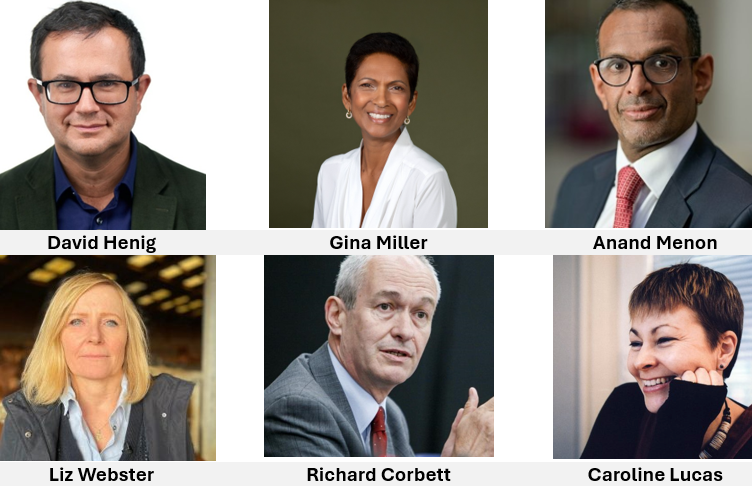
To commemorate the anniversary of the Brexit referendum, we asked six former contributors to give us their thoughts on Brexit 10 years on. Here’s what they had to say.

David Henig

Behind the daily dramas, the story of Brexit was that reality won over fantasy, that geography and inter-connectivity matter, and that the UK-EU negotiation is therefore permanent. These talks could come as members, angry divorcees, or a former couple returning to civility, but there are too many subjects of common interest for the relationship to be ignored as some would like.

Nor will the UK ever be dictating the terms, though it remains an important neighbour to Member States, but equally the EU won’t be able to ignore the relationship either. Once this all becomes clear, it is simply (!) a matter of the UK understanding what it wants and setting up everything required to achieve this, as against an EU for which such things are routine for good and bad. I fear though that such basics will continue to be ignored.


Gina Miller

Brexit was built on lies. The way back must be built on honesty.

Brexit was won on lies, by people with little interest in those left to live with the consequences. Ten years on, ordinary citizens are still paying, not least expats in Europe, who lost freedom of movement to a slogan.

The toll is stark: billions in lost exports, weaker growth, deferred investment. But the damage was also democratic, leaving a corrosive mistrust that populism thrives on.

Many of you want to rejoin, and I share that destination. But rejoining could take 10 to 15 years, while the poison festers. There is a faster way to heal. A Swiss option, the EU–Switzerland “Bilaterals III” deal of March 2026 is less elegant than membership but achievable in a few years and is not about surrender but serious, sensible action. By restoring cooperation, lifting barriers, and putting free movement back on the table, any future rejoin would come from far more stable, stronger ground.

The window is open – a Reform-led government could shut it within three years.


Anand Menon

Ten years on from the EU referendum and Brexit is still not ‘done’. Partly, that’s a function of how awful the EU is at joining with neighbours who do not aspire to join. Partly – ask the Swiss – it’s down to the fact that maintaining close ties requires almost permanent adaptation.

What is beyond doubt is that being outside the EU will mean we spend more time thinking about it than we ever did as a member state. The fact is – as neighbours of China and the US will confirm – living on the doorstep of a continental sized economy is never comfortable or easy. This is not necessarily a case for rejoining. Simply a warning that being out will bring its own challenges. 
Liz Webster

Ten years on, Brexit stands as one of the greatest acts of economic self-harm in modern British history.

As a farmer, I have watched British agriculture become the sacrificial lamb of Brexit. Brexit has opened our market to greater competition, while our European neighbours continue to benefit from collective support and strategic protection.

At a time of global instability, from climate shocks to conflicts threatening vital trade routes such as the Strait of Hormuz, Europe has recognised food as a strategic asset. European farmers are receiving additional support to maintain production and resilience. Meanwhile, British farmers face falling confidence, soaring costs and successive governments that refuse to put food security at the heart of national policy.

Brexit promises have all turned to dust, sovereignty has materialised as weakened resilience. More British voters now realise that in an increasingly uncertain world, strength comes from cooperation, not isolation, and want to rejoin the EU.


Richard Corbett

Contrary to what many politicians expected, the public didn’t rally behind Brexit once it had happened. A majority now say they support rejoining the EU. Leave voters see that Brexit bears no resemblance to what was promised.

Brexit has damaged the economy to an even greater extent than predicted, lost an annual £100bn of tax revenue, created extra red tape and inconvenience for UK citizens trading with or travelling to our neighbouring countries, and made it more difficult for Britain to participate in the wide range of matters handled multilaterally within the EU. This includes medical research, access to police databases, identifying and handling dangerous chemicals, food safety, trade sanctions, student exchanges, recognition of qualifications, and much else.

Furthermore, the geopolitical situation has changed, with a militarily aggressive Russia, an unreliable USA, and a more assertive China, making us increasingly aware of the interests and values we share across Europe. Time for more ambition!


Caroline Lucas

Looking back at the referendum 10 years ago, what can we learn? That top-down, technocratic arguments in favour of Remain didn’t work then (as some of us warned that they wouldn’t at the time) and certainly won’t work in the campaign to rejoin. Instead, we need to make a forward-looking, inclusive, values-based argument, based not only on the fact that it’s clearly in our best economic interests, but also on the idea of choosing a side. In an increasingly insecure world, with the US an ever more insular and unreliable partner, our future lies with our European neighbours, who still largely share our democratic values.

It’s time for the Government to tear up its red lines and start taking practical steps towards EU membership. The world has changed and so has public opinion. What better way for a new Prime Minister to signal a new beginning?

Coming next

Bremainers Ask will be taking a break in July, but we’re delighted to announce our contributor for August Alyn Smith – Scottish National Party MSP.

As well as being the MSP for Stirling, Alyn serves as Convener of the Criminal Justice Committee, focusing on Europe, the economy and growth, public service reform and building a case for independence in Europe.

Alyn served as an MEP in Brussels for 15 years representing Scotland and is Vice President of European Movement Scotland.

If you wish to submit a question(s) for consideration, please email us no later than noon on Saturday 8 August.


Bremainers Ask ……. Professor Christina Pagel

Bremainers Ask ……. Professor Christina Pagel

Christina is Professor of Operational Research at University College London, using mathematical tools to support the delivery of health services. She is also President Elect of the UK Operational Research Society and a Fellow of the Academy of Medical Sciences.

Since January 2025, she has been tracking authoritarian actions by the Trump administration (trumptractiontracker.info) and writing about their implications for the US and internationally.

Christina is passionate about healthcare and defending liberal democracy and is a regular commentator on social media, with 66k followers on Bluesky.

Valerie Chaplin : Will Trump last out his term or will the US see sense and oust him before he does any more damage?

I’m not sure if he will last, but to me the most likely reason for his exit is ill-health (including death). I can’t see the Republicans ousting him. If the Democrats win both the House and the Senate in the midterms, then they might be able to, if they can get enough Republicans to vote with them in the Senate, but I still think it is very unlikely.


David Eldridge : Will Trump’s unpopularity across most of Europe harm the poll ratings of far-right parties either modelling themselves on or openly courting his support (Reform, AfD, Vox, RN etc)?

Yes and no. I think parties that explicitly tie themselves too closely to Trump might be harmed by association and I can’t see them angling for his endorsement for that reason (especially after the US open endorsement for Orban in Hungary ended badly for Orban). That said, I think far-right parties can adopt many of Trump’s strategies and that this can work for them (e.g. leaning into the culture war, painting opponents as out-of-touch elites, stoking hatred for immigrants) and they can do this without even mentioning Trump or the US. Additionally, they can benefit from huge donations of Trump-aligned billionaires/right-wing foundations, again without necessarily tying themselves to Trump. 


Susan Scarrott : What do you consider were the greatest losses to your scientific field after leaving the EU and what would be the benefits of rejoining?

The biggest losses were scientists and science funding. On the former, applications for undergraduate and postgraduate study from the EU have dropped off a cliff (much more expensive for them and they need expensive visas). Even more worrying, while previously we used to get many applications for academic jobs (e.g. postdoctoral researcher or tenured positions) from brilliant EU scientists, these have disappeared. I can’t remember the last time an EU citizen applied for a postdoc position I was on the interview panel for. I think this is a tragic loss. We also lost access to exchange programmes with the EU and access to some European funding schemes (e.g. Horizon). Some of these are now restored, which is very welcome, but it has still been several years of lost opportunities.

Steven Wilson : Have Trump’s actions caused permanent damage to US global collaborations and standing, or will international relations return to ‘normal’ once he is removed from power?

Permanent is a long time – after all the UK is no longer enemies with France, Spain or Germany against whom we fought many wars. But as long as a MAGA version of the Republicans is in power, international relations and the US global influence are both severely weakened. If and when Democrats return to power, it will take a long time to build back collaboration to where it was, because the trust is gone that agreements will outlive an administration. I also suspect that this might be the start of the US decline as the pre-eminent global superpower (especially as China continues to rise), so perhaps in that sense the damage is permanent.


Lisa Burton : Why do you think evidence-based policy so often struggles to compete with political narratives or misinformation?

Excellent question! I think it’s a number of things. Evidence-based policy tends to be slower and to call for slower, more careful actions – which is out of step with what people want (quick change). Evidence-based policy also tends to involve at least some trade-offs, and people prefer to hear that things can be made better with little cost or effort on their part (I mean who doesn’t?). The growth of AI has made coming up with superficially convincing arguments (and pseudo-science) to support populists’ policies very easy, and social media has provided the means to amplify it. 

Evidence-based policy also requires changing your mind or direction if the evidence changes or better ideas emerge, and politicians are punished for this and so are social media influencers. This creates an incentive structure that rewards doubling down and extreme positions, which counteract evidence-based policy. I personally experienced this during COVID, when my followers would ‘reward’ me for any negative news about Covid or government policy but ‘punish’ (or ignore) when I posted good news or in support of a government policy. It can be very tempting to go towards the ‘reward’ and you have to consciously stop yourself.


Anon : With close to 3000 actions on your Trump Action Tracker, are there any particular misdeeds that stand out for you?

I think all of it is pretty bad – the combined attacks on rule of law, the media, and science. But what I personally find most disturbing is the utterly blatant white supremacist propaganda being pumped out on X by the Dept of Homeland Security and the in-your-face racism of Trump against non-white immigrants, especially (at the moment) Venezuelans and Somalis. When combined with all the actions that speak to a fundamental belief that whoever has the biggest army should do what they like, when they like, to whom they like, it feels like a return to very dark times.


NEXT MONTH Andrew Hesselden

Andrew is a strategic communications specialist and campaigner focused on UK–EU mobility and citizens’ rights. Having founded the “Save Freedom of Movement” campaign, Andrew also raises awareness of “90-in-180-day” issues with his “180 Days in Spain” initiative. Andrew serves on the National Council of European Movement UK and is working to build a Coalition for Mobility in Europe.

If you wish to put forward a question(s) for Andrew, please email us no later than noon on Saturday 9 May.