



Manchester ‘Defend Our Democracy’ Rally Sunday Sept 29 2019

Manchester ‘Defend Our Democracy’ Rally Sunday Sept 29 2019

Sunday September 29 sees the ‘Defend our Democracy’ rally take place in Manchester and our Chair Sue Wilson has been invited to speak. 

About the event:

The ‘Defend our Democracy’ demonstration is grassroots led, born out of the March for Change on 20 July and the 36 demonstrations across the country that took place on 7 September. The event, in partnership with Manchester for Europe, calls for Britain to Reject Brexit and to respect the rule of law and our democracy. It is led by a coalition of eight pro-European organisations coming together at a time of national crisis, four of which were founding members of the People’s Vote campaign. This timely event will take place outside the Conservative Party conference.There will be speakers and activists from across the political spectrum; this is an issue that brings together people of all views and backgrounds.

It is bigger than party politics and strikes to the heart of our shared values and democratic culture. We are keen to unite rather than divide so we encourage speakers to use inclusive language that takes into account our broad church and the strength and breadth of support at the heart of our movement. The speakers will be a mix of politicians, activists and ordinary people who care deeply about the future of our country and believe staying in the EU is best for Britain. Some kept campaigning against Brexit when most members of the political elite had given up hope; others, including some who voted for Brexit in 2016, are newer recruits to our cause.

The key messages for the demo are as follows:

● This is a time of national emergency: Boris Johnson’s move to suspend Parliament
is a sign of desperation, not strength. The Supreme Court has ruled that it was unlawful,
showing just how low he is willing to go to pursue to push his Brexit through without a
mandate or due scrutiny. We are mobilising urgently on all fronts to defend our
democracy and institutions. This is no longer just about stopping a no-deal Brexit. The
UK is the home of parliamentary democracy. It’s our job to keep it that way.

● We are a Remain Country . Brexit is not the will of the people. Every poll this year has
shown a clear and growing majority for our EU membership.

● We can’t fix Britain if we fixate on Brexit. Politicians have wasted three years
arguing about Europe. During this time, the crisis in housing, schools’ funding and the
NHS have worsened. We can do better than this.

We will not just be saying “no” to Boris and “no” to Brexit. We will be saying “yes” to Europe. People will speak with passion about how we can fix the country’s real problems if we stop fixating about Brexit. The list of problems is endless – the NHS, the climate crisis, knife crime, child poverty, opportunities for young people, care of the elderly, social mobility, lack of investment in large swathes of our country for decades and so forth. We will have the money, time and power to fix these problems if we stay in the EU.

Timings:

1400h: Crowds assemble in Whitworth Park, Manchester M14 4PQ
1445h: March begins
1530h: Arrive at Castlefield Bowl, Manchester M3 4JR
1600h: Rally begins
1730h: Rally ends
1745h: Crowds disperse

Speakers:

Peter Tatchell , human rights campaigner, Gina Dowding , Green Party MEP, Julie Ward , Labour Party MEP, Mohammed Amin , Chair of the Islam and Liberty Network & former Chair of the Conservative Muslim Forum, Helen Atkinson , Manchester for Europe, James Mellor , Remainer Now, Louise Houghton , South Yorkshire for Europe, Mandu Reid , leader of the Women’s Equality Party, Mike Galsworthy , NHS Against Brexit, Jessica Moll , Scientists for EU, Jordan Byrne , Young Conservatives for a People’s Vote, Sarah Judge , Manchester City councillor, Dan Price , Warrington councillor, Sue Wilson , Bremain in Spain,Daniel Paterson, Best for Britain.

You can find more information about the event here.

SB DOD

Bremainers Ask…….. Hugo Dixon

Bremainers Ask…….. Hugo Dixon

This month we are delighted to bring you Hugo Dixon. Hugo is a journalist, entrepreneur and campaigner. He is Chair of InFacts and Deputy Chair of the People’s Vote campaign. He is also co-founder of CommonGround. He founded Breakingviews in 1999, which he chaired until it was sold to Thomson Reuters in 2009. He writes columns for The Guardian, The Times, The Independent, The Financial Times, Politico and other publications. He is also author of The In/Out Question: Why Britain should stay in the EU and fight to make it better.

Sian Shaw: How can we combat Brexit apathy in the UK?

Hugo Dixon: We need to start making much more boldly the case for being in the EU – not just the case for a new referendum. And we need to connect the case for being in the EU to things that people already care deeply about – e.g. the NHS and care for the elderly, stopping knife crime, fighting the climate crisis, investing in parts of the country that have been neglected for decades, creating opportunities for young people. We also need to do this honestly. Happily, there are two really strong arguments that connect things people care about to our EU membership. First, we can fix the problems at home if we stop fixating about Brexit because we’ll have more money and politicians will be able to think about something different. Second, we’ll be able to help fix the problems abroad if we are an influential member of a powerful club rather than going solo and ending up either being bullied by the big powers or sucking up to them.

Ruth Woodhouse: Given that the EU & UK parliament will likely prevent Boris Johnson from negotiating a new deal, or leaving without one, do you believe stopping Brexit is more, or less likely with him as PM?

Hugo Dixon: The chances of stopping Brexit have risen now that Johnson is PM. He has antagonised the middle ground in Parliament. But the damage if we don’t stop Brexit has risen. It’s not just that we’ll probably crash out of the EU; Johnson may ride roughshod over constitutional conventions to get his way. So, there’s everything to play for and a huge amount at stake.

Mark Percival: What should be the best strategy now for Remain MPs – a referendum, to stop no- deal, a vote of no-confidence and/or a general election? If we are successful in securing a People’s Vote referendum, what options would you like to see on the ballot paper?

Hugo Dixon: The best strategy now is to pass legislation forcing Johnson to ask the EU for extra time so we can hold a referendum. If that fails, we should move to a vote of no confidence. If there’s a People’s Vote and Johnson is still PM, the question on the ballot should be a choice between whatever he is proposing (presumably “no deal”) and Remain. If a referendum took place under a different prime minister, e.g. Corbyn, the question might be different – but Remain would still be one of the options.

Sue and Hugo

Steve Wilson: Would you back Boris Johnson as Prime Minister if he did a 180 degree turn & supported revoking Article 50?

Hugo Dixon: The chance of that happening is virtually nil.

Juliet Smith: How do you maintain your optimism & positive outlook in the face of so much Brexit propaganda?

Hugo Dixon: At InFacts, we delight in exposing Brexit propaganda. Every morning I awake with a spring in my step. It is taking a long time to get an honest debate. But ultimately, the truth will come out. The big question is whether it happens before or after we’ve left. Everything is still in the balance. It would be wrong to be complacent or despairing. We need to strive every sinew as we can make a real difference.

Thank you to Hugo for agreeing to be our ‘Bremainers Ask’ for August. Our featured campaigner in the September newsletter will be Mike Galsworthy of Scientists for EU.

Links:

InFacts

People’s Vote


Sue Wilson Writes: There’s a reason that more Brits live in Spain than any other European country and it’s not just the sunshine

Sue Wilson Writes: There’s a reason that more Brits live in Spain than any other European country and it’s not just the sunshine

When I first visited Spain, at the tender age of 18, it was love at first sight.

Admittedly, back then, I was more interested in the weather, nightlife and the size/price of a Bacardi and Coke. Over the years, as I matured, so did my tastes. I grew to appreciate everything this wonderful country has to offer: the tasty tapas, varied landscapes, amazing culture, healthy lifestyle and – most importantly – the warmth and generosity of the Spanish people.

Now, a resident of 12 years standing, I’m living the retirement I could only dream of during many decades of annual holidays in Spain. I live in a small seaside village in the Valencian community, which is transformed by tourists for 10 weeks of the year. Our sleepy little winter village becomes a bustling resort, attracting visitors from all over Europe. In August, you’re more likely to hear French spoken than Spanish, although many other nationalities have also discovered our slice of paradise.

The inflow of visitors has its downside – longer queues in the supermarket and bank, parking problems, more traffic and slower service in bars and restaurants. However, the pluses more than outweigh the minuses. The buzz is infectious, the diversity of languages and people is a pleasure, and it’s good to be reminded that our village only exists thanks to the Euros, Pounds, Krone, Roubles and Francs that are spent here.

With so many European nationalities surrounding us, we feel part of a growing family – one that shares our dreams, concerns and values. It also allows us to see the village, and the country, through the eyes of those who love to visit but cannot stay.

When I speak Spanish, it’s clear that I’m not from around these parts,so the next question tends to be “where are you from?” When I tell people I’m from the UK, it’s commonplace to be greeted with a look of pity and an incredulous “what on earth was the UK thinking of with Brexit”. What, indeed!

Many of the tourists are regular visitors who have fallen for the local charms, as we did. When I’m asked when I’m going “back home”, I love to say: “In the next few hours – this is home!” I admit to taking small delight from seeing a glimpse of envy.

As well as interacting with tourists, many of us entertain our friends and family in August. It’s a time to switch off, dine out rather too often, visit tourist attractions that we ignore for 11 months of the year, and to relax and unwind. A time to set aside our worries about the future and appreciate what we have.

Before the referendum, I was guilty of taking all the benefits and freedoms of being a European citizen for granted. I never thought about my freedom of movement or my right to free healthcare and didn’t really associate those benefits with the EU. I just enjoyed those freedoms, with the expectation that I would have them for life.

Nobody knows what our Brexit future will bring, but if the referendum has had one positive outcome, it’s this: it has shown us what’s at stake and what we stand to lose.

I’ve loved my life in Spain since the day I arrived. I love it more with each week, month and year that passes. There’s a reason that more Brits live in Spain than any other European country, and it’s not just the 320 days of sunshine (although that’s amazing too!).

It’s the welcome, the sense of family, the feeling of security, the neighbourliness. Spain is in my soul and I’m never going to leave. The same applies to Europe, so keep your hands off my EU citizenship. The UK isn’t leaving, and neither am I.

Sue’s article from The Local

Sue Wilson Writes: Brits relying on funds from the UK are feeling increasingly helpless

Sue Wilson Writes: Brits relying on funds from the UK are feeling increasingly helpless

Sue WilsonAlways a popular topic of conversation, discussions about money have been more prominent recently, for all the wrong reasons, writes Sue Wilson of Bremain in Spain.

Prime Minister Boris Johnson has this week been visiting the four ‘corners’ of the United Kingdom, doling out promises to spend, spend, spend in a futile effort to win support. Judging by the reception he received in Scotland, Wales and Northern Ireland, his offers of financial support for communities and industries, which are currently reliant on EU funding, are not being taken too seriously. The fact that parliament, or even his own government, would be unlikely to sanction such overspending may be a factor at play.

On Thursday August 1st, money was again on the agenda when the new Chancellor of the Exchequer, Sajid Javid, announced the government will spend £2.1 billion in preparation for a no-deal Brexit. Despite frequent claims from the prime minister and the government that no-deal is not their preferred course of action, they seem very keen to convince the country, and the European Parliament, that it is.

The Treasury announced that the money would be spent to “accelerate preparations at the Irish border, support business readiness and ensure the supply of critical medicines”. £138 million alone is to be spent boosting public communications, including a public information campaign, and increased “consular support and information for Brits living abroad”. I’m sure a leaflet will make us all feel better at the prospect of being significantly poorer!

As you might expect, the news of more spending – especially on a damaging no-deal scenario – met with widespread outrage. The CEO of Best for Britain, Naomi Smith, said: “Wasting money like this when we have so many other priorities is exactly why the country has turned against Brexit. We need to stop fixating on it so that we can fix the country.”

Labour MP, David Lammy said it was money: “…wasted on preparing for an entirely avoidable and self-inflicted disaster. Money that should have been spent on schools, hospitals and housing.”

The prospect of spending such obscene amounts of money, when the UK has suffered underspending on an industrial scale for years, has everyone wondering: where is the money coming from? The government openly admits it intends to borrow, borrow, borrow.

All this talk of excess borrowing and spending is particularly galling for British citizens who are suffering from the collapse of the Pound. Sterling is at its lowest level in over two years, with no-deal Brexit only at the discussion stage. How much further might it plummet if the worst-case scenario actually happened?

Brits relying on funds from the UK, especially pensioners and others on low incomes, are feeling understandably helpless. Many are considering how to cut back on their personal expenditure. None of us are in possession of a magic money tree – unlike Westminster, where there’s enough fertiliser for a whole orchard.

There was, however, an unexpected word of comfort from a Brexit Party MEP. Apparently, Sterling’s fall is all down to Remainers and the European Union, and nothing to do with government policy or the pursuit of a hard Brexit. It can easily be fixed if we all stop saying that no-deal will be a disaster and – as Johnson might say – just “believe”!

If Abba’s ‘Dancing Queen’ will be remembered as Theresa May’s theme tune, Boris Johnson’s theme must be ‘Money, Money, Money’. At least, for now. Give it a few weeks, until his government fails, and parliament removes the no-deal threat, and ‘Waterloo’ might be more fitting.  

Sue’s Article in The Local

 

Bremainers Ask …… Julie Ward MEP

Bremainers Ask …… Julie Ward MEP

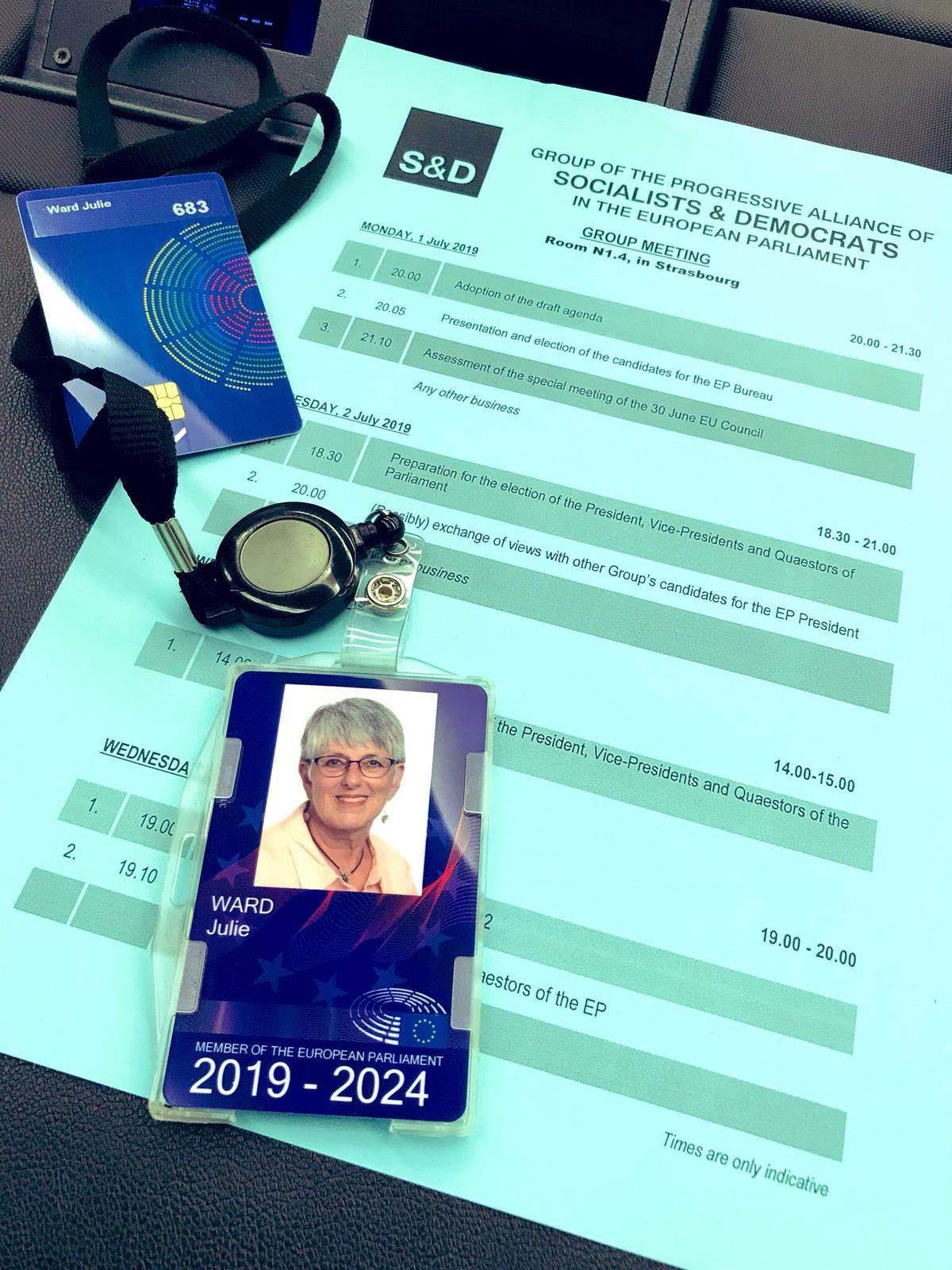
This month, Labour MEP Julie Ward has been kind enough to agree to answer some of our questions relating to Brexit. You can read more about Julie here, or listen to her speaking shortly after being re-elected in this video clip. We’re grateful for the time Julie’s taken out of her busy schedule to give us her thoughts and some very interesting insights into Brexit.

Q1: Apart from lobbying MPs, what else can Bremain in Spain members do to influence Labour thinking regarding a second referendum and remaining in the EU?

Be visible at all times across the traditional and new media outlets.

In respect of the UK Parliament, submit written evidence and offer to speak in front of select committees, such as Exiting the EU, Home Affairs, and the European Scrutiny Committee.

Learn about Labour values such as internationalism, workers’ rights and social justice, so that you can situate your arguments in the context of the Labour movement and its traditions.

Praise Labour for its efforts to support business and industry, and if you are a business owner demonstrate the damage Brexit will do to your business.

Write letters to Labour MPs and Labour MEPs. Ask family members in the UK to write about the threats to wider family life and the loss of accrued rights from Brexit. Champion Freedom of Movement and make links with the Labour Campaign for Freedom of Movement.

Also make sure to praise Labour (including the Leader) whenever a step in the right direction is made. Constant criticism is not perceived well. It’s important to remember that Labour does have a responsibility to both Leavers and Remainers – the top 20 Leave and Remain constituencies were both Labour.

Ensure your presence at key Labour events such as party conference, whether that be holding events, rallies or appearing on panels. Fringe events take place outside of the conference zone which means the general public can attend. In particular find out about The World Transformed which is a Momentum-backed arts and politics festival that runs alongside the main party conference. Attend events and speak from the floor where possible.

Build relationships with Labour’s sister party in Spain by writing to Spanish PSOE MPs and MEPs. Jeremy Corbyn attends regular meetings with his opposite number in Madrid and it would be good to get issues other than Gibraltar on the agenda.

Follow and sign up to Left platforms such as Another Europe is Possible, which is a pro-EU organisation campaigning to Remain and Reform. Many high profile Labour politicians are associated with AEIP.

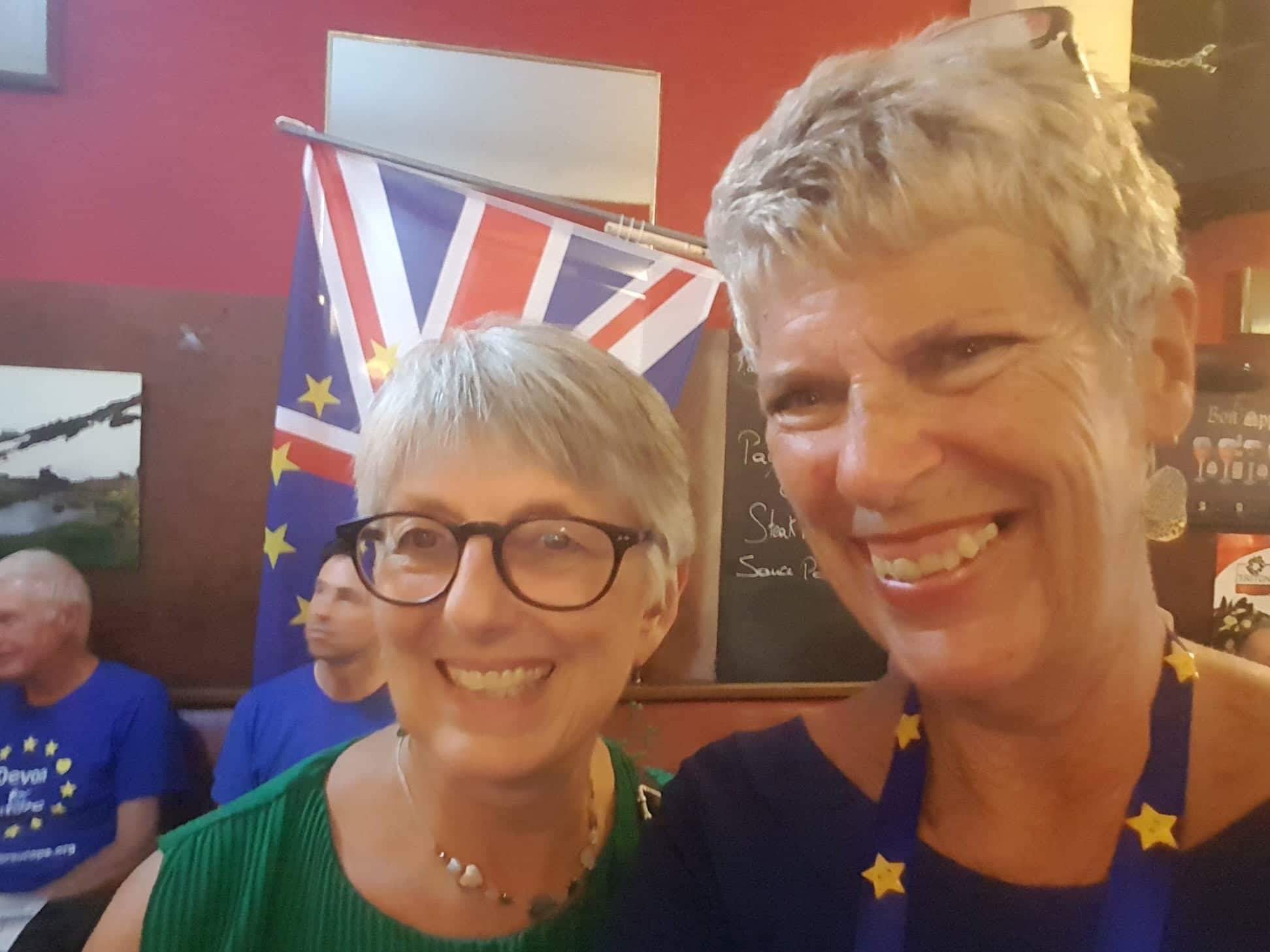
Julie Ward MEP and Sue

Q2: Are you more or less confident that Brexit can be stopped than you were six months ago, and why?

It is not about Brexit being stopped as, regardless of what we think about the validity of the referendum in 2016, the main parties accepted the narrow majority to Leave. The focus must be on people having a final say on the deal that would implement Brexit. We now know what the UK economy would look like if we leave the EU – restrictions on travel for work, study and leisure, less of a say through losing our seat at the table, and our communities would be poorer outside the bloc. The sunlit uplands of the Leave campaign in 2016 have now been replaced with reality, one of stockpiling medicines and food, and job losses right across the UK in key sectors. Brexit will only lead to more austerity and we will be unable to implement our plans for a fairer, more prosperous Britain.

There is still time to say that this is not what we were promised and it is OK to change our minds. In a democracy we often change our minds at each general election!

Q3: How open do you believe the EU27 are to a further Brexit extension?

I know our European colleagues and indeed sister parties would prefer the Union to be strong and for us to remain a key player as a member state. Our Socialist and Democrat colleagues are particularly open to a change of heart by the UK. Our group leader in the last mandate, Udo Bullman, put a lot of effort into keeping the door open, and colleagues like Austrian MEP Josef Weidenholzer organised letters signed by many MEPs, which were published in the British media. These included a heartfelt open love letter to the citizens of the UK which was greatly appreciated and reciprocated by Women For Europe. The Commission, under President Juncker, has expressed regret at the UK’s decision but always respected the result.

As the March 29th deadline came and went, quickly followed by another missed deadline of April 12th, and then the inevitable European Parliament elections, Brexit began to seem more unlikely. The European Parliament and the Commission are now in the process of internal organisation, and with a long summer break ahead, there’s very little time for either side to conduct the necessary negotiations for any kind of Brexit, especially considering the Conservative Party leadership elections, summer recess and then conference season. The future is very uncertain from an EU perspective, and partly for that reason I am hopeful of a further extension. However, a word of warning: The centrist liberals now operating under the new name of ‘Renew’ answer largely to President Macron, who denied the UK a longer extension earlier this year. Some think he and his clique would simply like to see the back of the annoying Brits!

Q4: Do you believe there will be a general election in the UK in the next few months, and if so, how are you personally preparing for such an event?

A general election OR a final say on the Brexit deal is looking inevitable. There is an impasse that needs to be resolved so that whoever governs can begin to implement a domestic legislative agenda to tackle the issues of climate change, social care, housing, stagnation of wages, the gig-economy and productivity. Only the Labour party has a progressive platform to ensure that these fundamental issues can be resolved and for the economy to begin working for the many, and not the few. Personally, I think it unlikely that Boris Johnson will call an election as the Conservatives will not win. If there is an early general election I predict another hung parliament with Labour being the biggest party. That means we would need to make a coalition with the Greens, SNP and Plaid Cymru. Labour MEPs always campaign in general elections, even in local elections and by-elections. Although I am not interested in selection as a UK parliamentary candidate I still want my party to do well in all elections. Regarding preparation, it is important to keep the party focused on the need for a public vote on any Brexit deal regardless of who might win an election.

Q5: Do you anticipate any significant change in the Labour Party stance on Brexit in the coming weeks?

The Labour party has been on a journey and I believe it is now fully focused on campaigning for a second referendum where we will be the biggest advocate of remaining in a reformed European Union. It is important to note that 80% of our members want to remain in the EU and we are a membership-led party.

Q6: Should the Labour party collaborate with other pro-EU parties to form a Remain alliance? 

The Labour party always puts up candidates in all constituencies (except Northern Ireland) to ensure that communities across Great Britain have the opportunity to vote for Labour values and policies. I don’t see this changing in the future.

However, working more closely with other parties in the UK Parliament might help rebuild public confidence in politicians. It is something that we do on a daily basis in the European Parliament in our committee work. 


Thanks again to Julie, who we hope will have the chance to serve out another full term as an MEP!