La colonia británica en España pisa el acelerador para empadronarse

La colonia británica en España pisa el acelerador para empadronarse

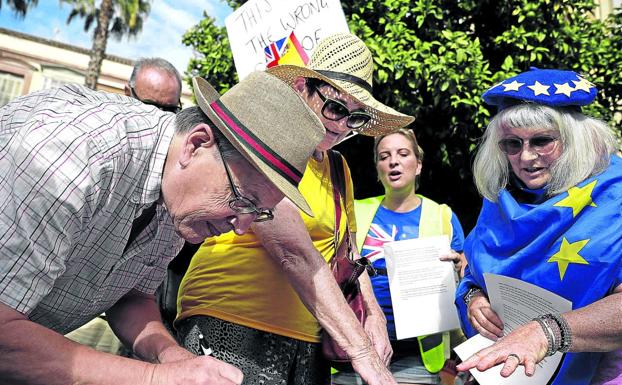
El Brexit ha unido a los casi 400.000 británicos (entre oficiales y no empadronados) que viven en España. Desde que su país aprobó salir de la Unión Europea, en junio de 2016, todos comparten un mismo sentimiento. Ninguno de ellos sabe lo que les va a ocurrir y eso ya es un punto en común que borra cualquier diferencia. «Todos los días nos levantamos pendientes de los periódicos y esperando información del consulado», explica Karen Cowles, presidenta de la Asociación de Comerciantes Británicos de Benidorm.

Las noticias que llegan de Reino Unido no aclaran mucho sus dudas. El Gobierno británico y Bruselas están tratando de alcanzar a marchas forzadas un acuerdo que debería estar cerrado el próximo día 17, fecha en la que el Consejo Europeo dará por concluido el plazo de negociaciones. A partir de ahí, la oposición obligará al Ejecutivo de Boris Johnson a pedir a Bruselas que amplíe la fecha límite de salida de la UE y forzará así la convocatoria de elecciones. Para complicar la situación, el primer ministro mantiene su promesa de sacar al país de la Unión Europea el día 31 con acuerdo o sin él.

Esta es la información que amarga todos los días el desayuno de la abundante colonia británica en España. Vive sumida en una sensación de incertidumbre que no hace sino aumentar a medida que pasan los días. No saben qué será de ellos ni cómo cambiará sus vidas cuando termine octubre. «Se desconoce cómo serán los términos del acuerdo, si es que lo hay», resume Ricardo Bocanegra, abogado marbellí experto en extranjería. Salvo esperar, solo pueden hacer una cosa: empadronarse en los municipios donde residen.

leer más en El Dario Vasco
 

‘This is an exciting time’, UK minister tells Brits in Spain as Brexit looms

‘This is an exciting time’, UK minister tells Brits in Spain as Brexit looms

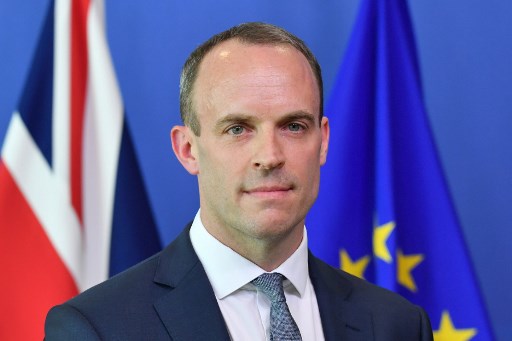
UK Foreign Secretary Dominic Raab has written an open letter to anxious Brits in Spain telling them that “this is an exciting time” as he urges them to prepare for Brexit.

Dominic Raab has penned a letter to UK nationals in Spain in which he tells them how they should be preparing for Brexit as the UK government gets ready to deliver the “will of the British people” on October 31. 

His letter reads like a set of demands for Brits in Spain – “you’ll need”, “you must”, “you should” – in return for only vague promises about UK nationals’ rights in their host country post-2020. 

Although Raab assures his target audience that in the event of a no-deal Brexit they will continue to have access to healthcare in Spain “exactly as you do now, until at least 31 December 2020 if you are an S1 form holder”, there is no mention of the worry and anxiety that’s been caused to them over the past three years, or what is likely to happen to their healthcare after that date. 

Instead the UK Foreign Secretary repeats much of what’s already been announced by the British Embassy in Spain, choosing to round off his impersonal letter by saying

“This is an exciting time, but also one of unprecedented change”. 

“We’re getting ready for Brexit on 31 October, and I would urge you to do the same”.

Sue Wilson of Bremain in Spain has responded to Raab’s tactless comments by telling The Local: “Brexiter Raab might think this an exciting time, but I can assure you, we do not!

“More appropriate adjectives to describe our assessment of the current state of play would be “terrifying” or “unsettling”. Promising that our rights and benefits are protected for a limited period does not provide reassurance. Rather, it has Brits in Spain worrying what will happen when that period expires?

“Those hoping for a deal, any deal, to get us out of this awful limbo, are now starting to realise that even a Brexit deal will not see the end of this awful uncertainty”.

Raab even found the time to praise the “the largest information campaign in British history” – the Get Ready for Brexit  campaign – as if to imply that this was of importance or helpful for UK nationals in Spain who still don’t know what their future holds.

Read Dominic Raab’s full letter in The Local


Británicos en España: nerviosos, confundidos y con menos dinero por el Brexit

Británicos en España: nerviosos, confundidos y con menos dinero por el Brexit

“Muchos hemos visto cómo se reducían nuestros ingresos, y algunos no saben cómo van vivir”, cuenta Susan Wilson, jubilada y residente en Alcocebre (Castellón) desde hace 12 años.

Susan -como muchos otros británicos que viven en España- depende de su pensión, procedente del Reino Unido y que se ha visto reducida en un 18 por ciento desde el referéndum del Brexit, por la caída de la libra. Cree que los más vulnerables son los que reciben una pensión del Estado británico, y conoce “personas que se ven obligadas a tomar decisiones financieras difíciles porque los ingresos que tenían hace tres años van a verse reducidos aún más”.

“Una gran parte de los británicos que reside en España son pensionistas; hasta ahora el gobierno británico les actualiza cada año la pensión, pero es posible que no lo siga haciendo”, dice Neil Hesketh, que vive en Málaga, y donde reside desde hace 17 años. Neil vino a España porque “quería vivir en un clima diferente” y encontró al principio trabajo en marketing y en una inmobiliaria. Explica que “hay jubilados, mayores -con problemas de salud- que están preocupados con el riesgo de quedarse sin cobertura sanitaria después del Brexit”, y “están un poco asustados, todos corriendo para inscribirse en el registro de ciudadanos europeos” para no quedarse sin cobertura sanitaria. A día de hoy el principal problema es “la capacidad de las comisarías para aceptar a todas las personas que quieren citas para inscribirse; están tardando en dar citas”, señala Neil, aunque reconoce que tanto la embajada del Reino Unido como el Ministerio de Interior español están haciendo todo lo que pueden.

leer más en Cope

‘It’s like a death sentence’: retired Britons in EU face loss of healthcare

‘It’s like a death sentence’: retired Britons in EU face loss of healthcare

Britons with serious, sometimes terminal, illnesses who live in the EU say they have no certainty about how or even whether their healthcare costs will be covered after a no-deal Brexit and are suffering a “living nightmare” of anxiety and despair.

“It’s like a death sentence,” said Denise Abel, who moved to Italy in 2012. “It’s all you think about. I feel abandoned, betrayed and furious. There are no words for the rage I feel. We’re the collateral damage in the government’s war with the EU.”

The UK government announced last month that if Britain crashes out of the EU without a deal the estimated 180,000 retired British nationals in the bloc whose healthcare costs it funds would continue to be covered for six months.

Most of the 1 million Britons in the EU are earners, so pay into the health systems of the EU member states they live in. Their healthcare arrangements should be unaffected by a no-deal Brexit.

But pensioners, who paid social security when they lived in the UK, are part of a reciprocal healthcare scheme, S1, under which the NHS reimburses the cost of their treatment – and which will cease to exist after a no-deal Brexit.

“They feel like they’ve been kicked in the gut,” said Kalba Meadows of the campaign group British in Europe. “A lot of them are pretty vulnerable; it really wouldn’t take much to guarantee their rights until bilateral reciprocal arrangements are in place.”

The government was urging pensioners to sign up for their local health system but this was often not possible or too expensive on a basic UK pension, which is worth 20% less in euros because of the collapse of the pound since the EU referendum in 2016, Meadows said. Private health insurance was also beyond the means of many retired people, who are likely to have pre-existing conditions.

“They are left with the very real prospect of having no healthcare,” she said. “And in many countries, without healthcare you are no longer legally resident. There’s really a lot of fear. We’ve had hundreds of people contact us. Many are elderly, some have terminal illnesses – they are genuinely petrified.”

Read full article in The Guardian


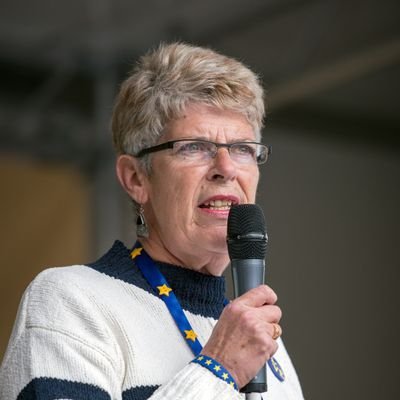
In conversation: Sue Wilson, Chair of Bremain in Spain

In conversation: Sue Wilson, Chair of Bremain in Spain

I met Sue Wilson on what can only be described as a typical Manchester Sunday afternoon in 2019 – grey, rainy, and full of protests.

The city must have felt millions of miles from Wilson’s current home in sunny Valencia, Spain, but neither the miserable weather, nor the fact that she had to walk in it from St. Peter’s Square to Rusholme (many of the main roads were closed in preparation for protests over the Conservative Party Conference), seemed to dampen her spirits. “I don’t come to Manchester for the weather,” she joked as we sat down.

And she certainly didn’t. Wilson was in Manchester to speak at the ‘Defend our Democracy’ rally, held over the weekend to coincide with the Conservative Party Conference. She is currently the chair of Bremain in Spain, a campaign group made up of Remainers looking to protect the rights of British citizens living in Spain. The group argue for the need for a second referendum, which is what Wilson calls “the most democratic way.” But she told me she ultimately feels that preventing Brexit altogether is the “only way we’re going to protect our rights”.

Wilson is one of approximately 1.3 million UK-born people currently living in EU countries outside of the UK and Ireland, and is unsurprisingly concerned about the effect of Brexit on those in her position. She is the first to admit that Brexit completely changed her political consciousness, calling the result of the 2016 referendum “a real wake-up call”.

“I wasn’t interested in politics at all, I wasn’t interested in current affairs either. I used to constantly tell my husband to switch the news off, it used to bore me,” she told me. But the result of the EU referendum changed all that. When asked why she thought Brexit had such a profound impact on her – enough to turn a previously politically disinterested, disengaged person into an activist within three months – she told me that it didn’t feel like a choice.

“I couldn’t believe that the country would decide to shoot itself in the foot in this way. As we’ve learned over the last 3.5 years, it’s so damaging to the country, people’s rights, to everything we hold dear really, so it wasn’t a choice to get involved. I felt as though I had no option – I had to do something.”

She encouraged any students who had felt similarly politically awakened by the result of the referendum to reach out to a student group, such as Inspire.EU and For Our Future’s Sake, but most importantly, to stay informed.

“There are lots of sources of information, and there are lots of campaign groups. There are ones specifically aimed at different groups; there are definitely groups that students can join, there are groups that young people can join, and even if you decide not to be active yourself, at least if you know the facts then you can make that decision as to whether you want to do anything about it or not, and whether it’s important to you or not.”

Read the full interview in The Mancunian


Healthcare for Brits in the EU to be covered for six months in no-deal Brexit

Healthcare for Brits in the EU to be covered for six months in no-deal Brexit

The government has pledged £150m to cover healthcare costs of the 180,000 British nationals living in the EU in the event of a no-deal Brexit.

The Department of Health and Social Care announced today people already living in the EU – including pensioners and students – will continue to access free healthcare under existing reciprocal arrangements for six months after a no-deal departure.

The measure includes those on disability benefits and UK workers temporarily posted in the EU – as well as any UK tourists who began their holiday before the UK’s exit.

The government has also committed to covering the costs of UK nationals in the EU who are in the middle of treatment when we leave the EU, for up to a year.

Health and Social Care Secretary Matt Hancock said: “Protecting the healthcare rights of UK nationals is a priority of this government.

While the government continues to work towards a good deal, I am today announcing that pensioners, students and UK workers living in the EU will have their healthcare costs covered for six months after 31 October, whatever the circumstances of Brexit.

“All UK nationals in the EU should act now and take the simple steps needed to secure their access to healthcare.”

However, the move was met with anger by campaign groups.

Jeremy Morgan, vice chair of British in Europe, said: “This is yet more smoke and mirrors from the UK government and another massive let-down for UK pensioners in the EU 27. 

“Having paid UK taxes and contributions all their working lives, when they moved to their host country, they had the right and expectation to UK government funded medical treatment for life.  This was a key factor in the decision of many when moving.

“Now the only guarantee they have is for 6 more months, or up to a year if they have already started treatment.  Just think what that means to someone who already needs life-long treatment, or a pensioner who gets a cancer diagnosis a month after Brexit.

Read full story in The Olive Press