Bremain Members in Lockdown

Bremain Members in Lockdown

The following selection of statements express, in their own words, some thoughts, anxieties & concerns expressed by Bremain members with regard to the coronavirus pandemic and the lockdown in Spain.

“I worry that with my husband & I both being over 65, we would not have access to ventilators, should the need arise – they are in short supply & would likely only be offered to younger patients.”

“With my husband still working, I am alone with the kids all day. I am finding it difficult to juggle their schooling with my own work.”

“I am worried about my family in UK – especially my daughter, who has asthma. I would rather the UK had the same tough restrictions we have here.”

“I run a small local business and am not eligible for any of the assistance being offered by the Spanish government, unless I close down the company. I’m worried that if schools remain shut until September it will be very difficult to get back up and running at work, even if there are clients to sell to.”

“I have had 2 trips to the UK cancelled already, & I worry about my elderly mum living in a residential care home. It’s difficult not knowing when, or perhaps if, I will see her again.”

“My main concern is that the UK are not taking things as seriously as Spain, & not enforcing compliance with lockdown. I’m very concerned for older parents/relatives & sad for cancelled visits, but just want them all to stay home and stay well.”

“My main concern is for my mental health at the moment.  Whilst in my house things seem okay, and I appreciate how lucky I am to have a garden, but when I first ventured out to buy bread recently, I felt like a criminal. Now when I go to the supermarket, I feel incredibly sad.”

“I am very worried about my family & friends in the UK, & I hate the fact that I am unable to visit them.”

“Who knows how long the lockdown may last or the long-term effect on so many towns & villages that rely totally on tourism.”

“Living in an apartment, my main concern is for my mental health. I have used running as my main form of exercise to combat it for the last 2 years. Now all we have is a small balcony with 2 hours of sunlight a day.”

“I travel a lot between Spain & UK for business, which has now ground to a halt, causing our small start-up to lose £1000’s in revenue.”

“Although I am used to doing some work from home, it is strange having my wife & son in the house all day, every day. I am concerned mainly for my son’s physical & mental health as despite all our efforts, it is boring for him & he needs fresh air & exercise.”

“The first concern is that family & friends are okay, but I’m also concerned about the impact on the economy & what comes after the virus is over.” 

“I run a hair & beauty salon business, which is currently closed & unable to operate. Waiting for information on government help, while still having to pay rent on the premises, is crippling.”

“I live just across the Portuguese border, & now cannot access facilities in Spain, which I rely on. This has affected my shopping, education, exercise & entertainment.”

“I own a relocation business. Not many people are able to relocate during lockdown & I wonder how long this may continue.”

“It’s difficult living on a development with young children.  We overlook a huge communal area that they usually use often, but they can only stare at now.”

“I am hoping that rapid tests will be available soon as I have had some mild symptoms.”

“We can’t go out to exercise in Spain, quite rightly, yet it’s still happening in the UK.”

“When this is all over, how do we to return to “normal?”. If the infections/deaths reach their peak and we enter a downward trend, then when and how will we begin to lift the restrictions?”  

“I live in La Linea & work across the border in Gibraltar. My company won’t allow working from home. I am not an essential worker, so I get questioned by the police every day and I am scared.”

“My partner is a nursing auxiliary at one of the local hospitals, assigned to A&E, so she’s one of the first people to come into contact with new patients.  The effect of her work on our everyday life has been quite dramatic.  We’re having to keep apart, whether eating, sleeping or watching a TV program.”

“Isolation has left me feeling lonely at times and it has been challenging adapting to working from home, but I think it is the right move and I’m grateful that I can still work.”

“I’ve been made temporarily unemployed from my teaching job so my main concerns are financial. The system is inundated with ERTE applications & my employer has no idea how long it will take for our applications to be processed.”

“My daughter’s education is a worry as there has been no notification of any online classes. Apparently, schools won’t open until June at the earliest.”

“I own an estate agency & my concern is for my staff – we are a close family business, & I worry about their future as well as my own.”

“My boyfriend’s family are from Madrid. His father is recovering from lung surgery & I am extremely concerned for his safety. He is locking himself in his house with his wife & they can’t even leave to go shopping as it would be too risky.”

“Both me & my boyfriend work in hotels – even after the crisis passes, we will not be able to restart our jobs due to all the cancellations. I don’t have a permanent job so am unable to get any financial help.”

“I have worked in tourism all my life. My principal worry is the economic situation. Where I live, almost everyone is involved in tourism & obviously 2020 looks like it will be a nonstarter.”

“I’m self-employed and it was a bit of a shock to wake up & find I had lost all my work.  I love my job & worked hard to build up my business.”

“My young children & I live in a city flat with no garden so it’s really tough for them.”

“It’s a worrying time, I’m a self-employed dog groomer & my husband works in a bar – neither of us can work, we have a young son to feed, with no money coming in & rent to pay.”

“My heart goes out to the many in tourism with small businesses, who, like myself, have now lost every single booking for March & April, with cancellations pouring in on a daily basis for future months too.”

“The Government response is appropriate and necessary! I’m complying with lockdown by using the time to re-connect with my partner & finally get around to all those ‘been meaning to do projects” to improve my home.”  

“I am concerned for my family here who are all worried financially as can no longer work & have young families to support. They are wondering how to pay bills, rent, etc. They are not sure what help they will receive.”

“I am used to working from home but having the kids home from school whilst working at the kitchen table is not ideal. I am trying to make the most of this by enjoying the time I have with my kids & doing craft activities with them.”

“My biggest concern is for my partner & her colleagues who work at a local hospital. We have to keep a safe distance from one another at home, which is not a natural situation.”

“I run a language school, so overnight we were shut down. Getting hundreds of students onto an online platform has been a nightmare. If this doesn’t work & the lockdown continues, I will have to fire all my staff. If we have no income, I don’t know how long we could last.”


“As I’d be classed as ‘vulnerable’, I’m grateful for the actions of the Spanish government.”

“The hardest thing is not seeing our family as we are not allowed out.”

“I feel the government here really cares & everyone is working together to try to get through this with as few deaths as possible. I worry about the economic & social after-effects.”

“I feel very relieved to be in lockdown. I feel as though I’m in a much better situation here than many of my family & friends in the UK who see little danger ahead.”

“The UK is depending on the good sense of the public & will get into serious problems resulting in unnecessary deaths. Advice, & reliance on everybody’s good sense is not enough. If speed limits were only advisory many would ignore them. COVID-19 advice is exactly the same, Spain is correct in enforcing the lockdown.”

“Isolation is not a great way to spend the day but it’s preferable to being dead!”

“I’m stuck in UK! I was due back to finalise my residencia in Spain & am now worried I might not manage it before end of year.”

“We all need to pull together and support each other.”

“I am enjoying the clear skies, lack of airplanes & the reduction in pollution.”

“I am concerned about the number of people who are ignoring the guidelines. They are putting others at risk.”

“I feel for those who are lonely and am so sorry for those losing their income & will find it a big struggle. There are a lot of people with worse problems than I have.”

“I miss the physical contact of friends & family. On-line is fine to compensate if you are not able to see them but not all the elderly have this facility.”

“I am bored!”

“I love that people are finding the bright sides. How people behave in crises like these says a lot about them.”

Bremainers Ask ……. Revisited Part Three

Bremainers Ask ……. Revisited Part Three

With the changing political landscape, Bremain invited former contributors to our Bremainers Ask feature for their thoughts on the subject. Before the current coronavirus crisis, we asked them to comment on where we are now, how they see things moving forward and what we pro-Europeans should be focusing on in the future.

Last month, we brought you the thoughts of Harry Shindler, MBE, Kyle Taylor & Steve Bray. Here is the final instalment, & grateful thanks to all our contributors.


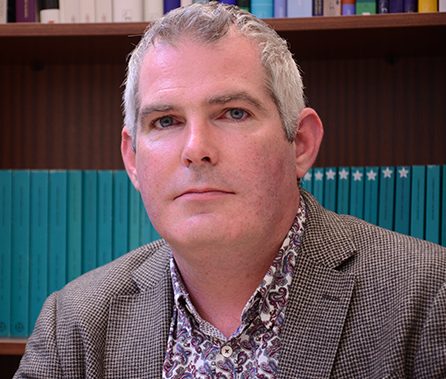
Professor Michael Dougan

EU Law Expert, Liverpool University

Website

Twitter


Prof Michael Dougan

On paper, Boris Johnson may have “got Brexit done”: the UK is no longer a Member State of the European Union.  But in practice, many of the real questions about future relations between the UK and the EU remain to be settled.

On the one hand, the UK Government under Boris Johnson has at least pulled free of the excruciating period when leading Leave campaigners, and then the administration of Theresa May, promised all things to all people and either believed or pretended that that could ever possibly happen in reality.  The current UK position on future relations with the EU is at least possessed of greater internal coherence and demonstrates a higher level of political realism.

On the other hand, the cost of such clarity is that the UK Government is driving headlong towards a serious rupture in relations with the EU – a far cry from many of the Leave fantasies made back in 2016 and repeated consistently thereafter – and crucially, that will be true regardless of whether there is a deal or whether there is none.  The British decision to rule out any transitional extension only exacerbates the situation by making “two regulatory changes” more likely in due course.  And of course, there remains a shocking contradiction between Johnson’s propaganda about “Global Britain” as the champion of free trade versus the reality of a Government poised to commit the single gravest act of economic segregation in modern history.

Besides the damage which will inevitably flow from the UK’s decision deliberately to dislocate and distance itself from the Union, that choice also has various important internal consequences for the UK itself: for example, the customs tensions affecting Northern Ireland will only grow in proportion to the degree of Great Britain’s divergence from Union law; and the same is true as regards the management of internal trade between England, Scotland and Wales.  But most of all: why is the Johnson Government so obsessed with the power to diverge from Union regulatory standards, many of which are only minimum in nature and do not prevent the UK from pursuing higher levels of protection?  Perhaps “taking back control” is just an exercise in nationalist political rhetoric.  But it seems more likely that the Tories do indeed harbour a dream of dismantling the UK’s adherence to Europe’s distinctive socio-economic model.

Moreover, the UK’s increasingly abrasive approach to the future relationship also poses serious challenges for the EU itself.  Above all: the risk of an aggressive competitor on its very doorstep, actively undertaking market deregulation and encouraging social dumping as an alternative economic model; as well as constantly engaging in attempts to undermine the political unity and solidarity of the Member States – with the UK’s post-withdrawal but still essentially Leave-driven leadership potentially motivated by the belief that the relative success of their precious Brexit can best or indeed only be demonstrated by the relative failure of the equally hated EU.  Even looking beyond the current generation of Tory politicians in office: the further and harder the UK does drift away from the European fold, the more difficult life will eventually be, even for a new administration more sympathetic to close relations with or indeed renewed membership of the Union.

For readers of this newsletter, it is also bitterly disappointing to see that the question of onward movement rights across the EU27 even for those UK nationals protected under the Withdrawal Agreement are not explicitly on the negotiating agenda – despite the two parties having repeatedly claimed that the issue would indeed be addressed in their “future partnership” talks.  It may take some noisy lobbying to make sure the issue doesn’t just drop off the agenda (again).

Seb Dance

Seb Dance

Labour politician, former MEP

Facebook

Twitter

So here we are. And we thought Brexit was bad enough. In fact, it was so bad that, having had quite enough of the dramatic highs and lows of the past three years my husband and I booked a trip as soon as I left the European Parliament to get away from it all. It was great! We had a fantastic time at the beach, the pool and an overland trip down the Malay Peninsula. I briefly forgot about the pain of losing the fight against Brexit and the sheer stress of it all. I remember joking one evening that whatever came next couldn’t be as bad as all that!

Fast-forward a few weeks and I am writing this on the eve of what is a likely announcement from the Prime Minister that we will have to stay indoors for the foreseeable future, an order that I know has already been in place in Spain for some time. We are afraid to go out, we give every passer-by a very wide berth. On the few occasions we do venture out we put on disposable latex gloves and a facemask – as much to protect anyone we come into contact with as ourselves.

We are living through something that is not just extraordinary, but which has profound consequences for our future. It is a global crisis, which will be far worse than 2008 in its impact. We must not let the UK government off the hook by letting them absorb the impact of Brexit into that of COVID-19, hoping no-one will notice. It would be reckless in the extreme to strangle a nascent recovery by pursuing an ideological agenda at a time when we need consensus and clear thinking to prepare us for the future.

Right now, we need to look after ourselves and our loved ones. We will get through this. And when we do, we must never give up on our fight: to create a world where we don’t divide each other on the basis of nationality but one where we are free to live our lives where we want, the way we want.


Many thanks to all of our Bremainers Ask contributors who have taken part in our Revisited series. Bremainers Ask will be back next month with Ian Dunt, Editor of Politics.co.uk and host of Remainiacs. 

Bremainers Ask ….Naomi Smith, CEO Best for Britain

Bremainers Ask ….Naomi Smith, CEO Best for Britain

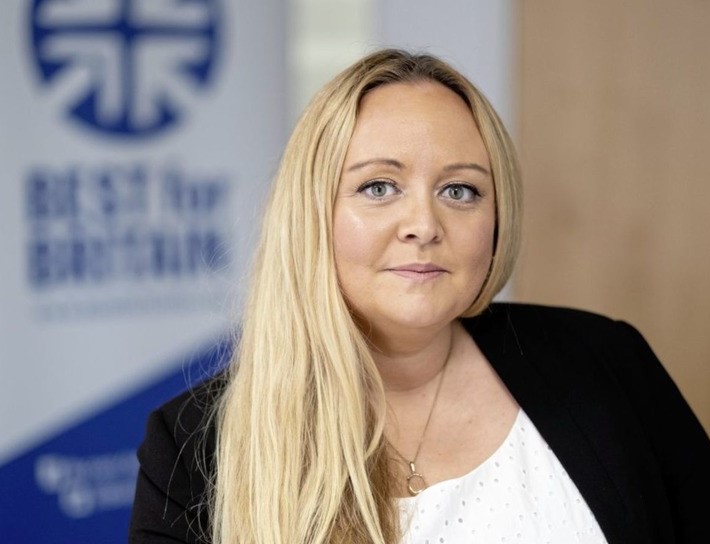
Naomi Smith has been CEO of Best for Britain since June 2019, having previously served as its COO.

Immediately before joining Best for Britain, Naomi was Executive Director of Campaigns at the business lobby group London First, where she organised the group’s campaign to stay in the EU, at the 2016 EU Referendum.

Naomi previously spent 15 years working in finance and accounting for companies including Arthur Andersen, Deloitte and the Chartered Institute of Management Accountants, as well as chairing voluntary groups.

Naomi also co-hosts the very popular Remainiacs podcast.

Many thanks to Naomi for taking part in our Bremainers Ask feature. Here are her answers to your questions:

Pat Kennedy: What can we all best do to make this Government accountable for the disaster that is Brexit?

Naomi Smith: Brexit is not done yet and, with the world in crisis, it’s more important than ever that we encourage the Government to delay the Brexit process, to give both Britain and our EU friends a realistic timetable with which to work.

Political accountability comes at the ballot box but, thanks to our first-past-the-post electoral system, Britain is a Remain country with a Leave Government. As fervent internationalists, our time is best spent working to ensure Britain and Europe remain as close as possible, with a view to rejoining the EU at some point in the future.

It is far better to act positively, making the strongest possible case for European integration, than find ourselves brooding about how to take revenge for the Brexit fiasco. To turn things around, we need to bring even more voters on side so that, come the next opportunity to hold the Government to account in an election, we have the upper hand.

In short, putting a pro-European Government in power would be the best possible way of holding all of Westminster to account – but not to ‘get our own back’. Rather, because that is what we believe is best for Britain.

Michael Soffe: Will Best for Britain throw their full weight behind any movement to Rejoin the EU?

Naomi Smith:  The EU has many totemic elements for us: human rights, freedom of movement, internationalism, to name but three. Protecting these elements amid the current chaos is of the utmost importance.

We remain committed to the ideals of the EU and, ultimately, to putting Britain back at the heart of Europe.

The last few years have been tough for Remainers. The Brexit referendum result was a body-blow, and I was certainly not the only person to be left in tears when that result became clear.

The recent General Election was also a chastening experience – we helped encourage millions of citizens to vote tactically, for pro-EU candidates, but that was not enough. The huge marches, the remarkable campaigns, the fact that the majority of voters backed pro-EU parties … none of that was enough.

When the time is right, the fight to rejoin is a fight we will be at the front of. It should be at a time of our choosing, on a battleground of our choice. The lessons of the last few years must be learned, and we must find a way back to Europe’s top table.

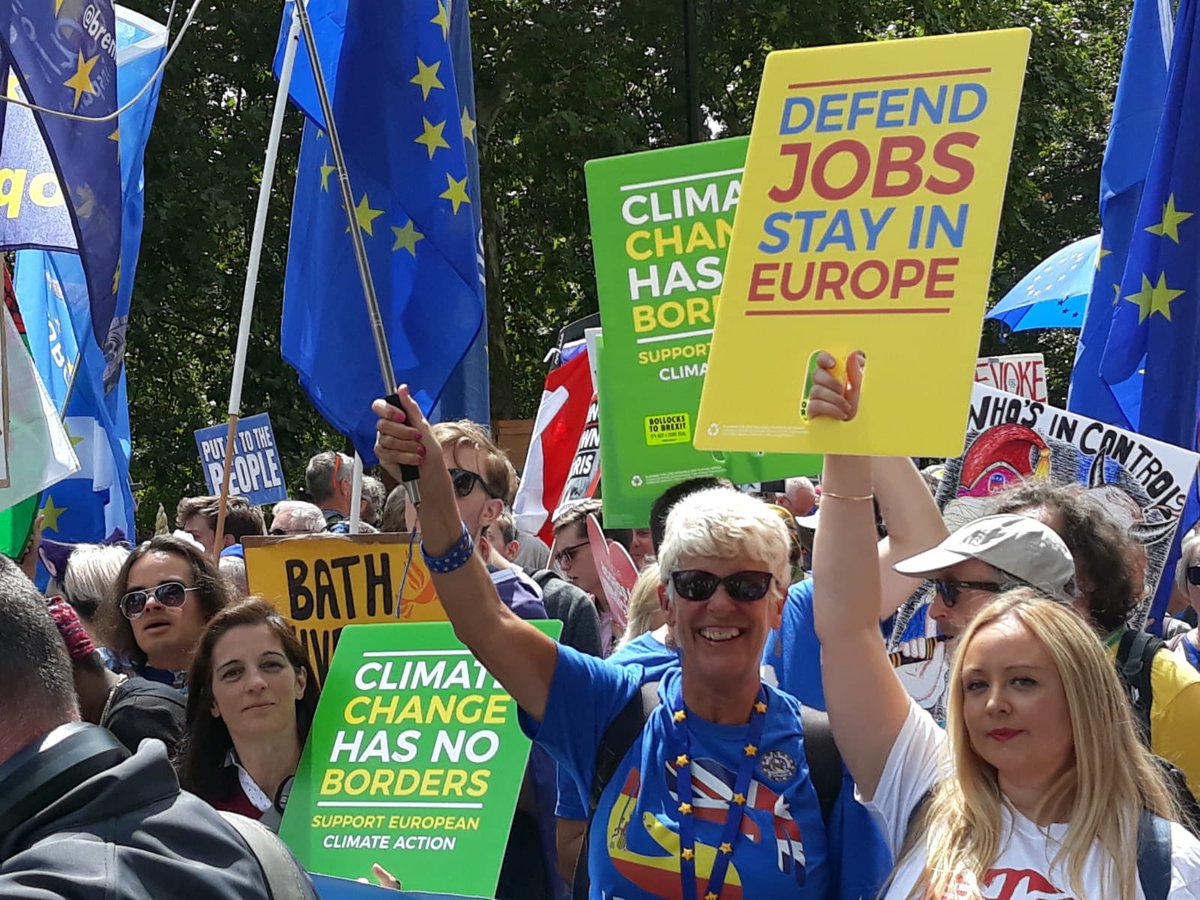
Our Chair, Sue, with Naomi at the March for Change, London, July 2019

Steven Wilson: Do you think that the current coronavirus crisis makes an extension to the Brexit transition period more likely, perhaps even inevitable?

Naomi Smith: By the time you read this, an extension may well have been agreed. It is neither reasonable nor desirable to expect the EU divorce process to be completed by December 31st, and nor is it acceptable for Brexit to be a distraction from battling coronavirus.

With civil servants reportedly being diverted from No Deal planning to coronavirus work, and with a Prime Minister facing the pressures of daily virus press conferences and Cobra meetings, it is clear that the system is being hugely stressed from top to bottom.

Coronavirus must take precedence – it is a global threat, after all, while Brexit is a much more localised disaster. It will take everything we have to get through the covid-19 pandemic, leaving Britain – and the EU – unable to focus properly on Brexit.

The 31st December Brexit deadline was always exceedingly ambitious, driven by the Government’s political will rather than any pragmatic reading of the challenges of divorcing us from the EU.

Now, it is patently ludicrous, and also unfair on all of those involved in the process. Videoconferencing is no substitute for face-to-face meetings, or the discussions that go on after such meetings have formally concluded. Even skilled professionals cannot be expected to perform at their peak if they are impacted by coronavirus, or worried about the effects it is having on loved ones.

One final point. Experts point to the risk of the virus hitting us in a second wave, near the end of the year… just when maximum pressure around Brexit and, particularly, a catastrophic No Deal Brexit, would be building. The Government has a chance to avoid such a calamitous confluence of crises and will surely enact a delay of some sort.

Tamara Essex: When Cabinet ministers claim there will be no checks with a new trade deal, are they generally aiming to mislead, badly informed or being completely unrealistic?

Naomi Smith: I can say with certainty that they are being unrealistic, because countless experts say so. Whether they are aiming to mislead or are badly informed is conjecture, and not something we should focus on.

Best for Britain is a data-led organisation; we look at the figures, gather the evidence, and then make our position clear. Discussions about whether politicians are misleading us are (let’s be honest) fun but they are also a dangerous distraction.

Politics is about presentation as well as policy, and facts get bent all the time. We might not like this, but it would be naïve to think it didn’t happen (pick your own favourite ‘fact that wasn’t’ from the Brexit campaign…).

As Guardian editor CP Scott said almost 100 years ago, comment is free … but facts are sacred.

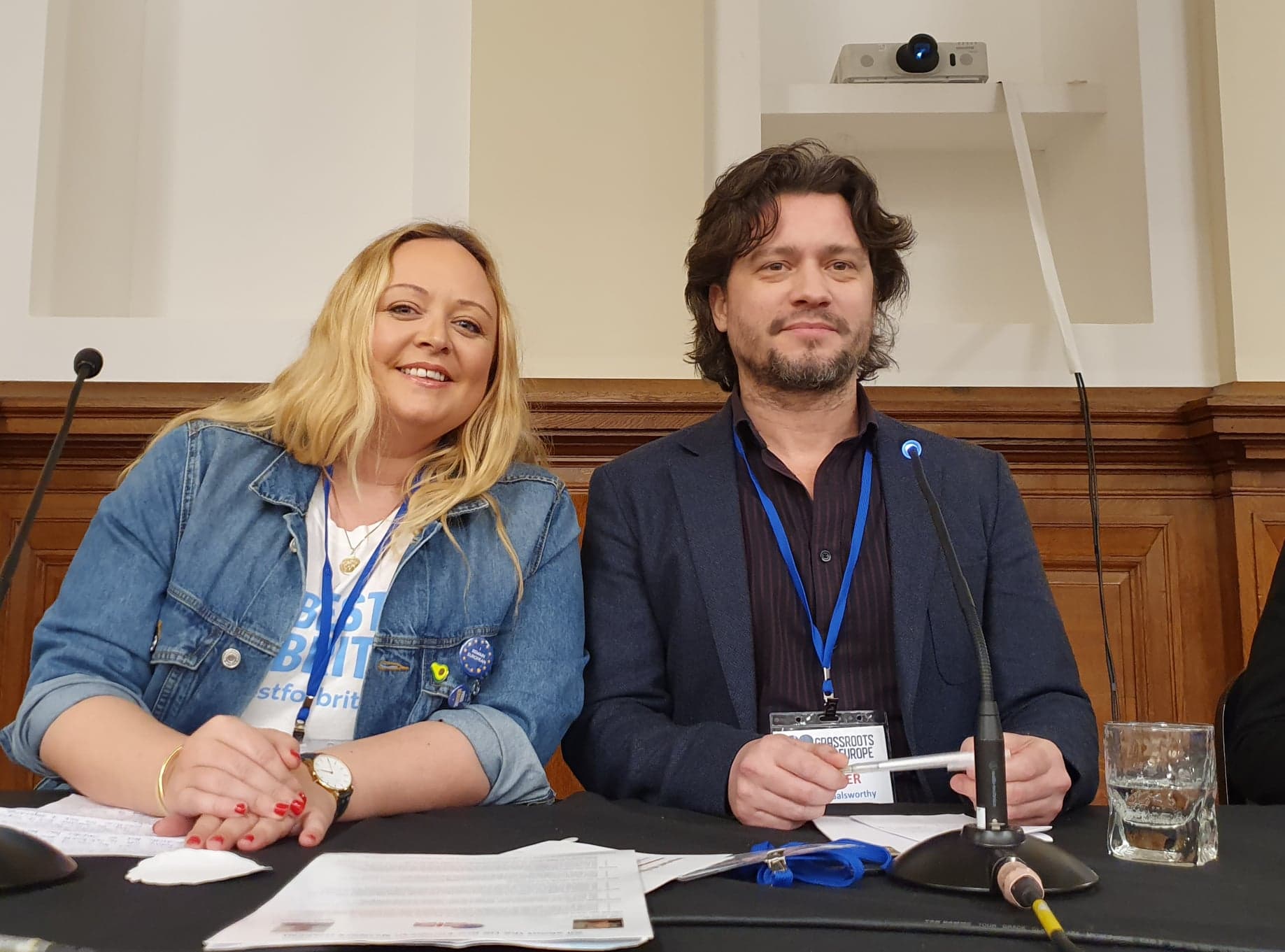
Naomi Smith and Mike Galsworthy

John Moffett: Does Best for Britain have a role lobbying the EU to influence the future relationship or do you see its role as solely holding the UK government to account? 

Naomi Smith: In the run-up to the General Election, we took a delegation of British MPs to Brussels to speak with senior counterparts from other countries, so we have form in building bridges between Britain and Brussels. Our aim is to do what is best for Britain, and that involves work behind the scenes, as well as the high-profile things we have been involved with such as marches and media appearances.

If us being a conduit between the UK and the EU strengthens the bonds between us, and accelerates the process of us getting back together, then it will have been time well spent. We are, after all, in this thing together

https://www.bestforbritain.org/
https://www.remainiacs.com/

Many thanks Naomi for taking part. Next month we are delighted to be featuring Ian Dunt, Editor of Politics.co.uk & Host of Remainiacs.

Coronavirus Info & Links

Coronavirus Info & Links

Coronavirus Info & Links

Bremain in Spain has collated a wealth of information and advice to keep you updated throughout the current Coronavirus pandemic.

This information includes basic protective methods, emergency contact numbers, and a host of useful links to reliable sources. There is also advice and suggestions on how to keep your families safe, sane, healthy, and entertained during your quarantine. We will continue to add new and relevant information as the crisis develops and welcome feedback from our members on how to improve our offering. Please stay home, stay connected, and stay safe!

You can download the PDF below.

Bremainers Ask ……. Revisited Part Three

Bremainers Ask Revisited Part Two

With the changing political landscape, Bremain invited former contributors to our Bremainers Ask feature for their thoughts on the subject. We asked them to comment on where we are now, how they see things moving forward and what we pro-Europeans should be focusing on in the future. Here’s the second update. 

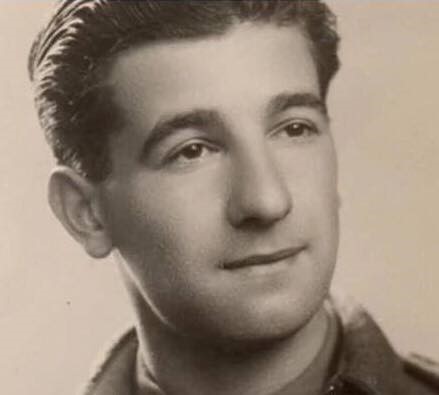
Harry Shindler

Harry Shindler MBE – Veteran Campaigner

After Brexit, what happens now? I was, and remain, against the idea of Brexit. I am not about to set out all the arguments against Brexit, but we were warned, and we didn’t heed the warnings.

There has been peace in Europe for almost 80 years – it’s never happened before. Without Brexit, it could have continued.

We have been fighting ‘the good fight’ for many years. During our campaign we have had promises made that our right to vote would be returned to us. The promise was made in general election manifestos, by three prime ministers, and Her Majesty the Queen, when opening parliament.

We must carry on our campaign, with even more determination. To all our friends and supporters, be of good cheer and keep up the good fight. As was said during the war, “we must win, and win we shall!”


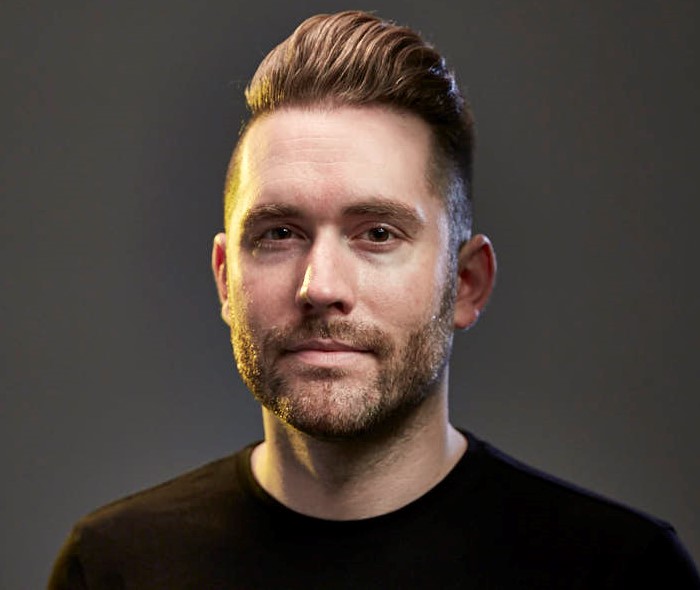
Kyle Taylor – Founder/Director Fairvote UK

It’s the morning after “Brexit,” which came with more of a “womp womp” than any spectacle. Why, you ask? Because despite the “perfect vision” metaphor suggested by the year, we’re no closer to clarity on what Brexit will actually mean. That’s mostly because the 31 January “exit day” only included exiting having any say on the future of Europe. We became – until at least December 2020 – a rule taker with no rule-making powers. The first step in “taking back control.”

Kyle Taylor

The framing of the general election result is that it was a “consensus on Brexit.” I believe it was more a consensus on a desire for clarity and certainty, even if what’s certain is Brexit. This is the major difference between the political attitudes of our European neighbours and American friends across the Atlantic: Britishness demands a stiff upper lip, even when you don’t like it. This is particularly difficult for British citizens living in the EU, who have neither clarity nor certainty – perhaps the greatest abandonment by this government of their immediate responsibilities to their citizens.

While that fight must continue, the broader strategic aim must be to let the Conservative government attempt to keep their impossible promises, waiting for the next flashpoint in the autumn. This isn’t about “I told you so.” It’s about “You told me so.” It’s clear from the failure of the Remain movement of the last three years that Brexit must be acutely felt for people to understand its true effect. Only then can we muster the nation to spend the next decade undoing the damage.


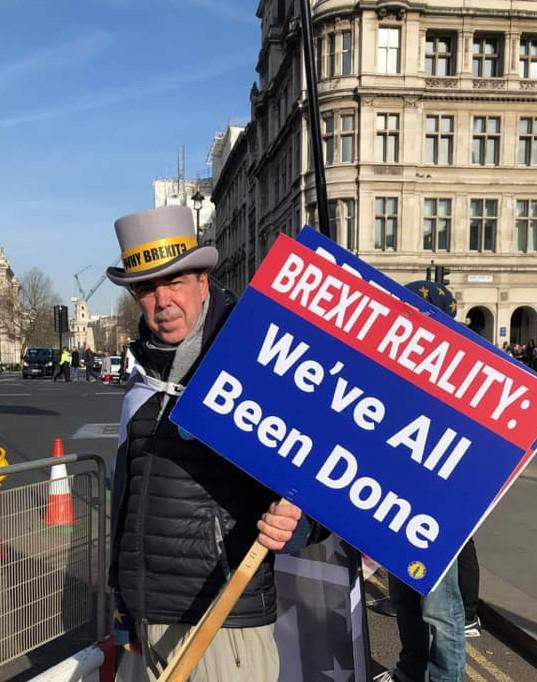
Steve Bray

Steve Bray – Mr. Stop Brexit

Social justice is very important to me and it is the reason that I took on the fight to #StopBrexit. That hasn’t changed. We have even more to fight for now.

I have never blamed the majority of people who voted to Leave. Deprived areas voted massively to Leave on the basis of promises of a better life. Why wouldn’t they? But they were lied to by the architects of Brexit who now occupy the highest posts in the UK government. 

I started the protest group SODEM (Stand of Defiance European Movement) in summer 2017 in Old Palace Yard, SW1. I stood there – at first by myself – and later was joined by hundreds of Remainers from grassroots groups across the UK and beyond, including Bremain In Spain. The name has now been changed to: Secure Our Destiny Europe Matters. 

Right now it’s important to channel our anger towards those who pushed hard to deliver Brexit – Johnson, Gove, Cummings et al and not those whose believed and bought the lies. The truth is that with #GetBrexitDone, we’ve all been DONE. But we will hold them to account. It’s important right now to focus on our local pro-EU groups, build the communities and look ahead to how, united, we can hold them to account and look towards re-joining the EU. 

I would really like to take this chance to thank everybody for their support over the last few years of the #SODEM protest outside parliament – for their support, encouragement and donations, and for standing with us at Westminster. The SODEM protest continues every Wednesday that parliament sits for PMQs because somebody has to #HoldThemToAccount. 

Many thanks to our contributors this month. Watch out for Part Three next month. 

March in Malaga – Bremain Annual Strategy Meeting & AGM

March in Malaga – Bremain Annual Strategy Meeting & AGM

On Saturday 7 March, the Bremain Council gathered together for our annual strategy meeting, to discuss every aspect of Bremain business. The most important agenda item was determining our goals, aims and strategies for our short/medium term future. We came up with a comprehensive list for the rest of 2020, and determined that with the unpredictability of Brexit, looking any further ahead at this stage would require a much more powerful crystal ball!

Other topics discussed included council roles and responsibilities, our current campaigns – #Letters2Europe and #VotesForLife, merchandising and fundraising, a membership drive, collaborations with other groups, and regional group activities.

The council also spent time revisiting our website, Facebook group, Facebook pages and Twitter account descriptions to update all relevant information in line with the new post-Brexit landscape, and to reflect our new aims and strategies.

On Sunday 8 March, the council were joined by Bremain in Spain members for our Annual General Meeting. Bremain accounts were introduced, Chair and council members were re-nominated and voted for unanimously, and the Bremain Annual Report was presented.

The Annual Report included details of membership numbers and growth, affiliations, a review of 2019 including our achievements, and our newly agreed goals, aims and strategies for 2020.

The audience took an active role in the meeting, with animated discussions and lots of questions on a variety of topics including: Votes for Life campaign suggestions, merchandising ideas, sponsorship, expanding newsletter readership and extending our reach in Spain. All attending members then joined the council for lunch in the garden, where the discussions continued in the sunshine.

Thank you to all those that attended, for your ongoing support, and for the great feedback we received following the event – you helped make it an enjoyable, interesting and successful afternoon. See you next year!

Many thanks to Jim Westlake who took all the photos.