Bremainers Ask – Siobhan Benita

Bremainers Ask – Siobhan Benita

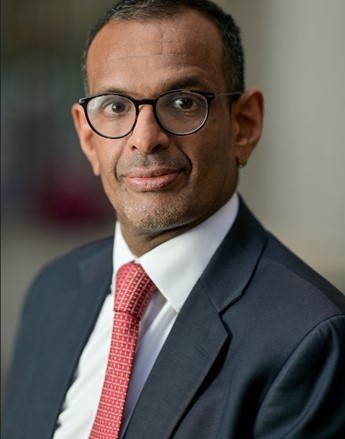
Siobhan Benita was a former senior civil servant who left Whitehall to campaign for better politics.  Passionately opposed to Brexit, she joined the Lib Dems on the morning of the EU Referendum result and became a leading voice in their anti-Brexit movement.  Now politically homeless again, she remains active on social media and spoke at the first National Rejoin March in Autumn 2022.  Siobhan has a French husband and two bilingual daughters.

David Eldridge: Do you foresee the UK rejoining the EU? If so, what would be the timescale and steps on the way?

I absolutely foresee the UK re-joining the EU. As time passes, the economic damage that Brexit has caused for the UK will become increasingly obvious and fewer and fewer people will be prepared to defend it (or even admit they voted for it). We are already seeing a shift in the narrative with papers like The Telegraph and Daily Mail running articles highlighting some of the negative consequences of Brexit. In addition, pressure for the UK to re-join will come from younger generations as they reach voting age and want to access all the freedoms that we previously enjoyed as part of EU membership.

Given that I would like us to re-join the EU tomorrow, the timescale will never be as quick as I want but I do think it’s possible for it to happen in a matter of years rather than decades. In terms of the main steps along the way, the immediate priority is to get the Tories out with tactical voting at the next general election. I also believe that we desperately need electoral reform and a move to a more proportional system should ensure that we never again have a government with so much power but so little reflection of the voting public as a whole.

Mike Phillips: The Retained EU law bill will scrap thousands of EU laws, many of which were proposed by the UK and all of which were scrutinised by them. This imposes a massive task on civil servants. How do you view the risk of lack of Parliamentary scrutiny resulting in loss of previously agreed common standards?

The Retained EU Law Bill is going to impose huge burdens on already stretched civil servants as they attempt to meet the Government’s deadline to review all EU legislation by the end of 2023. As a former civil servant myself, I can honestly say that the amount of resource that this needless and entirely self-inflicted exercise will require – at a time when the civil service needs to be tackling huge challenges such as post-Covid, economic recovery, getting our public services back on track or meeting our climate change obligations – is both absurd and indefensible.

The fact that the Bill will allow ministers to revoke and replace EU laws with little or no parliamentary scrutiny is a major concern. Not only is this undemocratic but it will also create serious uncertainty for all stakeholders, including employers, businesses, regulators etc. And let’s not forget, that all of this effort will, ultimately, either produce no change or will actually create new red tape and regulatory burdens, especially for people who still want to trade or work with EU organisations. It’s bonkers.

Michael Soffe: Where, oh where, can those of us who feel “politically homeless” turn to? Do you see the creation of a serious full-on, rejoin party ever being created and funded?

 This is the million-dollar question that I have been asking myself for years now! I am optimistic that a serious, re-join party will emerge over time. Indeed, as polls increasingly show that a growing majority of the public now believe Brexit was a mistake, the creation of a mainstream re-join party is surely a matter of when, not if. Whether this will be a new party or, for example, a future Labour party dropping its ridiculous and unsustainable “make Brexit work” stance, I’m not so sure.

In the meantime, there are many ways that politically homeless campaigners like myself can engage, including: amplifying the voices of individuals who do publicly advocate for re-join, supporting the ReJoin Party and other fledgling movements in their grassroot efforts and taking part in movements like the National Re-join March, which took place in London in Autumn last year and which will be touring the country over the coming months. Despite its many flaws, social media has helped me to connect with other re-joiners and to keep the re-join narrative going. It can be exhausting and disheartening campaigning for something you feel so strongly about when every day the Government seems intent on taking the UK further down a nationalistic path and Labour isn’t prepared to call out Brexit for the disaster that it is, so being part of a re-join community (even a virtual one) helps to keep me energised and sane!

Anon: If you could take over the job of PM, with so many pressing issues facing the country, where would you start?

As PM, my first priority would be to bring about electoral reform. Our two-party system is broken and is no longer serving the national interest or reflecting how the public actually feel and vote. I would also prioritise reforming parliament. We have seen under the Tories that Ministers can break the ministerial code and the Nolan Principles of Public Life with little or no consequences and that must change if we want better politics and better politicians. The Lords also needs reform. There should, for example, be transparency around appointment decisions and fixed terms replacing lifelong peerages.

With regard to policy, I’d initiate a fundamental shift in funding with more resource going into prevention, such as early years provision and public health because this would create more efficient and effective public services in the medium to long term. And, given that tackling climate change is by far the single biggest challenge facing us today, I would require every policy to be considered through a net zero lens.

Peter Corr: The pro EU community is said to be “full of old white people”. Do you feel this to be true, and if so, what can we do to promote the Rejoin campaign to a wider, more diverse community to win support?

Unfortunately, the accusation that the pro-EU community is “full of old white people” can sometimes feel justified when you look at who – traditionally – the most prominent pro-EU individuals have been. That said, there are some fantastic, high-profile campaigners such a Femi Oluwole and Marina Purkiss who certainly don’t conform to the stereotype. The other accusation that I hear quite often is that the pro-EU community is very middle class.

The bottom line for me is that Brexit will make everyone in the UK poorer, regardless of age, ethnicity or class background. And, whilst Brexiteers were sadly quite successful at persuading many voters that they would be better off post Brexit, the lies are now beginning to crumble and the economic reality is becoming clear. As with any issue, the pro-EU movement will be stronger and more impactful if it is inclusive, reflecting the UK’s diverse population. As we edge towards the possibility of re-joining the EU, having clearer messages, delivered by a wide range of people, on how this will benefit everyone will be crucial and the work to engage communities and community leaders should be happening now.

Lisa Burton: I note that you joined the Liberal Democrats on the morning of the Brexit Referendum result, as they were the only party with a clear rejoin message at that point. How do you feel now about how the party handled Brexit and their position now?

 This is a tough question for me to answer because I have a lot of friends in the Liberal Democrats. We desperately need a strong, centre-ground party in the UK and I would like to see the Lib Dems doing well in the next election. All that said, however, I am extremely disappointed in the way they handled Brexit and in their current position.

In the run up to the referendum the Lib Dems were so unequivocal in their pro-EU stance. Their “Bollocks to Brexit” approach gained them profile and traction, and consequently they were successful in getting 19 MEPs elected to the European Parliament in 2019. In contrast, Lib Dem MPs today are virtually indistinguishable from Labour in their stance on Brexit. I understand the thinking; where the Lib Dems see their best chances of winning seats at the next election, they are largely Tory-facing. Nevertheless, I believe they have made a strategic error in rowing back from their clear, pro-EU position.

As a party, they are currently at around 9% in the polls and this hasn’t budged since we left the EU, despite their reticence to talk about Brexit. Unlike Labour, they need to take some risks. There was an opportunity to be seized in scooping up the millions of people like myself (and disillusioned Labour and Tory voters) who are desperate to throw support behind a serious a re-join force but the party chose not to seize it. What a shame.

Next month: Russ Jones is an author and political commentator with over 277k followers on Twitter ( @RussInCheshire) where he regularly reports on #TheWeekInTory. He is currently writing the sequel to his book ‘The Decade in Tory’. The new book will be entitled ‘Four Chancellors and a Funeral”.

If you wish to submit a question for consideration, please email it to us enquiries@bremaininspain.com no later than 8 March.

Bremainers Ask….Revisited

Bremainers Ask….Revisited

To start the year, we asked three former Bremainers Ask contributors to tell us about their highs and lows for 2022 and their hopes for the coming year. This is what they had to say.

Alexandra Hall Hall is a former British diplomat who resigned from the Foreign Office in December 2019 after concluding she could no longer represent the British Government’s position on Brexit with integrity. She is now a frequent commentator and writer on British politics and foreign policy post-Brexit. You can read Alex’s earlier contribution to Bremainers Ask from May 2022 here

The low point of 2022 for me was without question Russia’s invasion of Ukraine. By the same token, the highpoint was seeing the courage of the Ukrainian people in refusing to yield to Russian aggression, under the inspiring leadership of Ukrainian President, Volodomyr Zelensky.

I was glad to see the UK respond so robustly to Russia’s invasion. Though I might question some of the motives behind Boris Johnson’s decision to champion the Ukrainian cause, I genuinely believe the British Government has shown impressive leadership on the issue. Johnson’s own visit to Kyiv in the spring undoubtedly boosted Ukrainian morale. I am willing to give him credit for that. I was also glad to see the UK work constructively with the EU and NATO to galvanise an effective international response, including by coordinating sanctions against Russia, and conducting a long overdue clamp down on Russian money and influence within the UK.

I was disappointed this did not translate into wider reflection within the British Government on our post-Brexit relationship with European partners. I had hoped that cooperation on Ukraine might prompt greater willingness to put UK-EU cooperation on broader foreign and security policy matters onto a more structured footing. Instead, many Brexit advocates argue it is proof that the UK can successfully coordinate with the EU from the outside, even though such coordination is now far more time-consuming and burdensome, and we have lost our direct influence on EU decisions.

I had also hoped that the need to stay united on Ukraine might persuade the British Government to adopt a more constructive approach on Northern Ireland. Unfortunately, the UK persists with its threat to renege unilaterally on certain aspects of the Northern Ireland Protocol unless it is renegotiated to British satisfaction. While the mood music on this issue has improved, it remains to be seen whether Sunak will be willing to face down the hardliners in his party in order to strike a deal.

From a purely domestic perspective, 2022 was the year of British politicians behaving badly. I do not need to recount all the shameful examples. The UK’s global reputation, already badly damaged by the incompetent, dishonest handling of Brexit, took a further battering. The disastrous Truss premiership was the absolute nadir.

At least with Rishi Sunak as Prime Minister, a veneer of normality has returned to British politics. But just as Donald Trump’s Presidency still casts a long shadow over American politics, so the continuing influence of Boris Johnson and his ilk casts a long shadow over the Conservative party and British politics. Like his predecessors, Sunak seems to remain afraid of the extreme wing of his party, and willing to compromise again and again in an effort to appease them.

As a result, even though restoring the British economy is Sunak’s priority, he is unable to pursue some of the easiest ways to achieve this, such as by relaxing immigration to address UK labour shortages, or by staying aligned to EU standards in order to facilitate UK-EU trade. Instead, he is pressing ahead with the Retained EU law bill to shred all outstanding EU legislation on our statute books by the end of the year. Not only does this risk many important environmental, consumer, worker, health and safety protections being lost, without time to draw up adequate replacements, it also risks UK businesses being left without a stable and predictable legislative environment within which to operate. Even worse, the draft bill gives unprecedented powers to the Government to draft new laws without proper parliamentary  oversight, using so called Henry VIII powers, representing a further erosion of British democracy.

I wish I could be more optimistic for 2023. Instead, I fear the war in Ukraine will grind on with more bodies and blood, as the West still hesitates to send Ukraine all the weapons it needs. I also fear that Sunak will remain in thrall to the right wing of his party, and that Boris Johnson and his supporters will also constantly try to undermine him in hopes of engineering Johnson’s return. British politics risks continuing on an unstable, damaging path.

For me, the big question for 2023 is whether British opinion will finally swing sufficiently decisively against Brexit, that it will give the Labour  party the political space it needs to adopt a stronger position in support of UK-EU cooperation. Opinion polls suggest that more and more British voters are coming to regret the decision to leave. Our challenge is to demonstrate how top voter concerns like the poor state of the economy, the NHS and other public services, are directly related to that decision to leave.

2023 is also the year in which we need to nail the Brexiter narrative that if Brexit is not going well, it is only because it was poorly implemented, or “thwarted” by Remainer elites, or because Ministers have yet to take proper advantage of the so-called opportunities of Brexit. Brexit never was and never will be the solution to the UK’s problems.

Gavin Esler is an award-winning broadcaster, novelist and journalist. His most recent book is entitled “How Britain Ends – English Nationalism and the Re-birth of Four Nations”, and he is currently working on a new book explaining how, as a nation, we can do better. You can read Gavin’s earlier contribution to Bremainers Ask from April 2022 here

It’s always daft to write history when you are still living it, but the past year has been so crazy I’m happy to give it a go. The year 2022 will be seen by future British historians rather as Olaf Scholtz spoke of his country when he became Germany’s Chancellor. The United Kingdom is at a “Zeitenwende” – a turning point. Everything seemed to change, including our three prime ministers in four months and the resignation of at least 60 government ministers, plus the notorious Kwasi Kwarteng political suicide note. He called it a “fiscal event,” forgetting that a cardiac event is to most of us just a heart attack. The good news was that we managed to change our head of state and head of government almost simultaneously with no revolution, gunfire or rioting. The worst that happened was a leaky fountain pen and a temporarily grumpy King. I felt sorry for King Charles at that perfectly normal human moment when he was ambushed on TV by an inky malfunction.

The bad news however was everything else, and a group of failed politicians it was impossible to feel sorry for, especially Matt Hancock whose bush tucker and other trials did not seem stressful enough. In Roman times he would not have been on I’m A Celebrity. He’d have been forced on to I’m a Gladiator and fed to hungry lions. But the event of the year – as Oscar Wilde might have said – is that for the British people to lose one prime minister might be seen as unfortunate. To lose two is carelessness. In fact, we have lost five prime ministers in six years and none of them struck me as up to Gladstone and Disraeli standards.

What was exposed ruthlessly in 2022 is not merely the characters of some very strange people who rise to the top in politics. It’s a failed system of governance where those in power seem to make up the rules to suit themselves. Liz Truss became our prime minister because around 80,000 people who pay just over £2 a month to join the Conservative party decided she was The Right One. Or Far Right One. Rishi Sunak became our prime minister because Conservative MPs decided trusting their own party members was a disaster, so they chose him. Boris Johnson became prime minster because he undermined his two immediate predecessors and the party whose supposedly “secret weapon is loyalty” rewarded his disloyalty with the top job.

The one serious bit of good news of 2022 was that the B-word returned in public speech. Brexit, that greatest self-inflicted wound that we British have inflicted upon ourselves in recent years was finally regarded as something which could be discussed in polite company. My hopes for 2023 therefore include the real possibility that the unravelling of Brexit will become so obviously clear that the leadership of the Labour party will aggressively try to unpick its worst aspects even if they pretend to be living up to what was once supposed to be “the will of the people.” Many of the people who voted for Brexit have inevitably changed their minds.

My second great hope is that we start to remember what is meant by patriotism. To be a patriot is not to sit in front of a Union Jack and witter endlessly about the non-existent benefits of Brexit. To be a patriot is to want the best for your country, and to avoid making British citizens, wherever they may live, poorer and experiencing more difficulties in their lives. By that definition Brexit is one of the least patriotic events in British history.

Otto English is the pen name of author and journalist Andrew Scott. He has written for the Independent, New Statesman, Politico and Byline Times. His book “Fake History” was published in June 2021, and he is currently working on a sequel. You can read his earlier contribution to Bremainers Ask from September 2022 here

Some years ago, while down an absolute rabbit hole of research, I came across an old interview with the author Graham Greene. Unfortunately, I cannot find the recording now but suffice to say that Greene came across as extremely grumpy and when prodded on why that might be, complained that he was very easily bored. He went on to describe an incident where, while on a boat in the Suez Canal, he and the rest of the passengers came under fire from the shore.

“At first,” Greene said – and I paraphrase – “one felt an immense fear and excitement – but soon it gave way to boredom… it was just very, very boring”.

I remember wondering at the time how anyone could ever think that dodging bullets in the middle of the Suez could ever be described as ‘boring’, but as the last eight years, of at times cartoonish events, have unwound, I think I’m beginning to get it.

Living through extraordinary times can get very boring indeed and ever more, the country has felt like an absurd soap opera in which a team of frenzied writers have been cooking up crazy plot lines.

Since the Scottish independence referendum in 2015, the once United Kingdom has reeled from one crisis to another, like a drunken bear fighting a donkey on acid, in a glassware shop. In hindsight, the Scottish referendum was but an amuse bouche for the uncivil war of Brexit that followed in 2016. That disastrous folly wrecked our global standing, screwed our political institutions and wreaked economic turmoil on us all. What followed whipped back the curtain on the libertarian lies of British exceptionalism – and the myth that we ‘don’t need the EU’. But in the process, it also took a sledgehammer to the old political consensus.

In all the chaos that followed, whether that be the inanity of the culture wars, the misery of Covid, lockdowns, the migrant crisis, the on-going disaster in Northern Ireland or the tsunami of other miserable stories lost in its wake, people’s positions have been largely defined by how they voted in that referendum.

At the same time, the pandemic and war in Ukraine have been a salutary lesson in how very dangerous it is to take our certainties for granted. World events can turn in a moment and threats to our peace and security can come out of nowhere. All of this has, I believe, irrevocably changed the political landscape. Britain’s new political lines are no longer defined by left, right and centre, but by ‘pragmatic and progressive’ versus ‘chaotic cloud cuckoolandism’. The good news is that, if polling is to be believed, most voters now sit, ever more, in the ‘pragmatic and progressive’ camp.

As we’ve gone through Prime Ministers and Chancellors faster than most of us get through underwear in a heatwave, this country seems to have edged ever more back towards a general consensus – that we want to be a grown-up country once more.

So, call me a crazy optimist and cross your fingers very tightly, but I’m beginning to think there are brighter times ahead. Happy New Year.

Coming next month

Former London Mayoral candidate and senior civil servant, Siobhan Benita, left Whitehall to campaign for better politics.  She is passionately opposed to Brexit and spoke at the first National Rejoin March in London in Autumn 2022. Siobhan has a French husband and two bilingual daughters.

If you wish to submit a question for Siobhan for consideration, please email us before the 7 February.

Hunt for optimism

Hunt for optimism

The chancellor’s economic plans for growth require a good dose of optimism, a dollop of delusion and some rose-tinted spectacle

Sue Wilson MBE bySue Wilson MBE

On Friday morning, Chancellor Jeremy Hunt outlined his economic plans for growth to a business audience in London. In his first major speech since the Autumn statement in November, he promised to use “Brexit freedoms” to boost economic growth in the UK.

According to Hunt, Britain is “poised to play a leading role in Europe and across the world” and the government’s plan for growth “is necessitated, energised and made possible by Brexit”. All that’s required is a good dose of optimism, a dollop of delusion and some rose-tinted spectacles.

Not all doom and gloom

Hunt criticised the media for suggesting that Britain is facing an “existential crisis” and “teetering on the edge”. The “gloom” being expressed about our country’s economic outlook was “based on statistics that do not reflect the whole picture”. Statistics, it seems, can only be relied upon when they support the story that the government is trying to peddle. In a desperate attempt to find some evidence of growth during the government’s time in power, Hunt could only state that the UK had “grown faster than France, Japan and Italy” by going back to 2010.

Without a hint of irony, Hunt suggested that “confidence in the future starts with honesty about the present”. Not sure when, exactly, that honesty about Brexit is expected to start, but there certainly was little to be found in this speech. Or any mention of so-called Brexit benefits.

When challenged to concede that Brexit was causing problems for business, Hunt admitted there had been some “short term disruption”, but said it was wrong to focus on those issues “without looking at the opportunities”. Whether business owners are cognisant of those unidentified opportunities, or would agree that three years of disruption could be classed as ‘short term’, is another matter altogether.

Hunt’s cunning plan

The plans for growth seem to rely on three things, all supposedly made possible by Brexit and based on “British genius” and “hard work”. The first – “restraint on spending” – effectively means £100bn being cut from government spending over the next two years. But balancing the Treasury budget does not equate to balancing the economy – or levelling-up, for that matter – and public services need investment, not further cuts.

Then we have Hunt’s plan to turn the UK into “the world’s next Silicon Valley”. Not exactly a new idea, and we’re hardly overrun with recent examples of entrepreneurial success. Hunt also aims to exploit “the freedoms which Brexit provides” and raise productivity levels. As with all other elements of his cunning plan, the details of how and when were left entirely to our imaginations.

The reaction

If Hunt was expecting wide coverage for his speech, he was to be disappointed. The leading business channel in Europe – CNBC – didn’t even bother to cover it.

The British Chambers of Commerce (BCC) highlighted the failure to announce detailed proposals as a lack of “meat on the bones of his vision”. The BCC also drew attention to the fact that energy costs and exports had not been mentioned. Although Hunt’s plan was a start, they said, we have moved “no further forward”. They ended their response by suggesting that the chancellor read the BCC’s own business manifesto “for realistic policies to help get back to growth”.

Labour’s shadow chancellor, Rachel Reeves, agreed with Hunt that the UK has “so much potential”. Unsurprisingly, she claimed only her party could seize the opportunities and pointed out the economic failings of the last 13 years of Tory government.

Sarah Olney, the LibDems Treasury spokesperson, compared the chancellor’s comments to “an unfaithful partner asking for yet another chance”, adding “why should we trust them again?” Why indeed! The government’s record, she added, was “nothing less than a shambles” and the public would see through this “desperate attempt” to rewrite history.

On the government website, Hunt’s speech is described as “his vision for long-term prosperity in the UK”. A long-term view will be of little comfort to those feeling the effects of the cost-of-living crisis right now. Or to businesses suffering from additional red tape and expense thanks to Brexit. Considering that the Conservatives are likely to be kicked out of power next year makes such claims rather pointless. No wonder so few bothered to pay much attention.

Collins English dictionary defines optimism as “the feeling of being hopeful about the future or about the success of something in particular”. Not for the first time, we are being asked by the government to ignore reality and be optimistic about our country’s future. We are being entreated to believe in the cult of Brexit, despite all the evidence of economic damage and the government’s own appalling record of management. It might have worked six years ago. It might even have worked three years ago. It won’t work now.