
Bremainers Ask Revisited
This month we asked some former Bremainers Ask contributors to tell us their hopes and fears for 2025. This is what they had to say
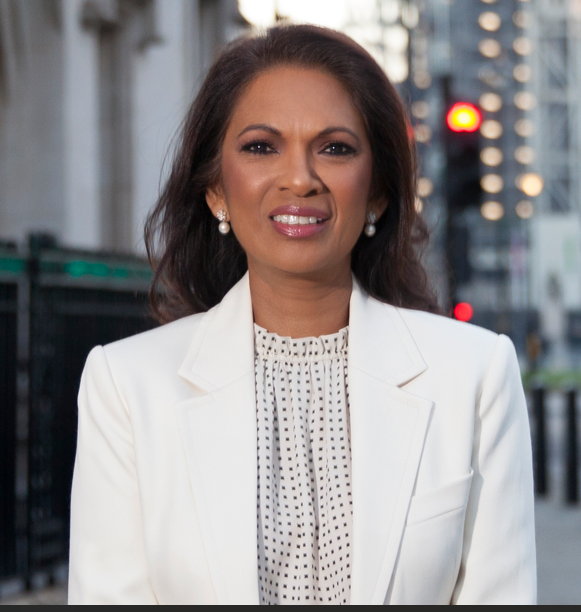
Gina Miller, Co-Founder of SCM Direct and MoneyShe, Activist and Campaigner
I was never one for making predictions, and even less so post-2016. But as we enter 2025, few would deny that the global outlook is a complex web of cautious optimism and pressing challenges. While there are glimmers of hope, there are equally ominous clouds on the horizon that cannot be ignored.
Politically, the world order appears fragile, and the cracks are widening, which I fear is undermining the cooperation on issues that demand urgent attention—climate change, security, and migration among them. Security threats from collaborations between Iran, Russia, and North Korea loom large, posing serious risks to Europe and the UK. Threats that underscore the urgent necessity for the UK to reduce the barriers, bad faith and economic, security and cultural distance with our closest neighbours. To work with creativity and courage to strengthen our alliances, protect Europe and the UK, and foster a unified approach to safeguard stability.
Already we have seen the spectre of Donald Trump’s second term as US President deepen these anxieties, with his return to power, surrounded by some of the richest, most powerful billionaires in the Western world, ushering in an era of plutocracy. His transactional and often divisive approach to global diplomacy jeopardising decades of hard-won alliances, the erosion of trust in multilateral institutions, and his disdain for addressing climate change are already sending shockwaves through the international community. Economists are also fearful that his love of tariffs and trade wars is likely to increase economic uncertainty, with a breakdown in the world trading system, and lower productivity growth, which will hurt the poorest in society and again fuel populism. I fear that a world order already reeling from structural social and economic challenges risks tipping further into chaos due to his leadership.
Closer to home, the rise of the far right, amplified by social media platforms, algorithms, and the influence of billionaires, poses an existential threat to all our democracies. AI-driven disinformation campaigns and the deliberate fuelling of societal divisions are energising extremist ideologies and further eroding public trust in our democratic institutions. Those exploiting the grievances of people suffering from the cost-of-living crisis, job losses, and decades of poor political decisions must be confronted. If left unchecked, I am very fearful that this trend threatens to undo the social, democratic and multicultural advancements we have fought so hard to achieve since the second world war.
But while these fears and dangers are real, I am heartened by the resilience I see in our younger generations. A recent YouGov poll conducted for the European Council on Foreign Relations revealed that nearly seven in ten Britons, including a majority of former pro-Brexit voters, support a scheme allowing 200,000 young people from the UK and the EU to travel, study, and work freely in each other’s countries for up to four years. Such overwhelming support highlights a growing recognition of the importance of international collaboration and cultural exchange.
This shift is especially encouraging at a time when public discourse is increasingly influenced by misinformation. The growing threat of opinion replacing fact is a pressing issue for our society and democracy, as a democracy cannot function if its citizens are misled or manipulated by falsehoods. Yet, amidst this, the younger generation’s pushback against fake news, social media manipulation, fast fashion, greed, gives me hope. Their willingness to question, challenge, and demand accountability may be the key to reversing these dangerous trends – BUT only if they are encouraged to be activist citizens. To stand up, speak out and fight back – our stewardship as the older generation is to help them do just that.
Another source of my optimism lies in the resilience of communities. After the devastating summer riots in the UK last year, the way people came together to rebuild and support one another was a testament to the power of collective action. Similarly, the growing momentum behind grassroots movements—advocating for climate action, social justice, and political reform—demonstrates that change often begins at the local level.
Still, my fears linger. Inequalities continue to deepen, environmental degradation accelerates, and democratic norms are increasingly under siege. The cowardice of those in positions of power—those who refuse to make difficult decisions or take meaningful action—remains a significant obstacle to progress.
As we navigate 2025, the path forward will not be easy. But I remain hopeful. I believe in the power of communities, in the potential of young people, and in the ability of humanity to rise to the occasion when it matters most. To secure a fair, sustainable, and tolerant future, we must demand better from our leaders and from ourselves. It is a time for bold action, driven by collective purpose, to ensure that hope triumphs over fear.
If there’s one thing we’ve learned since 2016, it’s that we cannot afford to be complacent. The stakes are too high, but the future is ours to shape.
Professor Chris Grey, Professor of Business and Management Studies, author and authority on Brexit
From a Brexit standpoint, my main hope is for continued improvements in the tone of UK-EU relations, and for these to deliver some concrete agreements. I say agreements in the plural, as I do not envisage one big, single ‘new deal’, but incremental changes.

That matters, not least because until those forces are faced down any prospect for substantial improvements in relations with the EU will be limited. Why should the EU agree to too much if it is liable to be reversed by, potentially, the next government? But it also matters because the UK polity needs, collectively, to have an honest discussion about Brexit. It is now obvious that it has limited public support, and even those who advocated Brexit have to admit that it has not remotely delivered on the promises they made for it.
I think it is useful to compare this with the Munich Agreement and the Suez Crisis. Both were deeply divisive issues in their time, yet both are now almost universally accepted bywords for shameful failure. Almost no politician now would be scared to denounce them. We have to get to that point with Brexit and the sooner the better. It isn’t enough for the government just to talk about the ‘botched Brexit deal’ delivered by the Tories. Brexit has to be acknowledged as a historic strategic error, and for that to be the consensus view of all but a fringe minority, before any real change will become possible.
The extent of that error should become even clearer this year with the advent of what looks certain to be a highly disruptive and de-stabilizing second Trump presidency. That will underscore the fragility of Britain’s post-Brexit place in the world, as a medium-sized power and yet detached from any major economic or political bloc.
On the other hand, the incoming presidency is highly likely to give new energy to populist movements, perhaps especially in the UK. This inevitably mitigates against a domestic consensus about the error of Brexit, and, in turn, makes it more likely that the government will continue to be low-key and almost apologetic for any small improvements it makes. It is also quite likely that the government will try to navigate the Trump presidency in the hope that, eventually, things will revert to ‘business as usual’.
Overall, then, my hope for 2025 is the UK government will recognize and rise to a moment of fundamental strategic re-alignment. My fear is that it has neither the imagination nor the capacity nor the courage to do so.
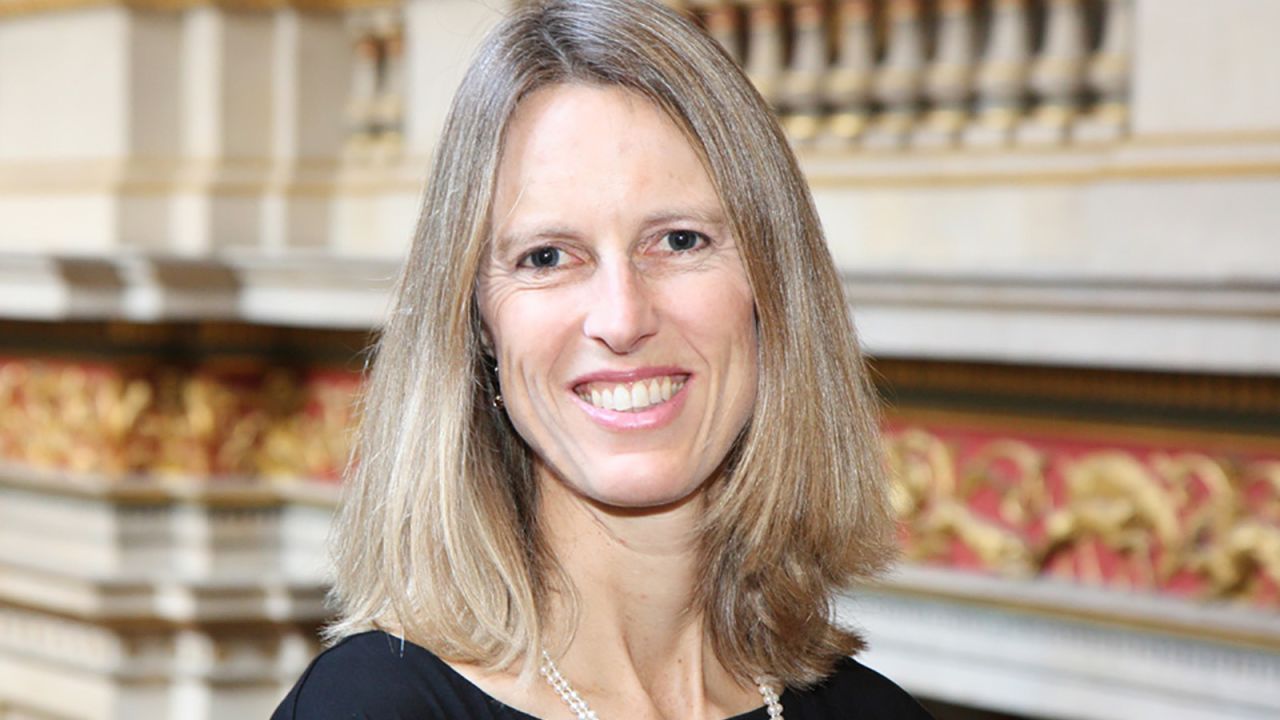
Alexandra Hall Hall, Former British diplomat and Brexit Counsellor to Washington
It’s hard not to feel depressed at the start of 2025. This is not because our enemies have multiplied or become worse, but because the world’s most important ordering power has gone rogue.
It’s hard to find much reason for hope, especially when the Supreme Court is in his pocket, and both Republicans and Democrats seem so utterly cowed by Trump, that they are offering little meaningful resistance, even when Trump tramples over their constitutional rights, such as with his order delaying implementation of Congress’s ban of TikTok, or suspension of foreign aid which they have authorized.
But these are early days. Eventually, Trump’s excesses will cause a backlash. His administration lacks ideological coherence. He has surrounded himself with incompetent people with giant egos, who will inevitably come into conflict with Trump and each other. For example, Elon Musk has already fallen out with Trump’s consigliere, Steve Bannon, and the man supposed to co-lead the new Department of Government Efficiency, Vivek Ramaswamy. Last week he publicly attacked Trump’s AI initiative.
Trump’s economic policies, especially his plan to slap tariffs on trading partners around the world, spell disaster for American businesses and workers, and will drive up inflation. His immigration policies will disrupt businesses reliant on cheap labour. Ugly scenes of immigration raids in offices, schools, and churches will cause revulsion.
Lawsuits will impede his most egregious policies, such as his attempt to overturn birthright citizenship, enshrined in the Constitution, or to fire federal workers without due process. Governors will push back against attempts to interfere with states’ rights.
His bullying foreign policy may cause some short term wins, such as his muscling of Israel to sign a ceasefire deal with Hamas, and insistence that allies spend more on their own defence. But they will not produce lasting results. They will instead reduce goodwill towards the US, embolden adversaries, and open the way for China to fill the gap left by American retreat from the world stage.
Eventually, even members of Trump’s own party, contemplating their re-election prospects, may find some spine.
Nick Harvey, Chief Executive – European Movement UK
In 2024, Britain replaced a zealously anti-European British government with one more benignly disposed to our European neighbours. What this means in practice will be largely determined during 2025.

A deafening silence is coming out of London about what we do want. By the time political leaders gather for smiles and photos, serious work in negotiating a new understanding must be long completed. With a union of 27 member states, the agenda needs to be set, diplomatic groundwork concluded, and ‘turf rolled’ in capitals, parliaments and media across Europe. Wrinkles must be ironed out before political leaders turn up for the handshakes.
This process should be 50% complete by now to achieve much, but there is no sign of anything. We just hear a kneejerk ‘no’ in Whitehall. We knew the customs union and single market were ‘red lines’ but why on earth rule out a youth mobility scheme almost universally popular with voters and having tangible benefits for our economy? They must embrace this – and fast.
Donald Trump’s return is the other significant development. We must judge him by what he does, not what he says. He sprays wild rhetoric around as a negotiating tactic. He hopes to resolve the Ukraine war by manoeuvring Putin and Zelensky into a deal. This will be difficult.
Albeit slowly and at terrible cost, Putin is winning – why make a deal when time is on his side? And if Ukraine accepts Russia’s land seizures as the price of peace, how can they or their neighbours believe Putin will stop there and not come back for more? Any deal must accept the shrunken Ukraine joining both the EU and NATO, with European NATO forces moving up to the new border even if America isn’t interested.
Trump is deadly serious about tariffs. He objects to trade deficits with other nations. He will impose tariffs based on those deficits. Here we have a ticklish problem. UK-US trade is uniquely well balanced – a slight advantage to America in 2023, potentially to Britain in 2024. So, he may impose low – or no – tariffs on us, while stinging the EU. This will cause UK-EU friction which we can do nothing about – we can hardly volunteer to pay higher tariffs which America isn’t charging.
My final fear is on climate change – the greatest threat the world faces. Trump has pulled America out of the Paris accords and right-wing EU governments are trying to erode Europe’s lead on this. So far, the EU Commission is holding fast, but the threat of watering down is real. Are we really going to look to China for a global lead on this? That really is scary!

David Henig, Leading UK authority on international trade policy
As we approach a decade from the Brexit referendum, UK debate about the EU remains largely immature and unrealistic. That’s where I hope to see change, without which there’s little prospect of improving relations significantly.
In other words, they are saying the UK is so weak it will have to do exactly what the EU asks. Not exactly a vote of confidence in their own project.
If only this wasn’t mirrored on the pro-EU side, whose discussions on the theoretical possibility of rejoining insist that there would definitively be no opt-outs. Perhaps that’s right, but it is the same expectation that the UK has no power.
At the same time, we hear suggestions that the UK is also tremendously strong. So much so that the EU would definitely want us back as members, or that we bestride the world doing deals.
Dull though it may be, the reality of the UK as a middling power with some negotiating capacity, but less than that of the EU, seems to be rarely spoken. Until that’s understood, we’ll just keep going round in circles.
Also, how have we not learnt that the EU is a political and legal entity where rules are important but can be flexible? Again, pro and anti-EU camps seem similar in thinking it is much more, a global salvation or evil empire.
Less talk of UK red lines obstructing progress would also be helpful. Every country has their own lines, this is absolutely normal, also that they can and will evolve. What’s more important to the EU is what has rarely happened, a good-faith negotiation. That will open the door to more.
Fault isn’t entirely on one side, and we can criticise some in the EU for a negative approach to a new government particularly in negotiating positions on youth mobility and SPS. But then we’d also have to complain about a UK government that took some convincing there wasn’t an automatic renegotiation in 2026 and doesn’t seem to realise it has to shape the relationship through public discussion of objectives. Without which Brussels just sees the same old UK, scared yet somehow wanting barriers removed.
There’s room for development all round. That includes me, for while I’m grateful to hear that Brussels thinks I get some of this right and London should listen more, that means I haven’t been succeeding in either place.
By the end of the year, I’d love to be thinking about how to improve relations more than explaining the basics. My fear is I’ll be writing the same piece with slightly different words. Taking a balanced view, I suspect there will be slow progress.
Peter Corr, Founder of UK Rejoin the EU Ltd and National Rejoin March
With the country screaming and polling at the government that we do not want to move closer to the USA with a one-sided trade deal (which the new President has clearly and repeatedly stated will be the case – “America First trade deals”), the phrase “Reject Trump – Rejoin EU” has been seen far and wide across social media. It gives me hope and reminds me of another time a few years ago.

I knew that if we left the EU with a trade deal, even the thread-bare one we have, that it would be used by the loudest people to say, “Brexit never happened” and/or “This isn’t the Brexit we voted for”. From that point, they would be able to continue blaming the EU for the country’s problems, continue to blame immigrants for our frustrations and never take responsibility. I even rang in to James O’Brien’s show on LBC to air the view, to which he agreed and also said it was similar to Alistair Campbell’s stance.
I wanted us to leave without a deal, giving them exactly what they said they wanted, which I know would have caused even more harm, even more quickly, to all of us – but it would also have sped up the process of Rejoin immensely. How could it not? Therefore, we would hurt more, but for much less time. The old saying, “no pain, no gain”.
So, Trump winning on a ticket of having a massive trade war around the world is similar to me, in that the catastrophe of what he’s saying is pushing people here, even people who may not have been ready yet, back towards Europe, clearly who we really have a ‘special relationship’ with. If, as I suspect, Trump’s team give Starmer’s team short shrift as they try to strike a deal (despite the country saying we don’t even want that), Starmer will be forced to stand up and tell the country that they cannot agree a deal.
It is at this point that it becomes a perfect opportunity for Starmer to bite the bullet and do what almost 90% of under 25s want for their future – to Rejoin the EU or say we should now at least consider it. He can sell it easily. We can stay on our own, skint – or we can join our European neighbours once more. It can be truthfully sold as urgent and essential for national security and the economy.
I also believe the EU would fast-track it, bring the 6th biggest economy back into the block, so we can stand together against Trump’s greedy, bullying tactics – as well as crush the rise of the far right across Europe. Who is going to see the UK leave, swerve to the far right, then almost straight away u-turn and come back to the EU after a number of years proving being outside the EU isn’t the way to go.
So, in a way, my hopes and fears for 2025 are tied together. I fear what continuing to be outside the EU does to our country and people. I fear what Trump’s heavily nationalistic ways are going to do to the world, our country and people – but, the harder he goes in, the quicker I believe, the UK will get back to the EU and decent people around the world will come together to protect each other and fight the clear and present fascism in our countries – that’s the hope.
Next month

Graham Hughes
Graham is a campaigner, adventurer, filmmaker, television presenter and Guinness World Record holder, being the first person to visit all 193 United Nations member states across the world without flying. If you would like to submit a question for Graham, please email us enquiries@bremaininspain.com no later than Sunday 10 February.