Withdrawal Agreement and Bill

Withdrawal Agreement and Bill

What is the difference between the Brexit Withdrawal Agreement and the Withdrawal Agreement Bill?

There is a great deal of political jargon to get your head around the difference between the two so we hope that this post will help you to get a better understanding of both. In a nutshell, the Brexit Withdrawal Agreement (WA) Is the international treaty agreed between the UK and the EU. The Withdrawal Agreement Bill (WAB) is the piece of legislation which Parliament needs to pass in order for the Withdrawal agreement to become UK law. There may be amendments to the WAB in either chamber but these are unlikely to pass due to the government majority. 

Bremain Brexelection Briefing 3

Bremain Brexelection Briefing 3

Bremain BrexElection Briefing (3)

We provide an extract of articles from a variety of news sources that you may have missed over the past week. To read the whole story please click on the link.

Labour poll surge after blasting Tory cuts that ‘make UK vulnerable to terror’

Mr Corbyn warned cuts to the justice system can lead to “missed chances to intervene in the lives of people who go on to commit absolutely inexcusable acts”. He said: “You can’t keep people safe on the cheap.” He was backed by criminologist and former prison officer Ian Acheson, who led a government review of Islamist extremism in prisons and probation. Mr Acheson said: “At the heart of this is the destruction of the prison and probation service through crazy, failed, ideological austerity cuts.” (Ben Glaze Mirror 1 December) 

Boris Johnson pledges to strengthen border security checks on EU nationals

Boris Johnson is pushing for a post-Brexit reform of border rules designed to strengthen security checks over Europeans entering the U.K. In the aftermath of Friday’s London Bridge terrorist attack, in which two people died and three others were injured, the Conservative Party put forward a package of five changes to border rules, including a requirement for Europeans to submit to electronic clearance procedures before entering the U.K. The party has pledged to implement the changes once it has ended freedom of movement after Brexit. (Cristina Gallardo Politico.EU 2 December) 

EU Flags
pound sterling

The Election’s impact on the Pound: is it all about Brexit?

It’s no surprise that a recent YouGov survey revealed that 68% of the British electorate rank Brexit in their top three most important issues facing the country. This is up from 64% in the runup to the 2017 general election. According to Ipsos Mori’s monthly survey; if voters are asked to name one issue that’s concerned them throughout the last 12 months, Brexit comes out top. 57% named it as the most important issue in the September survey, with no other topic receiving more than 3%. Let’s look at the election’s impact on the pound. How do the major political parties plan to address the Brexit issue if they win? How could the potential outcomes impact the pound? (RationalFX 3 December)


Why UK should be in EU. Sucking up to Trump won’t get Johnson a good deal.

Trump will throw his might around – with friend or foe – if he can get away with it. The only way to stop him is to stand up to him. As part of the EU, we have the strength to stand up to bullies all around the world. If Johnson gets his way and drags us out of the 28-nation bloc, we won’t. Trump says he will do a beautiful trade deal with us. But it will be beautiful for him, and ugly for us. If Johnson doesn’t agree to push up the prices the NHS pays for US-made drugs and open up our market to chlorine-washed chicken, he probably won’t get a deal at all. (Hugo Dixon InFacts 4 December)

Liberal Democrats hope tactical voting will win them Conservative seat in Winchester

Liberal Democrats hope a tight race in Winchester could create an upset for the Conservatives who are trying to hold onto this constituency that voted to remain. Some voters are now considering tactical voting – voting for a candidate other than their favourite in order to defeat an undesired candidate. The Liberal Democrats, the Greens and Plaid Cymru have formed a remain electoral pact in an attempt to defeat pro-Brexit candidates. (Vincent McAviney & Jack Parrock Euronews last updated: 5 December)


People with learning disabilities slam Tory candidate for saying they should be paid less

People with learning disabilities have hit back at comments made by a Tory candidate that they should be paid less than minimum wage as ‘they don’t understand money’. Sally-Ann Hart, the Conservative candidate for Hastings and Rye, was met with jeers and boos as she suggested paying disabled people less at a hustings event. (Zoe Drewett Metro 6 December)

wheelchair-
earth

General election 2019: Labour leads on combating climate change, says Friends of the Earth

Labour has has the most impressive environmental policies, a Friends of the Earth (FoE) survey has found. While the Greens and the Liberal Democrats also set out important policies to tackle climate change, the Conservatives scored poorly.Key areas covered in the survey included climate targets, energy, transport, food and nature. In contrast to the Conservatives ‘actively damaging’ transport policies, Labour has revealed a new policy to curb emissions caused by flying. (Clea Skopeliti inews 7 December)


We hope you have enjoyed reading the above extracts from important news stories published over the last 7 days and would welcome any comments you may have.
Bremain Brexelection Briefing 2

Bremain Brexelection Briefing 2

Welcome to Bremain in Spain’s second Brexit/Election update on the week’s news. We have given a “snippet” of each article and if you would like to read the whole story please click on the link.

Tory general election manifesto: 6 bits of bad news buried in the small print

The devil is in the detail – and in this case, the details are pretty devilish. Here’s our round up of the small print of Boris Johnson’s election blueprint – and what they’ve left out altogether. Boris Johnson launched his first manifesto as leader of the Conservative Party today ahead of December’s General Election. Some of the headline promises have already started to fall apart – notably the pledge to recruit 50,000 new nurses, which isn’t strictly true.

(Mikey Smith & Dan Bloom Mirror 24 November updated 25 November)

How Britain could still face a cliff-edge Brexit

Even if Johnson wins next month’s election and takes Britain out of the bloc on Jan. 31, his government and the other 27 member states of the EU will have an 11-month transition period to negotiate a future relationship. If they fail to hammer out a new trade deal by the end of 2020, which experts say is likely, and they fail to agree to extend the transition period for more negotiations, Britain will effectively be facing a disorderly no-deal Brexit again.

(John Chalmers Reuters 25 November)

Stop

If Tories win UK elections, Johnson’s ‘preposterous’ Brexit plans threaten no-deal

The British prime minister and Conservative leader is centring his campaign on the mantra “Get Brexit Done” – promising to take the UK out of the EU on the January 31 deadline after passing his withdrawal agreement, then end the transition period (under which Britain would remain in the single market and customs union) on the scheduled date of December 31, 2020.

(Tom Wheeldon France 24 26 November)

Nurse refuses to shake Boris’s hand until he delivers promise of 50,000 new nurses

Boris Johnson got a grilling from staff at a hospital in Penzance over his election promises for the NHS. The Prime Minister was asked if he had a ‘nurses tree’ as well as a magic money tree after pledging to deliver 50,000 new nurses for the NHS. He was accused of ‘deceit’ over the pledge after it emerged nearly half of the nurses promised already work for the NHS.

(Zoe Drewett Metro 27 November)


Nurse

General election 2019: Why Labour’s ‘red wall’ could be about to crumble – and how the party is dealing with it

Even in the worst of times, Labour could count on a “red wall” stretching across North Wales and England which remained loyal to the party. From the Mersey to the Humber, taking in the big cities of Liverpool, Manchester, Sheffield and Hull and their surrounding areas, supporting Labour was ingrained in generations of working-class voters. But that wall could be about to crumble. A detailed YouGov analysis released on Wednesday will send a chill down Labour spines because it predicts a succession of previous party strongholds falling into Boris Johnson’s hands. (Nigel Morris inews 28 November)


EU Flag

The legacy of Donald Tusk and Jean-Claude Juncker

It’s a relationship that has had its rows and rocky periods, but after five years as the couple in charge of the European Union, Donald Tusk and Jean-Claude Juncker will no doubt leave with a sigh of relief that the EU show is still on the road. Even if one of the lead players wants to leave. (Mark Webster CGTN 29 November)

Boris Johnson’s lead halved, putting UK in ‘hung parliament territory’, latest poll reveals

The Conservative lead in the general election campaign has been more than halved in just one week, putting the UK in “hung parliament territory”, an exclusive poll for The Independent shows. Boris Johnson’s party is now only six points ahead of Labour, it has found – matching other surveys suggesting the race is tightening dramatically, amid growing Tory nervousness. (Rob Merrick The Independent 30 Nov)

Graph

We hope you have enjoyed reading the above extracts from important news stories published over the last 7 days and would welcome any comments you may have on how we are bringing the latest news to you.

Bremainers Ask …….  James and Jack Dart

Bremainers Ask ……. James and Jack Dart

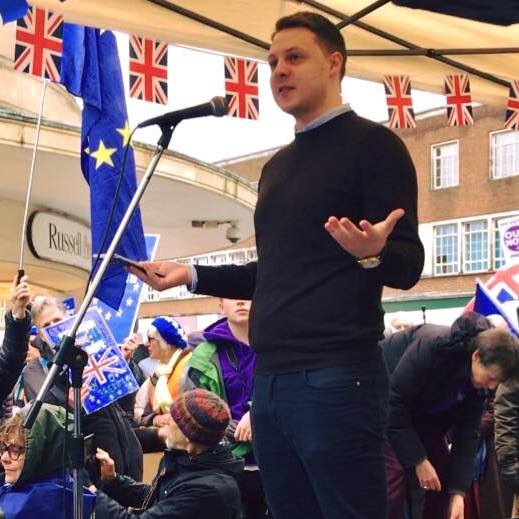
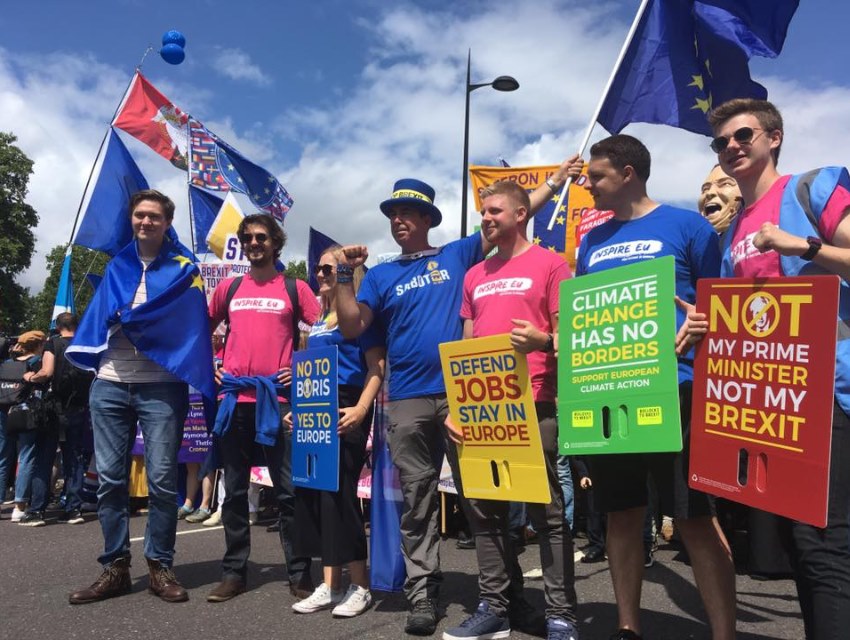
This month we are featuring James and Jack Dart from Inspire EU amongst other Remain projects. 

James Dart

Jack is a Liberal Democrat councillor in Torbay. In 2018, Jack deferred the 2nd year of his law degree in order to fight Brexit full time. Since then, Jack, along with his brother James, has organised, run and attended countless EU-related events all around the country, co-founding Inspire EU along the way. Jack is campaigning for a #FinalSay on the Brexit deal and won’t rest until the job is done. 

James is a former school teacher who left his job in 2017 to study European politics in the hope of better understanding the Brexit phenomenon. James co-founded Inspire EU with his brother Jack in order to campaign for a #FinalSay on the Brexit deal, as well as putting the positive case for the EU to people. 

Jack Dart

James answers our questions below on behalf of the two brothers.

1) What inspired you to take up the cause to fight Brexit and campaign for a #PeoplesVote?

The injustice, the lies, the faith-based mentality – they all worried me. The day after the result it quickly became clear that the Vote Leave leaders (Johnson and Gove) were already reneging on their promises and commitments – particularly around their central campaign pledge to spend £350 million a week on the NHS. The other aspect that concerned me was the flagrant disregard for detail, planning and expert opinion. As experts warned of economic damage, Brexit advocates – both in Parliament and on the street – waved away any criticisms or concerns in a way that I hadn’t ever seen before. A deeply defiant faith-based mentality had set in which prevented my brother and I from holding the most basic of conversations with our Leave-voting parents. We’d quiz them as to how Brexit would benefit them, but instead of calm, detailed responses, we’d get an angry bombardment of ad-hominem attacks, straw men and red herrings; they had absolutely nothing.

2) What do you think are the main barriers to getting young people to vote?

It’s no secret that young people turn out to vote in the fewest numbers. Indeed, when I type “voting by age” into Google, almost every graph tells the same story: the younger the age demographic, the less likely they are to 1) register to vote and 2) turn out on polling day.

It’s worth noting that this is not some recent phenomenon, but a historic one – though it did get especially bad between 1997 and 2015, recovering slightly in 2017. I think motivation plays an important role in this. I know a lot of people think that one vote won’t make a difference, but the fact is that if too many people think in this way, we lose the votes of a huge proportion of the electorate. Another thing that I think could play a role in this is that some young people who haven’t had access to as good an education as others feel like they don’t know enough about politics to make a decision about who to vote for. I think there needs to be better political education in schools especially, so that young voters feel not only more confident in choosing who to vote for but also more able to think critically about things said by politicians and decide for themselves what they believe in. Also, I think having to register to vote can be an obstacle. Not everyone may realise that they have to do this in order to vote and lots of people don’t know their national insurance number, either. I think there should be automatic voter registration as soon as a young person turns 18 to remove this obstacle.

Jack, James and Steve Bray

3) Are you concerned that – with the election on December 12 and with many universities breaking up for the holidays around this time – there will be a negative effect on young people voting?

We are aware of many students this time round who have registered for a postal vote if they want to vote in their home constituency. We have also witnessed more and more students being made aware that they can be registered in both their home and university constituencies and then can decide where they cast their vote. It is also likely that the political turmoil we have experienced in the past few years has led to an increased youth engagement or interest in politics, so hopefully this will translate into an increased youth and student turnout at the polls on December 12th. We really hope that students and all young people feel empowered and motivated enough to make the effort to vote in December.

4) What do you think still needs to be done to convince people who voted Leave in the last election to vote Remain in any subsequent referendum?

Be persistent. Our parents were sure that their vote to Leave was the right choice for over 2 years, and through constant sharing of facts, conversations and heart to hearts, they began to realise what Brexit symbolised. Never give up on the pursuit of the end goal, to stop Brexit entirely. Over 3 years have passed since the referendum, and that has proved to be key to outing the lies at the heart of the Leave campaign. The last election was a very strange one, but we know more about what is winning people over and we have stronger arguments. In summary, be vocal, be persistent, and communicate with others on what is and isn’t working. But remember, you don’t have to convince everyone, just 1 in 10 will do

Vote Tactically on Dec 12

5) Do you feel that young people will get behind a tactical voting strategy? If so, what can be done to spread this message?

Tactical voting is an absolute must in this election. It’s thought that if 30% of Remain voters vote tactically, then we can prevent a Johnson majority; that has to be our ultimate goal. Our advice has been, and continues to be, that voters young and old should consult the tactical voting sites out there, particularly getvoting.org, tactical-vote.uk and remainunited.org. These sites are continually updating their recommendations as new data comes in, so be sure to cross-check their recommendations right the way up until election day.

6) How have the last three years affected young people’s engagement in politics and their view of Parliament?  Has the turmoil made them less likely or more likely to vote?

Brexit (and the climate emergency) has done a huge amount to dent political apathy among young people. With that said, it’s still been challenging attempting to convert that anti-Brexit energy into activism. For many young people, this comes down to ownership, and a feeling that the Remain movement is for middle-class, middle-aged, polite, beret-wearing Englanders; it’s not cool, it’s not edgy and it’s desperately lacking in youth representation. We’ve had many conversations with young people who admit mobilising for the Donald Trump protest and the climate protests, but not for the EU events. With that said, when it comes to voting, we’ve just seen record numbers of young people registering to vote.

7) Do University students tend to participate more in election voting than other young people who are not in further education?

Students certainly benefit from the information and advice universities give out during an election period. Additionally, campuses tend to become highly political which may also help to advertise the election. We’re certain that this election will see an increase in young people voting, as Brexit, the climate emergency and issues around mental health, housing and the NHS dominate.

A university community exposes students to new ideas and political discourse and offers a space for students to educate themselves about parties and policies, particularly through committed political societies and events. Other young people who are not in further education may be working and may therefore be less exposed to politics or have less time to vote. It is also likely that university students may be more likely to vote on policies that have a direct impact on them, for example policies surrounding tuition fees.

Many thanks to the Dart brothers for taking time out from campaigning to answer our questions!
 

Inspire EU Logo
Meeting with the British Ambassador to Spain

Meeting with the British Ambassador to Spain

On Wednesday 27 November, the British Ambassador, Hugh Elliott, hosted an information event for British citizens in Valencia at the Casino de Agricultura. Also attending were the British Consul, Sarah-Jane Morris, and other Embassy staff.

I had been invited to attend the event on behalf of Bremain in Spain, along with Debbie Williams of Brexpats – Hear Our Voice and Molly Williams of Young European Voices.


Hugh and Sarah-Jane Morris
Hugh and Molly Williams

Prior to the evening event, we were also invited to lunch with the Ambassador, along with representatives of local charities who support British residents in the Valencian Community. The lunch was a 5-course affair, with a main course of a typical Valencian paella.

At the evening event, the Ambassador and his staff spoke about the importance of Brits making sure that all their paperwork is in order as well as the implications of Brexit and the forthcoming election for our situation here in Spain. The Embassy is extremely well-informed and keen to help and support the local British community in whatever way it can.

Debbie Williams and Sue Wilson
Paella Valenciana

The audience was invited to ask questions and offered the opportunity to speak to any one of us individually afterwards. Topics covered included healthcare, applying for residency, Spanish driving licences, aggregation of benefits, recognition of qualifications, dual nationality and much more.

For further information on these, or any other topics relating to living in Spain, you will find a wealth of information in the Embassy Living in Spain guide. You can also sign up for updates and be notified whenever anything changes.

We will continue to work with the Embassy to ensure that you are kept informed and that our issues are brought to their attention. Please make sure that your own paperwork is in order and encourage friends, neighbours and colleagues to do the same – thanks!

Sue Wilson, Chair Bremain in Spain

Sue and Hugh
Hugh and the Paella Valenciana