
Spain’s recent rise in infections is of concern to us all including the retired

Spain’s recent rise in infections is of concern to us all including the retired

When I dreamt of a Spanish retirement over many a cold, grey, British winter, the last few months of living with Covid did not feature in my vision, writes Sue Wilson.
Governments and medical professionals might have game-planned potential pandemic scenarios, but the general public were living in ignorant bliss. The shock, when it came in March, was scary and dramatic, and on an unprecedented scale.

When the worst appeared over, and safety measures were relaxed, our relief was tinged with caution, and lots of unanswered questions. Was it safe to go out? Would there be a second wave? Would life ever return to normal?

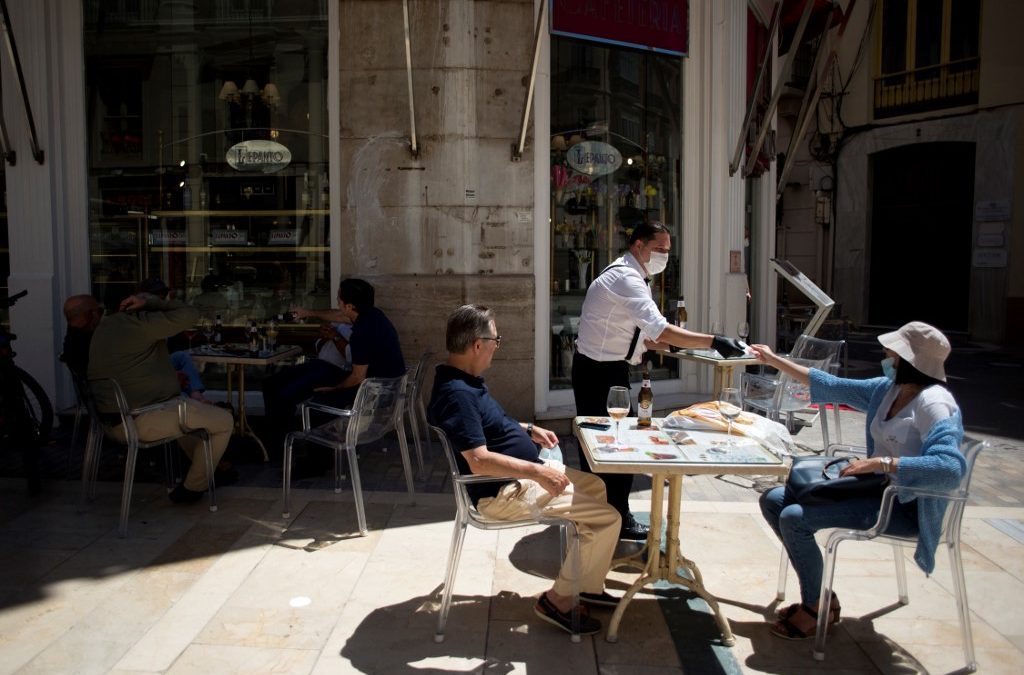
Covid aside, retirement in Spain has been everything I could have hoped for, and more. Although the rise in new Spanish cases has been alarming, we’ve been relatively virus free in my usually quiet corner of the Costa Azahar.

Being retired during lockdown has provided some relief. I’ve avoided concerns like earning a living, or worrying about job security, and the restrictions have affected me less than the younger, more social animals.

Covid people

Recent changes to safety measures, such as the closure of nightclubs, or the “early” closure of restaurants and bars at 1 am have not affected my life one iota.

Like everyone else, I have missed my family and friends, but not eating out is not a hardship, and the shopping restrictions have ensured my bank balance, at least, is healthier.

Regardless of age or personal circumstances, the recent rise in infection rates in Spain concerns us all.

The article in full can be found over at The Local.

‘We’re still waiting to be reunited with family and friends’

‘We’re still waiting to be reunited with family and friends’

Whether you’ve been put off travelling by the virus itself, or the anti-virus measures, the result is the same, writes Bremain in Spain’s Sue Wilson.
The Covid pandemic has affected our lives in ways we couldn’t have imagined at the start of this year. After several months of lockdown, our world started to open up again – albeit gradually – on June 21st, with the introduction of the “new normality”.

The impact on the tourism industry, the third largest contributor to the Spanish economy, has naturally been of great concern to the Spanish authorities. With travel proving inherently risky during the pandemic, expectations are of a record low tourist season. Furthermore, other countries – not least the UK – are quarantining travellers from Spain for up to 14 days. As a result, many people have decided their only option is to stay at home.

Before the UK opted to quarantine anyone landing from Spain, British tourists were already arriving in reduced numbers. Many were visiting family here, after a lengthy separation caused by the lockdown closing the borders. Those who were already visiting Spain when the UK government announced the new quarantine, with just a few hours’ notice, were caught by surprise.

They returned home, some earlier than planned, wondering if their 14 days self-isolation would be funded by their employers or from their own pocket. One thing was clear: the British government would not be paying for its own policy decision.

The quarantine resulted in many Brits cancelling their travel plans, whether they were heading from the UK to Spain or vice versa. Those of us wanting to fly off to see family were dealt another cruel Covid blow.

You can read the full article over at The Local. 

‘Who are the Brits who have flocked to Spain because of Brexit?’

‘Who are the Brits who have flocked to Spain because of Brexit?’

Ever since the UK voted to leave the EU Brits have been on the move, with many heading to Spain. Many are accepting a cut in wages and career prospects, but they’re willing to make the sacrifice, writes Sue Wilson from Bremain in Spain.
A recent study by the Oxford University in Berlin and the WZB Social Science Centre has revealed a significant rise in the numbers of Brits migrating to Europe.

Since the Brexit referendum, the numbers of Brits choosing to live in EU countries has increased by 30 percent. Spain has seen the largest increase in numbers, with an estimated 380,000 British nationals now living here. EU countries have witnessed a 500 percent increase in applications for citizenship, as British migrants strive to retain their freedom of movement rights.

Daniel Tetlow, an author of the study, said: “We’re observing a new social migration phenomenon and a redefinition of what it means to be British-European.”

Ever since the UK voted to leave the EU, British citizens in the UK have been on the move. Many wanted to fulfil a long-held dream to migrate, while it was easier and cheaper to do so. For others, it was a fresh idea, and a means of retaining valuable rights for their families.

Although many of the incoming British residents arrived soon after the referendum, the process is still underway. The Covid crisis ended many plans and put paid to many home sales. Now that things are returning to ‘the new normality’, plans are being expedited. With just a few short months left before the end of the transition period, the clock is ticking.

Nobody is suggesting a move to Spain once Brexit is finally ‘done’ is impossible. However, it would be more complicated and expensive. The exact requirements are still being defined and may be more akin to those for other Third Country Nationals.

The main reason to move to Spain this year is the rights secured during the UK/EU negotiations. The legally binding Withdrawal Agreement (WA) enshrines residency, work and social rights, including protecting healthcare and pension rights.

People dreaming of retirement in Spain can benefit from the WA protections. Even those who aren’t of pensionable age by the end of 2020 will still qualify for healthcare and pension benefits, assuming they’ve made the appropriate level of UK contributions.

You can read the full article over at The Local. 

Bremainers ask….. Sue Wilson

Bremainers ask….. Sue Wilson

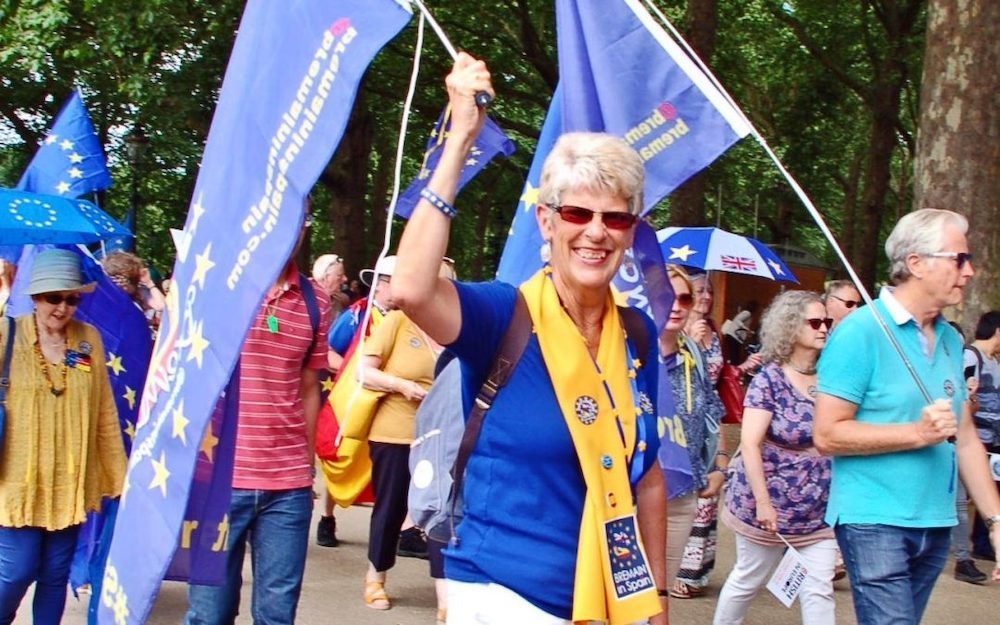
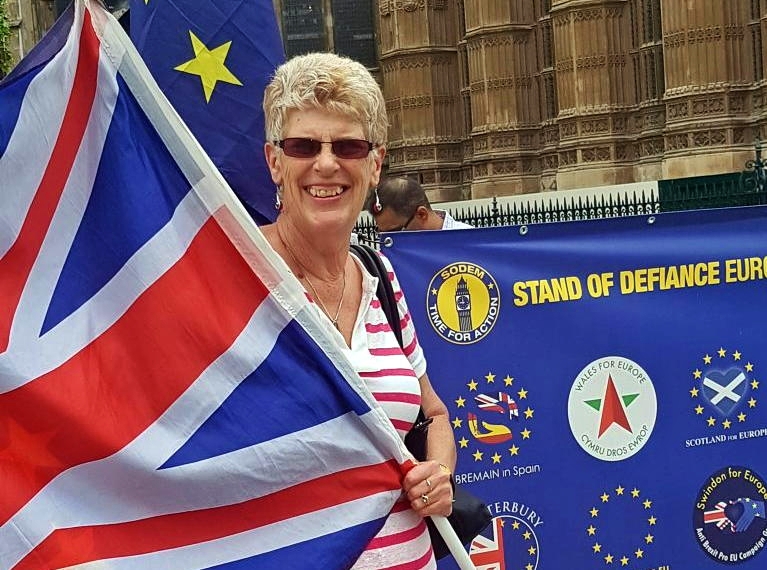
Having joined Bremain in Spain shortly after the Brexit referendum, Sue became Chair of Bremain in September 2016.  She has been an active anti-Brexit & citizens’ rights campaigner ever since.

Sue presented evidence to the House of Commons Exiting the EU Committee in January 2017, on behalf of Brits in Spain. She delivered campaign speeches at local and national events, including rallies in London, Manchester, Leeds and Brussels. Sue was also lead plaintiff in the ‘Wilson vs. The Prime Minister’ (Theresa May) legal challenge, over the validity of the Brexit referendum.

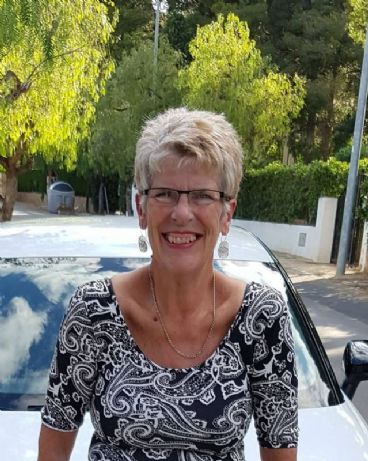
Sue has lived in the Valencian Community for 13 years with her husband and four cats and is now retired.

Tracy Rolfe: Do you think the UK will re-join the EU at some point? If so, how do you see that unfolding in terms of circumstances and timescale?

I think re-joining the EU is on the cards, but it’s going to take time. I don’t see a Conservative government applying to re-join, so first we need a Labour/coalition government in power. Then we’ll need an ongoing campaign selling the benefits of EU membership to the public – something that was sadly missing during the referendum campaign.

Even when the true cost of Brexit is more obvious, we will still have our work cut out. EU membership is going to be more costly next time around – we threw away the best deal we were ever going to get. No matter how much we tried to warn of the costs and dangers of Brexit, the public will only really miss what they have lost when it’s gone. The whole country is in for a very rude awakening from January 2021. Whilst I don’t wish any hardships on anybody, it may take the suffering that’s to come to make the UK wake up and think again. If I had to hazard a guess about timescales, I’d say it’s going to take a decade.

Sue Wilson UK SODEM May 2018

Jim Westlake: Do you think that the EU would welcome the UK back in with open arms?

After the way the UK behaved during the course of the negotiations, it’s easy to think the EU would be glad to see the back of us. We’ve been impressed by the EU’s professionalism throughout, and especially by their patience. The way the EU have conducted themselves, and protected their members’ interests, has emphasised just why we value our EU citizenship so highly.

I feel any efforts on the UK’s part to re-join would require considerable proof that the majority of the UK – a super majority this time, not a narrow one – were totally behind the move. There would surely be additional conditions to be met, such as joining the Euro and Schengen. Also, I imagine the EU would need to be convinced the UK were truly committed to European ideals and co-operation. So, not exactly open arms, but the EU are pragmatists, and the UK could once again become a valuable member.

Alison Curtis: What skills did you bring with you to Bremain and what new ones have you needed to acquire?

My background was in Sales, Management and Training, with a professional qualification in Learning and Development. Many of the skills I learnt during my career have proved invaluable in Bremain – especially leading a team, working with others, facilitating meetings and motivational skills.

The skills I’ve learnt over the last 4 years that have proved most useful have been public speaking and writing. I was used to speaking in front of 10 or 15 people – all of whom I knew – but speaking in front of a crowd of strangers for the first time was a terrifying, and exhilarating experience. Not only did I never think I’d be able to speak in front of 100,000 people, I certainly never imagined I would enjoy it! Now I’m a sucker for a stage and a microphone!

Writing was a surprise too. Of course, I’d written business reports, meeting minutes etc, but never so many articles. Now I write a weekly article for the Local Spain, as well as much of the Bremain newsletter and website content. I fear I may be getting to like the sound of my own voice too much!

Molly Williams: Do you think Brexit will have a knock-on effect on other countries throughout the EU where there is rising Euro-scepticism, perhaps influencing other countries to leave the EU?

The rise of the far-right across many European countries has been a huge concern, not least in Spain. However, one positive of Brexit seems to have been the strengthening of the bond between the EU27 countries. The risks and potential damage of leaving the EU have been exposed for all to see. Even countries further right than the UK seem to fully appreciate the value of EU membership. Despite what the Brexiters suggested – that Brexit would lead to the break-up of the EU – it seems to have had the opposite effect, thankfully. I don’t think any other member state is foolhardy enough to follow the UK’s suicidal path.


Michael Soffe: Guy Verhofstadt believes that permanent residents of an EU country should have the right to vote in the general elections of their country of residence. Do you agree with him?

It would seem a very sensible and logical move. This would be especially relevant to Brits in the EU who are without voting rights in the UK. As Spanish residents, we have a stake in this country in so many ways – even those of us that are retired.

However, I would wish for a reciprocal arrangement for EU citizens living in the UK. The arguments are the same for both – if you are legally resident, you should have a say in the future of the country you call home. In fact, you could use that argument to say that any legal resident, regardless of where they are originally from, should have that same right. In the meantime, I could certainly live with this being an EU-only policy, to get the ball rolling.

Wayne Darren Smith: After 4 years of fighting, do you see a time when you can hang up your blue wig and just bring it out for Carnival, and if so, how long do you think that will be?

That’s a question that could have a different answer depending on which day of the week you ask me!

When I got involved in this fight 4 years ago, I had no idea of the journey I would be taking. Whilst I regret, bitterly, that we lost, it’s been an amazing, exhausting, wonderful experience, and I still don’t know how or when it will end.

Before the referendum, I was not at all interested in politics or current affairs. I still don’t know if, when this is all over, I’ll revert to my former ignorant bliss, or whether my awakened passion for campaigning and politics will continue. It would be a shame not to use what I have learned for some good, but then the appeal of finally spending some quality retirement time with my husband is strong, too.

All I can say for sure right now is that there’s still a lot of work to be done, and I’m still addicted, so you’re stuck with me for a while yet!

Next month, Bremainers Ask will feature Jonathan Lis – Journalist & Deputy Director of British Influence