
Brexit causes yet more money worries for Brits in Spain

Brexit causes yet more money worries for Brits in Spain

Sue Wilson examines concerns over the news that British banks are cutting off customers living in the EU thanks to Brexit.

British citizens across Europe have recently received letters from some of the UK’s biggest banks, advising that their UK-based bank accounts will be closed when the Brexit transition period ends.  These closures will apply to credit card and/or current account holders who live in the EU but maintain banking facilities in the UK.

Britain’s largest banking group, Lloyds, started notifying of account closures in August, although not in all EU countries. Lloyds said it had written to customers living in “affected EU countries” to advise it could no longer provide them with “some UK-based banking services”, because of Brexit.

Confusion is increased due to the fact that only some banks are taking this stance, and only in selected EU countries. At present, only Lloyds, Coutts and Barclaycard (not Barclays bank) have notified customers of account closures.

Recent newspaper coverage, especially in the UK media, has done little to curb customers’ concerns about the issue. Headlines warning that tens of thousands of Brits “would be stripped of their bank accounts and credit cards in weeks” have caused sufficient concern that many customers have contacted their financial providers, regardless of whether they’ve received a letter. The responses they received have hardly been enlightening or reassuring.

 

pound sterling

It’s understandable that answers are vague. While Brexit negotiations are ongoing, and before any deal between the EU and the UK is reached – if one is reached – then the terms for transferring monies to the EU are an unknown quantity. If the current EU-wide banking rules no longer apply to the UK after December 31st, it would be illegal for UK banks to provide services in the EU without a licence.

If no agreement is reached, banks will decide if it is cost-effective to apply for these licences. That decision will be based on the number of customers in a country, and the level of financial activity. You can, perhaps, draw your own conclusions from the fact that Lloyds has written to 13,000 customers in the Netherlands, Slovakia, Germany, Ireland, Italy and Portugal, and not to customers in Spain and France.

The British Embassy responded quickly to British migrants, updating its website with the following statement: “Most people living in Europe should not see any changes to their banking when the transition period ends (31st December 2020). Whether UK banks can service customers living in an EEA (European Economic Area) country is a matter of local law and regulation. Also banks are set up differently, and may have taken different actions to continue to serve their customers. Your bank or finance provider should contact you if they need to make any changes to your product or the way they provide it. If you have any concerns about whether you might be affected, contact your provider or seek independent financial advice.”

You can read the article in full over at The Local

Just when we Brits in Spain believed we could relax and feel secure ……..

Just when we Brits in Spain believed we could relax and feel secure ……..

Sue Wilson from Bremain in Spain takes a look at the latest developments in Westminster and how it has sent shock waves through the British community in Spain.
There have been many days since the Brexit referendum when I’ve felt like I was doing a dance, with unfamiliar steps.

One day, it was the Brexit Hokey Cokey – in, out, shake it all about. The next, it was the Withdrawal Agreement two-step – one step forward, two steps back, spin around till you’re dizzy and confused.

Anyone worried about their rights after Brexit will be familiar with those feelings of confusion, fear, anxiety and exasperation.

It seems that, as soon as we start to believe that our rights are secured, the actions of the British government throw everything out of the window.

During a week when we hoped for some progress in the Brexit negotiations, the UK government dropped a bombshell in the shape of the Internal Market Bill. Long story short, the government is unhappy with the contents of the Withdrawal Agreement (WA) and is aiming to break its international treaty commitments. Not to worry though – it will do so in a “specific and limited way”.

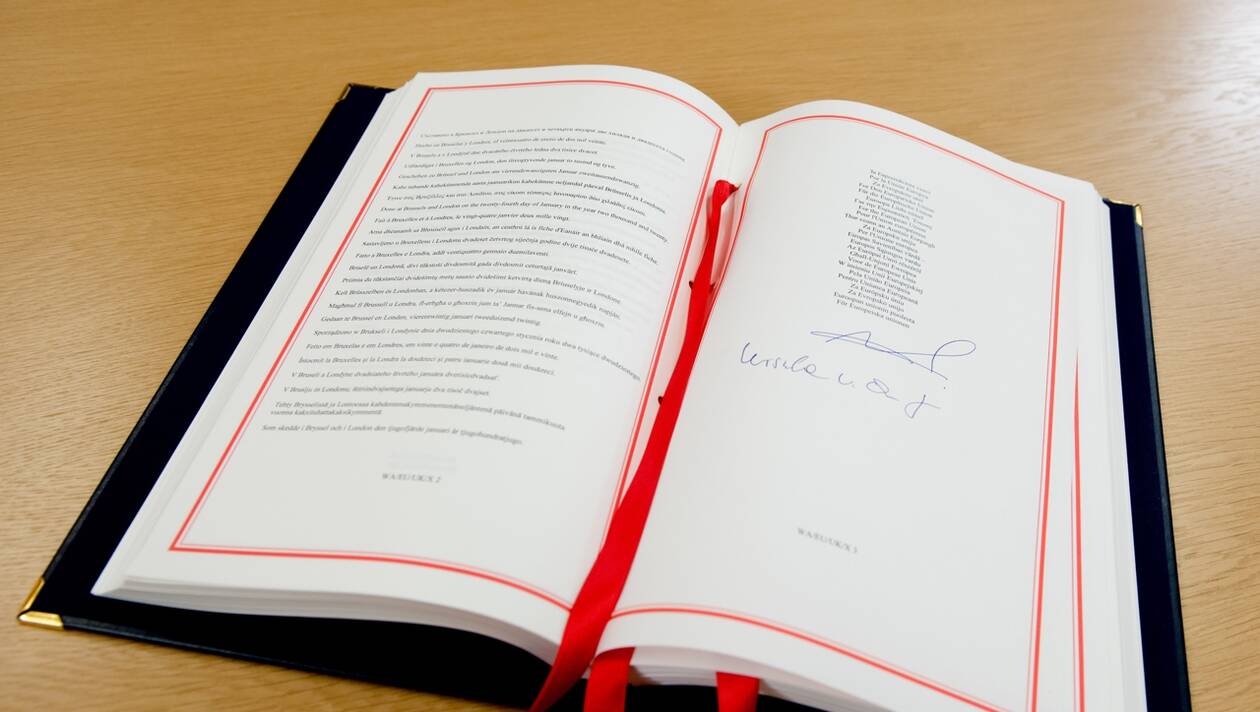
Withdrawal Agreement

Despite insisting that the WA was an excellent deal, requiring little or no scrutiny from parliament, the government has now read the small print. It seems that many Conservative MPs only voted for the deal on the understanding that they could unravel it later. This is exactly what the government is trying to do now. Having signed the deal and winning an election on the back of it, the prime minister is reneging on his international treaty commitments.

Unsurprisingly, the EU’s reaction was swift and robust. Following an “extraordinary” meeting of the EU-UK Joint Committee, EU Commission Vice President, Maros Sefcovic, said: “The timely and full implementation of the Withdrawal Agreement, including the protocol on Ireland/Northern Ireland – which Prime Minister Boris Johnson and his government agreed to, and which the UK Houses of Parliament ratified, less than a year ago – is a legal obligation. The European Union expects the letter and spirit of this agreement to be fully respected.” He went on to say that undermining the international treaty would risk the ongoing negotiations.

The EU also demanded that the UK government withdraw aspects of the bill that override the WA, giving them until the end of September to rectify the situation. Failure will risk termination of the negotiations and the prospect of leaving the EU without a trade deal.

You can read the full article over at The Local

We live in Spain and our rights are safe in the hands of Spanish authorities

We live in Spain and our rights are safe in the hands of Spanish authorities

As post-Brexit trade talks stall, it’s unsurprising that Brits throughout Europe are again feeling anxious about their futures. But for those in Spain, there is reason to be optimistic, writes Sue Wilson of Bremain in Spain.

Following the seventh round of Brexit negotiations in Brussels in August, there’s been little to report and no progress. The main issues preventing agreement remain the same – fisheries, a level playing field and state aid. The only change is in the amount of time remaining to resolve those issues, and the political rhetoric.

French foreign minister, Jean-Yves Le Drian, recently said that the UK government was deliberately stalling the negotiations with its “intransigent and unrealistic attitude”. Downing Street responded by saying that the EU was “making it unnecessarily difficult” for post-Brexit trade talks to progress. A source close to lead negotiator, David Frost, said that he had “made clear to Barnier that as things stand, he would have to recommend to Boris that we go for no deal”.

With the endless chest-thumping and finger-pointing, it’s unsurprising that Brits throughout Europe are again feeling anxious about their futures. Uncertainty is always unsettling, but there is a familiarity to the situation we find ourselves in. In many respects, we’ve been here before.

In 2019, we were worried about the prospect of leaving the EU with no deal, no rights and no benefits. Thankfully, that worst-case scenario was narrowly avoided at the 11th hour, but the talk of no deal has returned.

This time around, we do have a deal – the Withdrawal Agreement (WA) – that protects many, if not all, of our treasured rights. Yet there’s still the threat of failing to agree a trade deal. According to Michel Barnier, a negotiated deal is becoming “unlikely”, thanks to the UK government’s unwillingness to compromise.

Unsurprisingly, the idea of losing EU citizenship rights stirs anger, sadness and fear in British citizens in Spain. We moved here in good faith, secure in the knowledge – or so we thought – that our rights would apply for life. We’re more familiar with those rights now than ever before, because many of them are being taken away. We took the benefits of EU membership for granted: not anymore.

However, one thing surely causes more anxiety than the loss of rights already removed, and that’s the fear of losing the rights already secured by the Withdrawal Agreement.

You can read the article in full over at The Local