Votes for Life – a Bremain Campaign Update May 2021

Votes for Life – a Bremain Campaign Update May 2021

Bremain in Spain has been campaigning since 2017 for the repeal of the fifteen year rule which has prevented UK citizens living overseas from being able to cast their vote in UK elections. You can read the history of UK overseas voting in the House of Commons Library. Click the link to our Votes for Life Facebook Page or here to read more about our campaign.

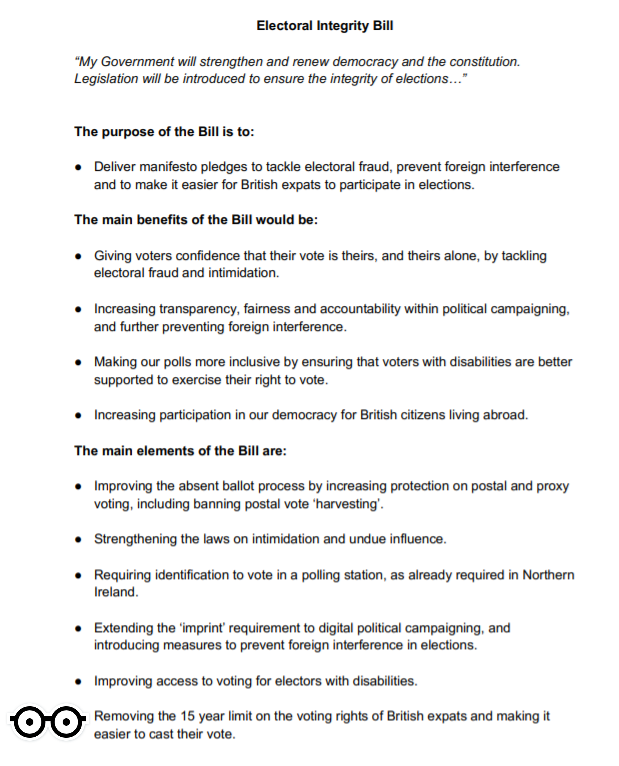
Most Western democracies allow their citizens living overseas to vote in elections with the exception of the ‘Mother of Parliaments’, but that is about to finally change. Since the 2010 General Election and each subsequent election, the Conservative party have pledged to repeal the fifteen year rule and provision was made in this year’s Budget in March – you can read more about that here. In yesterday’s Queen’s Speech, as part of the Electoral Integrity Bill, the commitment to remove the fifteen year rule was announced. You can read the briefing notes here


This means that the Bill should pass through Parliament in this current session but it is likely that some MPs will try to amend the Bill to prevent the return of voting rights. We therefore cannot sit on our laurels and expect it to pass without opposition. The Bremain team over the next few weeks will be planning how to ensure that we can equip you with as much information that we possibly can, along with some useful tools for you to use when lobbying your MP or the MP in your last UK constituency. This page and our Facebook Page will be updated so keep an eye out for further information in due course.

Our Chair Sue Wilson has just published an article for Yorkshire Bylines about the Electoral Integrity Bill which you can read here.

Meanwhile, here are some links to the Votes for Life announcement in the media:
The Guardian

Bermuda’s Royal Gazette

The Mirror

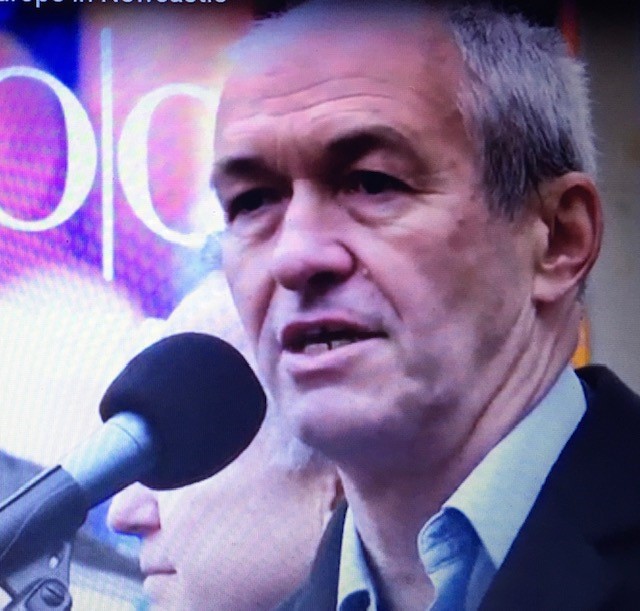
Bremainers Ask …. Richard Corbett, former MEP

Bremainers Ask …. Richard Corbett, former MEP

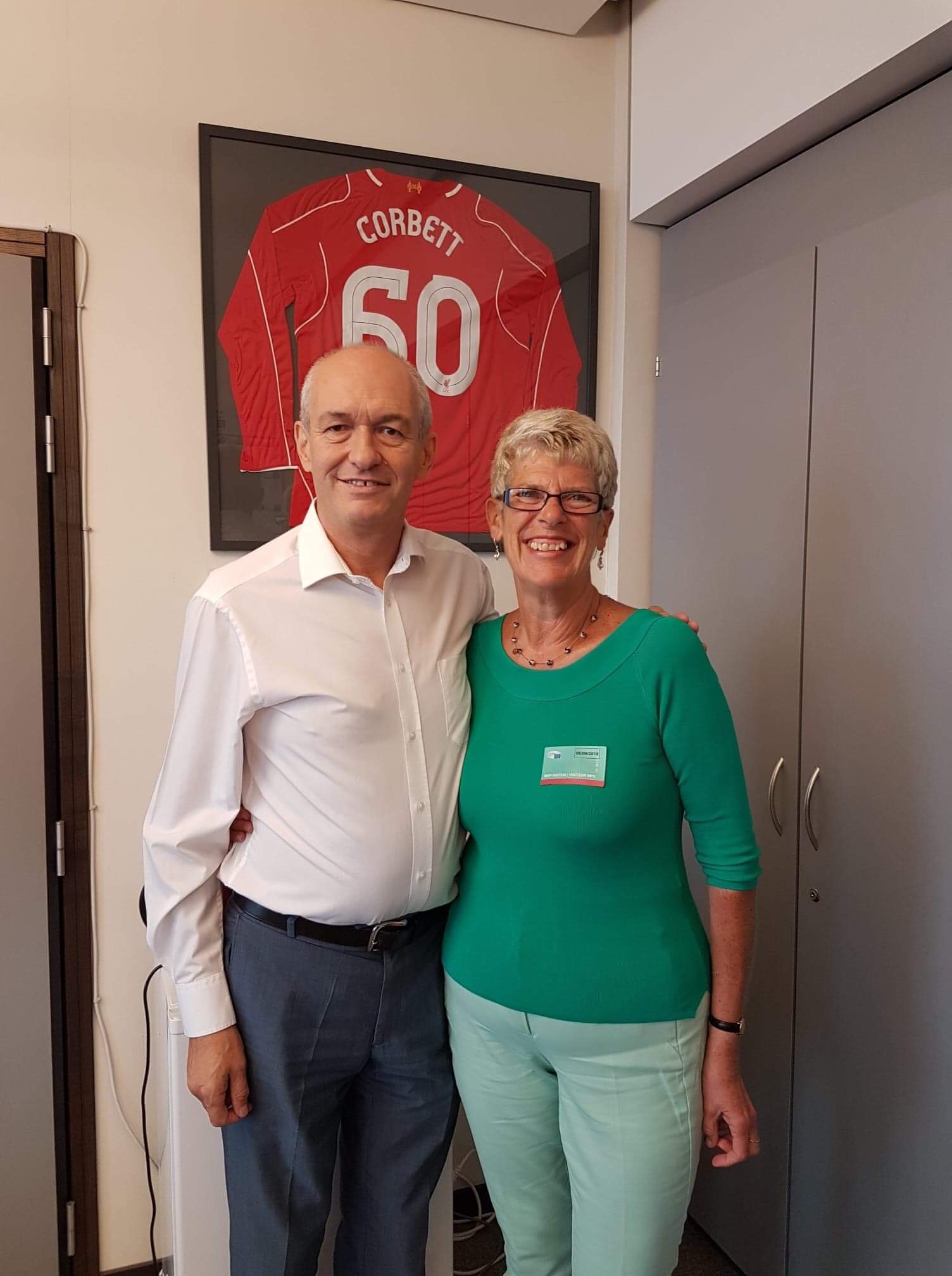
Richard Corbett was an MEP from 1996-2009 and 2014-2020. During that time, he was the spokesman of the Socialist & Democrat Group  on constitutional affairs, Parliament’s rapporteur on the Lisbon Treaty and, for the last three years, Leader of the Labour MEPs and therefore a member of Labour’s NEC and Shadow Cabinet. From 20010-2014, he was senior advisor to the President of the European Council, Herman Van Rompuy. He has written extensively on European issues from his regular blog to university textbooks.

Helen Johnston: How wary would the EU be of welcoming the UK back?

Brexit is bad for the EU too. Losing a Member State for the first time in its history, reduces its size, population and economy, and losing one which has a seat on the UN Security Council on the G-8 reduces its clout in the world. And what better advertisement for the benefits of EU membership and the perils of leaving than to see a return of the departed country? So, there would be considerable incentives for the EU to welcome Britain back, possibly even accepting some of the special features of Britain’s past membership, such as no obligation to participate in Schengen or the euro (on which point it would not be alone in the EU).

However, the EU would not want to risk going through the whole episode of Brexit again, nor would it want an obstructive member that blocked every new EU initiative. It would have to be convinced that Britain had genuinely changed its mind and that it would not walk out again a few years later. That in turn means that, politically, a new referendum would be needed, and won by a clear majority.

Michael Soffe: Do you believe the Labour Party should get behind the Votes for Life campaign and support returning the vote to UK Nationals who have been disenfranchised under the 15-year rule?

Yes. There is a growing number of citizens (not just from the UK) who fall out of the democratic system because they can no longer vote, either in their countries of origin or in their country of residence (except, within the EU, for local and European elections, but not national elections). This needs to be rectified.

Matt Burton: Many Remain supporters seem unable to forgive and forget Leave voters for Brexit. What would you say to those that blame them for our situation?

I would blame those who led the Leave campaign and those politicians who enabled Brexit to happen, rather than direct my ire at all ordinary leave voters who were lied to, not just in the campaign but over many years in much of the British press. 

Leave voters are entitled to say that Brexit bears no resemblance to what they were promised, namely that it would be easy, save lots of money (that would all go to the NHS), be good for the economy and have no down-side as “Britain holds all the cards”.  We need to get regretful Leave voters on our side. Talk to them!

Lisa Ryan Burton: Congratulations on your appointment as a secretariat member of the Conference on the Future of Europe. Why do you think a Brit was selected considering our departure from the EU, and what are the forum’s aims?

I suppose I was asked because of my previous experiences as the European Parliament’s rapporteur on the Lisbon Treaty and other things I did in the Parliament. My British nationality was secondary, but it does show that the European Parliament has nothing against Brits!

The Conference is intended to be the widest process of engagement with citizens that the EU has ever organized outside of elections, involving deliberative discussions and consultation exercises in all Member States, pan-European Citizens Panels with randomly selected participants, discussions with civil society organisations, and an interactive Multilingual Digital Platform on which any group of citizens may place their contribution. These will all feed ideas and proposals into a Conference Plenary, composed of representatives of the national parliaments, governments, European Parliament, regions, social partners, and civil society representatives. It therefore has the potential to engage a vast number of citizens in informed debate about the EU and its future and to distil broadly accepted demands about EU priorities and the way it works.  

Richard Corbett, Labour MEP

Steven Wilson: Do you miss your days as an MEP, and would you consider running as an MP in Westminster?

The European Parliament is a fascinating, diverse and innovative place to work. Unlike many national parliaments, who are often controlled and stifled by their government through its loyal majority and strict whipping, the European Parliament is freer, is not stifled and holds genuinely pluralistic debates. Majorities are built through explanation, persuasion and negotiation, not handed down by ministerial dictat. MEPs actually shape European legislation in a way that backbenchers at Westminster can only dream of.

Pat Kennedy: If you were leader of the Labour party, how would your approach to the E.U. and the fall-out from Brexit differ from the current Labour leadership?

I don’t think Labour can avoid addressing the considerable problems arising from Brexit in general and Johnson’s deal in particular. Job losses, disruption to supply chains and exports, losing access to shared police databases, extra costs to businesses and administrations, failure to fully protect rights of UK citizens resident in the EU and EU citizens in the UK, and the gratuitous vandalism of leaving the Erasmus student exchange scheme – the list goes on. And on.

Keir Starmer has focussed on criticising the government’s incompetence, its cronyism and its failures to address the COVID pandemic quickly enough.  It is time to broaden that attack.

Next month’s Bremainers Ask guest will be Lord Andrew Adonis, the newly appointed Chair of European Movement UK and a staunch anti-Brexit campaigner.  If you have a question for Lord Adonis, please email it to us before 7 May at enquiries@bremaininspain.com.

Authority Magazine Interview with Bremain Chair Sue Wilson

Authority Magazine Interview with Bremain Chair Sue Wilson

‘Don’t feel intimidated by so-called experts — you are the expert and you know more than they do! — When I first met a committee of politicians, I thought I would learn something from them. As it turns out, politicians don’t know a great deal (except perhaps on their specific subject), and they tend to want to pick your brains, not the other way around!’

Pirie Jones Grossman from Authority Magazine recently interviewed Sue Wilson and she writes:

Many successful people reinvented themselves in a later period in their life. Jeff Bezos worked in Wall Street before he reinvented himself and started Amazon. Sara Blakely sold office supplies before she started Spanx. Dwayne “The Rock” Johnson was a WWE wrestler before he became a successful actor and filmmaker. Arnold Schwarzenegger went from a bodybuilder, to an actor to a Governor. McDonald’s founder Ray Croc was a milkshake-device salesman before starting the McDonalds franchise in his 50’s.

How does one reinvent themselves? What hurdles have to be overcome to take life in a new direction? How do you overcome those challenges? How do you ignore the naysayers? How do you push through the paralyzing fear?

In this series called “Second Chapters; How I Reinvented Myself In The Second Chapter Of My Life “ we are interviewing successful people who reinvented themselves in a second chapter in life, to share their story and help empower others.

As a part of this interview series, I had the pleasure of interviewing Sue Wilson.

A long-held love affair with the country sparked Sue’s dream of retirement on a Spanish Costa. Little did she know that the move would come sooner than expected, or that retirement would look so different from her vision, thanks to Brexit. Formerly disinterested in current affairs, the Brexit referendum turned an aversion to politics into an obsession, bringing with it, new challenges and new skills. Sue now spends all of her retirement campaigning for the rights of British citizens living across Europe.

Originally from Oxford, Sue Wilson lived in London and Cambridge, working in sales, management and training. She moved to Spain in 2007 and worked as an English language teacher. Sue became Chair of Bremain in Spain — a group campaigning against Brexit — shortly after the 2016 referendum. As a pro-EU activist, she has been involved in many rallies and events and has worked closely with politicians and campaigners in Westminster and Brussels. Sue was lead plaintiff in the ‘Wilson versus The Prime Minister’ (Theresa May) legal challenge, over the validity of the Brexit referendum. Sue lives in the Valencian Community with her husband and four cats, and although officially retired, campaigns full-time for the protection of British citizens’ rights across Spain and the EU.

Thank you so much for doing this with us! Before we start, our readers would love to “get to know you” a bit better. Can you tell us a bit about your childhood backstory?


My younger brother and I grew up in Oxford. My father worked at the car factory, and my mum worked part-time for the NHS. My brother and I left home the same summer — me at aged 18 to move to London, and he at aged 16 to join the Navy. I lived in London for the next 15 years, and met my husband there.


Can you please give us your favorite “Life Lesson Quote”? Can you share how that was relevant to you in your life?


My dad always had a few of those — the one that resonates the most is “if a job is worth doing, it’s worth doing well”. It’s a mantra that has followed me throughout my career, and in my personal life.


You have been blessed with much success. In your opinion, what are the top three qualities that you possess that have helped you accomplish so much? If you can, please share a story or example for each.


A positive outlook has been incredibly important, not just for my own sanity, but also as a basis for dispensing hope and motivation to others. As a team manager, and as a campaigner leading a group of 6000 members, an optimistic outlook has been vital.

I have always been well organised and making plans and breaking tasks down into bite-sized chunks helps me make sense of work, and life. I could go into more detail, but I’d need to make a list first!

I’ve been fairly successful at building strong links with people — both professionally and personally. I like to think that is down to my being honest and open, and willing to share. Some enjoy confrontation whereas I prefer to avoid it.


You can read the full interview over at Authority Magazine.