
Bremainers Ask …….  Zoe Gardner

Bremainers Ask ……. Zoe Gardner

Zoe is an independent researcher, campaigner and commentator on immigration and asylum policy in the UK and Europe. She regularly contributes to political and media debates promoting a positive, evidence-backed alternative vision of how to manage migration well for the benefit of all. She has previously worked for the European Network on Statelessness, the Joint Council for the Welfare of Immigrants, Asylum Aid, the Race Equality Foundation and the European Council on Refugees and Exiles.

Ruth Woodhouse : What is your opinion of the recently-agreed “one-in-one-out” migrant deal between the UK and France?

Cooperation with France – and the rest of Europe – is absolutely necessary in order to resolve the small boats issue and manage the arrival of refugees in the UK safely and humanely, so it is a necessary first step that Starmer has entered into serious negotiation with Macron. The positive side of this is the acceptance on the UK side that not only are there refugees in France with ties to the UK who need to make their way here, but also that they need a safe and regulated way to make that journey, which they have lacked until now. That is the bare minimum that needs to be accepted and used as a basis for developing a safe route for asylum seekers.

However, unfortunately that’s where the good news stops. I fear that, in their haste to produce something that looks tough for the British news cycle this summer, they have jumped the gun on announcing this inadequate deal. The ‘one-in-one-out’ part is an immediate red flag – anybody coming safely to the UK therefore depends on another person risking their life and being detained and deported, which makes the whole thing a circus. If it ever were to fully work, then it would immediately stop working again, because if no one were crossing the Channel anymore, there would be no more safe routes available either, leaving us back where we started. The safe route to the UK must be put in place on the basis of need, not a reciprocal trade in human beings. The Dublin Regulation, when we were a part of it, suffered from problems too, which meant that the numbers of people sent back and forth essentially always stayed quite low – administering these schemes in line with the law is difficult and time consuming, and the numbers we’re talking about for this ‘pilot’ are simply not going to touch the sides of the issue.

How significant has Brexit been in the increase in “small boats”?

Brexit is both the cause of the small boats’ arrival, and also not! Before we left the EU, people entered the UK irregularly from France in significant numbers, provoking a great deal of political opposition. However, since Brexit, the preferred route for making that journey has changed to small boats, and the numbers have somewhat increased.

Pre-Brexit we were part of the EU-wide Dublin Regulation which meant that anyone apprehended making an irregular crossing from France could be returned there from the UK and anyone with family ties to the UK in other parts of Europe could apply to rejoin them here through safe means. The system was clunky at best, operating slowly and depending on the good will and cooperation of many different border force and asylum agencies across different countries. Essentially, only a couple of thousands of people per year at most were ever sent back and forth in and out of the UK through the Dublin mechanism. Mostly, people who arrived here had their claims processed here, despite irregular arrivals, similarly to now.

However, with Brexit, there was no longer any need to conceal the crossing itself from UK authorities – being “caught in the act” of entering from France no longer meant you would be subject to return to France because with Brexit we left the Dublin convention. This meant asylum seekers and smugglers abandoned the use of lorries and trucks and adopted a much more visible way of travelling to the UK – the small boats. Ironically, although still very dangerous, this is actually a somewhat safer way of making the crossing than travelling in trucks and lorries, because you are guaranteed to come to the attention of the authorities quickly and likely to be rescued – less likely to suffocate in the back of a lorry.

The fact that the crossings are now so much more visible has been a disaster from the political perspective, because asylum seekers in a boat create a visceral image, whereas asylum seekers milling around Calais lorry ports do not in the same way.

In addition, now that we are no longer a part of the Dublin system, we have become a destination of last resort for asylum seekers if they have their claim refused in another European country. If you are refused asylum in one Dublin Regulation country, you cannot apply in any other. But you still can in the UK, so there are families seeking to reach us now because they have exhausted their application rights in the rest of Europe and know that we will at least have to assess their claim individually again. In this way, Brexit has increased the numbers of asylum seekers in the UK somewhat, which is clear in the fact that numbers here are still very high, while they have been dropping in the rest of Europe over the last few years.

Rejoining the EU would be good for a lot of reasons, but it would not make asylum seekers in the UK disappear, and would not simply allow us to immediately remove everybody back to the first EU country of entry – the system is more complex and poorly managed than that. And the EU very much has its own significant failures in how it manages the arrival of refugees. We would need to take the lead in changing the European approach to one of solidarity, compassion and responsibility-sharing, whether from within or without.

Steve Wilson : Which countries – if any – have an immigration policy that you respect and would recommend as a model for the UK?

Tragically few. Although looking across other systems, there are areas where some countries do things better, and other areas where they perhaps do things worse.

Spain has a very poor approach to managing the border and the accommodation of child asylum seekers, but they have a very positive overall outlook towards immigration and work. Asylum seekers in Spain are given Spanish language and integration classes and matched with training opportunities in areas of the economy that are struggling to recruit workers. Spain has significantly increased immigration into work in the last several years and is reaping the economic benefits – its economy growing much faster than any other European country including the UK. Even in far more immigration-sceptical Italy, visa pathways for migrant workers are being expanded significantly to meet the demands of their ageing population.

The Spanish government also has a clear and morally robust rhetoric around immigration, explaining how Europe’s ageing populations cannot continue to support themselves without immigration and refusing to bow to pressures of racist rhetoric, as so many other European leaders have.

Spain has also pursued a number of regularisation programmes to bring undocumented migrant workers into the formal economy and give them the paperwork to allow them to stay legally and contribute to the country. This has been a huge success.

Both Spain and Portugal also have citizenship systems that recognise the ties created by their colonial pasts – immigrants from ex-colonies have faster pathways to settlement and citizenship in recognition of their cultural ties to the country.

France still has a system that recognises those born on French soil who have never lived anywhere but France as automatically eligible for French citizenship. We in the UK abandoned that sensible approach for racist reasons in the 1980s.

While Germany is not an example at the current time, the efforts they made to welcome large numbers of Syrian refugees a decade ago are having positive impacts today, with a significant majority of them in work and well-integrated, especially in areas where support for integration and language learning was provided, bringing in a positive contribution to the German economy according to latest economic reports.

These are all ideas the UK could benefit from considering.

Valerie Chaplin : How can the Government speed up the asylum process?

Instead of fast-tracking refusals – which will inevitably clog up the appeals process and risks sending people from largely safe places where they may have been individually targeted back to situations of danger, we should fast-track acceptance of asylum claims from people from manifestly unsafe countries like Syria, Sudan and Afghanistan. Let these people start rebuilding their lives quickly, after some light touch formal checks rather than a two-year process of limbo.


David Eldridge : Despite evidence to the contrary, the right wing media still repeat the same tired lies about refugees and immigration. How do we get the truth out there and stop the constant repetition of lies and misinformation?

They are extremely well funded, with money coming into the likes of GBNews and Reform UK from the world’s richest men. On the other ‘side’ we have volunteers, charitable foundations, and the dust where progressive political voices ought to be. We should take heart that despite this incredible discrepancy in resources, the British public is still decent in its politics around immigration – our side is punching above its weight.

But at a time like this, where we face the very serious threat of a descent into extremism, with the abandoning of all the post-war international treaties that protect our human rights, we all have a responsibility to do everything we can.

Every time and every way that we have to raise our voices we must do so, especially those of us who are protected from much of the immediate danger by our white skin and British passports. A lie can be repeated enough times that it starts to sound true, it is our job to repeat the truth even more times than that.

Helen Johnston : Do you have confidence in any of the major political parties to change the debate on migration and freedom of movement?

I have lost faith in Labour under this leadership. The Greens, LibDems, Plaid Cymru, SNP, and potentially the new left party being cobbled together by Corbyn and Sultana are all places where progressive politics on migration are still being heard. We must not give an inch in those spaces and continue to show politicians the example of what a brave, principled position that can push the Overton Window back away from the far-right looks like.

Every one of those parties is still lacking the bravery to take a stand, cut through the noise and seize control of the narrative on immigration, although if Zack Polanski wins the Green leadership I believe we’ll have a better shot than before with that.


Anonymous : When faced with so much hate, delusion and misinformation in debates on immigration, how do you manage to stay so calm and in control?

I seethe on the inside, even during interviews where I appear pretty calm. My friends, colleagues, and family are there for me to express my emotions and give me support in particularly difficult times. But it’s important for me to remember that I am speaking on behalf of so many people – not only the migrants who are subjected to such an onslaught of lies but also the good people all over this country who support a humane and realistic approach to managing immigration. I am not the one under attack, I am one of the people standing shoulder to shoulder to protect those who are, and that gives me strength.

I have been doing interviews on this topic for a long time, it is difficult to shock me, and very difficult indeed to come up with an argument on immigration that I have never thought about before. I am very much convinced that the side of humanity is the right one, and that we can and will create a system of immigration that respects people’s rights and works well for the UK. It is a fantasy to believe we can stop people from moving, no matter how awful we try to be – people have always and will always move. Our only choice is how to manage it, and so I’m unflustered by politicians and commentators who are selling fairy tales about making it stop. The important thing is to keep trying to get our message across.


Barbara Leonard : What do you suggest is the best way (and place) for us to challenge the strong wave of ‘othering’ that drives sales of papers like the Mail and clicks on social media? 

This will be different for everyone, but there are ways each and every single one of us can and must try to make a difference. Writing to your MP is something we should all get used to doing. If you are part of a church, mosque, synagogue or other, a community group, or sports team, or a school or university community, there are resources available to help you start a conversation about the political times we live in and what can be done to help.

In almost every town in the UK there are befriending and welcome groups of volunteers who are helping to make newcomers feel safe and at home. These networks and communities and the love and solidarity we show one another through them are something that cannot be taken away by right wing rhetoric or even the seizing of power by the right in politics.

We are stronger and more numerous than the forces that seek to divide us and each one of us taking small actions in our own ways is everything we can and must do.

When it comes to taking action, don’t ever think even just a conversation with a family member, or a tiny donation, or whatever it may be, is too small. The only thing that is unacceptable in these days is to do nothing at all. Every time we do the small things we can do in our families, friendship groups, communities or on the national stage if we have it, we are fighting for the world that is more equal that is coming and shaping the future that we are going to all live in.

Those of us who feel able must also make our voice heard in protest. I have been participating in a number of protests over the last months but I am hoping that we will have a really big opportunity to make the voice of decency heard against all the far-right politics that are represented by Donald Trump: I hope everyone reading this will join the demonstration against his state visit, gathering at 2pm at Portland Place in London on Wednesday 17th September!

Next month

Edwin Hayward is an author and political commentator, probably best known for his book ‘Slaying Brexit Unicorns’, in which he debunks many of the myths surrounding Brexit.

His work has appeared in Byline Times and The New European/World and many other publications. Edwin is also active on Bluesky and X, where he comments regularly on British politics and Brexit, with his own brand of sarcasm and gallows humour.

If you wish to submit a question for Edwin, please email us no later than noon on Monday 8 September.

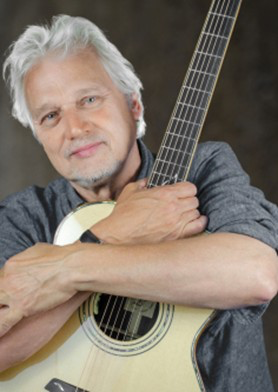
Bremainers Ask ……. Ben Chambers

Bremainers Ask ……. Ben Chambers

Ben Chambers is a musician, arranger and producer and is the voice behind the popular Pro-EU Radio Show and Podcast ‘SMR’ (Single Minded Rejoiners ).

Susan Scarrott : You’ve had some amazing special guests on SMR over the years. Is there anyone you are still longing to interview?

Hey, Susan – great question and one which I often end up asking myself! You’re right, some truly exceptional people have agreed to let me quiz them: Sir Tony Robinson, Ken Loach, Anna Soubry among others – but there are still so many people I’d love to talk to.

The list changes regularly, often according to news events and who I feel might have something worthwhile to say about them, but my Top 5 right now would be as follows:

Actor Eddie Marsan, who always speaks so thoughtfully on topics such as diversity, background and immigration; Armando Iannucci (the writer, director and satirist); former Liverpool Manager Jurgen Klopp about how to maintain principles in the face of vehement opposition; ‘Dragon’s Den’ legend Deborah Meaden, because I just love everything about her, and Ursula von der Leyen – I’d ask her all about the prospect of a fast track back! And right now, she’s the one to ask!


Steven Wilson : What, if anything, do you think Keir Starmer has done well, and what have been his worst mistakes?

I totally get why you’re asking that one, Steven! Disappointment runs deep with Labour right now, but perhaps my hopes were too high, eh? I think it’s important to remember, the contrast between the organized crime syndicate of the Tories and what we have now can’t be overstated – the vast majority of the Labour front bench and certainly their MPs are decent, principled people who care… and that’s a great starting point really, isn’t it?

But you’re right (I’m guessing from the “if anything” that you’re not exactly impressed!) Labour appears to have forgotten its root and branch principles and the reason it was elected, not to mention those in the Cabinet who previously held such passionate views on Brexit and Europe suddenly having so little to say (David Lammy? Whatever happened to him?). But aside from his refusal to fess up and face the Brexit music by reversing it pronto, Starmer’s obvious missteps thus far have to be the Winter Fuel Debacle, the optics over Benefit Reform and his obvious kowtowing to the multimillionaire press barons who “allowed him” to win the election!

But there is hope! Votes for 16- and 17-year-olds is a manifesto commitment I applaud heartily, provided (as I mentioned on last week’s show) substantial education reform takes place to prepare our young people for their new responsibility!


Lisa Burton : Which politician do you admire the most and which do you loathe the most?

Seriously, Lisa? You want me to whittle that list down to just one of each? Near impossible! But since it’s you – I’ll do my best…

But before I do, some honourable mentions: Anna Soubry (despite her Tory “ethics” on a number of issues) always impressed me with her straight talking, no nonsense approach to Brexit and still does to this day – but she’s no longer an MP, so I guess she doesn’t count!

I have tremendous respect for a number of former Tories who stuck to their guns over Brexit and were ejected from the party by Johnson in 2019, but again – they’re no longer serving.

So, right now, I’d have to say Lib Dem, Daisy Cooper. In my view, she’s a model MP. She publishes weekly a diary of how she’s spent each day, is principled, clear and able to take on anyone in a debate since she’s prepared to actually do her homework and know her stuff! Few others come anywhere near, but I also like Zack Polanski right now too!

As for the worst? Do you REALLY have to ask? It would have been a toss-up between Lee “30p” Anderson and some still serving vile Tory detritus like Robert Jenrick – but now the Nicotine-Stained Man Frog and Bollock Brained Foghorn of Ignorance has finally slithered into the Commons – there’s simply no competition!

I hate very few people. He’s one of them.

David Eldridge : Why do you think Farage’s Reform UK is so popular at the moment? Do you think they can keep it up till the next election?

Do you want me to be honest, David? I’m guessing you do…

Well, it’s no mystery really. Farage is adept at getting the hard of thinking onto the same page and dancing to his tune. In fact, he’s bloody good at it and right now, no-one does it better!

Promise big (forget about workable policy!), tell them EXACTLY what they want to hear and then bugger off down the pub to laugh at how stupid they all are with his multi-millionaire mates!

By tapping into what he knows are easily exploitable fissures in the public’s deep-rooted nationalistic tendencies, he expertly manipulates first the facts (into downright lies!) and then his base into fearing, then hating minority groups who pose them no threat whatsoever.

This both distracts from the REAL enemy (billionaires!) and helps cement his “cult of the ill-informed” (idiots?) who will follow him anywhere but off the cliff…

…which is a crying shame, isn’t it?

As for their chances in 2029? Who’s to tell? But Femi is right to take the threat seriously, as should we all – everything we can do to debunk his lies is 100% worthwhile! More power to the wonderful army of TikTok rebels who do it daily!


Valerie Chaplin : After one year in office, what advice would you give the Prime Minister?

Crikey, I’d love a chance to sit down with him, armed with a laptop and all the footage of him demonstrating his former principles! I’d make him squirm… or maybe I wouldn’t!

In his defence, I think being in Government means compromise to some extent and there will be things he has discovered that he genuinely didn’t know when in opposition. Plus, it’s easy to over-promise in an election campaign, they all do!

What’s harder to defend is his apparent void of understanding over how much damage Brexit is doing to the country, our reputation, trade, the economy, families – you name it!

I’d remind him that, when he took office, he promised to put “country before party” – what happened to that one? Rejoining the EU would fix 80% of our woes in one fell swoop and most of the population supports it – so what’s the REAL issue here?

I’d ask him to consult more widely before taking whatever daft advice his inner circle dream up! And I’d ask him to check his conscience before recycling the kind of rhetoric that came out of his mouth re: “island of strangers!”

Seriously, did no-one even think to check that?

Helen Johnston : As a long-standing campaigner what, if anything, do you think the anti-Brexit campaign could have done differently and what else can we do now?

Aha! The Billion Dollar Question, Helen!

Well, as we all acknowledge, the Remain Campaign was fatally flawed in that its leader was an arrogant Tory Prime Minister who assumed he had the charisma to knock Farage and Johnson into second place. Whoever made him think that?

And, as we also now accept, this was a campaign that lacked a positive case for the EU, assumed everyone knew all about it anyway and only ever reacted to the lies from Vote Leave, rather than setting the agenda themselves. What a mess!

Then there was People’s Vote, with their lukewarm, overly cautious approach which, although it managed to get boots on the street, failed to change a thing and then publicly combusted on social media!

We were a “gift” to the other side, really!

What we need to focus on far more now, in my view, is building positive arguments, linking our exit from the EU to the lack of cash in everyone’s back pockets and explaining how easy rejoining the Single Market and Customs Union would make everything for small and medium sized businesses trading with the continent.

We need to maintain our presence on the public stage (National Rejoin March have that covered, God Bless ‘em!) and work TOGETHER rather than seeing this as a multitude of smaller battles organizations and individuals can fight alone!

They can try, but alone they’ll achieve far, far less than alongside each other!

Next Month : Zoe Gardner

Zoe Gardner is an independent researcher, campaigner and commentator on immigration and asylum policy in the UK and Europe. She regularly contributes to political and media debates and appeared recently on BBC Newsnight. She has worked for the European Network on Statelessness, the Joint Council for the Welfare of Immigrants, Asylum Aid, the Race Equality Foundation and the European Council on Refugees and Exiles.

If you would like to submit a question/s for Zoe, please email us no later than Thursday 7 August.