
Bremainers Ask …… Mike Galsworthy

Bremainers Ask …… Mike Galsworthy

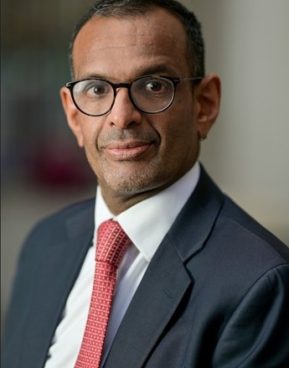
Dr. Mike Galsworthy

Mike Galsworthy is Chair of European Movement UK and co-founder of Scientists for EU/Healthier IN the EU. He is a media commentator about the effects of Brexit on the scientific community in the United Kingdom, a presenter with Byline TV and founder & co-director of the Bylines Network, which runs 10 citizen journalism online papers around the UK.

Michael Soffe : Thank you for your incredible work since Brexit. How do we now capitalise of the current admission by so many, that “Brexit has failed”?

The important thing to do is to get the “Brexit has failed” leave voters onboard. You’ll notice that although a very high proportion of people who voted leave agree that it has failed, a much smaller proportion would change their vote. Why? I’m guessing it’s because they still believe in the vision of Brexit as it was set out, over the vision of being an EU member. So, they believe their vote was the right choice, which they’d take again, despite the fact that in the current circumstances it has not borne fruit.

You may have noticed some Brexiteers now trying to push a new version of their vision – “National Conservatism” or “national sovereignty” as a way to build on Brexit and make it deliver the original vision. Sell the pot of gold at the end of the rainbow again, if you will. That’s why we need to go to those communities and those people, understand what it is that they want for their lives, kids, community and country, then find a way so our vision of rejoin is actually something that inspires them, on their own terms. Only then can they get onboard with rejoin. Just bashing them with how bad Brexit is will not win them over – they’ll be looking around for something else now, a new hope, and we must have a positive inspiring offer for them. If we don’t, we’ll lose them

Valerie Chaplin : How do we combat the negativity of Starmer in backing Brexit – it seems we have no opposition to vote for?

That’s why, in England in particular, we need European Movement as a prominent, visible and large alternative. Without anything like EM around, people will get frustrated and not feel hopeful. But if we can show rocketing membership, a fast-growing organisation with new branches all over the UK and presence in media from local to national, with more big-hitters joining as champions in our ranks, then we can really capitalise on this moment right now.

Starmer has made some pretty silly moves by painting in Brexit lines too hard and reaching out to an Express audience that doesn’t trust him, at the expense of his own base. However, he has no control over the shifting mood on Brexit in the country. Try as he might, he’ll not be able to avoid the issue should he come to power. He’ll be under pressure from businesses, Labour members, Labour MPs, other parties, public polling and media questions. If we can effectively build large societal structures advocating rejoin, and the polls are showing 65% for rejoin, what is Starmer, realistically, going to do? King Cnut knew, and I’m sure Starmer does too, that a leader cannot command a tide not to rise.

Keith Glazzard : A Labour or Labour led government is possible after the next election and closer ties to Europe may well result in an approach for access to the single market/customs union. What do you think the EU’s response to such a move would be

“The door is always open” said Michel Barnier recently. Which is true, but also quite simplistic. I do not think that a majority Labour government would open such a question (CU and/or SM) in their first term. But a Labour-led government in a coalition/confidence-and-supply arrangement is a very different beast as the Lib Dems (the most realistic partner) would come in with demands on PR and Europe. So, that could see things move very fast. Even the PR part makes a huge difference on UK-EU dynamics because the EU would know pretty instantly from that that there would be pretty much no way any future pro-Brexit government could form.

But anyway – back to the Labour majority scenario: The EU would be open to it, but they’d want to see a rapidly-diminishing Brexit contingent in the UK, because the last thing that they want to do is waste more time on the UK playing the hokey-cokey (in, out, in, out) down the decades with their EU membership and EU structures.


european movement
Steve Wilson : As a scientist, what is your biggest Brexit concern and how would you like to see the situation resolved?

If you’re asking about Horizon Europe, I find it quite distressing. A few years back for Scientists for EU, I calculated that under Horizon 2020, the UK had missed out on £1.5bn from 2016-2020 simply due to Brexit uncertainty getting in the way of collaborations, despite us being fully paid up members. I would hate to do the same calculation (i.e. loss relative to Germany) for the 2021-2023 period. 

I was actually joyful when the Windsor agreement was signed and Ursula von der Leyen said “this is good news for scientists” but noticed Sunak’s refusal to echo the sentiment. That then grew to an angry horror when I found out that, having waited for years outside Horizon Europe and shunning any Plan B because we were hanging on for Horizon Europe, that Sunak would then say he prefers a Plan B. That instantly threw cold water on the whole thing and will have had a chilling effect on our collaborations. 

Sunak may think he was being careful with money or haggling hard – but moves like that just lose money hand over fist. And I also note that Sunak, as Chancellor, threw out Erasmus+ too. What a wally! I want to see a deal on this asap – no more dragging it out and diminishing our science, or further diminishing and threatening this key bind of our nations. It’s vital that it’s fixed. This comes down squarely on our Government, in my view.

Beyond science, the loss of Freedom of Movement really bothers me. More important than our trade, for me, is the identity, rights and opportunities of our people (and, by our people, I also mean Brits abroad and fellow European citizens making their lives in the UK). Throwing away FoM not only took away an identity and a birthright from us, but it has done so much damage to people’s lives and families. It was wanton destruction. What needs to be fixed here is attitudes about immigration in general and free movement in particular. No political party wants to take it on, so this is where European Movement must do the work on public education, polling, focus groups, message testing, etc, etc. And this is a key element that must be supported by the public if we are ever to rejoin either Single Market or the EU outright. So this is where I want us to put a huge amount of work.

Anon : As Chair of European Movement UK, what changes do you hope to bring to the organisation & what is your first priority?

I hope to bring my passion, energy and my ability to knit people together from grassroots to big players. I love community-building and I want to build a huge, effective, pro-European community with EM at the heart of it all. 

My first priority has been to drive up the membership. That is absolutely the most necessary first step to getting the organisation bigger, so that we can take on more staff and resource the grassroots better. We’re not a think-tank, so we can’t get away with just a small team of analysts – we’ve got a vast community of members and local groups to service, train, supply, assist, etc and I take that function of EM very seriously. 

If we are to get the UK back into the EU, it’s not going to be done by a small team in Westminster – it’s going to be done by a huge great heaving community all over the country with well-resourced campaigns everywhere. So, the sooner we can get the membership and those underpinnings growing, the better place we’ll be in come the time. Additionally (and this feeds in) we need a lot more media exposure as a priority. European Movement needs to become a household name – and that in turn will help fuel the community build we’re undertaking.

Lisa Burton : There are a lot of excellent, active, pro-EU/anti-Brexit groups within the EU. Yet, Bremain is the only group outside of the UK to be affiliated with European Movement UK. As the newly elected Chair, do you have any plans to get more EU group affiliations or any plans to have ‘supporters of EMUK’ for the likes of industry, businesses, civic societies etc, who share our goals

Short answer – yes, absolutely. And again, this is why we need to build the kind of staff size that can support and engage with all such sectoral groups. I remember in the Britain Stronger in Europe campaign: I (as Scientists for EU) just could not get their ear on so many things. They had one guy who was a “stakeholder manager” and he was constantly deluged in correspondence and requests so he spent his whole time (as far as I could tell) fobbing off different groups to just give their team some internal peace. But think of all the opportunities missed! 

I know exactly what it feels like to be on the outside, with good ideas, but never being heard. I also know what it feels like being on the inside being swamped with requests that you cannot possibly manage. The only solution that I can see is to build the kind of team size and structure that can genuinely engage all the key parts of a nationwide movement and get the best out of all of them. And we absolutely need strong sectoral campaign drives.


Sue Mike G
Helen Johnston : How could a future rejoin campaign learn from the mistakes of 2016 to make a positive case for selling EU membership to British voters next time round?

Well that’s why the rejoin campaign is starting right now and learning right now! You cannot wait on last minute persuasion; you have to try and win before the contest itself actually starts. For me, the biggest lesson from 2016 was exactly that. By 2016, the Leave side had campaign veterans championing Brexit. They’d been at it for 25 years. They knew each other, they’d tested lines on it, toured around, found financial backers and sympathetic media. The Stronger In campaign, when it came together in late 2015, was constructed of people who were woefully naïve on matters European, and green as green could be on campaigning. So, for me, lesson one has always been to build, train and fully equip the army long before the battle. And if you look at what we have actually built since 2016, it is quite phenomenal. We have lots of veterans around, lots of hard knocks, lots of experience and lots of local groups who have lived through the tough times. We’ve built character and resources – community online and community knowledge about our core arguments – and now we’re really building central capacity at pace.

That’s the primary lesson. The second lesson is to be able to go out and meet people at their point of need. The huge comms errors of both Stronger In and People’s Vote was to think that endlessly repeating “economic damage” and “we demand a people’s vote” as pretty much catch-all campaign messages was going to turn people around.

Society is much more granular. People care about their own and their community identities, and community priorities. Yes, Vote Leave was saying “take back control”, but they were also going into actual communities and telling them “take back control so you can catch more fish from your own waters”, “take back control and scrap the stupid common agricultural policy”, “take back control of immigration to clear out these Eastern European workers that are sleeping six men to a room and undercutting what you can reasonably charge”, “take back control so we can get your Bangladeshi family over here once we stop the flood of European free movement taking their place”.

You see? That’s how the messaging was tailored to meet people at their point of need/desire. Yes, it was all BS and shamefully so, but it was all based upon what different communities wanted. When did PV do anything like that? We absolutely need to understand community need – and meet those communities at their point of need with our offerings, but unlike the Leave campaign, make sure they are solid promises and those communities stay onboard all the way to delivery. Brexit is failing because the promises didn’t hold up. Rejoin will be a success if the promises do.

David Eldridge : Apart from rejoining the EU, or at least developing a closer relationship with them, what do you think the main issues in next year’s general election should be?

The lead issue is clearly going to be the economy and who the public can trust to lead the economy out of the briar patch we’re in. There’ll be a big clash of Tories and Labour both saying, “you can trust us, but not them” and attacking each other’s economic credentials. There’ll also be debates around how you grow the economy out of a difficult spot – who do you invest in and where do you squeeze? But the main battle will be one over trust.

Flanking that, there’ll be more talk of corruption and constitutional reform. The public are still itching to see “real change” and both Labour and Tories will take aim at each other with portrayals of each other as complacent, incompetent elites. Labour will highlight the vast corruption and impropriety in office. The Tories will say Labour is the vanguard of “woke” culture sapping the civil service, business and wider society. As to what the issues *should* be (outside of Brexit); I’d say (1) guaranteeing basic quality of life (through a cost of living crisis), (2) reliable economic management to build out of crisis, (3) NHS.

Mike Phillips : How do we best promote the benefits to UK of getting back into Horizon and Erasmus, as first steps towards re-building a close relationship with the EU

With Horizon, everybody apart from Sunak knows the benefits – and I just don’t have his phone number. There’s realistically little we can say or do at this stage to swing anything there as it’s deep in negotiations between the UK and EU and it will stay there until they come to an agreement over money.

With Erasmus+, it’s a different kettle of fish. A really good ongoing campaign with strong involvement of youth groups can make it a prominent future-focused issue. Sunak will not want to backtrack on it before the next GE (although we could really hit him if we can get Conservative youth voices to back it), but it’s certainly a goer for a new Labour government that wants to throw something to rejoiners early on without compromising any of their red lines on EU relations (FoM, SM, CU).

So, that’s a real hopeful one to go for. Also, on Horizon, if Sunak hasn’t done a deal before next GE (surely he will and try to claim a win), then that too would be a complete gift for a Labour government. I’m very confident that eventually we’ll get both back. And then we’ll get more. And more. Until we’ve fully restored our place back in the European team.


Coming next month …………

In July, we will be returning to our occasional feature of Bremainers Ask Revisited. This time we will be asking 3 former contributors to comment on the state of play of British politics, and Brexit in particular, in the first half of 2023.

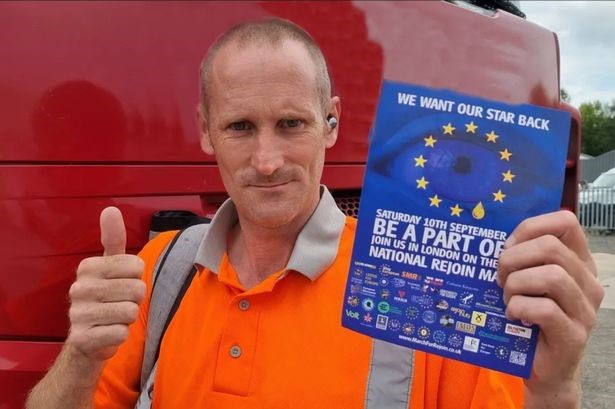
We are delighted to announce that our contributors will be Prof. Anand Menon (UK in a Changing Europe), Marina Purkiss (Jeremy Vine Show, The Trawl Podcast) and Peter Corr (National Region March).

Bremainers Ask….. Professor Juliet Lodge

Bremainers Ask….. Professor Juliet Lodge

Juliet Lodge has been a professor of EU politics at several universities in UK, NZ and EU. In the 1990s, she was named ‘EU Woman of Europe’ for her voluntary work. She has authored many books about the EU and is a regular contributor to Yorkshire Bylines. Juliet also co-convened the anti-Brexit group, Women4europe. She is currently working on EU Horizon projects on disinformation, leading work on ethics and AI.

Tracy Rolfe : What do you think is the best route to rejoin the EU and what do you think the timescale would be?

My sense is that many in the EU perceive our politicians to be way out of step with a public that is at worst indifferent rather than hostile to the EU, and at best increasingly and openly pro-European. There is appreciation of the desperate unfairness of Brexit on ordinary people, including Brexit voters, entitled to EU rights that the UK helped to create in 1986. The best route is not another referendum.

The timescale is unpredictable, given electoral variables here and in EU states, and the many other countries clamouring to join the EU (including Ukraine). I’d like to see us back in the EU tomorrow, and hopefully by 2030. Unfortunately, there isn’t a ‘best route’ in view of the hideous way in which our Brexiteer Governments connived in creating the worst of all possible Brexits, and given how they behave. It is hard to believe that they are as ignorant as their public face and party-oriented posturing suggests. They give the impression of preferring to side-step facts about the disastrous impact Brexit has on the UK and its citizens; seem uncurious about its impact on many in the EU; and in denial about how much Brexit has benefited our competitors.

Without a best route, politicians have to find a pragmatic way back. Any new Government must start by acknowledging the facts, come clean about the deceits, and prove its genuine commitment to being well-informed and working respectfully and cooperatively with our EU partners. A pragmatic way back doesn’t necessarily mean decades of delay, provided the foundations of a trusting and trustworthy relationship are cemented now. A new Government must capitalise immediately on the opportunities offered by the review of the Trade and Cooperation Agreement to restore trust in the UK and establish as close as possible relations, and work with the EU across the board. That demands openly acknowledging that we can’t achieve many policy goals alone. No country can. That’s why we joined the EU in the first place.

So, the first steps to working together are vital: paying our dues under, and participating in, the EU’s research programmes (such as Horizon), restoring Erasmus Plus and sector-specific freedom of movement, such as for musicians. But these are insufficient and discriminatory. What a future Government chooses to call what we need to do (rejoin the customs union or the single market, and restore mutual freedom of movement for all EU citizens, including Brits), is less important in the short term than being adult about what we lost and need to have. A grown-up leader should publicly and immediately work to ensure that families are able to travel and meet freely anytime, anywhere they wish; that good quality fresh food supplies are once more the norm; that trade flows free of bureaucratic barriers erected by the UK; and that our domestic and international security are once more improved by pragmatic cooperation and participation in programmes we helped to create and which we need. Our behaviour has to inspire respect and confidence in our ability to act honourably, upholding international law, and being the good partners we once were. We have to show that we understand and practise the values on which the EU was founded and thrives. That, itself, requires the UK to look closely at and address its own failings of democratic governance.

The UK has to prove that it can be trusted to be honest, open and accountable in upholding the rights and values and democratic practices we took for granted in the EU and which enabled us to flourish. In short, we have to show our value to the EU and offer constructive ideas for reform, dynamically confronting the many problems we must solve together in a spirit of open cooperation.

Steve Wilson :Many believe that the EU would be cautious about considering any UK application to rejoin. Do you agree?

Yes and no. Yes, because the Conservative Governments appear to have flippantly squandered achievements and wallow in toddler theatrics instead of genuinely seeking to have a constructive, working relationship with our closest allies and partners.

Yes, because there seems to have been a lack of understanding at the most basic level about how we worked when in the EU, and how the EU has worked (well) and developed progressive political agendas and policies without us. Yes, because purely from the point of view of presentation, too many Government and opposition politicians display deep ignorance about political realities in Europe and the UK’s increasingly irrelevant position in it.

And yes, because many feel that Article 50 should not be invoked frivolously in the expectation that its consequences can be overturned the moment things don’t quite accord with what the state who invoked it wanted. I feel that Article 50 should never have been included years later as an amendment to the original founding treaties. When the EU was created, there was no clause to leave it. European integration was the promise to work to solve problems together, in effect, forever.

No, because many EU leaders and politicians and officials, business and civil society representatives would welcome us back in the EU as soon as possible. Why? The UK co-created some of the greatest steps leading the EU to become what it is today: freedom of movement, the single market (warts and all), cooperation on defence and security, ErasmusPlus, health, climate, food and safety standards, police and judicial cooperation, and many more. The UK helped draft and agree some of the regulations which are acknowledged as genuine world standards, including the GDPR.

The friendship group created by Terry Reintke MEP is looking after ‘our star’ until we return to the EU as members. By then, many of those who knew the UK as a constructive EU member may have retired so we can’t just rely on them to be our advocate. But we can do our bit on a people-to-people basis to sustain, expand and deepen our links. Above all, we can show that a country outside the EU, which has a bigger pro-EU movement than any of the EU’s current members, is educated, interested, dynamic and a trustworthy partner who would add value to the EU.

It’s our job to educate ourselves in order to give our children a fighting chance of being in the EU, enjoying the opportunities that arise from having shared values and a commitment to democracy and working together with their European peers to improve the well-being of their communities. Isolation on a global stage is daft, on a regional stage it heralds oblivion.

Anon : As EU Woman of Europe in the 1990s, how far do you think women’s rights have come since then, and how much further do they need to move in order to equate to real equality with men?

Women’s rights have come a long way, but nowhere near far enough. Worse, we seem to be going backwards. Brexit seems to have unleashed in the UK more misogyny and an erosion of workers’ rights, inflexible working, discriminatory conditions (and little apparent attention to equal pay and opportunities for females); erosion of paternity and maternity rights, de-professionalisation of skills, exploitative practices in the gig-economy, lack of free post-school education, lack of access to EU funding for pre-school and lifelong learning, protection against domestic violence, stalling moves to a better work-life balance, undermining of fundamental rights and freedoms.

Brexit impoverished us all culturally, educationally and in terms of what we thought the UK stood for: tolerance and reasonableness.

Valerie Chaplin : Nationalism and the far-right thrive on disinformation and make us question truth and facts. How, in an increasingly digital world, do we combat this?

This area is recognised by the EU as a threat to its way of life. Accordingly, it has media literacy projects (which the UK could emulate) and programmes, such as the EuvsDisinfo project, to raise awareness and strengthen social resilience among young people as well as the public at large, and to improve rapid alerts across the EU to disinformation that represents a threat to democracy, health, the environment and security. Whereas hate speech is unlawful, disinformation is not. The EU insists that any of its measures to combat both should not undermine the freedom of opinion and expression enshrined in the EU Charter of Fundamental Rights.

The EU is investing in multinational, multi-disciplinary research teams to identify and combat disinformation without losing the potential benefits that AI may bring. The UK Government has excluded Britons from these teams. It cannot credibly combat manipulation of people for nefarious purposes while ignoring the standards set by the EU and the work it is doing. It must participate in work undertaken by those sharing common goals and values, and commit to upholding the human rights we took for granted in the EU. This does not preclude wider international cooperation, but it does mean understanding, pooling and sharing knowledge, jointly funding the kind of facilities and programmes we all need but cannot fund as individual states alone. It means working with our close neighbours to combat the challenges you mention.

There are innumerable initiatives afoot in the EU already: this year will see the EU advancing the adoption of a (reformed) AI Act which is widely regarded as setting global standards. This complements laws on the digital single market, and measures to combat extremism and disinformation. All must be seen against the backdrop of the next European Parliament elections in 2024 and concerns that hostile actors, foreign interests and non-dom media will use AI to manipulate ‘facts’, the news, citizens’ perceptions and even the results.

We all have to be vigilant, think critically, and know how to access legitimate fact checkers and assess independent reporting in order to improve our own understanding and knowledge, and we must show our children and families how to do the same. Above all, we need to join in media literacy projects and collaborate with the EU.


EU Nov

Matt Burton : Why are attitudes to compulsory ID/biometric cards so different in the UK compared to the EU?

I don’t know. Carrying ID cards in the first and second world wars was associated with national emergencies. In May 1952 they were scrapped. The UK Parliament reported on them in the 1990s. The Labour Identity Cards Bill (2004) was dropped owing to the timing of the 2005 general election. While another Act created the basis for a national identity register in 2006, this was scrapped in 2010.

Attitudes differ perhaps to those in the EU for many reasons, many associated with concern over state misuse of them; poor data handling and storage or even onward sale of data by the state and its private sector partners; fraud; and maybe an illusion that to be free means to be free of such a document. In practice, most adults have some form of official paper, plastic or digital ID – a covid vaccination card, NHS number, national insurance and tax numbers, bank cards, travel cards, student cards, loyalty cards, passports, driving licences being among the most common, and many of them biometric ones.

Legitimate questions as to the purpose of ID requirements introduced for recent local elections need to be resolved. The UK deviates from many EU norms in its seemingly laxer approach to biometric and AI tracking and surveillance of people.

David Eldridge : How has leaving the Horizon programme affected the UK, and what would be the process to rejoin it?

Disastrously. High level researchers have left (brain drain). UK universities have lost significant funding and hence a degree of research autonomy. Horizon’s budget for 2021-27 is €95.5 bn, including €5.4 bn from the NextGenerationEU to boost recovery and resilience. Worse, staff have lost the opportunity to take part in collaborative innovative research on matters from sustainable energy, AI and space research, to oceans, climate, industry, agriculture, culture and creativity, key enabling technologies, quantum security, robotics, combating disinformation, new treatments for diseases, means and therapies to restore lost abilities (e.g. through brain injury) or improve the lives of the most vulnerable.

The Government rejected the chance to rejoin Horizon because it did not want to pay its contribution to the research budget, as all partners do. This is likely to be resolved, but against a background of the EU’s overall general budgetary constraint. The EU’s budget covers things that cannot be achieved by states individually. The EU’s 2021-2027 long-term budget is €1.2 trillion and an additional €800 billion is available in the so-called NextGenerationEU recovery instrument for 2021-2026.

The priorities are building a greener, more digital and more resilient Europe. The UK has a role to play and it’s alarming that any Government would deny its people a chance to fulfil that.

Sue Scarrott : Do you foresee this Government continuing its journey along the road of divergence and isolation from the EU before the next GE? Or, alternatively, will it seek to limit the Brexit damage as public opinion changes?

This Government is likely to continue to diverge as deeply as it can and for as long as the current electoral and weak parliamentary system allow. It may moderate its position in order to show that whoever happens to be Prime Minister come the general election is potentially a more popular leader than any of his/her opponents, and rely on personalities and glib sound bites to win votes. It is unlikely to be disposed openly to taking steps to limit Brexit damage, even though the TCA review provides a good opportunity to acknowledge and remedy what isn’t working. Even then, voters must remember how fast the Governments has U-turned on commitments (such as the infamous claim of 40 new hospitals) and think critically before voting. In the background, talks have been progressing on many fronts – including security, migration and trade – few of which get covered by UK media.

Next month

Dr Mike Galsworthy is Chair of European Movement UK and co-founder of Scientists for EU/Healthier in the EU. He is also a media commentator about the effects of Brexit on the scientific community in the United Kingdom and a presenter on Byline TV. If you wish to put a question to Mike, please send it to enquiries@bremaininspain.com no later than Wednesday 7 June.