Bremain in Spain chair ‘disappointed’ after British High Court refuses appeal on Brexit referendum

Bremain in Spain chair ‘disappointed’ after British High Court refuses appeal on Brexit referendum

Sue Wilson, head of Bremain, said hearings at the Court of Appeal had shown there was a need to review the 2016 referendum result.

Wilson is the lead claimant of the UK in EU Challenge, a legal appeal launched with backing from expatriates in Spain, France and Italy.

“We still believe another referendum is likely and hopefully this will be conducted in a fair, legal and honest manner under increased scrutiny,” Wilson said.

The Court of Appeal’s Lord Justice Hickinbottom and Lord Justice Haddon-Cave ruled in favour of an earlier decision not to permit an appeal.

The court heard from Jessica Simor QC, acting on behalf of the claimants, that it was unreasonable for Prime Minister Theresa May to proceed with Article 50.

Sir James Eadie QC, First Treasury Counsel acting for the government, said the court had no scope to intervene now that Parliament had taken over the Article 50 process.

It comes after an Electoral Commission referred Leave campaigns to police after finding they spent more than the legal limit during the 2016 campaign.

Article from the Euro Weekly News
Bremainers Ask …….. In Limbo Project

Bremainers Ask …….. In Limbo Project

We’re delighted that Debbie Williams and Elena Remigi of the In Limbo project have agreed to answer questions from Bremain members this month. Below you can find out more about the project and our two interviewees, followed by their answers to your questions.

Description of the project

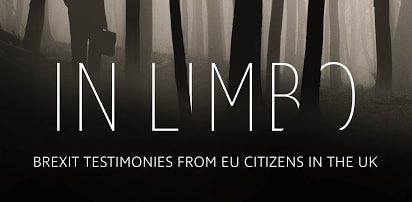
The In Limbo Project is a not-for-profit, non-political initiative set up by a group of EU citizens to record testimonies from the five million victims of Brexit and to allow their voices to be heard. 

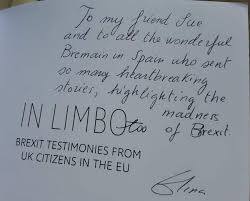
In Limbo project book, called ‘In Limbo: Brexit Testimonies from EU Citizens in the UK’. In 2018, it published its second book, ‘In Limbo Too: Brexit Testimonies from UK Citizens in the EU’. This second book is born of a collaboration between the In Limbo project’s group ‘In Limbo – Our Brexit Testimonies’ and the group ‘Brexpats – Hear Our Voice’. 

A true grassroots endeavour, the In Limbo project has gone from strength to strength as the books have become the go-to reference documents for understanding the harrowing human cost of Brexit for all those who, having embraced the European dream and built their life on it, have been plunged into an anguishing limbo since June 2016. These 5 million people risk losing everything (their homes, their friends, their jobs, their families, their sense of identity…) through no fault of their own and, for most of them, without their having had any say in what’s happening.

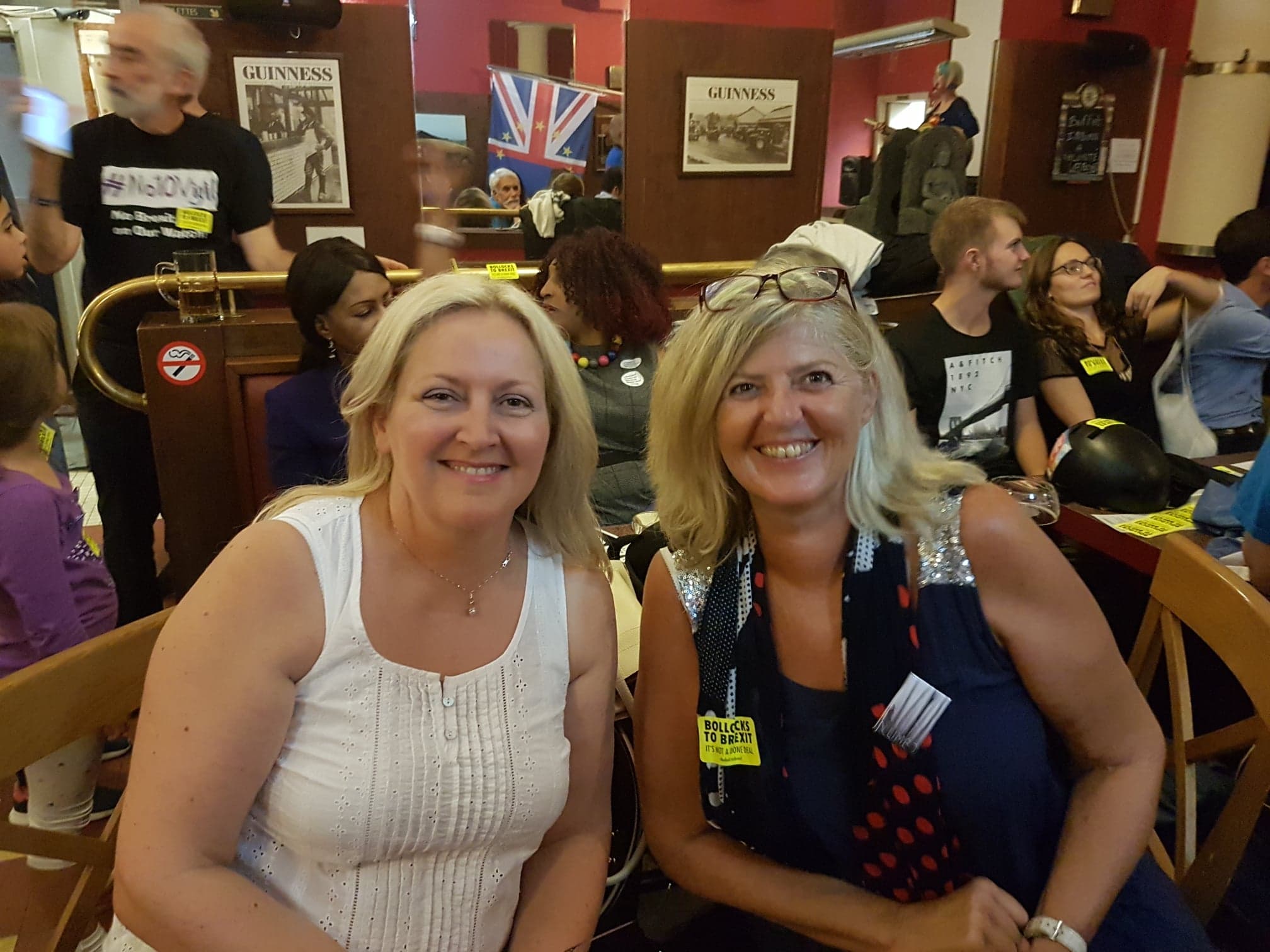
 Elena and Debbie

Elena Remigi

Elena Remigi is an interpreter and translator originally from Milan, Italy. She moved to the UK in 2005 with her husband and son, after spending 6 years in Ireland. She is Founder and Director of the In Limbo project and co-editor of ‘In Limbo & In Limbo Too: Brexit Testimonies for EU Citizens’. 

Debbie Williams

Debbie Williams is Welsh, and recently moved to Spain from the Netherlands. She founded ‘Brexpats – Hear our Voice’ in June 2016 and is on the Steering Committee of British in Europe. Debbie is co-editor of ‘In Limbo Too’.

Jo-Jo Chipper: “In the case histories you have collected, what is the most frequently-occurring fear voiced by the participants?”

Elena: “For EU citizens in the UK, the most recurring fear is that of not being allowed to stay in Britain due to a lack of documents and the presence of Theresa May’s hostile environment. Let’s not forget that some of our members have been dealing with this daily when trying, for instance, to obtain permanent residence. To give you a small example, in the summer of 2017, the HO sent some deportation letters ‘by mistake’. Some were sent to members of In Limbo. One was sent to a Finnish academic; another to a car factory worker upon his return from the holidays. In this context, you can understand why the most vulnerable ones in particular are very afraid about their future. 

The worries may differ but there is a common denominator: the fear of the unknown, a sense of betrayal because our rights have not been guaranteed and anger for not having had a voice in this referendum and what followed.”

Tracy Rolfe: “How much overlap is there between the two groups? Are they mirror images of each other or are there lots of differences?”

Debbie: “We are very much sister groups based on shared circumstances, and also that has now developed into personal friendships. There are many similar worries. Of course, each person is affected emotionally in different ways but the common denominator is one of anxiety based on the unknown.”

Elena: “In both groups, there’s a good mixture of EU citizens in the UK and UK citizens in the EU27. Working together has deepened our friendship and made us realise the importance of collaborating to ensure that all our rights are ring-fenced. Both groups of citizens are at serious risk, particularly in the case of a no-deal. The suffering is also the same, so in this sense we are mirror images of each other.”

Ruth Woodhouse: “Is there a difference in attitude between the way in which people view the plight of EU citizens in the UK and the way in which they view that of British citizens in the EU27?”

Debbie and Elena: “That’s a tricky one to answer. It depends on who you talk too. Within the two groups there is solidarity and understanding; outside of our safe places there are mixed messages. However, we will not be anything other than one united immigrant voice.”

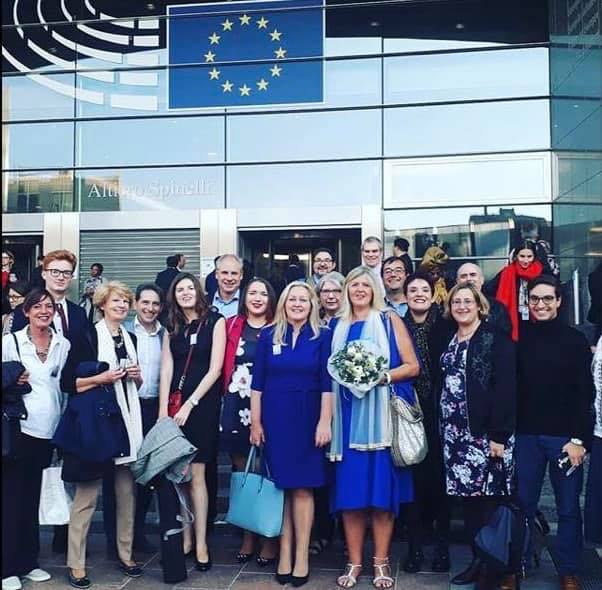
EP group

Pat Kennedy: “Have there been any interesting or helpful responses from politicians who have been presented with the books?”

Debbie: “With ‘In Limbo Too’, yes – encouraging and supportive words from many MEPs, a couple of MPs, and in the Lords. Three MEPs supported us in our presentation to the European Parliament last October.”

Elena: “Both books have received a lot of supportive messages from MPs, MEPs, Ambassadors and other political figures. The first book in particular has been sent to over 1000 politicians and we aim to do the same with the second. It’s imperative that our voices be heard.”

Sandra Stretton: “Do you have another book in the pipeline?”

Elena: “The In Limbo project was conceived as a duology from the beginning. There is no other book in the pipeline, but we will continue to document everything that happens to EU citizens in the UK and to UK citizens in the EU27, as our rights have not been fully guaranteed yet. In the case of EU citizens in the UK, there are grave concerns regarding Settled Status, given it’s an application made in a country known for the hostile environment introduced by Theresa May. It’s already causing problems now, and we wonder what will come next. For Brits in the EU27, there are concerns linked to the various registration systems put in place, access to healthcare and loss of freedom of movement and what that will mean for people working across borders. So this will remain an open project which will give a voice to the voiceless and consign these testimonies to future generations to understand – and hopefully learn from – what happened.

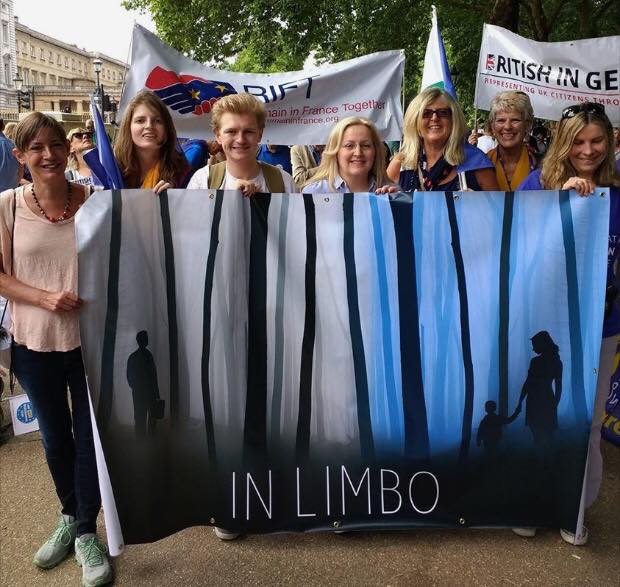
In Limbo March

James Gambrill: “How has being involved with the In Limbo project changed your own personal outlook?”

Debbie: “I now have a better understanding about the issues surrounding migration, the preconceived ideas and stereotyping of people. It has opened my eyes to not only European migration but all migration and asylum issues. The human side always seems to be forgotten: Every individual is unique, and the treatment of people by some governments is a disgrace.”

Elena“Totally agree with Debbie – I would not add anything else.”

Malcolm Perry: “Has there been a difference between the reception of ‘In Limbo’ and ‘In Limbo Too’? Is there a difference between perception of migrants in your opinion?”

Debbie: “As a group, BHOV has had some understandable stick for the word ‘Brexpats’. I take full responsibility for naming it, and I’m hating it more as each day passes. But in consultation with the group we have decided to keep it as it is known and a reminder each day that we are not expats, we are immigrants, like all mobile citizens.”

Elena: “Personally, I think that in terms of the books, they have been equally well received. ‘In Limbo’ being the first volume, it created quite a stir when it came out in 2017, but I would have always felt it to be an incomplete work if the stories of the Brits in Europe hadn’t been told.

Regarding the perception of migrants, however, there is a difference. Since the referendum campaign, here in the UK, EU citizens have had to fight against a narrative which all of a sudden has depicted us as unwelcome migrants, as the ‘other’, the enemy, as people who weigh on the system. We have also had to deal with innumerable cases of xenophobia and hate crimes. The last we heard was yesterday by a member whose windows were vandalised. I don’t think that’s the case for most Brits in Europe, so in that I see a divergence.”

Zoe Adams Green: “What first gave you the idea of a book of testimonials?”

Elena: “The idea of the book came from my personal experience of dealing with the Home Office. When I obtained permanent residence after filling in the infamous 85-page document and sending 5 kilos of evidence, I decided to apply for citizenship.

On top of all the tests and documents already requested by the Home Office, I had to send an additional 3 kilos of evidence (including detailed bank statements and medical reports), as the Home Office simply wouldn’t believe that I had been living in this country for over 13 years even though I had a house, a car and a mortgage here. Sadly, I realised that I was not an isolated case, and this opened my eyes to the plight of many others.

Above all, after the referendum I noticed that many people had started sharing their feelings of anger, worry, disappointment and even betrayal on Facebook, and so I thought that if our voices could be collected in a book they could become a much stronger, collective voice. The aim of In Limbo is therefore to show the human side and the human cost of the Brexit story.”

Kay Adams: “Once Brexit is resolved, one way or the other, will you still be actively involved in citizens’/human rights campaigning?”

Debbie: “Absolutely yes for me. There is no way we should ever dehumanise people on the basis of their origins, we should never again see people be stripped of their rights without their permission.”

Dedication to Sue Wilson

Elena: “Definitely yes. This experience has opened my eyes to the plight of countless other people: EU citizens in the UK, UK citizens in the EU27, non-EU migrants or refugees, and it has given me a better insight into the hostile environment and the impact it has had on countless lives (for example on those of the Windrush generation). The fact is that I can no longer close my eyes after what I have heard from private chats or have read, so I think that I will continue to be involved in one way or another in these issues.” 

Many thanks from the Bremain team to Elena and Debbie – and thanks also to the Bremain members who sent in their testimonies to the In Limbo project. 

Sue Wilson Writes: Remainers must forgive fellow Brits in Spain who fell for the Brexit lie

Sue Wilson Writes: Remainers must forgive fellow Brits in Spain who fell for the Brexit lie

There’s no doubt that Brexit has caused a deep rift in society, often dividing colleagues, friends and families. In this week’s column Sue Wilson from the Bremain in Spain campaign group says remain voters must forgive fellow Britons in Spain who fell for the Brexit lie.

When I speak to people in the UK, I’m commonly asked: “Is it true that some Brits living in Spain voted for Brexit?” People seem genuinely surprised when I confirm it’s true. They frequently ask: “Isn’t that like turkeys voting for Christmas?”

The next question is, inevitably: “But why?” I’ve pondered that many times over, as have other pro-EU campaigners living in Europe.

In my role as chair of Bremain in Spain, a campaign group that works to stop Brexit, with a membership of Remainers, it would be easy to ignore the question altogether. Spending so much time in a Remainer “echo chamber”, I could almost forget the Leave side. However, it’s important to understand opposing views.

The reasons why some Brits in Spain voted Leave are the same reasons that Brits in the UK voted for Brexit. Whether they believed Turkey was about to join the EU (it isn’t), that the UK doesn’t control its borders (it does), or the infamous lie mounted on the side of the red bus, I believe most people wanted what was best for the UK. They voted for a better life for themselves and their families, even if Brexit could never deliver it.

I frequently hear of conversations – sometimes heated, sometimes fatal – between families, friends and colleagues, on different sides of the debate. The divisions created by Brexit are deep and strongly-held. They run against previous groupings that were based largely on socio-demographic background and political inclination. Many people have lost some old connections and have replaced them with strong, new ones, forged in unlikely places.

A common belief of Leavers in Spain is that Brexit would change nothing – life would continue as before. In some ways, that could be true for Brits living in Spain, especially for those with disposable income and/or a bolthole in the UK. In the event of Brexit, especially a hard one, we would avoid the immediate issues faced by UK residents, such as food shortages and price increases.

However, the impact could be felt re travel/visa requirements, the potential further devaluation of sterling, or a reduction in our rights and freedoms. Some of these could have significant consequences for us.

The truth is that we don’t know all the implications – we don’t even know what Brexit might look like at present. Furthermore, a forthcoming snap election in Spain could impact the Brexit bilateral negotiations. I have a good understanding of the situation, but even my crystal ball can’t predict the future under these circumstances!

Read Sue’s full article in The Local

Costa Collateral: The sad fate of Britain’s Brexpats

Costa Collateral: The sad fate of Britain’s Brexpats

It is a typically tranquil winter afternoon at the Chambao de Vicente restaurant.

Its rustic terrace spills out onto the golden sands of the Playa La Herradura, a beach running parallel to the small Spanish Costa del Sol town of the same name.

The clientele is a mix of both immigrants – British, Germans and Swedes – and Spaniards, their jovial laughter perforating the sound of the nearby rolling waves.

Yet, once lunch has been cleared, the sleepy restaurant wakes with a jolt as a group of British diners gathers to unfurl a European Union flag.

“We want to stay with you!” whoops one woman.  “Yes,” exclaims another, “Bollocks to Brexit!”

The good-natured gang are received well by other patrons, many of whom rush over to be photographed with the Brits.

The group are members of Bremain in Spain, an organisation set up in the wake of the Brexit referendum in June 2016.

Bremain in Spain not only campaigns for the UK to Remain but also lobbies British, Spanish and EU politicians to protect the rights of British immigrants in Spain.

Membership of the group has swollen over the last few months to include more than 5,000 activists with the increase attributed to concerns that Brits in Spain have been all but forgotten by Theresa May. A number of other worried groups exist across the country.

Just the day before the lunch in La Herradura, the Brexpats in Spain organisation held two public meetings in the towns of Benalmadena and Mijas.

“We had two informative public talks on the coast, both attended by more than 200 worried Brits,” explains Sharon Hitchcock, a volunteer for Brexpats in Spain.

“During our meetings we have found that there are a lot of confused people who are finding the whole process quite overwhelming.”

More Brits call Spain home than any other country in the EU27 – 310,000, although this figure is thought to be as low as a third of the actual number, with temporary residents, dual nationals and those not registering with the Spanish authorities making up the rest.

Read the full article in The New European

Sue Wilson Writes: How Spain treats Britons over Brexit is in the hands of the UK

Sue Wilson Writes: How Spain treats Britons over Brexit is in the hands of the UK

While there have been warm words and encouraging promises from Spain towards Britons in the country, the reality is their futures depend on the UK government and people have lost faith in it, says Sue Wilson from the Bremain in Spain campaign group.

How many times, over the last 31 months, have Brits living in the EU been told not to worry? As frequently, I imagine, as EU citizens in the UK have heard the same words.

Since the start of the negotiations in March 2017, our rights as citizens were one of three priorities up for negotiation. It was going to be easy, apparently, as nothing was going to change, and our lives would not be affected.

We might have believed it at the time, as the EU seemed keen to preserve the status quo. Brexit would not undermine our rights in any way, shape or form.

The initial offer from the EU provided reassurance. That is, until the Department for Exiting the European Union became involved. Prime Minister Theresa May rejected the EU’s initial offer and came back with her own inferior counter-offer. Not only that: May acted as if she were making the first offer!

It comes as no surprise, after viewing May’s time at the Home Office, that her driving ambition was to reduce immigration numbers. Having set an impossibly low target of tens of thousands of EU immigrants, May immediately starting taking rights and freedoms off the table for EU citizens. Naturally, the EU responded by removing rights from the table for British citizens in the EU.

Campaign groups, such as British in Europe, of which Bremain in Spain is a founding member, and the 3Million, have worked tirelessly to protect citizens’ rights. Despite their best efforts, the Withdrawal Agreement sees our rights downgraded and leaves important gaps, causing much anxiety. These include the loss of freedom of movement and the failure to recognise professional qualifications.

For many, the rights secured in the Withdrawal Agreement, such as healthcare and pensions, provided relief from the ongoing Brexit nightmare. However, that relief was always tempered with the constant ringing in our ears of May’s “nothing is agreed until everything is agreed”. Also, while May’s deal might have been agreed with the EU, there’s still no agreement with the UK parliament, or any sign of an agreement on the horizon.

Read the full article in The Local

Brexit: Why have British citizens in the EU been left to fight for their own rights?

Brexit: Why have British citizens in the EU been left to fight for their own rights?

Groups of volunteers are spending all their time and hard-earned cash on fighting for the rights of Britons across the EU who are directly affected by Brexit. The British government needs to finally make the 1.2 million citizens in the EU a real priority and ease the burden on campaigners, writes Ben McPartland.

Last week a team of volunteers in different parts of France worked late into the night trying to interpret the newly published French law that spells out what will happen in the case of a no-deal Brexit.

The volunteers, who form the “citizens rights” team at Remain in France Together (RIFT), put aside their normal lives and got on with the job of providing information to the thousands of anxious Brits who were waiting desperately for news of what their futures might hold if Britain crashes out of the EU in a few weeks’ time.

These are the same team of volunteers who have spent their own money travelling to Paris to lobby the French government to alert them to the issues Britons are facing across the country.

Of course, it’s not just in France where unpaid volunteers have taken it upon themselves to explain the impact of Brexit on health cover, driving licenses and residency rights and basically to stick up for the citizens’ rights of anxious Britons, whose lives and health have been damaged by nearly three years of limbo.

Read full story in The Local