Bremainers Ask…… The Bremain Council

Bremainers Ask…… The Bremain Council

Bremain’s AGM took place online on Saturday 22 November. Vice Chair Lisa Burton presented our Annual Report and Chair Sue Wilson talked about our goals and strategy for the coming year.

For the Q&A session, members were invited to put questions to the Bremain Council. We received some great questions and the answers we gave in the meeting are summarised here

Michael Soffe : Could I ask that Bremain have a concerted effort to create a campaign to get ALL the members to vote in the next GE. Many people are saying they have not registered. We are going to need absolutely every vote we can get in the next GE I feel.

Sue Wilson : I absolutely agree that encouraging registration to vote as overseas electors is vital, especially after how hard we fought to regain that right. It is disappointing that so few took advantage when the opportunity arose, so I think a renewed campaign is essential. Timing, however, is crucial: if we ask people to register too early, they may have to repeat the process by the time the election comes around, since re-registration is required every three years. I believe a more forceful push should come a year before the election, to maximize effectiveness. Maintaining this momentum and making sure people are aware of both the opportunity and their responsibilities is key.


Beth Martin :I am unclear what Spanish residents with a TIE are supposed to do when the EES comes in. Do we have to use the same machines as tourists or will we count as “Europeans”?

Sue Wilson : Based on what we know from the embassy, the official EES procedures aren’t entirely clear for residents like us. Officially, if you hold a TIE, you are exempt from fingerprinting and biometric data, but it’s still uncertain which gate you’ll use: in theory, there are supposed to be three options, but we haven’t seen this implemented yet. From my recent experience in Barcelona, I tried the EU gate but was refused, having to use the non-EU line with everyone else, though I didn’t need biometric checks. And, based on the stories we have heard today from members entering through airports such as Alicante, Castellon, and Malaga, for now, I’d advise that TIE holders should expect to queue with other Brits. The rules may become clearer and more consistent as the system matures, but for the time being, expect some confusion and be ready to politely present your case depending on the airport and the officials on duty that day.


Mike Phillips : What is the better way to rejoin a changing EU, in a phased manner starting with an EFTA single market approach, or as if we are a new non-member?

Lisa Burton : I believe that, although full EU membership is our long-term goal, we have to be realistic about the current political climate, both in the UK and within the European Union. From my perspective, the EU is understandably cautious about welcoming Britain back when there’s a risk that another anti-EU government might reverse any progress. That’s why I advocate for a step-by-step, pragmatic approach—one where we focus first on building trust and establishing closer ties through agencies like Horizon, Erasmus, and joint energy projects. While public support for rejoining is rising, it hasn’t yet reached the level where an immediate push would be successful. So, for now, we must combine visible campaigning with emotional arguments that reconnect people to the European ideal, while steadily advancing our engagement with Europe.

David Eldridge : I share Lisa’s view that a phased strategy is wisest. Specifically, I support intermediary measures such as joining a Customs Union, as recently proposed by the Liberal Democrats. This route provides tangible progress without the political difficulties of freedom of movement. Gradual integration reduces the risk of another reversal and builds credibility with the EU, laying a stronger foundation for eventual full membership. I believe incremental steps and maintaining rejoining as our ultimate goal are both essential.

Sue Wilson : I think  it’s important that rejoining the EU remains our goal. Joining the Single Market and Customs Union would be significant improvements but we still wouldn’t have a voice. So we need to work on two fronts, with rejoining as the ultimate goal, while considering how to improve things along the way. One doesn’t have to exclude the other.


Bremain in Spain Banner Christmas

Ruth Woodhouse : Our list of aims includes protecting the rights of UK citizens abroad, but have we got anything specific about protecting the rights of EU citizens in the UK?

Sue Wilson : Although we’ve always supported them morally, it’s not explicitly listed in our aims—though it does appear in our mission statement. Our focus has traditionally been on representing Brits in Europe because that’s who our main contacts, like Westminster officials, expect us to represent. However, I see no obstacle to making this support more explicit in our goals, especially given coming challenges. It’s a topic worth revisiting in future council meetings to consider how we might advocate more directly for EU citizens’ rights in the UK.

Lisa Burton : Early on, our group worked very closely with organizations like the 3 millionand the In Limbo project—especially during the heightened uncertainty of the withdrawal agreement’s rollout. Although some of those partnerships have faded a bit, they were strong, productive relationships based on mutual support. I see value in reinvigorating those connections and collaborating where our efforts align. It’s important to revisit these links as we continue to face evolving challenges.


Anonymous : What are your thoughts about the new immigration rules being proposed by the Home Secretary?

Lisa Burton : I see these new immigration policies as deeply worrying, especially the reciprocal risks for Brits in Europe. When lobbying, I point these repercussions out to the Labour government, stressing that dignified treatment of EU citizens in the UK is crucial because it will be mirrored for UK nationals abroad. I’ve also noticed a troubling increase in fear-driven, anti-immigration rhetoric—even among liberal, anti-Brexit group members. It’s vital we keep confronting misinformation with facts and compassion, reinforcing our group’s core values on migrant rights and showing how Brexit has damaged positive attitudes toward migration and made policies more restrictive.

Sue Scarrott : I speak from the perspective of living in Scotland, where the labour shortage is acute and immigration is desperately needed. Policies that prevent asylum seekers from working only make things worse, and we need to communicate how Brexit has led to harmful restrictions—especially hampering our ability to fill essential jobs. I’d like to see a shift in the message toward the advantages migration brings, particularly for struggling economies and public services.

Helen Johnston : It’s clear that Brexit hurt not just long-term migration, but crucially, short-term and seasonal work. This loss is felt in agriculture, hospitality, and other industries that used to rely on the easy movement of temporary workers. I would argue that any discussion about migration policy needs to include the positives of freedom of movement for all types of workers,especially young people, who benefit from opportunities to work abroad and experience other cultures, while filling vital gaps in the labour market.

Sue Wilson : I make it a point to remind people—both inside and outside our group—that we should always link the current hostile migration climate back to Brexit’s negative impact. U.K. policies now erroneously lump all newcomers together as “illegal”, escalating fear and misunderstanding. When the government conflates asylum seekers with economic migrants, public perception worsens, and policy becomes more damaging. Our advocacy should be fact-driven and emphasize constructive, humane solutions.


Anonymous : Do you feel more or less optimistic about the prospects of the UK rejoining the EU now than you did a year ago?

Lisa Burton : I feel 100% more positive than last year. The change in government and Starmer’s deliberate effort to rebuild trust with the EU are significant. The symbolism of the EU-UK summit in Britain was huge, and Starmer has found himself included in European circles where we were previously excluded. There’s mounting evidence of the negative impact Brexit has had: the GDP loss, labour shortages, security issues. Politicians are now talking openly about these problems and about solutions that invariably lead back toward Europe. Public opinion, as reflected in Lib Dem, Lab, and SNP positions, is aligning as well. The landscape is clearly shifting toward closer EU ties.

Sue Wilson : I share the sense that things have moved forward over the past year. It’s encouraging to see Brexit finally being mentioned again by politicians and in the media as, until recently, it has been a taboo subject. I believe politicians are beginning to acknowledge the damage and to talk about improving the relationship with Europe, as well as how the landscape is shifting towards practical cooperation. I’m convinced, though, that the approach will remain cautious for a while—government will want to proceed quietly to avoid political attacks from opposition and media.

Sue closed the AGM by summarising our collective optimism about future relations with the EU and confirming the Council’s views that we are closer now than a year ago, and progress is being made. 

Rejoin Ramble

Rejoin Ramble

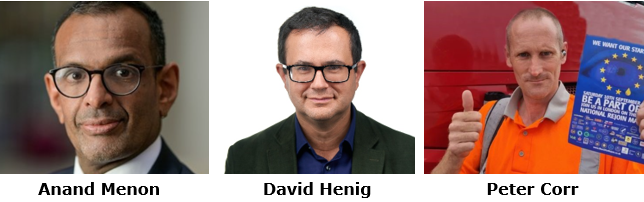
Next year, from Saturday 23 May to Friday 5 June, the National Rejoin March are planning an extra special event. The Rejoin Ramble will see the NRM team of Peter Corr, Clare Hall and Ceira Sergeant walk 255 miles from London to Brussels. On arrival, they will deliver a booklet full of your comments on why we want to rejoin the EU.

There are many ways you can contribute:

  • Add your comment for inclusion in the booklet here
  • Make a donation to cover the Ramble costs here
  • Join the send off in Parliament Square on Saturday 23 May at 8.00 a.m.
  • Join the send off in Dover on Friday 28 May at 8.00 a.m.
  • Join the reception in Brussels on Friday 5 June at 6.00 p.m.
  • Join the NRM team on any of the legs, on any of the 14 consecutive days, in England, France or Belgium (daily average 19.6 miles)

Or, for the really ambitious (and fit), why not join for the entire ramble?

Further information is available on the Rejoin Ramble webpage, including how you can join the NRM team for any/all of their ramble.


Bremain in Spain will be taking part. Why not join in the fun and show the EU just how badly we want our citizenship back?

Bremainers Ask…. Marsha de Cordova MP

Bremainers Ask…. Marsha de Cordova MP

Marsha de Cordova has been the Labour MP for Battersea since 2017, serving in Keir Starmer’s Shadow Cabinet as Shadow Secretary for Women and Equalities. She is a member of the Socialist Campaign Group and has been Second Church Estates Commissioner since 2024.

Marsha is Co-Chair of the UK-EU Parliamentary Partnership Assembly, having been appointed in 2024.

Ruth Woodhouse

Why are Labour seemingly so afraid to challenge the anti-migrant narrative of Reform UK, and indeed appear to be positively enabling it?

This directly speaks to the crucial issue of standards and the responsibility all politicians share to maintain honest and respectful debate.

I am deeply concerned that the migration debate has become toxic, in part because the left has underestimated how easily racism and far-right extremism can infiltrate mainstream political discourse. This complacency has led to a misguided approach, one that tolerates far-right rhetoric and, at times, repeats it while ignoring the serious risks involved. In some cases, when the repercussions of doing this become clear, some politicians have retreated from their harmful statements. However, by then the fear and division have already taken root in our communities.

We must confront the far-right’s anti-migrant narrative decisively and hold ourselves to a higher standard of political discourse – one grounded in truth, respect, and inclusivity. Giving ground to far-right discourse on migration will only strengthen the far-right and weaken our message to communities.


Lisa Burton

When can we expect to see the details and implementation of the youth mobility scheme between the UK and the European Union?

As I’m not a government minister, I don’t have the specifics of the negotiations.

However, based on several indications from the Chancellor and the Minister for Europe, it’s clear the Government is committed to advancing the scheme. This includes promising signs of working towards association to the brilliant Erasmus+ programme.

After multiple discussions with Ministers, I’m optimistic they aim to make substantial progress ahead of the next UK-EU Summit in May.


 Matt Burton

What would you say to pro Europeans who feel that Labour is not going far or fast enough with resetting the UK’s relationship with the European Union?

I represent Battersea – a constituency that voted overwhelmingly to remain in the European Union and a place where thousands of Europeans live – and I fully share the frustration many feel about the ongoing challenges as result of Brexit. This includes issues around the cost of living, reduced cultural exchange, and the pressure on small businesses that my constituents experience every day.

Throughout my time as an MP, I have consistently championed a pro-European vision. Across Battersea, it’s clear just how much a closer, more constructive relationship with the EU could improve people’s lives.

That said, it’s important to remember the state of our relationship with the EU before this Government took office. Less than eighteen months ago, conversations were simply not being had and there was no sign of life between the UK and EU. Since then, we’ve seen real progress: this Government has reopened dialogue, laid the groundwork for deeper cooperation on a range of issues, and, crucially, demonstrated a genuine willingness to work with our closest neighbours to confront the world’s most pressing challenges.

I am hopeful that from this standpoint, further change will flow.


Susan Scarrott

Have lessons been learned from the Brexit referendum campaign – where there were few positive messages regarding our relationship with the EU – rather than simply reacting to the negatives that Reform is still perpetuating?

We only need to look at the outcomes of last May’s UK-EU Summit to see change here. The tone of our relationship has shifted, and we are now hearing the right messages about the value of working together.

The Government is putting forward the argument that we need our neighbours to build a safer, more stable and peaceful world. We are also pressing the value of cultural exchange for young people’s opportunities and emphasising the objective truth – that it is better for our economy and for trade to work with the EU rather than against it.

There is a renewed confidence to Government communication on EU affairs, which is very welcome given the dire state of the conversation less than six years ago.


Anon

As a former Secretary of State for Women and Equalities, what positive changes for women have you witnessed over recent years and what more needs to be done to ensure equality?

Gender-based violence remains one of the most serious challenges we face in achieving women’s safety and equality. For many in Battersea, this issue struck painfully close to home with the horrific murder of Sarah Everard in 2023.

Since then, however, we have begun to see meaningful progress. The introduction of Raneem’s Law in February marked an important step forward, bringing domestic abuse specialists into 999 control rooms for the first time. A new criminal offence for spiking will soon be created under the forthcoming Crime and Policing Bill, showing the Government is serious in its commitment to halve violence against women and girls in the next decade.

I was also buoyed by the appointment of Dr Mary-Ann Stephenson as the new Chair of the Equality and Human Rights Commission. Having had the privilege of working with her and the Women’s Budget Group during my time as Shadow Minister for Women and Equalities, I know she brings a wealth of expertise, integrity, and compassion to the role – qualities that will be essential in defending and advancing women’s rights and equality.

Next month

Bremain’s Annual General Meeting will take place online on Saturday 22 November. You can register here to attend.

Members, whether attending or not, are invited to put questions to the Bremain Council. We will also feature the best questions/answers in next month’s newsletter.

If you wish to submit a question for consideration, please email us no later than Wednesday 12 November. Please indicate in your email if you would prefer your question to include your name, or if you prefer it to be discussed and published anonymously.

Strengthening The Institutions We Rely On

Strengthening The Institutions We Rely On

by Helen Johnston for Yorkshire Bylines

A new report finds that the UK’s arm’s length public bodies are highly vulnerable to politicisation.

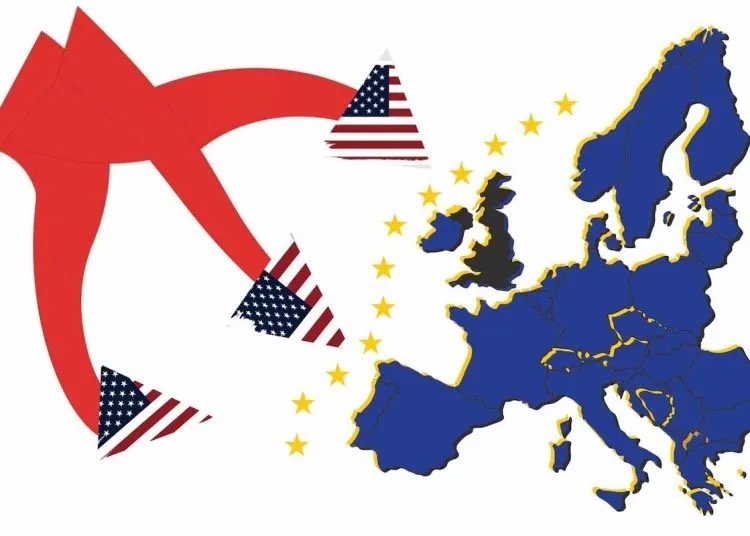
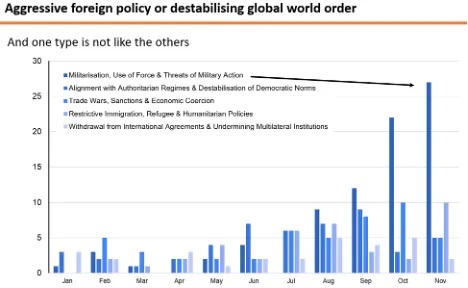
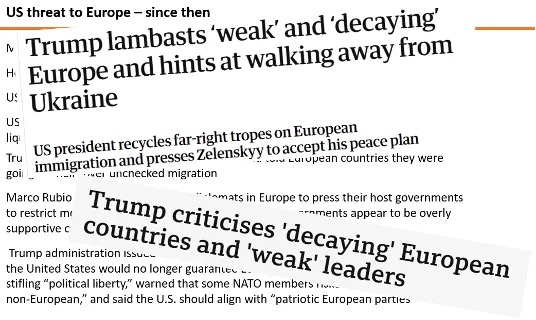
Earlier this month, we reported on a talk by Professor Christina Pagel of University College London (UCL) at a Grassroots for Europe  webinar about the Trump Action Tracker project, documenting the systematic dismantling of democratic institutions in the United States by the Trump regime.

Now, a new report, ‘Strengthening the institutions we rely on’ by Pagel and her colleagues Luke Flynn and Martin McKee at the UCL Policy Lab and the London School of Hygiene and Tropical Medicine (LSHTM) respectively, finds that the UK’s top scientific institutions, from the Met Office to the UK Health Security Agency, have inadequate institutional defences to prevent potential political interference.

Learning from the US experience

The tracker shows that under Donald Trump, independent institutions in the US have been systematically attacked in a number of clear areas:

With its populist, far right, nationalist agenda, the Reform Party is on the rise. We can see only too clearly how Nigel Farage is reading, and following, the Trump playbook. Professor Pagel explained that, as she watched events unfold in the States, she began to wonder: “What can we do that is a bit more positive than just tracking this kind of doom spiral. Do we need to protect British institutions if a right-wing populist government came into power here in four years’ time?” Her ANCHOR (Advancing National Commitment to Health and Science, Open Data & Resilient Oversight) project examines how UK institutions can be protected by understanding the US experience.

Identifying weak points

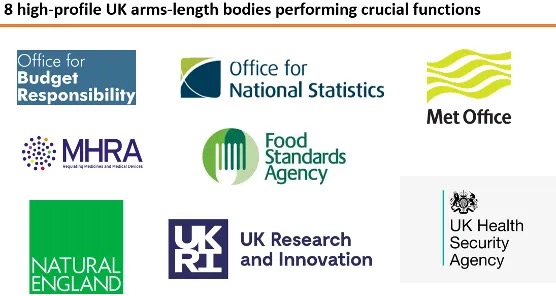
By mapping the independence of 24 arms-length bodies (ALBs), specifically involved in producing or publishing evidence or holding governments to account, the project aims to identify and counter potential vulnerabilities. Results for eight key bodies are shown below (taken from the Report’s executive summary).

Reassuringly, they show that the Office for National Statistics (ONS) is already substantially protected from interference. But some other vital bodies have very little independence. The UK Health Security Agency has the right to publish without interference, but it could be abolished rapidly, with no parliamentary oversight. This is effectively what the Tories did to its predecessor, Public Health England, in the middle of the pandemic.

The most vulnerable aspect across all the ALBs studied is that of independent appointments. The 2015 Grimstone Review significantly weakened the powers of the Commissioner for Public Appointments. Independent panels draw up a shortlist of candidates, but the new rules allow ministers to override their recommendations and pick whoever they want:

“Given what’s happened in the US, I think we can all see where that can go wrong.”

There is already evidence of interference in the independent functioning of some key bodies. While acknowledging the limitations of the UK’s parliamentary sovereignty, Pagel believes strengthening public accountability mechanisms can at least ensure parliamentary and public scrutiny of proposed changes to remit, funding or leadership, and so slow or prevent potential authoritarian shifts. “There is obviously a democratic argument that ministers should set overall strategy, but within that, ALBs should have the ability to set priorities on how to meet that strategy.”

How populists exploit vulnerabilities

The UCL Policy Lab report published today examines how the resilience of these key bodies can be strengthened to protect them from a populist government. According to Pagel: “We only need to look across the pond to the actions of the second Trump administration in the USA to see how a coordinated attack on institutional guardrails can rapidly undermine the independence of federal agencies and diminish evidence-based governance. This was not done through sweeping, time-consuming legal reform, but through the calculated exploitation of a series of structural vulnerabilities.

“We’ve seen how the replacement of agency leadership, purges of internal watchdogs and legal re-engineering have been weaponised in the USA, not to mention the slashing of funding and the suppression of research, and it is vital the UK learns lessons from this before it is too late.” 

The report highlights how around one-third of the independent bodies studied lack statutory status, meaning their existence, powers and functions are not defined and authorised by an Act of Parliament, leaving them at risk of being redefined or even abolished behind closed doors.

Co-author Professor Martin McKee (LSHTM) says: “We compare the current situation to a castle with open gates and holes in its walls. This may not matter when there is peace but, when a threat arises, these weaknesses really matter.”

The report recommends: 

  • Increasing legal and statutory protection – Parliament should expand statutory underpinning where needed, especially for ALBs involved in regulation, scrutiny, or advice. It should protect against ministerial overreach.
  • Supporting independence in leadership – The Civil Service should adopt appointment procedures that limit the direct involvement of ministers beyond setting the strategic direction of a post.
  • Resilient funding models – Sponsoring departments should safeguard medium-term funding by expanding multi-year funding settlements to support sustainability and delivery and build on experience with existing practice.
  • Strengthening accountability – Parliament should strengthen accountability by requiring ALBs to produce parliamentary accountability reports, which the National Audit Office would review.
  • Setting priorities and safeguarding operational autonomy – Priority setting must reflect a balance between democratic oversight, the public interest and institutional independence.
  • Protecting the freedom to publish – Legislation should protect the right of ALBs involved in scrutiny, regulation, or public health to publish independently, without needing the prior consent of ministers.
  • Framing the national conversation – Ministers should publicly support the ALBs for which they are responsible and avoid using pejorative language or creating politically motivated bodies.

There is broad public agreement for these principles: polling for the report, carried out by More in Common, found 71% of Britons said it is more important for ALBs to be independent of the government, rather than controlled by it. Across all demographics, the public agreed that a key argument in favour of independent ALBs is that “politicians aren’t experts in many areas”.


Fighting back

The other participants in the webinar where Pagel introduced the ANCHOR project wholeheartedly endorsed the ideas behind it. Tom Brake of Unlock Democracy noted that, in opposition, Labour was very much in favour of restoring, for example, the independence of the Electoral Commission. Now it is in power, it prefers to leave the Tory changes on the statute book. “There are many examples of things that the government could be doing now to try to defend defenders better, should there be a change of government to one which seeks to do exactly the sort of things that Trump is doing in the US.”

Mike Galsworthy, chair of European Movement UK, agreed: “More democracy needs to happen in terms of empowering citizens’ voices, so that citizens can comment on, organise on, and resist power structures in politics … I think ANCHOR is a fantastic start to buttress the system”.


Original article by Helen Johnson for Yorkshire Bylines: https://yorkshirebylines.co.uk/politics/strengthening-the-institutions-we-rely-on/

Helen Johnston is a freelance translator who has lived in Spain for over two decades. She is on the council of the Bremain in Spain, and is the ‘Europe outside the UK’ member of the Grassroots for Europe Council.

Bremainers Ask ….. Edwin Hayward

Bremainers Ask ….. Edwin Hayward

Edwin Hayward is an author and political commentator, probably best known for his book ‘Slaying Brexit Unicorns’, in which he debunks many of the myths surrounding Brexit. 

His work has appeared in Byline Times and The New European/World and many other publications. Edwin is also active on Bluesky and X, where he comments regularly on British politics and Brexit, with his own brand of sarcasm and gallows humour.

Steve Wilson : Is a switch to Proportional Representation a realistic goal in the next 5 years?

There’s a rational answer, and then there’s a realistic one. The rational take is that everything lines up in favour of PR. Labour delegates voted in favour of PR at their 2022 party conference. The LibDems, Greens, Reform, SNP and Plaid Cymru all support PR. There are tentative positive rumblings within the Tory party. A symbolic backbench bill in support of PR passed first reading in January 2025. The 2025 British Social Attitudes survey found majority support for electoral reform in every party’s voter base. The drumbeat has never been louder.

Here’s when reality intrudes. All that counts for nothing if the Labour government won’t play ball. Their overwhelming Commons majority leaves them in absolute control. Parties in power tend not to rush to change the system which put them there. Backbench bills wither and die without government support. Other parties can say what they like; they’re in no position to enact anything. And Labour are past masters at ignoring the will of Conference.

So, is PR a realistic goal within the next five years? Not before the next election, and snowballing events may well see the 2029 GE fought on other grounds.

Anon : What do you regard as Starmer’s best results and worst mistakes?

Carrying on where the Tories left off, Starmer showed exemplary support for Ukraine. This stance, though internationally vital, is likely undervalued at home. Labour ended VAT exemptions on public schools and abolished non-dom status. They raised the minimum wage, created millions of extra NHS appointments, and are bringing the railways back into public ownership. Though their list of achievements goes on, they so far lack a flagship success to catch the public’s imagination.

Labour have also made very high-profile mistakes. The winter fuel debacle saw them tread on an obvious rake early on. Their stance on Gaza and Israel has been catastrophic. It is barely alleviated by very belated recognition for a Palestinian state. Planned welfare reforms, watered down from grizzly heights, will still bite deep. Aping Reform on immigration has been a catastrophic error. The Overton window shifts most when parties move it together, and Labour have shoved it Right. Their endless repainting of harsh Brexit red lines leaves no room for meaningful change. This, despite Brexit being by far the biggest drag on a tottering UK economy.

But for me their biggest mistake is one that rarely makes the headlines. Labour do not appear to understand why they are in power. The 2024 GE was cathartic, a chance for the country to purge itself of 14 miserable Tory years. But it was not a widespread embrace of the Labour manifesto and Labour values. Starmer and Labour misinterpret their huge Commons majority. They take the support of millions of non-traditional Labour voters for granted. Come 2029, the exhortation to “Stop Reform” will resonate far more weakly than “Get the Tories Out” ever did. It is hard to see how Labour can win the next election without a significant change of attitude. They need to pivot politically towards their broader base.

Helen Johnston : Following the latest reshuffle, what are your thoughts on the new cabinet?

Uninspiring. Most of the same faces remain on the front bench, albeit some now in different roles. There has been a loss of key expertise, like David Lammy at the Foreign Office. And for what? It is not as if subject matter experts replaced those moved to other positions. All that happened is that people who were starting to get to grips with their jobs now have to begin all over again. The whole exercise smacked of panic, forced by external events. A chance for Starmer to appear decisive for the sake of appearing decisive. Pure performative politics.

Lisa Burton : Do you envisage any party standing at the next election with a manifesto promise of trying to rejoin the single market (at least) if they get into power?

Yes, with caveats. It feels like the most obvious move for both the LibDems and the Greens. They should go further and put rejoining the EU on the cover of their manifestoes. Would that it were so. But with the best will in the world, it is hard to see how they end up in a position to enact their pledges. That’s the problem with smaller parties, even surging ones. If you’re not in power, none of your commitments mean anything. But perhaps an unprecedented 5/6/7 party bun fight will deliver a surprise. When coalitions are on the table, nothing is off it. We should also remember that all they can do is pledge to negotiate. It is up to the EU to decide the outcome of those negotiations.

https://www.shutterstock.com/image-photo/uk-england-flag-european-union-eu-1569512128

Matt Burton : What’s the one Brexit myth that you think has persisted the most?

That we had to leave the EU to get control of immigration. We always had complete control of non-EU migration. And as an EU member, we could have done more than we did to control immigration from EU states. Various EU countries took tougher stances than Britain did. Our huge failure was never showing any real interest in tracking who was entering the UK. If you don’t know who’s coming in, there’s very little you can do to stop any given group from doing so. The abject failure to repeal this myth gives Farage cover to keep taking potshots at Europe. An honorable mention goes to “Brexit was for tax reasons”. This notion continues to circulate on social media like a cockroach that refuses to die. The Leave camp is not alone in persisting Brexit myths.

Michael Soffe : Which “Brexit Unicorn” was the MOST important to slay and which “immigration unicorn” is the most important to slay given the current political climate?

It has to be the idea that Brexit could be cost-free, even positive for the economy. Most of Brexit’s biggest boosters now concede that it has hurt the UK financially. (Many still insist the damage was worth it for the nebulous stuff we got in return, like More Sovereignty.) Much like sticking your hand in a fire, the only way to understand the real damage of Brexit was to experience it. Now we’ve got blackened fingers, and one less Brexit unicorn.

On the immigration front, it’s a tie between two unicorns in equal need of culling. One is that illegal immigration is significant, even a national emergency. In truth it is a mere fraction of irregular migration, which itself is a tiny fraction of all immigration. The other is the way immigrants get taken for granted, despite the huge positive role they play. This attitude is writ large in Labour communications. In August 2025, Starmer, the Home Office, and the official Number 10 Twitter account, tweeted 76 times in total about immigration. That was nearly half their combined social media output for the month. Only one tweet made even passing reference to the positives of immigration. The other 75.5 could have been straight from Reform’s playbook.

Susan Scarrott : Reform are currently flying high in the polls focusing on immigration issues in exactly the same way as the Brexit campaign. Do you think this can be turned around by the next GE or has nothing been learned from the past?

We’re back in rational vs realistic territory. Reform should not be doing as well as they are. They are a one trick pony, and that pony is immigration. For some bizarre reason, Labour and other parties insist on riding it too. In theory, Reform should be beatable. Many of their headline policies crumble under scrutiny. Their only strength is immigration, but it is a superpower. Nobody else can win the immigration fight. Every attempt strengthens Reform further, like some perverse judo reversal. So, what should Labour do? Insist on a different battleground. Imagine for example that the next election were about rejoining the EU. Immigration becomes a small part of that much louder conversation. And other aspects of Brexit are much, much harder to defend. The consequences of Brexit have never been properly interrogated. This would serve to shine a blinding spotlight onto them.

Now for the bucket of ice water: Labour seem set on sticking to the wrong path. They will continue to advance on Reform territory, and in doing so lose more votes than they gain. The ballot box will be their ultimate reckoning. But by then, it will be too late.

David Eldridge : Why do you think Labour are doing their best to copy Reform when all polling evidence suggests Reform’s rise has come from ex-Tory voters/non-voters, and Labour’s losses are to the Lib Dems and Greens?

It beggars belief. As you point out, all the evidence contradicts Labour’s stance. The only answer I can think of is unpleasant and hard to swallow. The issue stems from the very top. Starmer appears to prize being consistent over being right. Once his mind is set, it’s bedrock. Like a supertanker, his turning circle is immense. We have seen this play out many times before. Belated u-turns, coming only after events forced his hand. That’s why Labour are dancing to the wrong tune on immigration. That’s why they’re so far out of whack with the electorate on Brexit. To borrow from Mastermind, Starmer’s motto could be: “I’ve started so I’ll finish”. But many things do not deserve finishing because they were the wrong choices to begin with.

Coming next month ……. Marsha de Cordova

Since 2017, Marsha has been the Labour MP for Battersea, serving in Keir Starmer’s Shadow Cabinet as Shadow Secretary for Women and Equalities. She is a member of the Socialist Campaign Group and has been Second Church Estates Commissioner since 2024.

If you wish to submit a question(s) for consideration, please email us no later than Wednesday 8 October.