How Brexit is delivering unpleasant surprises for Brits in Spain

How Brexit is delivering unpleasant surprises for Brits in Spain

Already a week into the New Year, Sue Wilson considers that aside from the large-scale losses brought by Brexit – freedom to live and work across the EU – it’s the smaller losses that are now causing concern.

Last week, as we bid goodbye to the worst year most of us could remember, we dared to hope that 2021 would be better. After all, it could hardly be any worse. Just one week in and our resolve is certainly being tested with plenty of fresh concerns to cause us stress.

Thankfully, with the ongoing Spanish Covid situation, we have reasons to be hopeful. Although cases and death rates remain a concern, they are falling, and compliance with government rules is generally high. By contrast, the UK continues to break records for the number of new cases daily, and that’s before the impact of Christmas mingling is assessed.

International travel has been problematic throughout the Covid crisis. For Brits, it has recently become even worse. This week, we have seen British nationals denied entry to Spain and other European countries, as border control officials questioned whether the travellers were valid EU residents with essential travel needs. Hopefully, with the swift intervention of Spanish authorities and the British Embassy, the problem has largely been resolved.

Many Brits in Spain are still struggling to get their affairs in order, and the lack of appointments for residencia and driving licence applications is contributing to stress levels. Add to that the continuing uncertainties surrounding Brexit, and it’s no surprise that we are still reeling.
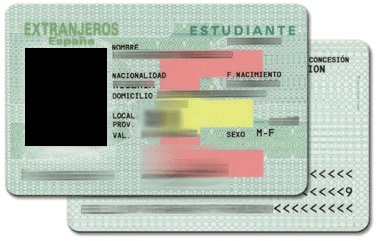
TIE Example

Even after Brexit is supposedly all over, much remains unresolved, leaving room for unpleasant surprises. Although an oversimplified generalisation, it would be fair to say that those that voted to remain are less surprised than those that voted to leave. Many leave voters were expecting – indeed, were promised – that nothing would change. They were misled that our rights, freedoms and benefits would remain the same, regardless of Britain’s EU membership status.

With the Withdrawal Agreement agreed a year ago, it was clear that some things were going to change for the worse. However, the scale of change was unclear to many. Aside from the large-scale losses – such as our freedom to live, work or study in any EU country – the smaller losses are now causing concern.

With our travel prospects limited, we won’t immediately be aware of all the ways our lives will change. It is too soon to say how the sterling/euro exchange rate might be affected long-term. The pound is worth about the same today as it was a month ago, even despite a Brexit deal being agreed. Seems the markets didn’t think it was that good a deal after all.

You can read the full article over at The Local

What does 2021 hold for those in Spain who fought against Brexit?

What does 2021 hold for those in Spain who fought against Brexit?

After months of bluster, grandstanding and tedium, the UK and EU have finally agreed a Brexit trade deal.

Although it’s far from ideal, and even further from the best deal possible – the one we already had – it’s a great relief all round not be crashing over the proverbial cliff edge. It seems a bad deal really is better than no deal after all.

I could complain about what we’ve lost, but it won’t change the situation we are facing. Instead, my New Year’s resolution is to move past old arguments and concentrate on constructive battles. I don’t mean that I’ll forget or forgive what has been stolen from us, and I’m certainly not ready to “suck it up”. However, our Brexit journey isn’t over with the new deal, as negotiations will likely continue for years to come.

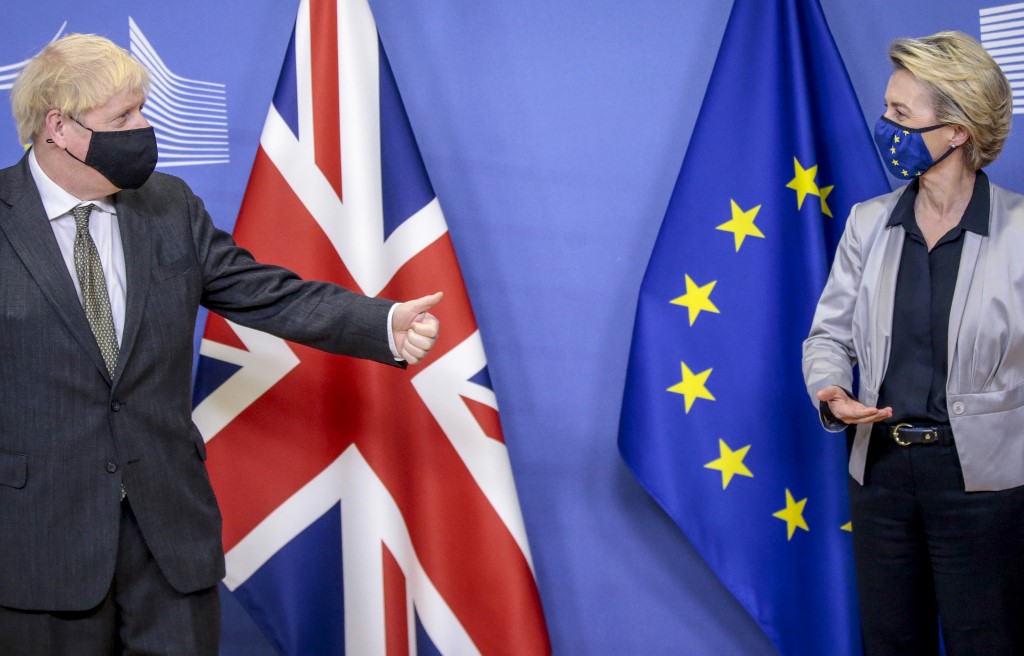
When Michel Barnier and Ursula von der Leyen announced that a deal had been struck, their overall tone was one of regret. By contrast, and entirely as predicted, Boris Johnson’s approach was celebratory and triumphal.

Never one to focus on the details, it’s quite possible our prime minister doesn’t understand all the intricacies of the deal he just signed. This was apparent in his response to press questions about friction-free trade. He claimed that the tariff-free deal had no non-tariff barriers, when in fact there are many barriers to trade. With the UK leaving the single market and customs union, those barriers will include a multitude of customs and regulatory checks at borders.

EU Nov

By contrast, the EU is keen on details and has added legal clauses to protect the integrity of the single market, and the EU itself. Based on its recent experiences, the EU knows that Johnson’s good faith cannot be taken at face value.  Legal protection is evident in the deal with regard to the European Convention on Human Rights (ECHR). Should the UK attempt to diverge on human rights, the agreement will be “terminated on date of leaving ECHR”. Not for the first time, I’m grateful that our rights are protected by international statute, rather than UK law.

So, where does the current state of play leave campaign groups, such as Bremain in Spain? When the group was created on June 24th, 2016, our main aim was to stop Brexit. Obviously, we failed, but I don’t regret a single moment of that fight. The anti-Brexit campaign came close to securing a second referendum, and we know that we tried everything in our power.

It was sometimes a bitter struggle, but I’ll always remember the moments when we united with passion and hope. The feelings of camaraderie are still strong, as are the collective feelings of sadness, anger and disbelief.

With varying degrees of success, I have tried to understand the reasoning behind Leave voters’ decisions, but I’ve rarely felt that Remainers have been extended the same courtesy. The most vocal commentators are usually the extremists on both sides, but they don’t express the majority view.

You can read the full article over at The Local.
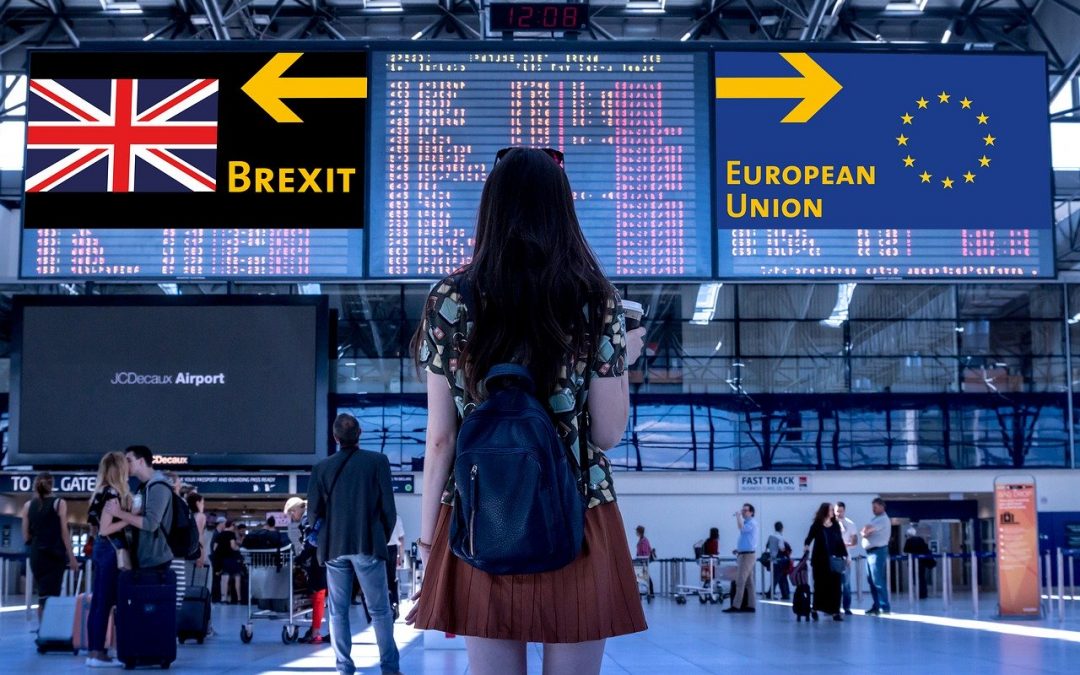
As the ‘moment of truth’ arrives our Brexit future is still uncertain

As the ‘moment of truth’ arrives our Brexit future is still uncertain

writes Sue Wilson from Bremain in Spain

On Sunday evening, the last trade deal deadline passed without progress, leaving us none the wiser as to whether the UK will leave the EU with a deal in just a few days time.

Although I understood the attraction of Boris Johnson’s “Get Brexit Done” catchphrase – particularly to Leave voters – it never appealed to me personally. Had the prime minister come up with a “get a deal done” catchphrase, I might have been converted!

Let me be clear (to use a phrase nicked from a former PM): I’m not saying that I’ve become a Brexit fan; just that the Brexit negotiations have been interminable! Deadlines have come and gone. When the chances of a deal were described as “very, very difficult”, our patience wore very, very thin.

How many ways can politicians, or the media, say it’s the 11th hour in the talks? In case you missed any of them, a few of my personal favourites are: last chance saloon, on a knife edge, moment of truth and end of the road.

Following the latest round of talks, Chief Negotiator, Michel Barnier, said the EU remained committed to achieving “a fair, reciprocal and balanced agreement”, and that talks with the UK’s chief negotiator, Lord Frost, had reached a “crucial moment”.

In response, the UK accused the EU of making “unreasonable demands” and stated that a “substantial shift” was required in the EU’s position. Whitehall sources said no-deal was increasingly likely. If that sounds familiar, it’s because we’ve been here several times before. Unsurprisingly, it’s still about fish and the level playing field.

Despite the final, final, final deadline having passed, the talks are continuing still. Sunday’s deadline, set by the EU, offered the last opportunity for the European parliament to ratify any agreement before the transition period ends. While talks are continuing, a last-minute deal is possible, but it’s unclear what it would entail. Until any deal can be ratified, there could be contingency plans implemented, or a brief period of no-deal, and the accompanying chaos.

As if Brexit problems aren’t enough, a new strain of Covid – thought to originate in Kent – has thrown the UK’s plans into disarray. The new strain, which has been around since September and on the government’s radar since October, apparently spreads more rapidly.

Thankfully, it’s no more lethal than the original strain, and there’s no reason to expect it wouldn’t respond to the vaccine. However, it has caused widespread concern across Europe.

You can read the article in full over at The Local

Whether leave or remain it’s time to accept the bureaucracy in Spain

Whether leave or remain it’s time to accept the bureaucracy in Spain

With a “no deal” Brexit looking more and more likely, Sue Wilson of Bremain in Spain, reflects that those best prepared to face it are the ones who least wanted it.
Well, here we are, just three weeks from the end of the Brexit transition period, and still none the wiser about what the future will hold. Despite Boris Johnson’s dinner date in Brussels on Wednesday, we are no closer to knowing whether it’s deal or no deal. Where’s Noel Edmonds when you need him?

British citizens and businesses are finally waking up to some truths about Brexit. While many unknowns remain, dependent on whether there’s a deal, we are aware of many of the realities. Life outside the single market and customs union, with or without tariffs or quotas, has taken away our freedom of movement and will cause significant economic harm.

As we grapple with the necessary paperwork required to make ourselves legal and secure in Spain, some are dealing with the new landscape better than others.

For those who still have a vote, our viewpoint re the Brexit referendum is relevant to our post-Brexit position. It has been suggested that Remain voters are better prepared and adjusted for the transition process. Not that I’m suggesting it’s about the skills we possess. Rather, it concerns our perceptions of what Brexit entails.

If you voted leave in 2016, for whatever reason, you possibly believed that your life in Spain would not change significantly. After all, that’s what the Leave campaign said – especially Michael Gove. Regardless of whether Leave voters have changed those Brexit expectations, there’s no doubt they better understand what will change and what they must do.

For the people who insist that Brexit is the best thing since sliced bread, the villain is the EU, and their rules are unfair. How dare those pesky foreign bureaucrats make them apply for a new driving licence or register with the local authorities! They forget that the UK helped write EU rules and knows what they are, even if they act like they don’t.

A mountain of paperwork can be daunting, even for those who are familiar with the processes. While some paperwork is new and Brexit-related, much of it has always been the legal requirement here in Spain. The difference is that people can no longer turn a blind eye to the requirements.

Leave voters are entitled to be angry about the impact of Brexit on their lives – deal or no deal – but they are not alone. Remainers are also angry and have been since 2016. For five years, we’ve known what to expect from Brexit. We were accused of ‘project fear’, pessimism and talking down the country.

You can read the article in full over at The Local