
enquiries@bremaininspain.com
  • Facebook
  • X
  • Instagram
  • Facebook
  • X
  • Instagram
  • About
    • Our Mission
    • The Bremain Team
    • Bremain History
    • Members’ Issues & Anxieties
    • Members’ Gallery
  • Events 2026
  • Bremainers Ask
  • Resources
    • Pro-EU Groups
    • British Embassy Updates
      • Bremain Glossary of Terms
    • Government
    • Withdrawal Agreement
    • Support & Advice
  • Votes for Life
    • REGISTER TO VOTE
    • My Vote Matters
  • Sign Up
  • Donate
  • Get in Touch
Bremain in Spain
  • Home
  • About
    • Our Mission
    • The Bremain Team
    • Bremain History
    • Members’ Issues & Anxieties
    • Members’ Gallery
  • Events 2026
  • Bremainers Ask
  • Votes for Life
    • REGISTER TO VOTE
    • My Vote Matters
  • British Embassy Updates
    • Bremain Glossary of Terms
  • Resources
    • Pro-EU Groups
    • Government
    • Withdrawal Agreement
    • Support & Advice
    • Glossary of Terms
  • Sign Up
  • Donate
  • Get in Touch
Select Page
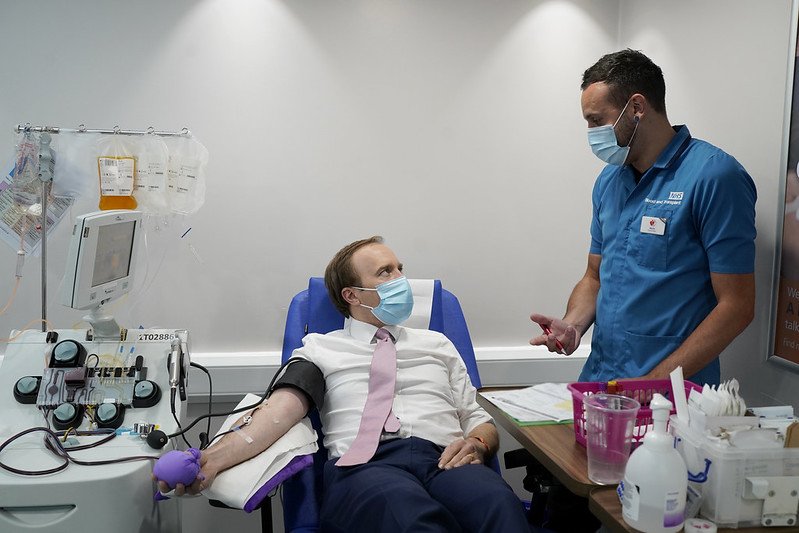
Open letter to Health Secretary Matt Hancock

Open letter to Health Secretary Matt Hancock

Mar 2, 2021 | Bylines, News

Our Chair Sue Wilson has written an open letter to Health Secretary Matt Hancock for Yorkshire Bylines:

Dear Mr Hancock,

As you seem to have been in the media spotlight recently, I thought I would write to you to offer my support and some well-intentioned advice.

Firstly, I’m not sure how frequently you meet with the prime minister, but it often appears as though the right-hand doesn’t know what the far-right-hand is doing. Whether or not you compare notes, you often seem to be singing from different hymn sheets. Getting your stories straight would be a good place to start, as any good cop or lawyer will tell you.

Working for a boss that takes all the credit when things go well cannot be easy, especially when he makes you deliver the bad news. And to be fair, there’s been plenty of bad news. Still, it’s good to see you holding your own and borrowing from the boss’s methods by taking credit for the work of “your team”. I assume, by that, you mean the wonderful, and massively overstretched, NHS, who have proved themselves time and time again throughout the covid crisis. It’s puzzling that the chancellor doesn’t seem to think they deserve a decent wage after all they have been through. If only you’d seen fit to give the NHS the important task of test and trace, where might we have been now? How is Dido by the way? We haven’t seen much of her lately.

You’ve been getting a lot of stick lately – not least from Piers Morgan and Jolyon Maugham – over the whole ‘contracts for cronies’ scandal. I appreciate that these are times of national crisis, and that normal rules don’t apply, but you need some better excuses I’m afraid. Declaring that breaking the law was in the “national interest”, and that given half a chance you would do it again, was probably not the best of defences.

I’m sure that being taken to court at a time like this must be inconvenient to say the least. Such a shame you didn’t just own up to getting it wrong before it got that far. You could have saved the taxpayer a small fortune, and yourself considerable embarrassment. Instead, it was rather silly of you to claim after the fact that there had never been a shortage of PPE when every nurse and doctor had so much evidence to the contrary!

You could ask your boss for some pointers on how to get away with telling porkies. He’s so much better at it than you. Perhaps you have designs on Number 10 down the road? If that’s the case, I can think of better role models for you to emulate than Mr Johnson. I’m sure he’s a lot of fun down the pub, but these are times when the grown-ups should take charge.

I was pleased to see that you had the good sense to remove a photo of your mate’s pub from your office wall. Better late than never. I did look as though you had replaced it with a cycling proficiency certificate, but I know you’re not that daft! It’s a shame you moved rooms though as, we did enjoy your earlier Zoom sessions. I know having a Union Jack in plain sight is now de rigueur, but I don’t believe any other Cabinet minister went as far as having the Queen’s portrait as background.

My apologies if this all seems like unfair criticism, but I promise I’m only trying to be helpful. I do believe that you are one of the hardest working and most intelligent members of Cabinet, though that is a low bar, I admit. You have it within you to do a better job. You must have, surely.

And I don’t mean to detract from the amazing progress of the vaccination programme. At last, the UK really is world-beating at something, even if it is just the delivery of the first vaccine dose. You are right to hold this up as a fantastic achievement. However, what the country would welcome is some recognition of the terrible death toll, and your government’s part in that. Better yet, a sincere apology wouldn’t go amiss. Furthermore, you are asking the country to take “personal responsibility” to protect themselves against covid. Setting a good example with your own errors would be a good place to start.

I have one final ask. If you could see your way clear to supporting the families of those that have sadly died, that would help mitigate the terrible human cost of covid and government policy. A useful way to start would be to abandon government plans to effectively block families access to justice. Threatening the bereaved with heavy government legal fees is not a good look. Tell your boss!

Finally, I’d like to thank you for wrapping your arms around care homes and around the vulnerable in our society. Consider this letter my return hug. I have sent you a friend request on Facebook, which I hope you will accept. Did I mention I have a nice little company that is ready and willing to work for the government at a moment’s notice? I don’t have any experience of delivering PPE, or tests, or vaccines, but I’m sure we’ll pick it up quickly as long as you can pay in advance!

Yours sincerely,

Sue Wilson

Will the electoral integrity bill reduce or increase democratic participation?

Will the electoral integrity bill reduce or increase democratic participation?

Feb 23, 2021 | Bylines, News

Our Chair Sue Wilson wrote this piece for Yorkshire Bylines about the upcoming bill:

A new electoral integrity bill will form part of the Queen’s Speech this spring, according to the latest government announcement. The controversial proposals, requiring the production of photo ID when casting ballots, are due to be in force by the time of the local elections in 2023. The government claims the new measures will “strengthen the integrity of UK elections”, though campaigners disagree, claiming that millions will be prevented from exercising their democratic rights as a result.

Despite the supposed justification for the proposal, there’s no evidence to support the government’s claims of electoral fraud. In March 2020, the Electoral Commission reported that “there was no evidence of large-scale electoral fraud in 2019”. A total of 592 cases of alleged electoral fraud were investigated by the police that year, with only three leading to a conviction and one to a police caution.

The human rights campaign Liberty has condemned the plans as undemocratic and questioned the government’s justification for such action. Sam Grant, Liberty’s head of policies and campaigns said, “In a healthy democracy everyone should have the right to vote”. He described the introduction of mandatory voter ID as “a very real threat to this right”.

Chief executive of the Electoral Reform Society, Darren Hughes, warned that the new proposals would disadvantage “older voters, people of colour and those on low incomes”. Hughes went on to say that, “rather than pulling up the drawbridge to large groups of voters, ministers should deal with bringing in the nine million people who are missing from the electoral register”.

In the US since 2010, 12 states have passed laws requiring the production of photo ID when voting, or when applying to register online. A 2017 nationwide study confirmed that black, Asian and minority ethnic (BAME) communities were disproportionately affected and were more likely to suffer voter disenfranchisement as a result of tougher restrictions. It showed that the gaps between BAME and white voting numbers were significantly wider in states with stricter voter ID laws.

British citizens who have lived abroad for more than 15 years make up a significant portion of those ‘missing’ from the register. As part of the electoral integrity bill, the government has committed to restoring lost voting rights to millions of British citizens living overseas. Although much of what’s in the new bill is likely to reduce democratic participation, removing the 15-year rule would be a welcome move.

The restoration of British emigrants voting rights – like the voter ID proposal – is not a new idea, but one that formed part of the Conservative Party manifesto. However, the indefinite extension of voting rights for Britons abroad also appeared in the previous party manifesto. And the one before that. So, it’s little wonder that those long denied their democratic right to vote in UK elections are more than a little sceptical about current government promises being met.

After the 2015 general election, the government committed to scrapping the 15-year rule. A year later, this was followed by the publication of a policy document: ‘A democracy that works for everyone’. A further commitment to introduce ‘votes for life’ appeared in the 2017 manifesto, followed by the overseas voters bill 2017–2019 – a private members bill that never made it past the ‘report stage’ in parliament. I remember it well, as I watched from the House of Commons public gallery as the bill was ‘talked out’ by serial filibusterer and ERG member, Philip Davies, MP for Shipley.

Under the heading of ‘Protect our democracy’, this short mention appeared in the 2019 Conservative manifesto: “We will make it easier for British expats to vote in Parliamentary elections, and get rid of the arbitrary 15-year limit on their voting rights”.

In correspondence received from the Cabinet Office in 2020, the government recognised the connection Brits abroad have with their homeland. It said, “most British citizens overseas retain deep ties to the United Kingdom. Many still have family here, some will return here, others are drawing a British pension after a lifetime of hard work and some may have fought for our country”. I await, with interest a response to my, as yet unanswered, enquiries submitted this and last month.

Despite deep connections with ‘home’, many Brits abroad have no say in British matters. Thanks to Brexit, many have no democratic voting rights left anywhere. Our voices are silenced, our democratic rights denied, no matter how loud we might shout. Regardless of whether we choose to live in Margate or Madrid, we are still British, and decisions made in Westminster affect our lives.

To the public and politicians alike, Brits abroad are out of sight, out of mind. We made a decision to leave the country and we should live with the consequences, regardless of how strong our ties with the UK might be. The government, apparently, agrees with us – we should be able to vote regardless of where we lay our hat.

The right to vote is widely recognised as a fundamental human right. In the Universal Declaration of Human Rights (Article 21), it states that, “Everyone has the right to take part in the government of his country, directly or through freely chosen representatives”.

We will follow the progress of the new bill with interest, but with more than a little scepticism. Like many before us, we will hold on to the hope that this time will be different, despite the many disappointments of the past.

We’ve been patient, as the numbers of disenfranchised voters have grown. We’ve watched from a distance as major decisions about the future of the UK have been made without our involvement. Decisions that affect us deeply. It’s time to give us the voice we’ve so long been promised, and in time for the next general election. Even if the government might not like what we have to say.

Is retirement in Spain now out of the question?

Is retirement in Spain now out of the question?

Feb 17, 2021 | Bylines, News

This article by our Chair Sue Wilson first appeared in West England Bylines on February 10 2021.

If you have ever cast an eye over a foreign estate agent’s window, you’ve probably considered moving abroad. For some, that’s just a fleeting fantasy, induced by sun, relaxation, and perhaps a glass or two of vino. For others, it’s the start of a dream, or even a journey.

From a young age, I dreamed of living by the sea. Those dreams were based on happy childhood memories of monthly visits to family in Dorset. The beaches were glorious and the people, and the weather, always seemed to be warm and sunny. Then at 18, I discovered a different kind of heat – and coastline – on my first trip to Spain. It was love at first sight. Spain has now been my home for 14 years, and always will be.

Moving house is said to be the third most stressful event in anyone’s life, with only the death of a loved one and divorce considered more traumatic. Even if your move is local, the complexity of the tasks and the anxiety of waiting for decisions, especially financial ones, can be immense. Choosing to move abroad is on another scale entirely.

Spain has long been the most popular European destination for migrating Brits, closely followed by France. While the weather has always been a significant factor, the charms of European landscapes, culture, people and lifestyles should not be underestimated.

Despite media stereotypes of retired expats sipping gin at the golf club, or worse still, at the local “British” pub, only 20% of Brits in Europe are actually pensioners. Although that figure rises to 25% in Spain, the vast majority of British immigrants are younger, working people or students. Most are integrated into local society, many having lived abroad for years, if not decades.

Another common misconception about Brits abroad is that they are all relatively well off. While it’s true that some have the means to afford property in the UK and abroad, most of us don’t. In fact, many in Spain are on low incomes, some having moved specifically because their money goes further here. Those with means will cope with new financial requirements, but migrants with lower incomes may not.

I am fortunate to live in a mortgage-free, detached two bedroom villa, with a nice garden and a swimming pool. I have a quality of life I could never hope to achieve in the UK, and thanks to the lower cost of living, my husband and I are able to live well, and within our means. Our British state pensions are our only source of income. We would never be able to afford our current lifestyle in my home-town of Oxford.

It takes a certain kind of bravery to pack up your lives, leave family, friends and careers behind, and start afresh, especially in a foreign language. That journey was made so much easier for us by the freedom of movement, and lack of barriers, that our EU citizenship provided.

Many more have joined the ranks of Brits in Europe recently – some much earlier than originally intended – in an effort to become legal residents before the end of the Brexit transition period. As a result, they have secured their right to live in Europe, and the added protections afforded us by the Withdrawal Agreement. While it doesn’t protect all the rights and benefits we enjoyed as EU citizens, it does preserve many of them.

Thanks to Brexit, how many Britons will have to abandon their long-held dreams of ‘living in the sun’, now EU immigration has become more difficult and expensive?

British migrants now face the same hurdles in applying for Spanish residency as other third country nationals. To work in Spain, they will need to apply for a work visa, having first secured a job offer. Although many of the complex administrative arrangements would be dealt with by the prospective employer, the issue is more one of employability. British citizens are finding their job prospects in Europe considerably reduced, as employers favour EU citizens. Not only does it save them considerable bureaucratic hassle, but it means those employees can freely travel to other European countries on business.

Should you decide to complete your working days in the UK, what are your emigration options as a pensioner? You can apply for a Spanish “retirement visa” if you can meet a number of conditions. You would need to provide the following, with all documents having been translated into Spanish:

a medical certificate stating you have no infectious diseases
proof of medical insurance cover
no criminal record
proof of financial resources
in some cases, proof of accommodation, such as a year’s lease or property title
Those financial resources equate to having a healthy bank balance (over £26,000), or a guaranteed monthly income. For a married couple, that monthly income is equivalent to around £2,400. Anyone reliant exclusively on a British state pension for income, like myself, would not meet the financial threshold. Not to mention that private healthcare for the over 65s is expensive, especially for anyone with pre-existing medical conditions.

After all that effort – assuming the criteria for residency were met, your initial retirement visa would only last for one year. All rather different from the ease with which I packed up myself, and my house, and got on a plane in 2007.

The easiest way (for some) to secure residency in Spain, or any European country, is the “Golden Visa” scheme. Invest one million euros in a Spanish company or buy a property worth more than €500,000. No worries – we’ll take two of those!


Nice for those with the cushion of a healthy bank balance, but as with so many aspects of Brexit, it’s those with the least that will lose out the most. The sunlit uplands of many a future retirement may, by necessity, be a bit closer to home than you’d hoped.

Third open letter to Boris Johnson

Third open letter to Boris Johnson

Feb 8, 2021 | Bylines, News

Sue Wilson follows up on her first two Yorkshire Bylines open letters to the prime minister – you can read these here.

Dear Boris,

It’s been two whole months since my last letter, and still no response from you. I’m feeling a little unloved by your lack of attention, but considering what you’ve had to deal with recently, I’m prepared to make allowances.

Dealing with the pandemic has proved a heavy burden to many world leaders. On top of the weighty toll of covid, you’ve had a Brexit deal to secure and implement. It would be rather churlish of me, under the circumstances, to give you a hard time about your failure to acknowledge little old me. After all, it’s not like I’m a Conservative supporter, and most definitely not a party donor!

I must congratulate you on your handling of both crises. First, covid. It never ceases to amaze me as to your flexibility on the subject. What other leader has changed their mind so often regarding what strategy to pursue or what measures to enforce? Those that suggest you are unable to make a decision, that you ignore scientific advice, or accuse you of being reactive just don’t know what they are talking about! “He’s doing his best”, I tell them, and I truly believe that – you are using all the skills you possess.

The heavy toll of all those deaths must, I’m sure, keep you awake at night. Thank goodness the vaccination programme is rolling out at a world-beating pace. I promise to give you a big “woo-hoo!” when the roll-out of the second doses match up with the speed of the first.

My mum wanted me to tell you that she is most grateful that, at the age of 90, she has received her first jab. At the age of 67, I will have to wait a while longer, but it’s a great relief to know that one’s parent is on the road to safety. Likewise, you must be greatly relieved that your 80-year-old dad has had not one, but both vaccinations. Mum did ask if you could explain why her second appointment was cancelled, and your dad’s was not, but I assured her there would have been a very good reason and it was nothing to do with money or connections.

Of course, I cannot write without a mention of Brexit. I knew I was right when I said you’d get a deal, so congratulations. You pulled a rabbit out of the hat at the eleventh hour and proved all those doubters wrong. Not only that, but you managed to get parliament, including the troublesome ERG, to ratify the deal! That’s something not even the EU’s managed to do as yet.

It is perfectly understandable that the new arrangement is causing some concern over a few “teething problems”, but not to worry. I appreciate you are being inundated with complaints from various industries, but sod ‘em, I say! If the bankers, fishermen, musicians, farmers, cheese exporters et al were so concerned, they should have spoken up before Brexit was “done”. Bit late to cry about it now!

Considering my earlier letters – assuming you read them – you may have noticed a change in my attitude towards Brexit. I guess I have finally accepted that Brexit is “done” and that it’s time to move on. I’m not saying that will always be easy, but I know that I can rely on you to cheer up both me and the nation when we falter.

I very much look forward to seeing you out and about around the country, and I can’t wait to see what you will be doing, or wearing, next. I sincerely hope to see some more tractors, bulldozers, perhaps even a fishing boat or two. I especially look forward to seeing you dip into the dressing-up box again and donning the next uniform. I don’t believe we’ve yet seen you dressed as a sailor – perhaps that’s one to consider. Failing that, why not have a word with the Village People – I’m sure they could come up with a few ideas. Maybe they could even supply a theme song to go with it, like they unwittingly did for your old, disgraced American pal. In any case, with or without the outfits, I can’t wait to see how you are going to get yourself out of your next scrape.

Threatening the EU with some article or other, and persuading the media that the EU are still the bad guys, is no mean feat. I look forward, with interest, to see what japes you might come up with next. Having a jester for a prime minister doesn’t always look wise, but it sure can be a lot of fun in these depressing times, so keep up the good work!

Lots of love,

Sue Wilson

Chair of Bremain in Spain

Biden gives the world hope

Biden gives the world hope

Jan 23, 2021 | Bylines, News

Bremain Chair, Sue Wilson, wrote this article about the new American president, Joe Biden, for Yorkshire Bylines and it was published on 22 January 2021:

Donald Trump’s departure from the White House and the arrival of Joe Biden was a massive relief to millions this week. Not just in America, but all around the globe. After the nightmare of Trump’s presidency – the extremism, the lies, the childishness – Biden is a breath of fresh air. The appointment of Kamala Harris as his vice president was an added bonus – the first woman of colour to the role.

The strength of feeling across Europe – not least in the UK – was a surprise to many. It was as if we had been collectively carrying a heavy burden and the weight had been lifted from our shoulders. It had been replaced with a sense of relief and hope, and more than a little envy. Britain still has the prospect of another four years of our own mini-Trump; another four years of our own extremism, lies and childish behaviour.

After what had seemed like an interminable wait since the US election – a period when we dreaded what churlish antics Trump might get up to – Biden was finally sworn in on 20 January. The inauguration demonstrated more statesmanship in a few minutes than we had seen in the last four years. It was polished, full of promise and moving. Quite the contrast to the crass, narcissistic departure of spoilt brat Trump.

2nd open letter to Boris Johnson

On day one of his presidency, Biden certainly hit the ground running, proving beyond doubt that he was going to put his money where his mouth is. In a flurry of executive orders, he sought to overturn much of the damage caused by his predecessor. Those orders included stopping construction of the border wall; rejoining the Paris Climate Agreement; rejoining the World Health Organization; ending the Muslim travel ban; and introducing a nationwide face mask and social distancing mandate.

As Biden was demonstrating how caring, mature, professional leaders run a country, our own head of state was being “petty”. The UK government was refusing to grant the EU Ambassador to the UK full diplomatic status, declining to treat an international organisation in the way they treat nation states. This was despite the fact that EU Ambassadors in 143 other countries have been accorded an equivalent status to nations’ embassies under the Vienna Convention.


Conservative MP, Tobias Ellwood said:

“This is simply petty. Biden commits to strengthening alliances and we engage in silly spats which will not help strengthen security and trade cooperation. We are better than this”.

The EU’s foreign affairs chief, Josep Borrell, has written to Foreign Secretary Dominic Raab saying, “Your service have sent us a draft proposal for an establishment agreement about which we have serious concerns. The arrangements offered do not reflect the specific character of the EU, nor do they respond to the future relationship between the EU and the UK as an important third country. It would not grant the customary privileges and immunities for the delegation and its staff. The proposals do not constitute a reasonable basis for reaching an agreement”.

Despite Brexit being “done”, negotiations between the UK and the EU are destined to continue for years, likely long past the life of the current government. The impact of such petty measures on our future relationship can only be guessed at, but it’s difficult to discern what the possible rationale for this move could be. Perhaps it’s nothing more than the government’s complete aversion to anything EU related.

Whether the government will continue to cause potential harm to relations with the EU remains to be seen. What’s clear is that post-Trump America is likely to align itself more closely with Europe than with the UK. Biden’s personal connections with Ireland are strong, and that’s certainly a factor. But when it comes to trade, size really does matter, and that means the single market.

After four years of Trump, America can finally start to break away from the toxicity, hate and fear. It’s going to be a long hard road to reverse the damage caused by an ex-narcissist in chief, but Biden and Harris have made a positive start. The journey is being led by those with a heart, a passion and a conscience.

We may have to wait four more years for a sea change in the UK. Who knows where the current government’s journey will take us in the meantime, or how much damage they might do in their time in power. We can only hope that with Trump now removed, the failures, lies and extremism of our own self-absorbed leader with be exposed for all the world to see, and to scorn.

What Brexit means for British Expats in Europe

What Brexit means for British Expats in Europe

Dec 6, 2020 | Bylines, News

If you are a Daily Mail reader – or even if you are not – you may well have seen their latest outraged headline criticising the EU. It reads: “Furious British expats blast EU’s new post-Brexit travel rules which will ban them from spending more than three months at a time at their holiday home from January”. There is so much wrong with that headline, and the accompanying article, that it’s difficult to know where to start.

“Expat” or “Immigrant”?

Personally, I hate the term “expat” as it confers a status on Brits that is unwarranted and unwelcome. We are immigrants – no better, no different to EU citizens living and working in the UK. I do understand, however, that in the UK media the term is shorthand for ‘British citizens living abroad’, which is – it’s fair to say – a bit of a mouthful.

Let’s stick to the facts though. It may well be true that “expats” who own a second home in Europe are furious. Whether it’s with regard to this coming change caused by Brexit – or by the loss of other EU citizenship rights – there is certainly much to be angry about. What is absolutely not true is that this is a result of “new post-Brexit travel rules”. Yes, this is a result of Brexit, but these rules are not new. These are the same rules that have applied to non-EU citizens all along – we were just lucky enough to have special, favourable rights that waived them. Brexit means the loss of these, and many other, rights associated with EU citizenship. If you are not members of the EU club, then you cannot expect the exclusive benefits that membership brings.

What is the rule?

The Daily Mail article stated that a 90-day stay meant anyone staying in an EU country would not be able to return for a further 3 months. It’s actually worse than that, as the rule does not apply just to one country, but to the EU as a whole. So, once an allowance of 90 days in a 180-day period has been used up, not only can you not return to your holiday home in Spain, or France, you cannot travel anywhere in the EU. Say goodbye to that romantic trip to Paris, or that historical tour of Rome. While you can enter the Schengen area more than once in the 90 day limit, the official guidance from the EU outlines the rules thus: “you must carefully calculate your days of stay as the overall period of stay must not exceed the overall total of 90 days of stay within any 180-days period”. Those “swallows” that like to spend winter in the sun, will find themselves returning to cold, British weather rather sooner than they’d like.

And what does it mean?

The ramifications of overstaying your welcome in Europe could be serious. Post-Brexit, British passports will be scanned on arrival and departure in Europe. Anyone caught “illegally present”, staying longer than permitted, risks an “over-stay flag” on their passport. This could not only lead to a fine, but to difficulties applying for any visa in future, or even a re-entry ban.

The implication from the Brexit-loving media, throughout the ongoing negotiations, has been that the EU are punishing the UK for leaving the union. Whenever details of the loss of rights or benefits has been brought to the public’s attention, blame has been levelled at the vindictive EU. Rules have, supposedly, been brought in specially to penalise the Brits, when in fact, those rules have always existed for third country nationals. Apart from the expectation that nothing would change – that lie sold to the British people during the Leave campaign – many assumed the UK could just negotiate the bits of EU membership they valued and ditch the bits they didn’t. The fact that there are rules that the EU must comply with never seemed to equate. To allow British citizens special rights after Brexit would not just be unfair to other third country nationals, in many cases it would actually be illegal.

Whether a second-homer or not, travel to the EU is about to become more difficult, and more expensive, for every Brit. The EU is about to launch the European Travel Information and Authorization System (ETIAS), a new travel system aimed at controlling who enters EU territory. Citizens of more than 60 countries – including the UK – will need to apply for and obtain authorisation before turning up at EU borders. The date that the ETIAS will come into force is still to be determined.

UK EU Jigsaw

And what will it cost?

Another casualty of Brexit is the loss of the European Health Insurance Card (EHIC) for British travellers to Europe. The result will mean the need to purchase medical insurance – a considerable cost for a family travelling together, or for anyone with pre-existing medical conditions, assuming they would even qualify.

While you are adding up the additional costs, don’t forget also the loss of free data roaming on your mobile phone. No doubt the Mail blames the EU for that too.

And whose fault is it?

There’s no doubt there is a lot of anger at the realisation of what is about to be lost when the Brexit transition period ends. For some, this late awareness of the true meaning of Brexit – with or without a deal – has clearly been a bit of a shock. For those of us that have been pointing all of this out for the last four years, it’s incredibly frustrating. We’ve been accused of ‘project fear’ and told repeatedly that Brexiteers knew exactly what they were voting for. I’m not sure that was ever true, but they are certainly starting to get the idea now!

I have some sympathy for those second-home owners “furious” about the Brexit effect on their lives and their rights. I have sympathy with everyone who stands to lose something they value for no good reason, and often through no fault of their own. Having said that, those with two homes will have their European travels cut short. Those with lesser means, may have their European travels curtailed altogether. But, regardless of your means, Brexit will make us all the poorer, and that’s not the EU’s fault.


It’s the fault of the charlatans that sold the British public a lie. How about getting “furious” about that instead?

This story first featured on the West England Bylines website, written by Sue Wilson, Chair of Bremain in Spain.  For more information see the European Union FAQs re Schengen visa-free regime and Schengen visa website with Information for British second home owners in Spain.

« Older Entries
Next Entries »

Search Our Site

Sign Up to our Newsletter

Translate this Site

Official Partners

european movement

Members of

Grassroots for Europe

Follow Us on Bluesky

Latest Posts

  • Data Privacy Policy
  • Sign Up
  • Get in Touch
  • Facebook
  • X
  • Instagram
© BremaininSpain.com 2016 - 2026 General Email: enquiries@bremaininspain.com Media: media@bremaininspain.com
Manage Consent

We use cookies to optimise our website and our service.

Functional Always active
The technical storage or access is strictly necessary for the legitimate purpose of enabling the use of a specific service explicitly requested by the subscriber or user, or for the sole purpose of carrying out the transmission of a communication over an electronic communications network.
Preferences
The technical storage or access is necessary for the legitimate purpose of storing preferences that are not requested by the subscriber or user.
Statistics
The technical storage or access that is used exclusively for statistical purposes. The technical storage or access that is used exclusively for anonymous statistical purposes. Without a subpoena, voluntary compliance on the part of your Internet Service Provider, or additional records from a third party, information stored or retrieved for this purpose alone cannot usually be used to identify you.
Marketing
The technical storage or access is required to create user profiles to send advertising, or to track the user on a website or across several websites for similar marketing purposes.
  • Manage options
  • Manage services
  • Manage {vendor_count} vendors
  • Read more about these purposes
View preferences
  • {title}
  • {title}
  • {title}