enquiries@bremaininspain.com
  • Facebook
  • X
  • Instagram
  • Facebook
  • X
  • Instagram
  • About
    • Bremain History
    • The Bremain Team
    • Members’ Issues & Anxieties
    • Our Mission
    • Our Stories
    • Members’ Gallery
      • Mike Parker’s Story
      • Martin Robinson’s Story
      • Sandra’s Stretton’s Story
      • Mike Zollo’s Story
    • The Local ES
  • Events 2026
  • Bremainers Ask
  • British Embassy Updates
    • Bremain Glossary of Terms
  • Resources
    • Pro-EU Groups
    • How the WA affects you!
    • Government
      • Official Negotiation Links
    • Support & Advice
  • Votes for Life
  • Donate
  • Get in Touch
Bremain in Spain
  • Home
  • About
    • Our Mission
    • The Bremain Team
    • Members’ Gallery
      • Mike Parker’s Story
      • Martin Robinson’s Story
      • Sandra’s Stretton’s Story
      • Mike Zollo’s Story
    • Bremain History
    • Our Stories
    • Members’ Issues & Anxieties
    • The Local Articles
  • Events 2026
  • Bremainers Ask
  • Votes for Life
    • V4L matters because…
  • British Embassy Updates
    • Bremain Glossary of Terms
  • Resources
    • Pro-EU Groups
    • How the WA affects you!
    • Government
      • Official Negotiation Links
    • Support & Advice
  • Join Us
  • Donate
  • Get in Touch
Select Page
Going to Europe next year?

Going to Europe next year?

Sep 23, 2020 | Bylines, News

On 18 September, the newly merged Foreign, Commonwealth and Development Office launched a public information campaign for post-Brexit travellers to Europe – Going to Europe next year? The campaign is designed to “help British travellers prepare for changes when visiting Europe from 1 January 2021”.

Any new government campaign usually warrants a catchy new slogan, but this time an earlier one was recycled – “Check, Change, Go”. To translate that from government-speak, it’s fair to assume it’ll mean more checks before you go and handing over a lot more change for the privilege.

If you’re intending to travel to Europe for pleasure, the government website is recommending that you:

~Check your passport
~Get travel insurance that covers your healthcare
~Check you have the right driving documents
~Organise pet travel
~Ensuring you have six months left to travel on your passport is not new in many countries, and will make little difference in the grand scheme of things. More problematic will be other newly required travel documentation.

On arrival in an EU country, you will need to prove you have enough money to cover the cost of your visit. You will be asked to produce a return ticket to prove you intend not to outstay your welcome. It will only be possible to stay 90 days in any 180 day period – that’s 90 days in Europe in total, not 90 days in any one EU country. So, those with second homes in Europe will no longer be able to spend half the year in their favourite destination without forfeiting the opportunity of visits to other EU destinations the same year. This will also rule out the “swallows” who like to fly into Spain and France for the winter months. They will have to limit their winter visit to just 90 days, not the more usual four months.

Additional costs will also come in the form of health insurance and driving permits. The European Health Insurance Card (EHIC) is only valid until the end of this year. Over the course of the Brexit negotiations, there have been government assurances, not least from the ex-Brexit Secretary, David Davis, that the government was “looking to see if we can get a continuation of the EHIC scheme as it now exists”. There was even talk of the government providing a similar scheme “unilaterally”. This close to the Brexit negotiating deadline, the EHIC card is hardly likely to be a top government priority, so private medical insurance here we come. That’s fine and dandy if you’re relatively young, fit and healthy, but prohibitively expensive for older travellers with pre-existing medical conditions.

Driving will also present additional challenges for those travelling across the continent, particularly if you’re planning to visit more than one country. The current government advice on this is full of ambiguity – you “may” need extra documents, you “might” need an international driving permit, a green card or a GB sticker. Not to worry – “Check, Change, Go!”

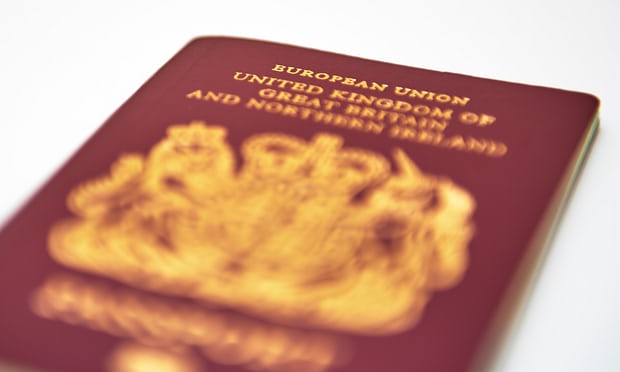
passport, bremain, british, rights, EU

Many European tourists who choose to go by car do so to facilitate travelling with pets. The new process will replace the EU pet passport scheme and applies to dogs, cats and, for some bizarre reason unknown to me, ferrets. The final details will not be known until Brexit negotiations are concluded, when we will discover which category of ‘third country’ the UK becomes. Suffice to say that the process will certainly include a rabies blood test, a vaccination and the insertion of a data chip, and will take several months. At least your pet’s journey will not include having to quarantine (though your journey still might)!

For those of us who are never far from our mobile phones, even on holiday, beware of the cost of mobile roaming charges. You are going to be spending your European holidays searching for free WiFi when our current EU arrangements for free mobile data come to an end. A new law will provide some protection from the risk of being charged more than £45 without your knowledge, but it’s easy to see how the coming changes are all adding pounds, and inconvenience, to your European travel experience.

And what about business travel to the EU? Well, your checklist will be even longer. Additional hurdles will include checking the following:

Will your professional qualifications be recognised if you are offering services?
Do you have the right documentation to take goods with you?
There used to be further blurb for business travellers on the government website, regarding a potential increase in social security payments, but the page “has been withdrawn because it’s out of date”. No rush, nothing to see here, plenty of time left – “Check, Change, Go”.

Travel to Europe has been drastically reduced in 2020 due to the pandemic and the measures put in place to prevent its spread. Whether it’s due to restrictions placed on the hospitality industry, the fear of crowds and infection, or the inconvenience of quarantine measures, 2020 has been the year of the UK staycation. While the British tourism industry may have benefited in some small way in some areas, countries like Spain and France have suffered considerably as a result.

It’s safe to assume that travel to Europe is about to become even more complicated, more time-consuming and more expensive. Like the British economy, European tourism is about to suffer the double whammy of Covid and Brexit damage.

Of course, not all Brits will suffer this fate. Those with the wherewithal to buy EU citizenship, or with access to a private jet and minions to do all the necessary paperwork for them, will barely notice.

Us mere mortals will have to “check” all the boxes, “change” a lot more pounds for euros, and perhaps “go” somewhere cheaper on holiday in future.

Sue Wilson, Chair Bremain in Spain

UK lobs a grenade into Brexit negotiations

UK lobs a grenade into Brexit negotiations

Sep 11, 2020 | Bylines, News

Even before the latest threats to the Brexit Withdrawal Agreement Act 2020 were made public, Britons living in Europe were becoming increasingly nervous about their futures. For those relying on protections afforded us by this ‘deal’, those concerns were heightened this week by the introduction of the UK internal market bill.

British citizens, both in the UK and abroad, will lose many of their current rights – those associated with EU membership – when the Brexit transition period comes to an end on 31 December. For the 1.2 million Brits already living in the EU, the withdrawal agreement has provided an element of comfort that at least some of our basic rights would be protected. The biggest fear among this group has been that the British government would somehow undermine the withdrawal agreement, and that those rights we believed secure would again be put at risk.

Brexit-supporting MPs have long criticised the withdrawal agreement. Without a hint of irony, they have complained about the content, despite having pushed parliament to vote for it in a hurry. Whether they failed to understand it, failed to read the small print, or just didn’t care, we may never know. According to some European Research Group members, the only reason they signed up to the withdrawal agreement was on the understanding from Boris Johnson there would be an opportunity to revisit it further down the road. On Wednesday, that ‘opportunity’ was brought to parliament with the first reading of the internal market bill.

Nothing to worry about, ministers assured parliament. Just a bit of housekeeping to tidy up a few loose ends regarding the Northern Ireland protocol. No need to be concerned that the government was planning to break international law – they would only do so in a “limited way”. That argument failed to convince parliamentarians, with outrage being expressed even by senior, and in some cases Brexit-supporting, Conservatives.

Needless to say, the EU was not impressed either, stressing that the protocol the UK parliament had ratified was a “legal obligation”. President of the European Commission, Ursula von der Leyen, warned Johnson not to break international law and said:

“I trust the British government to implement the withdrawal agreement, an obligation under international law and prerequisite for any future partnership.”

An interesting choice of words considering the efforts the UK government seems to have made to undermine that trust.

Belgian MEP Philippe Lamberts said the UK risked turning into “a rogue state” if it reneged on its legal commitments. Chief Brussels negotiator Michel Barnier commented, “Everything that has been signed must be respected.” Likewise, leaders from across the world have been quick to emphasise the importance of international law, and in particular the impact any breach would have on the Good Friday Agreement and likelihood of any future trade deals with the UK.

Thankfully, under the terms of the withdrawal agreement, the rights of British citizens in Europe are not the direct responsibility of the British government. In fact, the protection of our withdrawal agreement rights as legal EU residents are the responsibility of the relevant EU member state. Where I live in Spain, the authorities have been incredibly supportive. I have felt secure in the knowledge that my rights – to my British pension and free healthcare – are in the safe hands of the Spanish, not the British, government.

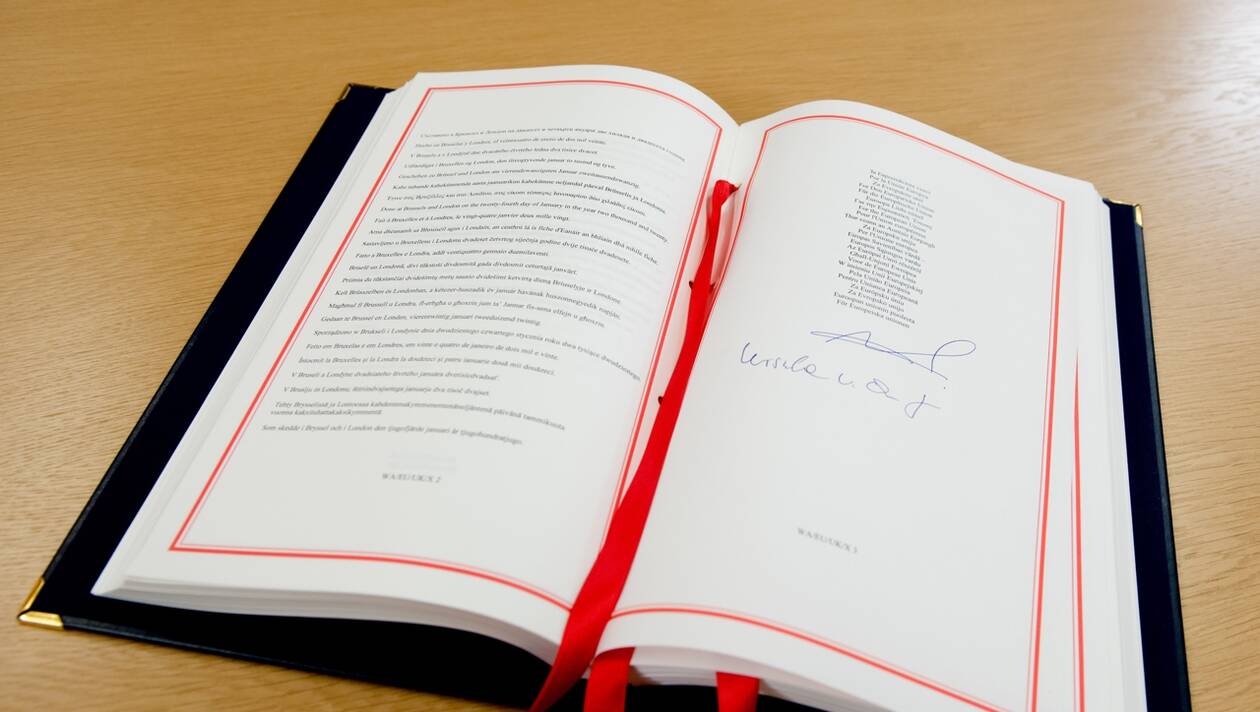
Withdrawal Agreement

However, the latest UK government plans to renege on international treaty commitments has sent shockwaves throughout British migrant communities. Questions arise as to the full consequences of its actions.

This week, just two days before the reading of the bill, Barnier himself provided some reassurance for Britons resident in Europe. When he spoke on a French radio programme, he said that, “the rights of citizens including pensions are guaranteed under the withdrawal agreement, which has been signed and come into force”. Signed, yes, but clearly there are those busy searching for an eraser.

The last four and a half years have been a rollercoaster ride, though without any of the thrills. The anxiety, anger and despair felt by those with rights at risk has been hard to handle. Nothing, apart from continued membership of the EU and retention of all existing rights, would be enough for many of us. The withdrawal agreement has, or should I say had, provided some relief that all was not lost. But just when we thought the British government could no longer threaten our sanity and security, it has lobbed a hand grenade into the negotiations.

As a Spanish resident and European, I have put my faith in the Spanish government and the EU. Both have promised to protect me and have done nothing to undermine that trust – quite the opposite, in fact. As a British citizen though, trust in my own, potentially rogue, government has been completely eroded.

I believe the EU will do everything in their power to ensure withdrawal agreement commitments are met by all parties – the UK included. They have taken their responsibilities to all EU citizens – including us Brits – very seriously throughout the Brexit process. That responsibility will not end when Brexit is finally ‘done’. If this latest Johnson threat cannot be resolved to the EU’s satisfaction, then the UK government could find themselves in the European Court of Justice.

If the protection of British citizens in Europe rests with our European hosts, then spare a thought for EU citizens living in the UK and ask yourself if you would feel safe in their shoes. It’s going to take more than a dose of Johnson optimism to make them, and us, feel completely safe – especially if the prime minister’s signature turns out not to be worth the paper it’s written on.

Unless, of course, it’s on his resignation.

Sue Wilson, Chair Bremain in Spain

Brexit brings the end of an era for UK sellers on Amazon

Brexit brings the end of an era for UK sellers on Amazon

Aug 27, 2020 | Bylines, News

any may find it surprising to find out that over 50 percent of Amazon’s sales come from third-party sellers who use Amazon’s marketplaces to list and sell their products. Changes coming to Amazon’s European fulfilment services when the Brexit transition period ends on 31 December will have a significant impact on many UK and EU sellers. Effectively, this will reduce a UK seller’s possible customer base from 510 million consumers to just 66 million.

There are two ways of selling goods via Amazon. With the first, you list your products on Amazon and when a customer orders that item, the seller dispatches it directly from their premises. This is known as ‘fulfilled by merchant’. The other way is known as ‘fulfilment by Amazon’ (FBA). The fee structure is higher, but via this method, a seller ships their inventory directly into Amazon fulfilment centres. When a customer orders that item, Amazon ships it straight to the buyer while Amazon customer services take care of all queries, returns, refunds and issues on behalf of the seller.

Currently, there are over 100,000 active registered Amazon sellers in the UK. Although it is difficult to find exactly how many of them presently use FBA services, 66 percent of Amazon’s top 10,000 sellers do. For those who use this FBA service, there are currently two options for listing and selling across all Amazon’s European marketplaces: via the European fulfilment network and via Amazon’s pan-European service. Neither of these options will be available to UK sellers when the Brexit transition period ends in just four months’ time.

Using Amazon’s European fulfilment network is a straightforward service for FBA sellers that enables them to try to crack the European market without the requirement of complex, multi-regional tax systems and accounting. Amazon will list a seller’s items across all European marketplaces, providing exposure to over 400 million customers. All the seller has to do is to ship their inventory to a UK fulfilment centre and pay Amazon the relevant fulfilment fees when a European customer orders that item. In this case, there is no requirement for the seller to be tax registered and pay sales tax (VAT) in the other EU marketplaces, unless their sales exceed the distance selling threshold, which varies from €35,000 and €100,000 per annum, dependent on the country. The loss of this simple service will be a devastating blow to tens of thousands of small businesses and start-ups. It will drastically diminish customer reach and could have a significant effect on sales.

FILES-BELGIUM-BRITAIN-EU-POLITICS-BREXIT

Amazon’s Pan-European service, which will also cease to exist, requires a seller to be tax registered in the other European marketplaces to participate. Vitally, it allows a seller’s goods to be stored and sold directly out of EU countries’ distributions centres. By opting for this service, a seller allows Amazon algorithms to look at the seller’s inventory and, at their discretion, remove stock from a UK warehouse and place it in another distribution hub in Europe. These complex algorithms tell Amazon that, for example, six items may be needed in Germany, five in France or three in Spain. The items are eligible for the ‘Prime’ service to EU customers, while the seller only pays UK fulfilment fees making it a very cost-effective option.

Although sellers will still have the option to ship stock directly into fulfilment centres in the EU, they will have to decide on what items to send, the quantity, to which destination, complete customs paperwork, and, possibly, pay tariffs. While larger businesses may choose to invest in IT solutions or staff to make these decisions, many smaller sellers will not have the resources, the know-how or the experience to do so. Stock in Amazon’s fulfilment centres carries a monthly storage fee and if it does not sell in 12 months, the seller will incur long-term storage fees, or have to pay for the return of their stock. Fundamentally, the process becomes far more expensive, complicated and convoluted.

The double whammy facing sellers this year is that Amazon will almost certainly stop locating stock throughout Europe well before the end of the transition period. Also likely is the repatriation of the seller’s products back to the country of origin before the end of December. So not only will UK sellers be losing these simple, convenient and cost-effective services in January, but they are also likely to lose out on the increased seasonal sales they would traditionally expect around Black Friday, Christmas and New Year.

They didn’t mention that on the side of a bus.

Lisa Burton, Council Member Bremain in Spain

Spain’s welcome message to UK citizens

Spain’s welcome message to UK citizens

Jul 19, 2020 | Bylines, News

“Many of you have built your homes here and we want you to stay . . . You are part of the Spanish family. You are part of us. The Spanish Government is here to support you in this new phase and we want to send you a very clear message: this is, and will always be, your home.”

Hana Jalloul, Spanish secretary of state for migration (Ministry of Inclusion, Social Security and Migration)

It had always been my dream to retire to Spain, having first fallen in love with the place at the age of 18. Thirteen years ago, my husband and I asked ourselves why we were waiting for retirement before taking the plunge. We couldn’t think of a single, good reason to delay, so we packed up and left the UK behind.

Freedom of movement made the process easy – we bought a house, worked on our language skills, became legal residents and found work. From the very beginning, we were made to feel welcome by the local authorities and the Spanish people. We have always been grateful of that welcome, but never more so than now.

Unlike France, where British citizens are having to apply to retain their legal residency – at the risk of rejection – Spain’s approach has been straightforward and reassuring. The Spanish declaratory system means the status of existing legal residents does not change, and the application process for non-legal residents is simple. As long as new applicants meet the EU residency requirements and start the application process before the end of the transition period, their rights are protected, including those covered by the Withdrawal Agreement (WA). Although I mourn the loss of any EU citizenship rights – especially freedom of movement – I am mindful that thanks to the WA, we will have more rights than Brits in the UK, come 2021.

As a pensioner, I have my healthcare and pension protected for the rest of my life, but pensioners only make up 25 per cent of the Brits in Spain. Younger migrants – with jobs, mortgages and families to consider – are fearful for their job security as the employment of British citizens becomes more complex and less desirable than the employment of other EU nationals.

The message put out recently by Secretary of State Hana Jalloul, in a video with British Ambassador, Hugh Elliot, brought a lump to the throat of many a British migrant. The Spanish government, even through the coronavirus crisis, have kept us informed and reassured. Their approach has been in sharp contrast to the hostile treatment of EU citizens by the home secretary, and what I like to refer to as the ‘Go Home Office’. The attitude of the British government towards EU citizens, including via the settled status process, is in direct contrast to the warmth and compassion shown by the Spanish government towards the British migrant community.

Sunset spain

Even in Spain, some voters during the referendum were convinced that Brexit was the right choice and that nothing would change. Many thought Brexit would be the beginning of the end of the European Union, and that most Brits would be heading “back home” to Little England. Yet, EU members have found increasing strength in their bonds, and though Brits are migrating in increasing numbers, it is mostly in the opposite direction – just ask any Spanish estate agent. Spain is welcoming new British migrants with open arms and with open hearts.

The realisation that much is going to change for British residents in Spain – not least the ability for us and our pets to travel in and out of the EU – will be a rude awakening for many. Of course, not all Brits currently living under the radar in Spain will choose to become legal residents. Whilst there are many reasons that Brits have previously elected not to become legal residents, any that did so for tax purposes are either going to have to return to the UK now, or start paying their dues as legal tax residents.

Then there are the ‘swallows’ – those that fly south for the winter months – who will need to restrict the length of their visits once the transition period ends. Instead of spending most of the winter in their second homes, they’ll be limited to staying for a maximum of 90 days in any 180-day period, not just in Spain, but anywhere in Europe.

It’s worth also remembering that non-EU citizens wishing to move from one European country to another, will have to start from scratch. No matter how many years a Brit has been legally resident in France, for example, a move to Spain will mean starting the whole residency process all over again. After 31 December our rights will be restricted to just one European country, instead of all 27 EU member states.

When I moved to Spain in 2007, I expected all the rights and freedoms I enjoyed then to be mine for life. Even now that’s no longer true, I can never imagine living anywhere else. The weather, the culture, the people, the food, the entire way of life, is everything I could have dreamed of for my retirement.

I don’t recognise the country of my birth anymore. I didn’t believe I could feel more ashamed of the country I grew up in, but Boris Johnson and the UK government prove me wrong at every turn. I hope one day in the future the UK will match Spain with a compassionate, outward-looking and progressive government. Though even if that happens, I won’t be packing my bags.

There’s a reason Spain is the most popular destination for migrating Brits, and the attitude of our hosts is a big part of that. Moving here was the best decision I ever made and I’m thankful for it every day. Hana Jalloul was absolutely right about that – this is, and always will be, my home.

Sue Wilson, Chair Bremain in Spain

Next Entries »

JOIN US

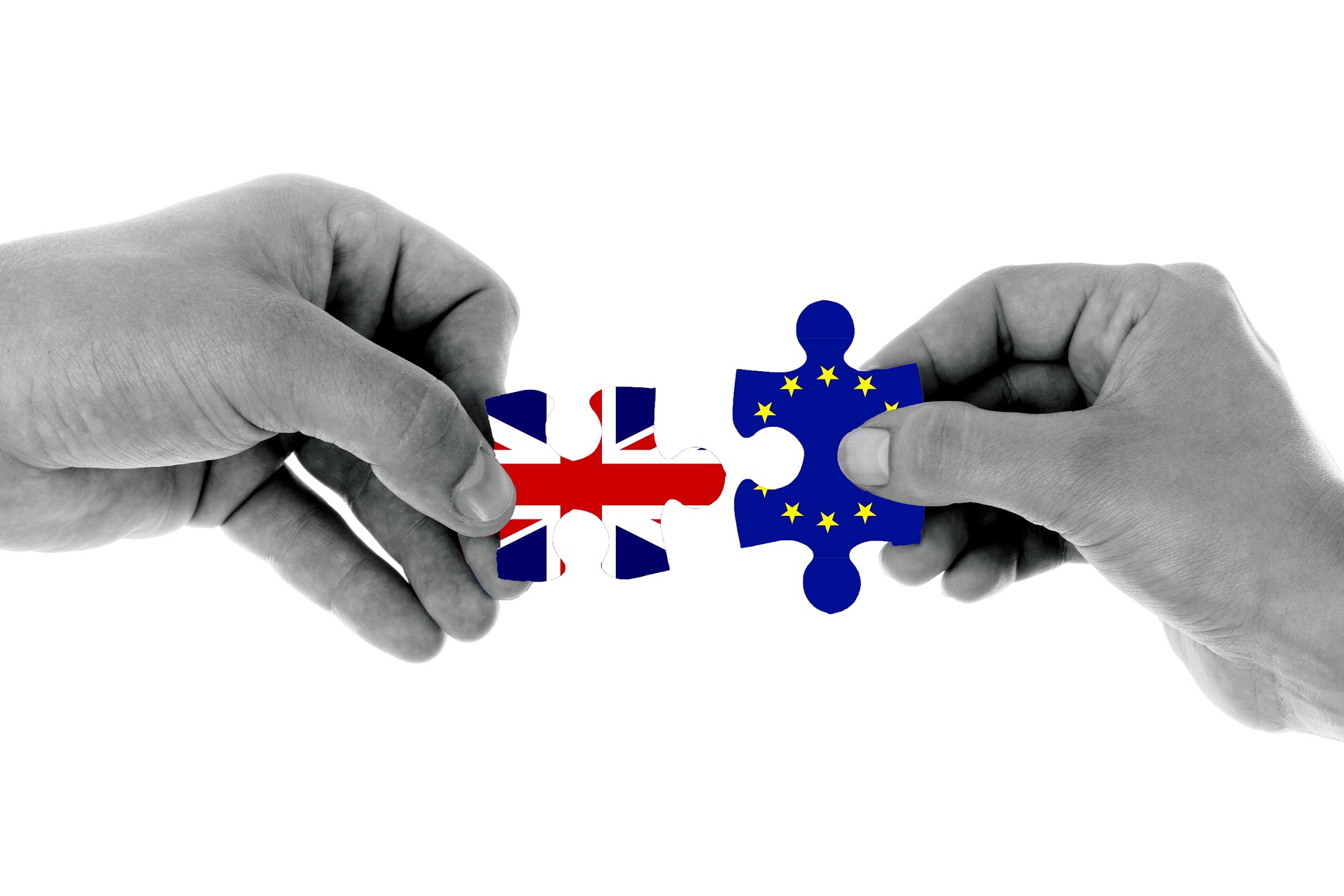
https://www.bremaininspain.com/wp-content/uploads/2016/11/Sue_BremainInSpainHandsFlags_01.png

Search Our Site

Translate this Site

Official Partners

european movement

Members of

Grassroots for Europe

Follow Us on Bluesky

Bremain in Spain

@bremaininspain.com

15400 Followers 11720 Following 6754 Posts

A pro-EU campaign group set up to oppose Brexit, protect the rights of British migrants living in Spain/EU & to rejoin. We believe freedom of movement is a force of good; in a democracy free from division & interference; equality.
www.Bremaininspain.com

Latest Posts

Bremain in Spain

@bremaininspain.com

See Bluesky Profile
  • Get to this post

    Bremain in Spain @bremaininspain.com 6 hours

    A compliment

    Zelenskyy does not always get the recognition he deserves from many. He’s been unwavering in his commitment to Ukrainian independence, democracy and EU accession

    Mark Chadbourn

    Former Trump envoy Keith Kellogg: “Zelenskyy is a tough son of a bitch. He's stubborn. He has his opinion. He's unafraid to say that. He knows how to use media.

    “We in the United States have not seen a leader like him since Abraham Lincoln.”

  • Get to this post

    Bremain in Spain @bremaininspain.com 15 hours

    Do you want Britain to reverse Brexit and rejoin the EU?
    A new poll found that 58 percent of people would vote to rejoin the EU in a second Brexit referendum, with strong support for reversing Brexit among younger and pro Remain voters
    www.coventrytelegraph.net/news/news-op...

    Do you want Britain to reverse Brexit and rejoin the EU?

    A new poll found that 58 percent of people would vote to rejoin the EU in a second Brexit referendum, with strong support for reversing Brexit among younger and pro Remain voters

    www.coventrytelegraph.net

  • Get to this post

    Bremain in Spain @bremaininspain.com 15 hours

    NATO weighs boosting Arctic security as Trump escalates Greenland claims
    Ideas include better Arctic surveillance, more defense spending, transfers of military equipment and military exercises
    www.politico.eu/article/nato...

    NATO weighs boosting Arctic security as Trump escalates Greenland claims

    Ideas include better Arctic surveillance, more defense spending, transfers of military equipment and military exercises.

    www.politico.eu

  • Data Privacy Policy
  • Join Us
  • Get in Touch
  • Facebook
  • X
  • Instagram
© BremaininSpain.com 2016 - 2026 General Email: enquiries@bremaininspain.com Media: media@bremaininspain.com
Manage Consent

We use cookies to optimise our website and our service.

Functional Always active
The technical storage or access is strictly necessary for the legitimate purpose of enabling the use of a specific service explicitly requested by the subscriber or user, or for the sole purpose of carrying out the transmission of a communication over an electronic communications network.
Preferences
The technical storage or access is necessary for the legitimate purpose of storing preferences that are not requested by the subscriber or user.
Statistics
The technical storage or access that is used exclusively for statistical purposes. The technical storage or access that is used exclusively for anonymous statistical purposes. Without a subpoena, voluntary compliance on the part of your Internet Service Provider, or additional records from a third party, information stored or retrieved for this purpose alone cannot usually be used to identify you.
Marketing
The technical storage or access is required to create user profiles to send advertising, or to track the user on a website or across several websites for similar marketing purposes.
  • Manage options
  • Manage services
  • Manage {vendor_count} vendors
  • Read more about these purposes
View preferences
  • {title}
  • {title}
  • {title}