enquiries@bremaininspain.com
  • Facebook
  • X
  • Instagram
  • Facebook
  • X
  • Instagram
  • About
    • Our Mission
    • The Bremain Team
    • Bremain History
    • Members’ Issues & Anxieties
    • Members’ Gallery
  • Events 2026
  • Bremainers Ask
  • Resources
    • Pro-EU Groups
    • British Embassy Updates
      • Bremain Glossary of Terms
    • Government
    • Withdrawal Agreement
    • Support & Advice
  • Votes for Life
    • REGISTER TO VOTE
    • My Vote Matters
  • Sign Up
  • Donate
  • Get in Touch
Bremain in Spain
  • Home
  • About
    • Our Mission
    • The Bremain Team
    • Bremain History
    • Members’ Issues & Anxieties
    • Members’ Gallery
  • Events 2026
  • Bremainers Ask
  • Votes for Life
    • REGISTER TO VOTE
    • My Vote Matters
  • British Embassy Updates
    • Bremain Glossary of Terms
  • Resources
    • Pro-EU Groups
    • Government
    • Withdrawal Agreement
    • Support & Advice
    • Glossary of Terms
  • Sign Up
  • Donate
  • Get in Touch
Select Page
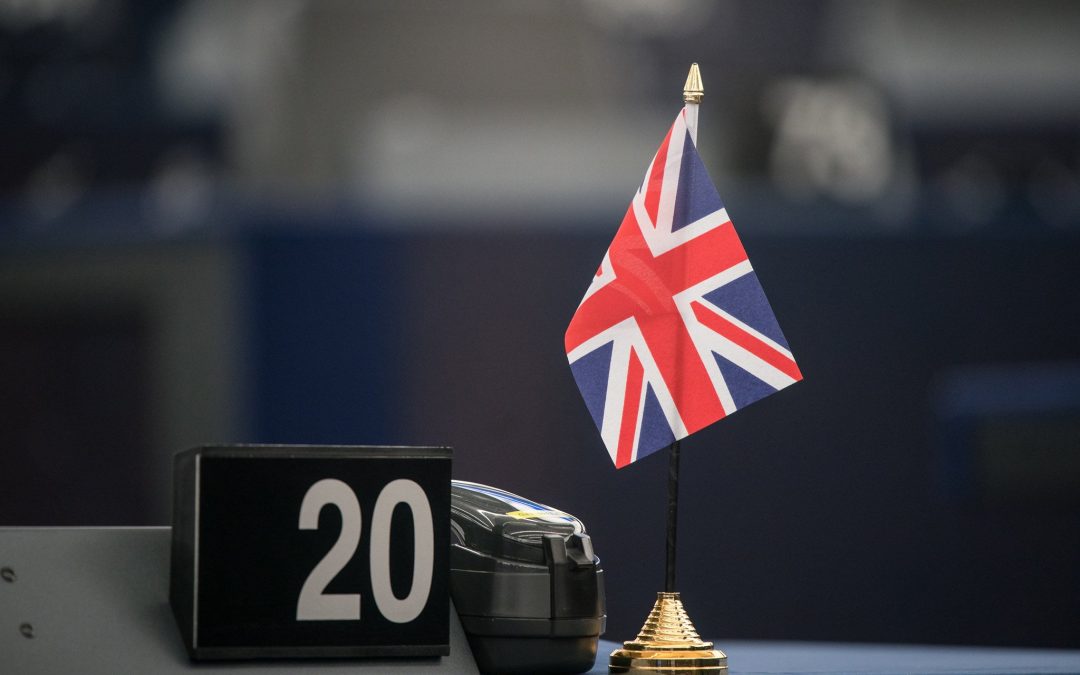
Lord Frost, chief Brexit negotiator: UK-EU relationship a “bit bumpy”

Lord Frost, chief Brexit negotiator: UK-EU relationship a “bit bumpy”

May 20, 2021 | Bylines, News

Minister of State, Lord David Frost – best known as the chief Brexit negotiator – has had a busy few days. On Saturday 15 May, he joined the prime minister in welcoming the Irish Taoiseach, Michael Martin, to a meeting at Chequers. Then on Monday and Tuesday, Frost was giving evidence to not one, but two, parliamentary select committees.

His first appearance was before the House of Commons European scrutiny committee on 17 May. This was followed by an appearance before the new House of Lords European affairs committee on Tuesday.


Lord Frost on Brexit and the Northern Ireland protocol

As Frost was the minister responsible for implementing the Brexit agreement, and a key negotiator of the deal with the European Union, issues surrounding the Brexit deal and the Northern Ireland protocol were bound to be high on the agendas of both committee meetings.

Before Lord Frost had appeared in front of either committee, he had given them plenty to think about. During a visit to Northern Ireland last week, Frost said the protocol was presenting “significant challenges for many in Northern Ireland”. Despite the “extraordinary efforts” by local businesses to make the current requirements work, he said it was “hard to see that the way the protocol is currently operating can be sustainable for long”.

The fact that the deal was described in December as the best thing since sliced bread (I paraphrase slightly), by Frost himself, was, strangely, not mentioned.

This aged well… https://t.co/6Z0ifLTpAo

— Marina Purkiss (@MarinaNigrelli) May 18, 2021

Friendly relations with our neighbours as a sovereign country

In an article for the Daily Mail last weekend. Frost said he had always wanted from Brexit was “free trade and friendly relations with our neighbours as a sovereign country”. He described the current situation as “going back to our roots” after the “interlude of EU membership”. He accused the EU of not having “much enthusiasm to make things work” and suggested Brussels “stop the point-scoring”.

He described the approach of the EU as “purist”, and said the UK government was considering all options, including the triggering of Article 16. The Article allows either party to withdraw from provisions in the agreement if they threaten serious or lasting “economic, societal or environmental difficulties”. Should the UK take this drastic action, the EU’s response could include the imposition of tariffs on UK exports.

In response to Frost’s comments, Matthew O’Toole, member of the Northern Ireland legislative assembly said, “Frost should be focused on making this deal – his deal – work”. He went on to say that, “it is truly depressing that those who have shouted loudest for the hardest Brexit … have been quickest to run away from its consequences”. If Frost truly does want to foster friendly relations with our EU neighbours, he certainly has a funny way of showing it.


European scrutiny committee

The subject of the European scrutiny committee meeting was the ‘UK’s new relationship with the EU’. Chair, Sir William Cash began by asking Frost to name his three main priorities, to which Frost replied: the Northern Ireland protocol; strengthening the relationship with the EU; and the opportunities of Brexit.

Frost said that discussions with the EU, regarding issues relating to the NI protocol, had a “bit of momentum” but were not currently “hugely productive”. The relationship with the EU, he said, would be “a bit bumpy for a time”. According to Frost, the EU’s point of view was that the “easiest solution to any border problem is that we should just operate the same rules and laws as they do”. He added, “Obviously that doesn’t work for us”.

He described the EU as still “coming to terms with the UK’s departure”. Whether that’s true or not of the EU, it’s certainly true of many UK businesses struggling with border issues, and many UK citizens. Frost seemed keen to downplay any Brexit-related issues, while overplaying the opportunities. In fact, ‘opportunities’ seems to be Frost’s favourite word.


Brexit has been unexpectedly disruptive?

Frost suggested that the government had not expected Brexit to be so disruptive, and a new unit would be set up to exploit “Brexit opportunities” – there’s that word again. It seems that neither Westminster nor Whitehall has the suitable talent to make this happen, so the intention is to look outside of government.

It seems to be proving difficult for the government to demonstrate the tangible benefits of Brexit. Perhaps an outsider will stand a better chance. Or not.

Lord Frost said today he is looking for someone to head a new unit on ‘the benefits of Brexit’. Apparently he can’t find anyone in the civil service up to this challenge

Any suggestions?

— Andrew Adonis (@Andrew_Adonis) May 17, 2021

At the end of the 90-minute session, the discussion circled back to the NI protocol, as Frost was asked about his comments in the press regarding the possible triggering of Article 16. Specifically, he was asked how the EU might retaliate to such an action. His suggested that should the EU react, it would only be making things more difficult – setting things up nicely to continue the ‘blame the EU’ game.

European affairs committee’s

The subject of the European affairs committee was the ‘UK-EU relationship’. Chair Lord Kinnoull asked Frost about the current state of play, described by Frost earlier this year as “problematic”. Frost responded that there had been some improvement but repeated his comment that the relationship with the EU was likely to be a “bit bumpy” for a while yet.

Scrutiny was an important issue for the committee. In particular, Lord Foulkes referred to the government’s desire to “take back control”, emphasising that control should be taken back by parliament, not by the government.

Lord Liddle raised the issue of the earlier “totally unnecessary row” over the status of the EU ambassador to the UK. Frost said the matter was now resolved and the issue was “unfortunate” rather than “unnecessary”. When asked what lessons had been learned from the experience, Frost said the government would be aware there would be friction “in areas we don’t expect”.

When asked to comment on recent figures from the Office for National Statistics (ONS) re export/import trade, Frost dismissed any negative comparisons between quarter 4 of 2020 and quarter 1 of 2021 as “unlikely to be very useful”, and cited covid as a significant factor. Lord Purvis pointed out there was a “stark difference” between EU and non-EU trade, so clearly more Brexit-related than covid. When asked if the downturn in trade was temporary or long term, Frost said it was “difficult to tell”.


The sovereignty principle

On the Northern Ireland protocol, Frost confirmed that there were between 20 and 30 ‘areas of contention’, with only limited progress being made on some of those. With difficulties over border checks and customs declarations, Frost was asked whether a temporary alignment of rules was possible or desirable. He replied that it was “a fundamental issue of principle that we don’t dynamically align with EU rules”. It was not for ideological reasons, he said, but in order to be able to do trade deals elsewhere.

On the subject of equivalence, Frost noted that the EU has arrangements with Canada and New Zealand that mirror what the UK desires. Frost still seems to have failed to grasp the relative distance between the EU and Canada and New Zealand, as compared to the UK – that distance being a significant factor when considering the risk of unfair competition.

Regarding the UK’s desire to develop free trade agreements around the world, Frost said it was important in trade negotiations to “find the right balance between offensive and defensive interests”. It is difficult, having observed Frost for three hours of committee Q&A, and having read his comments in the media, to think of Frost being defensive about anything. Evasive, yes. Offensive, certainly. Or to put it in the admiring words of committee member, Lord Lamont, “pugnacious”.

Not exactly a desirable quality for a diplomat or negotiator, one would have thought. But then, that’s this government of Brexiters all over.


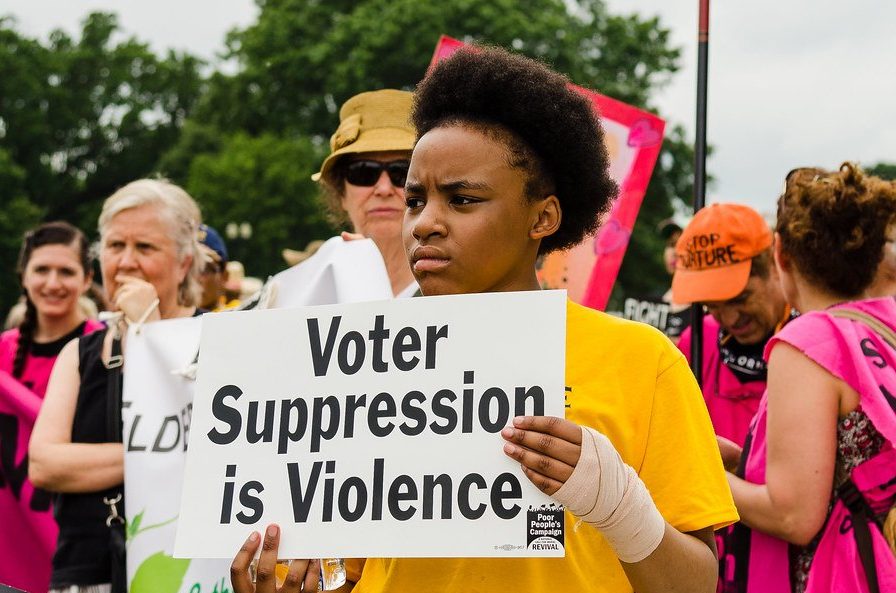
Electoral integrity bill: voter rights vs voter suppression

Electoral integrity bill: voter rights vs voter suppression

May 12, 2021 | Bylines, News

After many false starts, and countless broken promises, there was a glimmer of hope for Brits abroad – and their voting rights – in Tuesday’s Queen’s speech.

The scrapping of the arbitrary 15-year voting rule has been a longstanding, and oft-repeated, Conservative manifesto promise. The rule has deprived up to five million UK nationals living abroad of their democratic right to vote in UK elections, as it deprived them from voting in the 2016 Brexit referendum.

An earlier private member’s bill aimed at restoring voting rights – the overseas electors bill 2017–2019 – failed to make it past the report stage in parliament. We now have a government bill, and a government majority, that could finally bring about the change we have been long been campaigning for. There is also more money available, following the increase of funding by £2.5m in the recent budget.


Harry Shindler on the Queen’s speech

Responding to news of the electoral integrity bill being included in the Queen’s speech, veteran campaigner, Harry Shindler MBE, had this to say: “It is excellent news”. In typical modest style, Harry took no credit for getting us this far himself, instead asking me to thank campaigners in Spain for their efforts.

He said, “UK nationals in Spain have played an important role, and your efforts have finally paid off. You did it”. Whilst the recognition from Harry is welcome, we think, after his 25 years of active campaigning, that most of the credit is his.


Scepticism from those denied voting rights

Despite baby steps in the right direction, there is still a high degree of scepticism from those denied their voting rights. We have been here before, heard the rhetoric before, had our hopes dashed before. Even the name of the bill that might finally resolve our longstanding issue – the electoral integrity bill – brings about a wry smile. Integrity is not something we naturally associate with this government.

For many months, I have been attempting to get a straight answer out of the Cabinet Office about when we could expect the return of our voting rights. After involving my own MP, and later the Foreign, Commonwealth and Development Office, the scarce responses have always been much the same.

They repeat back to us how important our rights are to them; how we maintain strong links to the UK, including paying taxes; how committed they are to scrapping the 15-year rule etc etc etc. No specifics, no time scales. A cut and paste job, hardly edited from last year’s version before the electoral integrity bill even existed.


Rights of UK nationals abroad

In the grand scale of concerns around the content of the Queen’s speech, the rights of UK nationals abroad will not be high on anyone’s agenda, especially in the UK. There are many pressing concerns. Boris Johnson’s pledge to reform social care has failed to amount to anything, with no more than an assertion that a proposal “will be brought forward”. Then there’s the controversial police, crime, sentencing and courts bill, which threatens our civil liberties and our ability to protest peacefully.

There is no way voter suppression legislation is getting through the Lords

— Andrew Adonis (@Andrew_Adonis) May 10, 2021

In addition, the planned repeal of the Fixed Term Parliament Act could see the prime minister call an election at any time – such as when he feels Labour are most at risk and the ‘vaccine bounce’ is still working in his favour.


Voter suppression

If the next election comes early, even if the electoral bill progresses well through parliament – House of Lords permitting – any government promises to restore our voting rights before the next ‘scheduled’ election become meaningless. The government’s plan to avoid scrutiny and suppress opposition seemingly continues unabated.

Clear pattern across the bills in the Queen's Speech. Voter suppression through pointless ID scheme, reform of judicial review, continuation of policing bill to silence protests. They all expand the power of the Conservative government and undermine that which might challenge it.

— Ian Dunt (@IanDunt) May 10, 2021

As welcome as the news about the restoration of voting rights is, it is a bitter pill to swallow when the bill that could restore democracy to Brits abroad, will have the opposite effect on many others. If, or perhaps when, the electoral integrity bill is passed, Brits abroad may be the winners, but many others will be the losers, including 3.5 million UK residents currently without photo ID.

A mother on Twitter said, “when I was a single mum, struggling to buy food, I didn’t have money to drive a car, so no licence. Certainly not enough to buy a passport. Let alone travel abroad. So how do the millions in a similar situation provide photo ID? But that’s the whole point isn’t it @BorisJohnson.”


Photo ID and electoral fraud

Under the guise of protecting the country from electoral fraud, the proposed new photo ID requirements will prevent many others from exercising their democratic right to vote.

As people listen to #QueensSpeech today be very aware requiring #VoterID from 2023 will damage UK #Democracy
In Feb 3 big US civil rights groups warned MPs that Trumpian like ID laws disproportionately affect people from poorer/marginalised communities. https://t.co/2N9U6CTObt

— Gina Miller (@thatginamiller) May 11, 2021

The electoral fraud argument for voter ID is a spurious one. In 2019, there were a total of 595 cases of alleged voter fraud investigated by the police, of which only 164 related to the general election (source Electoral Commission). Of the 595 alleged offences only four led to a conviction, with two individuals being given a police caution. Voter ID is a solution to a problem that does not exist.

If concern over electoral fraud were really an issue for this government, then perhaps they should focus on the worst case of electoral fraud in recent history – the Brexit referendum. That might require a different kind of bill with ‘integrity’ in the title, and perhaps a very different kind of government.

Tourism and the Spanish economy

Tourism and the Spanish economy

Apr 27, 2021 | Bylines, News

Bremain Chair Sue Wilson writes for Yorkshire Bylines:

The economies of countries around the world have been hard hit by the Covid-19 pandemic. In some cases, like the UK, the severe impact has in part been due to poor or late decisions on safety measures. Elsewhere, the reliance of some countries on certain industries has also been a significant factor. In Spain, that industry is tourism.

Lockdown restrictions in Spain were stricter than most other European countries. Having watched the crisis unfold in Italy, the Spanish authorities took decisive action. Whilst many of those restrictions have now been lifted, the country is still under a ‘state of alarm’, although this is expected to be lifted on 9 May.

Regional governments have the authority to set their own pandemic measures. Where I live in the Valencian community, the measures are some of the strictest in the country, but they have been effective. This region now has the lowest covid infection rates in the whole of Europe.


The immediate impact on tourism

But covid has had a direct and devastating effect on the tourism industry, not least here in Spain. In 2019, over 83.5 million visitors contributed over €92bn to the Spanish economy. In 2020, the number of visitors was down to 20 million, with revenues down by 75 percent – figures not seen for 50 years.

Though 2021 is expected to see those numbers recover by around 40 percent, that will still represent a significant downturn in a sector that’s responsible for 12.4 percent of GDP and 2.9 million jobs. The Balearic Islands have been hardest hit. Visitor numbers dropped from 13.6 million in 2019 to just 1.6 million in 2020, with UK visitors alone falling by 82 percent.


Long-term impact on tourism in Spain

According to the Laboratory of Tourism Analysis and Innovation, even in 2022 revenue levels are not expected to reach normal levels – a view that was supported by the Funcas think tank, back at the start of this year. At that time, the Spanish government was rather more optimistic, expecting an increase in visitors from Easter, but that never really materialised.

The minister for industry, trade and tourism, Reyes Maroto, told El Pais, “Our country’s tourism is facing the worst crisis in its entire history”. She said this was because “the two elements that define the very essence of travel are affected: mobility and confidence”.


The EU’s recovery package is set to offer hope

Despite the impact that the pandemic and the fall in visitors have had on the Spanish economy, the outlook for recovery looks hopeful. Spain is in line for a significant chunk of the EU’s €750bn covid recovery package.

Spain’s prime minister, Pedro Sánchez, recently unveiled plans for the €140bn EU funding package – a combination of half grants and half loans. He described the recovery package as “the greatest opportunity for Spain since its admission into the EU”.

Brussels has urged Spain to make reforms in many areas, such as pensions, jobs, the environment and education. Many of these reforms are already taking place, though there is much work still to do.

Significant sums will be spent on investment in infrastructure projects, and decisions about spending will be made by national, regional and local government. Sánchez said a €70bn investment “will have an immediate impact on jobs this year”.


There’s a long way to go but Spain has the support of the EU

Predicting how long the pandemic will last, or the impact on global health or wealth, has been an inexact science. The virus has fought back hard, with dangerous new strains and long-term effects that have confounded forecasts for the future.

The amazing speed of the development and production of vaccines has given humanity a fighting chance of control, as long as the world’s leaders remember we are one planet with one global problem.

Countries like New Zealand, that acted quickly and decisively, have already seen a return to something like ‘normal life’. As New Zealand’s health has recovered, so has its economy. For Spain, and other EU countries, the help and significant financial support provided by the EU, will go a long way to helping us turn the corner and recover – both our health and our wealth.

Sánchez says, “The pandemic will give way to a new period in history”. Such a shame that the UK – suffering one of the worst hits to its economy of any country on the planet – must go it alone, without EU support and funds. Not sure the supposed ‘extra £350m’ a week is going to cut it.

The challenges of law enforcement and security after Brexit

The challenges of law enforcement and security after Brexit

Apr 15, 2021 | Bylines, News

Bremain in Spain Vice Chair Lisa Burton writes for Yorkshire Bylines about post Brexit security issues:

As members of the European Union, Britain played a crucial role in creating policy and the many complex systems on criminal justice and law enforcement. Our post-Brexit arrangements and access to these many systems is not straightforward. The House of Lords European Union committee 25th report of session 2019–21 has recently reported on the challenges the UK now faces as a non-EU third country.

The UK was a leader in developing the European arrest warrant (EAW), the Europol and Eurojust agencies, and some of the shared databases and alerting systems that underpinned cooperation on justice and security among EU member states.


The challenges of law enforcement and security after Brexit

Although use of these systems became an integral part of keeping British citizens safe, very little of it was covered in the political declaration, nor did it receive much attention from the press and public. If the UK had left on a no-deal Brexit basis, Britain would have had to revert to outdated legal systems, that in some instances, had not been used for decades.

However, in December 2020, the UK and the EU signed the Trade and Cooperation Agreement (TCA). ‘Part Three’, as it’s known, is the section on law, policing, security and judicial matters.


Schengen Information System

One of the most significant consequences of the UK’s new third-country status is the loss of access to the Schengen Information System (SIS II), which had become an everyday working tool for all countries across the EU. The importance of this system and the real-time access to data it provides about persons and objects of interest, including wanted and missing persons, has been emphasised repeatedly.

In 2019 alone, UK police independently checked the SIS II system 603 million times. The loss of access to this system has been described as a significant blow as it is not legally possible for a non-Schengen third country to cooperate with the EU through the SIS II database.

As a substitute, UK authorities now use the Interpol I-24/7 database; however, the effectiveness of this alternative rests on EU states’ willingness to upload the same information onto the Interpol system that they circulate on SIS II. There’s no clear evidence or policy from the UK government on how it would persuade EU states to do this, when they already have real-time access through SIS.

The UK is also dependent on the completion of technical improvements to UK systems so that I-24/7 data is available to its frontline law enforcement in minutes, not hours. This work has yet to happen. The Lords have requested that the government report regularly to committees of both Houses on the progress of what they have deemed “urgent matters”.

Data and GDPR

Data is now the most valuable commodity on the planet. There have been concerns that post-Brexit, the UK could become a hub for ‘dirty data’, which would have serious international consequences, as detailed here.

UK law enforcement’s capacity to share essential data is subject to an evaluation by the EU of how the UK handles that data. If the UK decides it doesn’t want to stay aligned to the EU in the future around data, this could risk the agreement’s suspension or termination.

In that case, the UK would again be thrown into a situation of not having access to EU information on crime, DNA, organised criminals and terrorism. The UK’s data protection arrangements set out in the agreement are untested, and dispute methods are still undecided. A breach of conditions, particularly on data, would have unknown consequences.

There have been worrying instances of Home Office errors in handling police and criminal justice data, which have raised concerns about the reliability of UK data sharing processes. In January, the Home Office lost 400,000 records which, of course, could seriously compromise criminal investigations.

It is this sort of issue which could lead to a dispute.

Particularly worrying is the clause that Part Three of the TCA can be suspended in its entirety if a “serious and systemic” deficiency occurs within one party as regards to either “the protection of fundamental rights or the principles of the rule of law” or “the protection of personal data”.

It states a party may at any moment terminate Part Three of the agreement with nine months’ notice. Oddly, all other sections of the TCA state 12 months’ notice for termination.


European arrest warrant

The EAW is a much-praised system that allows a streamlined extradition process between EU states – used for high-profile terrorists, drug smugglers and murderers. The EAW has now been replaced by the ‘surrender agreement’, which tries to replicate the EAW broadly, but 10 EU countries have already stated they will not extradite their nationals to the UK post Brexit.

The UK may have to attempt prosecutions in other countries or circulate wanted criminals on Interpol, bringing more complex, costly and time-consuming processes to the justice system.


Family law

The UK government chose not to negotiate an agreement on family law, which the Lord’s showed great concern around. Previously, three cooperation agreements upheld laws around maintenance, divorce, and international child abduction and brought much-need clarity and certainty to cross-border family relationships’ intricacies. These were The Brussels 1 regulation, Brussels II a regulation and the maintenance regulation.

In 2017, the Lords committee suggested the UK join the Lugano Convention, which could provide a partial solution. Unfortunately, the UK only just applied this month, April 2021, and the EU is yet to approve its membership.


Human rights

The European Convention on Human Rights (ECHR) dates back to the 1950s and is widely considered the most influential international treaty for human rights protection in the world. This agreement is between Council of Europe member countries and is, therefore, not a European Union construct as many people believe.

The TCA states the UK, as a third country, will continue to collaborate with the EU on a range of policing and criminal justice mechanisms. “Adherence to the ECHR is an important provision”, said report contributor Professor Mitsileg, “particularly if the UK decided to abolish the Human Rights Act and, therefore, change the way ECHR rights are enforced within the UK”.

One of the most severe aspects of the TCA is that if either the UK or an EU member state denounces the European Court of Human Rights, then termination becomes effective on the date of that denunciation.

We have all heard concerning language from the media and UK government ministers around human rights. Home Secretary Priti Patel has attacked “lefty lawyers and human rights campaigners”, and Prime Minister Johnson has repeatedly made threats over current human rights law. It will do the UK no favours globally or domestically to dismantle human rights.


Brexit isn’t over and negotiations on security will continue for years

Worryingly, the UK institutions that will oversee the operation and development of the agreement – the partnership council, and (of particular relevance to Part Three), the specialised committee on law enforcement and judicial cooperation – have yet to be constituted, let alone meet, even though these areas are vital to the security of the UK.

Brexit is not done. The TCA is detailed and complex, but it isn’t an encompassing agreement, and there’s an incredible amount of work still to be done. Hammering out the details will rely on close dialogue, cooperation and trust between the UK and the EU.

The EU and Britain will need to negotiate for years, not just around security but also in many other areas where close and ongoing collaboration is vital and necessary. If the UK and the EU are to flourish, their citizens to be safe, prosperity and peace maintained, then the political game-playing must stop.

Is it time to drop the divisive labels?

Is it time to drop the divisive labels?

Apr 12, 2021 | Bylines, News

Following the Brexit referendum, those of us with strong feelings about the outcome, exchanged our former political identities for Brexit ones. Instead of categorising ourselves as socialists, centrists, or conservatives – whether with a small ‘c’ or a big one – our most important labels became Remainer or Leaver. No longer brought together, or pushed apart, by our attitudes to party politics, how you voted in the Brexit referendum carried far more weight.

Now the UK is no longer an EU member state – even in Brexit is still far from ‘done’ – are those labels still relevant or helpful? Do the vast majority of the British public even care about Brexit anymore?


Who still cares about the ‘Leaver’ and ‘Remainer’ divisive labels?

While it’s clear there is still a considerable divide, for many there are more pressing problems, not least the wide-reaching effects of the pandemic, or the climate crisis. While Brexit is still a considerable cause of concern to many, especially those directly affected, it’s understandable many would prefer to close the Brexit door and move on.

If the pandemic has taught us anything, it’s perhaps that life is too short.

If putting the past behind us is a desirable outcome for the majority, it’s something that is proving quite difficult for those with strong views, on both sides. You don’t have to look too far on social media to witness plenty of evidence of anger and frustration, from Leavers and Remainers alike.

Put the two together, and the level of vitriol, from both “winners” and “losers”, is enough to make anyone switch off.


An angry nation

Most Remainers will, at some point over the last five years, have been on the receiving end of jibes like “you lost, get over it”. In turn, Remainers have taunted Leavers with various versions of “I told you so”. Even for those of us that have tried, and on the whole, succeeded in avoiding such comments, the temptation to lash out has been compelling.

Just logged onto twitter and noticed that the top trends currently appear to be ‘gammon’ and ‘remainers’. Logged off again.

— Brian Cox (@ProfBrianCox) April 9, 2021

Brexit has discovered an anger in the British public that is often ugly and toxic, yet totally understandable. We all have a lot to be angry about. Leavers and Remainers alike. Maybe the important question is – who should that anger be directed at?

I’ve always believed that the blame for Brexit lay at the door of the liars, not the lied to; that many who voted to leave honestly believed they were making the best decision for themselves and their families. I still believe this was the wrong decision, but I also accept that they likely would disagree with that assessment.


Focus on the present and the future

Extremists on both sides are hanging on to their anger, as is their right. But let’s not pretend we – yes, I’d classify myself as an extremist, as far is Brexit is concerned – speak for the country. We don’t.

So, how do we ever hope to move forward, when it’s so hard to forgive and forget? Reactions to Brexit by Remainers have been described as like those experienced by the bereaved. The various stages of grief, such as depression and anger, are all too familiar to pro-Europeans, though the acceptance phase has yet to be reached by many.

Leavers may be experiencing some of those same emotions now, as they see promises they were made come to nothing. Some of the Leave Campaign’s promises were compelling. It’s not surprising that so many people wanted so much to believe them. When they won the referendum, they were full of hope and optimism. Almost five years later, the mood is rather more sombre.

No matter how you voted, or where you stand on Brexit now, trying to fight old battles is neither useful nor healthy. Despite my belief that the UK’s place is, and always should be, at the heart of Europe helping to make important decisions for a continent, I have to accept that is not where we are.

The fight is far from over

Accepting Brexit is ‘done’ does not mean the fight is over, just that the battles are different now. Remainers might rib Leavers about not knowing what they voted for, but very few voted for what we have now. Most people voted for a better life, or at least not a worse one.

Healing the division is not going to be easy. The experience has been extremely painful for so many, and the realities are biting us all. The deal we ended up with – and which hasn’t even been ratified yet by the EU – is one very few wanted. Theresa May’s red lines were responsible for much of the harm, but Boris Johnson’s position only made matters worse.

I would never suggest we all kiss and make up. That’s never going to happen, and it would make me a hypocrite. I have lost friends over Brexit that I will never see again. But I do believe we have more in common than we are ready to accept.

Extremists on both sides will never shake hands, but there are many others that don’t fit that description: honest, decent people who want a government that looks after them, that keeps its promises and that doesn’t get rich at their expense.

They want an NHS that is valued and well-funded, an electoral system that is fair, and a government that does more than pay lip service to the climate emergency.

Maybe most of all, they want their elected representatives to show some compassion, take responsibility and not be afraid to admit to their mistakes. Maybe if the government started to act a bit more human, we all could too.

This article was written by Bremain Chair Sue Wilson and was first published in Yorkshire Bylines on 11 April 2021. 

Covid and the treatment of Brits in the EU

Covid and the treatment of Brits in the EU

Apr 7, 2021 | Bylines, News

Bremain Chair Sue Wilson recently wrote this piece for Yorkshire Bylines about the impact of Covid and treatment of Brits in the EU:

Ever since the Brexit referendum, Brits living in the EU have complained about being invisible, and with good cause. In the early stages of the negotiations, the lack of representation for British citizens in the EU, alongside our EU friends in the UK, was notable.


Brits in the EU are traditionally ignored by mainstream media

Not only were we largely ignored by politicians, but by the mainstream media too. Our voices gradually came to be heard in both Europe and Westminster, thanks to the efforts of campaign groups across the EU.

Stories of our plight occasionally made the papers, but more focus was given to the dire situation facing EU citizens, and quite rightly. Their situation was, and is, worse than ours, thanks to the toxicity of the (Go) Home Office. Our European hosts, by comparison, have been far more welcoming and sympathetic.

When stories of Brits abroad did make the headlines, they were far more likely to be about British tourists behaving badly, than tales of rights removed from overseas British citizens. But thanks to the actions of overzealous immigration officials at Alicante airport, British residents of Spain hit the headlines bigtime this week.


British citizens refused entry to Spain

When 40 passengers returning to their homes in Spain were refused entry, there was an indignant outcry. It was claimed that, due to covid restrictions, no returning resident could be admitted to Spain without producing the new Tarjeta Identidad Extranjero (TIE, or foreigners identity card).

Whilst it’s true that returning Brits must produce proof of legal residency, it is not a legal requirement to produce – or even possess – a TIE. Existing residency documentation that pre-dates the TIE is equally valid and confers the same withdrawal agreement rights. What those passengers produced on arrival should have been sufficient to allow their entry.

It appears those passengers had all the necessary documentation required for travel, even checking directly with the airline in advance. Although specific reasons for their journeys have not been reported, it’s likely many were simply trying to return home, having been prevented from doing so earlier by covid restrictions.

The British Embassy in Madrid was quick to act, and immediately issued a statement offering assistance. We can only hope that – similar to an earlier incident at Heathrow around Christmas – this will prove to be an isolated episode.


The impact of Brexit and covid

When stories of this nature hit the media, the tendency – of the right-wing press especially – is to erroneously seek to blame the EU, or the EU country concerned. But in this case, clearly the fault did lie with certain officials who over-stepped the mark, and our sympathies are with those personally affected.

Lockdown is a necessary evil we have all have to face. To be stuck in a country for weeks or months longer than planned – especially one you no longer recognise as a green and pleasant land – is an added nightmare. Although covid can legitimately be claimed as the cause, this situation would not have arisen had we still been EU citizens, rather than third country nationals.

As a British resident of Spain, I appreciate the fact that the British media has cottoned on to our existence. But there’s certainly room for improvement. Thanks to Spain hosting the largest British resident population in Europe, it’s often the focus of UK media coverage. You’d be forgiven for thinking that the third country 90-day in 180-day rule only applies in Spain, for example.

You might be forgiven for thinking only Spain could be about to deport illegal Brits for overstaying 90 day allowance.
Think you'll find there are 26 others countries about to do the same.
The UK government knew this. They helped write 3rd country national rules.@BremainInSpain

— Sue Wilson (@Suewilson91) March 29, 2021

Sovereignty of EU member states

Although many of the ramifications of Brexit on Brits abroad are the same EU wide, there are significant differences. EU countries – regardless of what the Brexiters said – are sovereign nations with the ability to make their own rules. So, while we appreciate the focus on Spain, it is not entirely representative of the treatment of Brits across the EU.

We’re fortunate here to have a system whereby any pre-Brexit legal resident can switch to the new TIE. If they choose to – it is not a legal requirement, though it is recommended, especially for travel! Not all EU countries have adopted this system.

France, for example, requires residents to re-apply for a status they already have, at the risk of being refused. It’s akin to the settled status system in the UK for EU citizens.

Maybe we expect too much from the media in wanting our stories to be told. To some extent, the mainstream media merely reflect the interests of their readership. Are the British public really that interested in problems faced by Brits abroad thanks to Brexit, or covid? Aren’t they, naturally, more concerned with how the current crises affect their own lives?


Perhaps we’re the lucky ones?

It’s been pointed out to us that, thanks to the withdrawal agreement, Brits abroad have more rights post-Brexit than Brits in the UK. Certainly, it’s true that, for those of us that moved abroad and took up European residency, certain rights we assumed were ours for life, have been protected. But not all of them. Freedom of movement has been lost to us all.

Is there an element of jealousy from Brits in the UK that we’ve taken advantage of life-changing opportunities to live abroad? Opportunities that are no longer available to others? Are we truly the lucky ones to have left a country that we no longer recognise, or that shames British citizens at every turn?

Damn right we are! But that doesn’t mean we give up the right to hate Brexit with a passion, for what it has taken away from all of us, no matter what country we call home.

« Older Entries
Next Entries »

Search Our Site

Sign Up to our Newsletter

Translate this Site

Official Partners

european movement

Members of

Grassroots for Europe

Follow Us on Bluesky

Latest Posts

  • Data Privacy Policy
  • Sign Up
  • Get in Touch
  • Facebook
  • X
  • Instagram
© BremaininSpain.com 2016 - 2026 General Email: enquiries@bremaininspain.com Media: media@bremaininspain.com
Manage Consent

We use cookies to optimise our website and our service.

Functional Always active
The technical storage or access is strictly necessary for the legitimate purpose of enabling the use of a specific service explicitly requested by the subscriber or user, or for the sole purpose of carrying out the transmission of a communication over an electronic communications network.
Preferences
The technical storage or access is necessary for the legitimate purpose of storing preferences that are not requested by the subscriber or user.
Statistics
The technical storage or access that is used exclusively for statistical purposes. The technical storage or access that is used exclusively for anonymous statistical purposes. Without a subpoena, voluntary compliance on the part of your Internet Service Provider, or additional records from a third party, information stored or retrieved for this purpose alone cannot usually be used to identify you.
Marketing
The technical storage or access is required to create user profiles to send advertising, or to track the user on a website or across several websites for similar marketing purposes.
  • Manage options
  • Manage services
  • Manage {vendor_count} vendors
  • Read more about these purposes
View preferences
  • {title}
  • {title}
  • {title}