enquiries@bremaininspain.com
  • Facebook
  • X
  • Instagram
  • Facebook
  • X
  • Instagram
  • About
    • Bremain History
    • The Bremain Team
    • Members’ Issues & Anxieties
    • Our Mission
    • Our Stories
    • Members’ Gallery
      • Mike Parker’s Story
      • Martin Robinson’s Story
      • Sandra’s Stretton’s Story
      • Mike Zollo’s Story
    • The Local ES
  • Events 2026
  • Bremainers Ask
  • What’s New
    • News
    • Articles
    • Events 2026
    • British Embassy Updates
      • Bremain Glossary of Terms
  • Resources
    • Pro-EU Groups
    • How the WA affects you!
    • Government
      • Official Negotiation Links
    • Support & Advice
  • What Can I Do?
    • Donate
    • Votes for Life – Improving Representation for Brits Abroad
    • Write to Politicians
  • Donate
  • Get in Touch
Bremain in Spain
  • Home
  • About
    • Our Mission
    • The Bremain Team
    • Members’ Gallery
      • Mike Parker’s Story
      • Martin Robinson’s Story
      • Sandra’s Stretton’s Story
      • Mike Zollo’s Story
    • Bremain History
    • Our Stories
    • Members’ Issues & Anxieties
    • The Local Articles
  • Events 2026
  • Bremainers Ask
  • Votes for Life
    • V4L matters because…
  • British Embassy Updates
    • Bremain Glossary of Terms
  • What’s New
    • News
    • British Embassy Updates
    • Bremainers Ask
    • Articles
  • Resources
    • Pro-EU Groups
    • How the WA affects you!
    • Government
      • Official Negotiation Links
    • Support & Advice
  • What Can I Do?
    • Donate
    • Write to Politicians
  • Join Us
  • Donate
  • Get in Touch
Select Page
Learning to live with Covid

Learning to live with Covid

Jul 10, 2021 | Bylines, News

Bremain Chair Sue Wilson writes for Yorkshire Bylines about her personal experience during the pandemic:

It’s been nine months since I last saw my mum. Having been used to monthly visits, covid measures have prevented me – like so many others – from spending precious time with family.


Taking precautions with covid

I live in Spain, my mum lives in a care home in Oxfordshire. My last visit was a week after her 90th birthday, which I missed, thanks to being stuck in quarantine.

As I write this, I am doing a further period of enforced isolation, though this time for 10 days, not 14. I say 10 days, but as the count doesn’t start till the day after arrival, it’s really 11. Leaving me three days out of my two week trip to visit mum, by appointment only, and time limited.I don’t mind the precautions the care home is taking, even the daily testing. In fact, I welcome them. I rather wish the whole country, not least the government, were half as cautious over covid.


Covid travel measures

I thought long and hard before making the decision to visit the UK, weighing up convenience, cost, and safety.

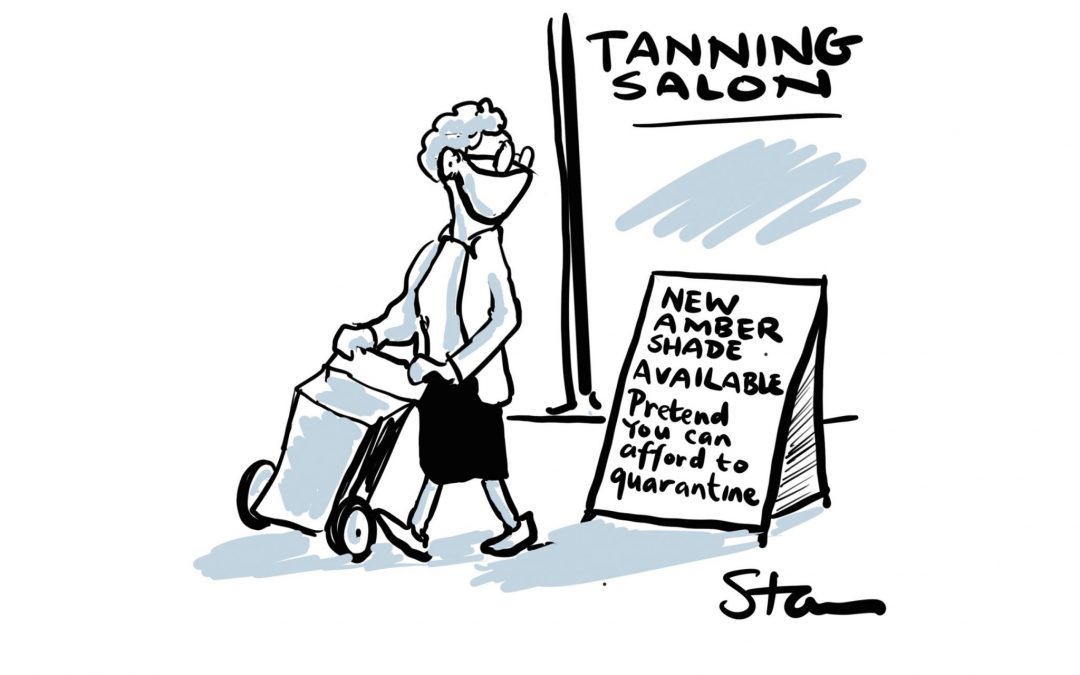
It was anticipated that on “Freedom day” in June, many covid restrictions would be lifted. Instead, any revisions were postponed for four more weeks. With Spain on the government’s amber list, and no immediate signs of that changing, travelling to England was going to mean isolation. But the alternative could mean waiting until after the new Freedom Day – expected on 19 July.

With quarantine measures expected to be dropped from amber list countries, this could mean a considerable increase in demand for flights – both into and out of the UK – and no doubt a hike in prices. With more people, comes more risk, even for those of us fully vaccinated, and on balance, I chose to come earlier and quarantine.

Although my decision has cut the time I will be able to spend visiting mum, you can’t put a price on feeling safe. Though there seem to be plenty of companies willing to take our money. My pre-flight test in Spain was quick, painless, and relatively cheap. For 40 euros, I was tested by a laboratory assistant in a white coat, and had my results fully documented in an email within two hours.

I have just posted the first of two UK tests – self-administered – during quarantine. The two tests combined cost me £175, and all that is guaranteed is that I will have the results within 48 hours of the provider receiving them in the post.

I was officially allowed to break quarantine in order to go to the nearest priority post box to return my test. The logic of that escapes me, but then the logic of many of the government’s covid measures have that same effect.


Mask wearing

With social distancing about to be scrapped, and the wearing of masks left up to the individual, you could be forgiven for thinking that it’s perfectly safe to return to normal life. But will the British public continue to wear masks when the matter is left to their own discretion?

Wearing masks has always been about protecting others, not ourselves. Behavioural Scientist, Professor Stephen Reicher told the BBC, “I agree that people have to exercise responsibility – but not just personal responsibility, social responsibility”.

Speaking of circumstances when personal freedom affects the freedom of others, he compared mask wearing to driving. He added, “my freedom to drive fast affects your safety”, adding that the freedom not to wear a mask similarly affects the safety of others.

Speaking for transport industry union Unite, Bobby Morton said any lifting of requirements for the wearing of face coverings on public transport would be “an act of gross negligence”.


Covid is not like the flu

The new Health Secretary, Sajid Javid, seems keen to put freedom and wealth before health. He does know he’s not Chancellor anymore, doesn’t he? By all accounts, we all now have to “learn to live” with covid – like we live with the flu.

But covid is not the flu, and nobody, to my knowledge, has been seriously ill for months on end, or suffered long-term damaging effects, from “long flu”. I also don’t remember the entire population being recommended to be vaccinated against the flu or having to self-isolate.


👇🏼 New UK health minister saying COVID is like flu. Same position 18 months into the pandemic. 😩 We didn’t have to vaccinate the entire adult population against flu, or do mass community testing, or have lockdowns bc hospitals full. I don’t understand this analogy. https://t.co/2w15dwpuYE

— Prof. Devi Sridhar (@devisridhar) July 4, 2021

The fact that covid is spreading amongst the younger, unvaccinated population, or that case numbers are the highest they have been for many months, is nothing for us to be concerned about apparently, at least according to Javid or the prime minister.

Despite rising hospitalisations, they point to the low number of daily deaths, comparatively speaking, as if that is the only measure worth consideration.

"I don't think we can do anything but conclude that this government is seriously carrying out its herd immunity policy through natural infection, through school children."@Zubhaque #IndependentSAGE pic.twitter.com/lsTNCQ2hXU

— Independent SAGE (@IndependentSage) July 2, 2021

It may be the case that the vaccination programme is having an impact on the relationship between case numbers and deaths. We certainly hope so. But isn’t it too soon to know for sure? Have the government given up any pretence and decided to carry out its earlier, and supposedly soundly rejected herd immunity policy.


Learning to live with covid

Though not quite what the government had in mind, I am learning to live with covid measures. Measures that will restrict my movement, my proximity to others and my freedoms. I shall continue to wear a mask, not for my own benefit, but for the benefit of others.


There is nothing very promising about the covid data.

We're about three quarters of the way through the vaccine programme and they're giving up – let the rest just get it.

Dangerous and wrong in my view. https://t.co/XxzzeAsUsv

— Prof. Christina Pagel (@chrischirp) July 4, 2021

We are going to have to learn to live with covid, say the government – even as it mutates and becomes more dangerous. Not easy, but perhaps not as tough as learning to live with this government – even as it mutates and becomes more dangerous.

“Black Lives Matter is a Marxist Organisation”

“Black Lives Matter is a Marxist Organisation”

Jul 7, 2021 | Bylines, News

Bremain Vice Chair, Lisa Burton, recently wrote this piece about the alleged Black Lives Matter links to Marxism for Yorkshire Bylines:


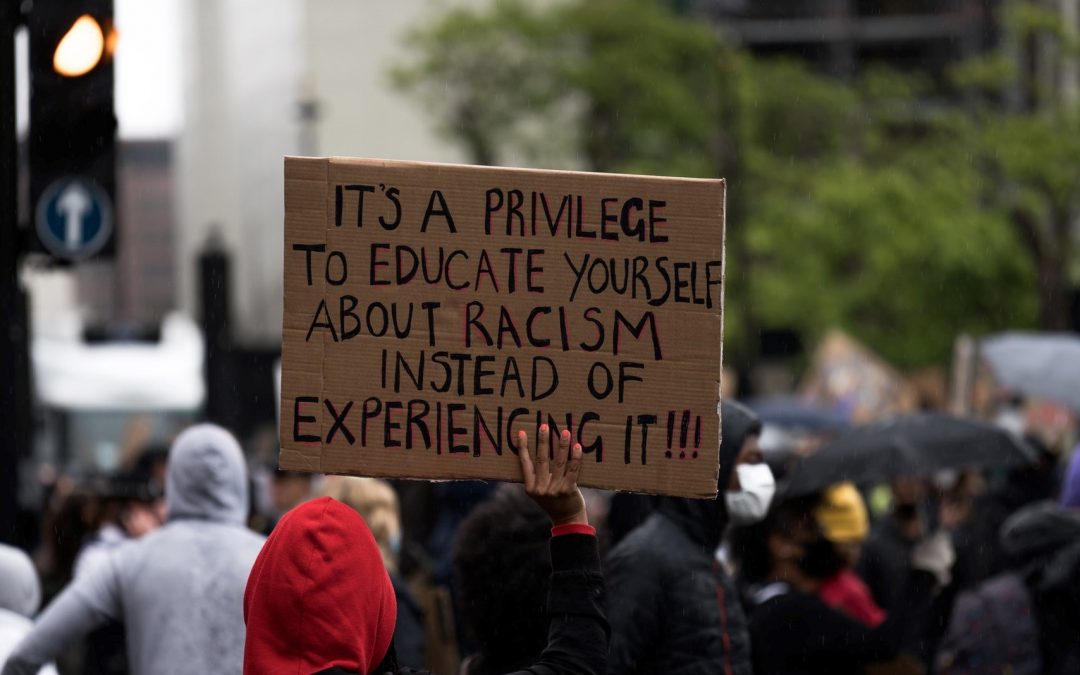
We hear it from politicians, celebrities, political commentators, and those who have launched a so-called ‘war on wokeness’ – ‘Black Lives Matter is Marxist’. It has played out most recently through the discussion of football teams deciding to ‘take the knee’ to show solidarity with the movement and stand against racism in the European Championships.

It is not the first time a social movement or individuals who have fought for equality and equal rights has been labelled as Communist or Marxist. But why? What does this mean, why is it perceived as such a threat, and is it true?


What is Marxism?

Very simply, Marxism is a theory that states the world is split into two classes of people: capitalists and workers. Capitalists exploit workers, and the conflict between these two classes deeply drives the history of humans. Social change (or, in its absence, social stagnation) results from the conflict between these classes.

Marxism envisioned the revolutionary overthrow of capitalism by the proletariat (working-class people), and the preparation of the state eventually for a classless communist society.

However, Marxism is theoretical and in modern times, usually means analysing social change through an economic lens, with the assumption that the rich and the poor should become equal.

Historically, communism has often been feared or seen as a threat to western society.

In the 1940s and 1950s, American Senator Joseph McCarthy made public accusations of “card-carrying communists” within the US government. His charges were proven untrue, but his campaigning ushered in one of the most repressive times in 20th-century American politics.

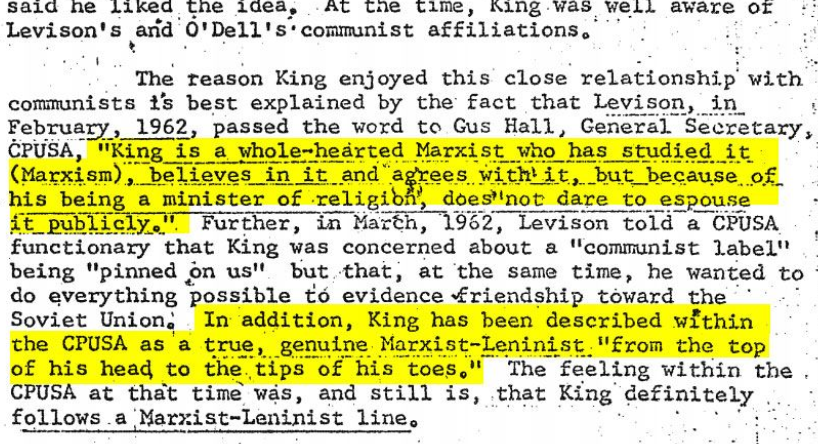
Just three weeks before Martin Luther King Jr’s assassination, an FBI report (not released for 50 years) tried to discredit him while also labelling him a secret supporter of communism, “a whole-hearted Marxist”.

No evidence exists that verifies any of the claims in the report, yet it shows how even then, Marxism was being tied to the fight for racial equality.


What is the Black Lives Matter movement?

Black Lives Matter (BLM) is an international social movement against racism made up of a broad array of people and organisations. The organisation that initially took the name Black Lives Matter (which is not trademarked and therefore can be used by anyone) was founded in 2013 by three women: Alicia Garza, Patrisse Cullors, and Opal Tometi.

All were community organisers  who set up the group in response to the acquittal of George Zimmerman. On 26 February 2012, the neighbourhood watch volunteer fatally shot unarmed black teenager Trayvon Martin in Florida. In 2015, one of these founders stated that she and another founder were “trained Marxists”.

In response to the deaths of many black Americans at the hands of the police, BLM activists became involved in numerous protests in 2014 and 2015, and by 2016 the originators expanded their project into over 30 local chapters.

Then, in 2020, George Floyd’s murder was broadcast around the world. An estimated 15–26 million people protested in America alone; soon, the protests spread across the globe, encompassing people from every nationality and every walk of life who had decided enough was enough.

Within the BLM movement, an ‘official group’ managed to get the verified tick on Twitter. Still, there is no natural hierarchy or structure to the campaign, contributing to confusion in the press and public.

It would be nonsensical to say that 15–26 million people in America are Marxist or that those who marched across the world’s streets are communists. Black Lives Matter is not a single organisation but a fluid movement; it doesn’t matter if one of its founders was a liberal, Marxist, socialist or capitalist.

There is also an assumption that the BLM movement is violent. We all saw pictures broadcast from America of rioting and property damage. However, the facts don’t justify that. As this Harvard study shows, 96.3 percent of events involved no property damage or police injuries, and in 97.7 percent of events, no injuries were reported among participants, bystanders or police

Another common criticism you see on social media is that BLM wants to destroy the nuclear family (defined as a family unit that includes two married parents of opposite genders and their biological or adopted children living in the same residence). This statement seemed to focus on much of the Marxist label, and it does come from one of BLM’s stated goals which is:


“We disrupt the Western-prescribed nuclear family structure requirement, by supporting each other as extended families and ‘villages’ that collectively care for one another; especially our children, to the degree that mothers, parents, and children are comfortable.”

This statement is very much along the lines of ‘it takes a village to raise a child’. They want to dispel the notion that the traditional family structure is the only way to ensure neighbourhood stability and vitality.

Some may not think it an ideal policy but considering the modern makeup of so many families is now one of diversity, it is a bit of a leap to consider BLM has the power to destroy the family structure.

The truth is, the statement is perceived as a threat to the patriarchy.

In a rapidly changing world, some white people, and white men in particular, feel their societal standing is being diminished by those traditionally deemed to be of a lower class in society, such as women and people of colour


Taking the knee

Similarly, taking the knee has been equated by BLM critics to supporting Marxism. They often label it as a ‘political act’ or state that taking the knee is associated with George Floyd.

It was somehow honouring him as a ‘career criminal’.

The gesture, however, has a long history. Dr Martin Luther King Jr took the knee in 1965 while leading a prayer outside the Dallas County Alabama Courthouse, along with several other civil rights marchers after the group, of about 250, were arrested for parading without a permit.

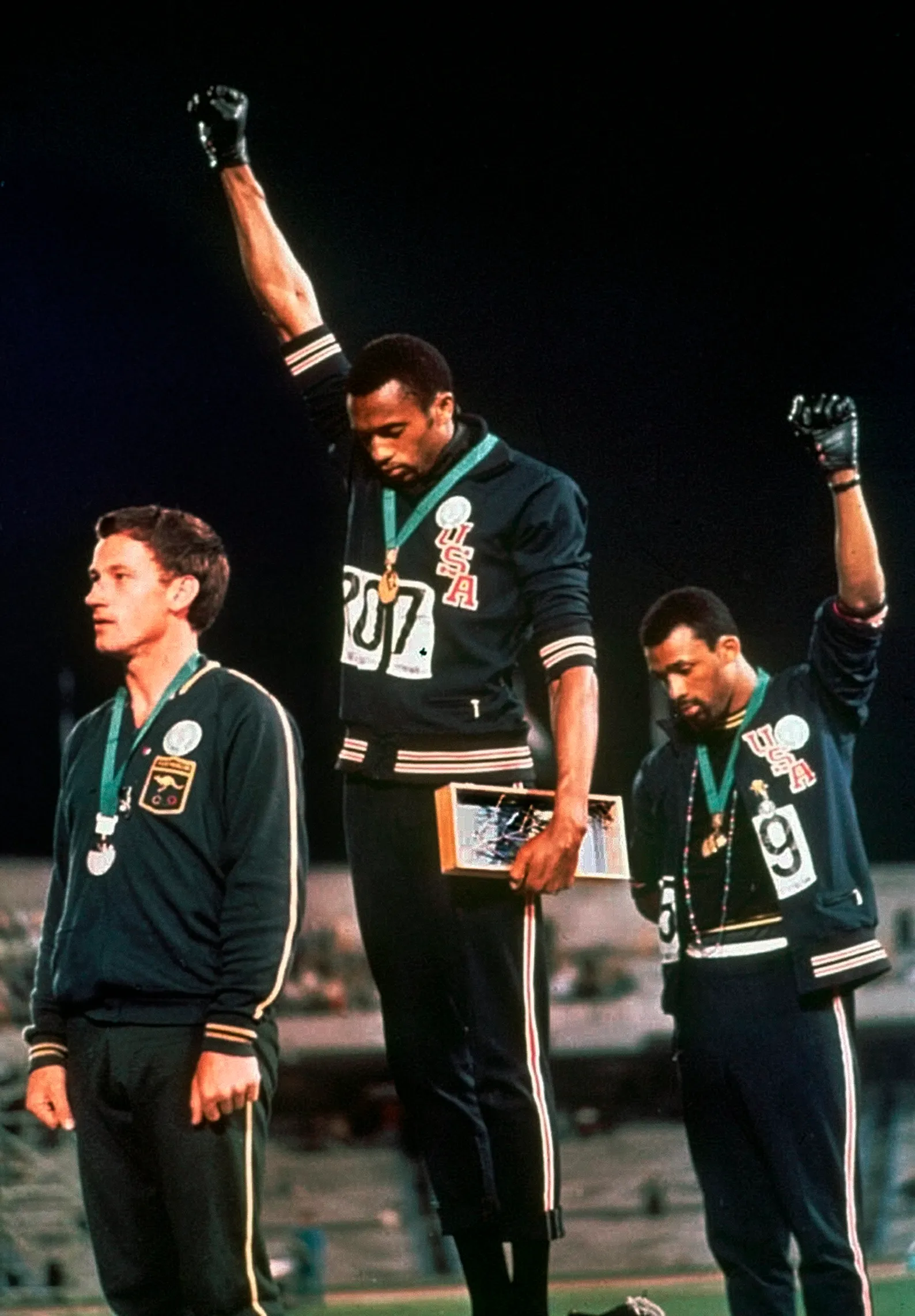
Only a few years later, in 1968, the now-iconic photo was captured of African American sprinters Tommie Smith and John Carlos with raised gloved fists when they received their gold and bronze medals at that year’s Olympics Games.


They were booed by the crowd, expelled from the Olympic village, blocked from competing in future US squads, and even found employment outside the sports complex. Their actions, however, cemented the gesture as a way for athletes to use their sport as a platform to draw attention to racial inequality.

The most significant influencer in the gesture of taking the knee, by far, was NFL quarterback Colin Kaepernick. In 2016, he and his teammates took the knee before a game to draw attention to the undeniable police brutality inflicted on black Americans.

Kaepernick was advised by a white ex-serviceman, Nate Boyer, that kneeling was a more respectful gesture than simply remaining in the changing room during the national anthem.

Reactions were highly polarised, and after that season, Colin Kaepernick, despite being a top player, never played in the NFL again.


So is the BLM movement Marxist?

Multiple studies have shown there is no evidence to suggest that the BLM movement is Marxist. It is hugely diverse, and its support for gender identity politics sets it apart from historical Marxism. The goals listed on its website do not appear to be overtly anti-capitalist. Black Lives Matter and taking the knee both started to protest the unfair treatment of black Americans but have now become a global symbol of fighting racism, nothing more.

The real question is, why do those in power try to deride and dilute the BLM message? Well, it’s not that complicated.

The top of the pyramid of power and privilege has been almost exclusively white and male for hundreds of years. They see a rapidly changing world where sectors of society, whether that be by women, people of colour, the LGBTQ+ community, pushing for a society where they are treated equal and have equal opportunities.

People who cannot let go of traditional thinking fear power going to those they have always perceived as lower down the societal ladder than them. Society is weighted against minorities and those on low incomes, and many think that promoting minority interests will diminish their own interests and threaten their standing in society.

There are no valid reasons for fearing or deriding the BLM movement just as there was no reason to fear the Martin Luther King movement.

It is about changing society by ensuring everyone enjoys the same rights and opportunities, regardless of race, gender, or sex, not removing rights from the rest of the community and as a non-black person, Black Lives Matter allows us to open ourselves up to listen, and accept the experiences of others, even if we haven’t experienced them ourselves.


Open Letter to Boris Johnson from Sue Wilson, MBE

Open Letter to Boris Johnson from Sue Wilson, MBE

Jun 12, 2021 | Bylines, News

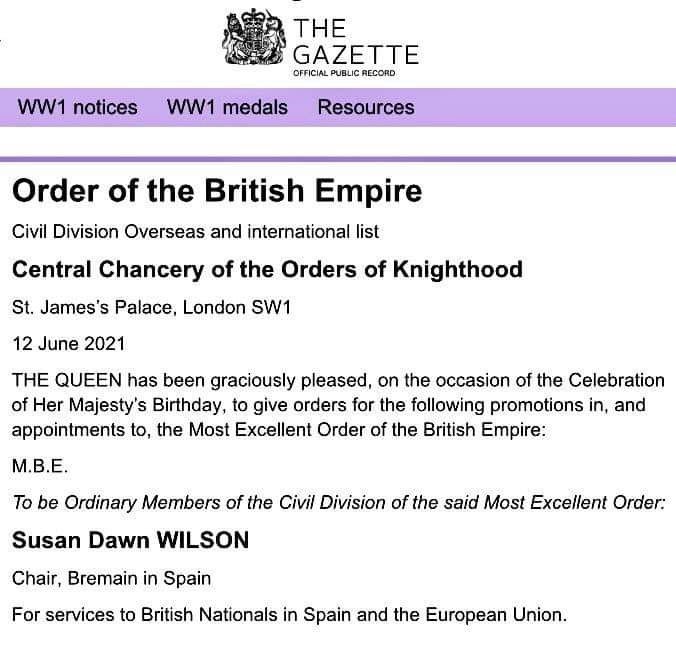
Sue Wilson, Chair of Bremain in Spain and now a Member of the Most Excellent Order of the British Empire, writes a further open letter to Boris Johnson in Yorkshire Bylines asking for his advice– you can read her earlier letters here.

Dear Boris,

It’s been a while since my last letter, and I’m still hopeful of receiving a reply from you at some point.

I appreciate you have had a lot on your plate. Getting married, sorting out (or rather, not sorting out) your Brexit deal, Cummings’ betrayal, wallpaper-gate followed by sausage-gate, being side-lined by the EU and not being President Biden’s number one pal – must all take its toll on a world ‘leader’.


Open letter to Boris Johnson

I’ve had rather an eventful time myself. I was named in the Queen’s Birthday Honours list as a Member of the Order of the British Empire (MBE). Considering what I’ve spent my last five years focusing on – fighting your Brexit – nobody could be more surprised than me. According to the British Ambassador to Spain, he was asked to inform me by the secretary of state for foreign, commonwealth and development affairs that, “he proposes to submit my name to the Queen”. This was equally surprising, considering Dominic Raab is such an arch Brexiter, and I’m, well, not!

All this honours malarkey is new to me, but not to you, of course. So, I hope you won’t mind if I pick your brains about the protocol. You have, after all, honoured many of your friends and donors, so I imagine this is one topic that you know more than a little about.


Questions about MBEs

Firstly, am I already an MBE, having been named in the list, or do I only become one once I’ve got the medal in my hands? If the latter, perhaps you could advise if there’s a code of behaviour that I have to adhere to, to make sure I get the gong and title eventually. Do I have to be on my best behaviour until I meet the Queen? I would ask how I might go about doing that, but perhaps you’re not the best person to comment on following codes of practice.

Secondly, am I part of the British Empire now, and what does that mean? Do have to get a flag to show off when I’m on Zoom?

I should probably warn you in advance that, once my MBE is confirmed, I will be joining the latest campaign to have the ‘Empire’ removed from the title and replaced with ‘Excellence’ – an easier task for a gong than for a country, I suspect.


Can I pay for an upgrade later?

I’m assuming, as an MBE is a lower-level honour, that this one is complementary. However, I would be very interested to know what the going rate is for an upgrade. I quite like the sound of a ‘Companion of the Order of the Bath’ or a ‘Knights Grand Cross of the Order of the British Empire’, if you have any spare, going at bargain rates.

I appreciate you’re currently rather busy with saving the planet, charming foreign heads of state and looking dapper. Making such an effort must take an enormous toll, especially with the missus and latest offspring in tow. So, I won’t hold my breath for a response.

But when you get a moment, please thank the two Dominics for me. One for spilling the beans and the other for supposedly knowing who I am. Please reassure Mr Raab that as he is so delighted with my anti-government, anti-Brexit and pro-European stance as to reward me for it, that the least I can do is keep on doing what I’m doing. Only more so. With knobs on. Big, shiny, metallics knobs, with ribbons on.

Yours sincerely,

Sue Wilson, Chair of Bremain in Spain and MBE (I think!)


Latest round of Brexit negotiations

Latest round of Brexit negotiations

Jun 10, 2021 | Bylines, News

Bremain Chair Sue Wilson writes for Yorkshire Bylines:

Even before the latest round of Brexit talks began on Wednesday, both sides were laying out their stalls. By the time the chief Brexit negotiators Maroš Šefčovič and Lord Frost met, sabres were being rattled and patience was already running out. As temperatures were rising, expectations of any progress fell.

The month began with the newly recognised EU ambassador, Joao Vale de Almeida, accusing the new DUP leader, Edwin Poots, of making comments regarding the Northern Ireland protocol that lacked, “adherence to reality”. Lord Frost’s response was to suggest the EU needed to show more “common sense” over the protocol.


Concerns over British government’s approach to Brexit negotiations

Concerns were raised in Brussels that UK lobbying was getting out of hand, and member states began discussing a ‘code of conduct’ for dealing with the British government. Fears were being raised that the UK would attempt to deal with individual EU member states directly, rather than collectively

Irish Foreign Minister, Simon Coveney, warned that the EU could and would take retaliatory action against the UK for failing to implement the protocol. Then EU commissioner, Mairead McGuinness, warned the UK was “playing a very dangerous game” by inflaming tensions, and stated, “you can’t wash your hands of an agreement that you shaped and made and signed”.

A few days later, Lord Frost asked Brussels to embrace “pragmatic solutions”, suggesting time was beginning “to run out”. He called on the EU to forgo “legal purism” but admitted that the UK government had “underestimated” the effect of the protocol on Northern Ireland trade. A claim that was immediately contested by Theresa May’s former chief of staff, Lord Gavin Barwell, who said the government knew it was a bad deal, but went ahead anyway, just to get “Brexit done”


G7 meeting and a warning from Biden

Ahead of the G7 meeting, warnings came that President Biden was about to wade in on the argument. The president would warn Prime Minister Johnson, that a US/UK trade deal would be dependent on the success of the Northern Ireland protocol. With the USA as guarantor of the Good Friday Agreement, Biden is expected to issue a warning to Johnson when they meet face-to-face today.

The latest pre-negotiation game-playing has been a trade-war argument over sausages. Despite the environment secretary, George Eustice, insisting that “there’s no problem with our sausages or indeed our chicken nuggets”, the EU disagreed. The bloc warned that they would not hesitate to retaliate with tariffs should the UK fail to honour its commitments. If Johnson chooses to violate his deal again, retribution will be “swift and firm”.


International law obligations

The day before the latest Brexit negotiations started, Šefčovič was reported as saying that the EU’s response would be so crushing, it would ensure the UK “abides by its international law obligations”. The final comment, ahead of the talks, came from Ursula Von der Leyen, European Commission president, who expressed “deep concern” over the implementation of the trade and cooperation agreement and the withdrawal agreement. Not exactly the ideal precursor to the critical, forthcoming discussions.


It's tempting to believe that – despite all the warnings – the government "underestimated the effect of the protocol", but I'm pretty sure it's not true. They knew it was a bad deal but agreed it to get Brexit done, intending to wriggle out of it later https://t.co/V0eNpCNwXL

— Gavin Barwell (@GavinBarwell) June 7, 2021

The meeting on Wednesday 9 June lasted just over three hours, but little progress was made. The discussions finished with “no breakthroughs”, but also no “breakdowns”.

After the talks ended, Šefčovič warned that the EU’s “patience is wearing very, very thin”. He said Brussels would act “firmly and resolutely” if the UK unilaterally decides to delay checks at the Irish Sea border. He told a press conference, following the meeting, “We have to assess all options we have at our disposal”.

Frost described the discussions as “frank and honest” and said both parties had agreed to continue talks in an effort to achieve a breakthrough. He added, “What we really now need to do is very urgently find some solutions which support the Belfast Good Friday agreement, support the peace process in Northern Ireland and allow things to return to normal”


Continued problems with the Northern Ireland protocol

There was some progress on some of the less contentious issues, such as importing second-hand vehicles from Great Britain to Northern Ireland, and on EU access to UK customs databases, but the main sticking points – most notably on fresh meat imports – remain at stalemate. (You can read the official UK government statement on the meeting here).

The UK government is continuing to claim the EU is acting in a “purist” way, as if EU rules are merely guidelines to follow when it suits, rather than legally binding international commitments. The EU has put forward many suggestions over time, on ways to resolve some of the issues surrounding the Northern Ireland protocol. Each time, the UK has said no, as the cost – adhering to EU rules – is too high a price for “sovereign” UK to pay. Yet the UK has failed to come up with any suggestions, other than ones that require the EU to bend, if not break, their rules and risk the integrity of the single market.


Continued English exceptionalism with Brexit talks?

Frost was quoted recently as saying that the EU “needs a new playbook for dealing with neighbours, one that involves pragmatic solutions between friends”. It seems, even after five years, three prime ministers and three Brexit negotiators, our government still expect to be treated differently from other third countries.

Despite the damage – not just to our economy and trade, but to our international reputation – we seem to have learned little about how the EU operates or how to win friends and influence people. The same cake-ist, superior, delusional attitude seems to pervade every discussion.

Maybe the rhetoric works in Westminster. Maybe it even works with Conservative voters. But it doesn’t work in Brussels. If half the effort was put into finding real world solutions that is put into the optics, we might actually see some progress. In the meantime, the government will continue with the spin until the whole country feels dizzy. They may have to. It seems as though it’s all they know how to do.


Covid and Brexit: a pair of thieves

Covid and Brexit: a pair of thieves

Jun 4, 2021 | Bylines, News

Bremain Chair Sue Wilson writes for Yorkshire Bylines:

Thanks to the pandemic, the last year has seen all our lives turned upside down and inside out. Dealing with a global crisis on this scale would have been damaging enough. For the UK, and to a lesser extent, the EU, the double-whammy of Brexit, on top of Covid-19, has added to the pain, confusion and damage.


Brexit – the thief in the night

Whether you supported Brexit or not, there’s no doubt that there has been a cost for all of us. Brexit has been the thief in the night that has stolen our vision of the future. For those in favour of close ties with the EU, that relationship has been soured, and our rights diminished. For those that looked forward to a brighter new day, outside of the EU, the view ahead is not quite what was expected, or promised.

Brexit has proved to be a skilled burglar, having robbed us of job opportunities, freedom of movement and EU trade – to name but a few. But apart from the tangible losses felt by the country, what has Brexit cost us personally?

Excluding Brexit extremists on both sides of the debate, the feelings of loss vary considerably depending on where you started your Brexit journey. And whether the direction of travel took you to your expected destination.


Covid 19

For those that went into Brexit with expectations of a brave new global world, then its more likely feelings of optimism and hope have been lost – to be replaced with disappointment, and perhaps a little anger.


Covid – the deadly mugger

As we struggled to deal with the new post-Brexit order – or to try and put anything Brexit-related behind us – we were about to be mugged by covid.

In many ways, the pandemic has become as divisive as Brexit. On the one hand, there are those who believe in taking every precaution possible, even at a considerable cost to their families, their careers and their mental health. On the other hand, there are those who believe lockdown restrictions are an invasion on their civil liberties, vaccines don’t work, and even that the virus is no worse than the flu.

Where it was clear which side of the Brexit debate the government was on, it was less clear with covid – not helped by the constant change of direction, mixed messages, and general appearance of ministers and decision-makers not knowing, or understanding, what they were doing.

Of course, the vaccine rollout – handled (as everything covid related should have been) by the NHS, was a remarkable feat. However, there were times when it felt like the UK had bought an expensive insurance policy, installed security systems and cameras all over the building, but went out for a walk leaving the back door wide open to invasion.


Not everything we’ve lost can be replaced

Regardless of what Brexit stole from all of us, covid was a much more deadly assailant. Not only did covid steal our freedom, our social lives and in many cases our livelihoods, it stole so much more. It stole our ability to be close. It stole family reunions. It stole our hugs. Worst of all, it stole perhaps 150,000 lives, not least from those working at the frontline trying to protect us all from the pandemic heist.

As with any home invasion, gradually over time we can start to replace what has been lost. In some cases, the replacements might even be an improvement. Those treasures we value the most – like our family members, lost to this terrible disease – can never be replaced. We will feel their loss long into the future.

But the hardest possession to recover will be a lack of trust and confidence in the government. They were meant to protect us from harm. They were meant to keep us safe and secure. Whether it’s Brexit or covid, and regardless of where you sit on either debate, they have failed miserably. The next insurance policy is going to come with a huge excess, and the deficit is coming out of your pocket.


Lord Frost, chief Brexit negotiator: UK-EU relationship a “bit bumpy”

Lord Frost, chief Brexit negotiator: UK-EU relationship a “bit bumpy”

May 20, 2021 | Bylines, News

Minister of State, Lord David Frost – best known as the chief Brexit negotiator – has had a busy few days. On Saturday 15 May, he joined the prime minister in welcoming the Irish Taoiseach, Michael Martin, to a meeting at Chequers. Then on Monday and Tuesday, Frost was giving evidence to not one, but two, parliamentary select committees.

His first appearance was before the House of Commons European scrutiny committee on 17 May. This was followed by an appearance before the new House of Lords European affairs committee on Tuesday.


Lord Frost on Brexit and the Northern Ireland protocol

As Frost was the minister responsible for implementing the Brexit agreement, and a key negotiator of the deal with the European Union, issues surrounding the Brexit deal and the Northern Ireland protocol were bound to be high on the agendas of both committee meetings.

Before Lord Frost had appeared in front of either committee, he had given them plenty to think about. During a visit to Northern Ireland last week, Frost said the protocol was presenting “significant challenges for many in Northern Ireland”. Despite the “extraordinary efforts” by local businesses to make the current requirements work, he said it was “hard to see that the way the protocol is currently operating can be sustainable for long”.

The fact that the deal was described in December as the best thing since sliced bread (I paraphrase slightly), by Frost himself, was, strangely, not mentioned.

This aged well… https://t.co/6Z0ifLTpAo

— Marina Purkiss (@MarinaNigrelli) May 18, 2021

Friendly relations with our neighbours as a sovereign country

In an article for the Daily Mail last weekend. Frost said he had always wanted from Brexit was “free trade and friendly relations with our neighbours as a sovereign country”. He described the current situation as “going back to our roots” after the “interlude of EU membership”. He accused the EU of not having “much enthusiasm to make things work” and suggested Brussels “stop the point-scoring”.

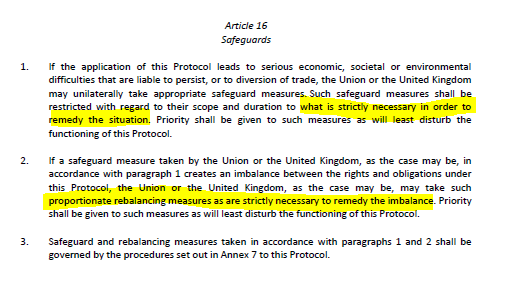
He described the approach of the EU as “purist”, and said the UK government was considering all options, including the triggering of Article 16. The Article allows either party to withdraw from provisions in the agreement if they threaten serious or lasting “economic, societal or environmental difficulties”. Should the UK take this drastic action, the EU’s response could include the imposition of tariffs on UK exports.

In response to Frost’s comments, Matthew O’Toole, member of the Northern Ireland legislative assembly said, “Frost should be focused on making this deal – his deal – work”. He went on to say that, “it is truly depressing that those who have shouted loudest for the hardest Brexit … have been quickest to run away from its consequences”. If Frost truly does want to foster friendly relations with our EU neighbours, he certainly has a funny way of showing it.


European scrutiny committee

The subject of the European scrutiny committee meeting was the ‘UK’s new relationship with the EU’. Chair, Sir William Cash began by asking Frost to name his three main priorities, to which Frost replied: the Northern Ireland protocol; strengthening the relationship with the EU; and the opportunities of Brexit.

Frost said that discussions with the EU, regarding issues relating to the NI protocol, had a “bit of momentum” but were not currently “hugely productive”. The relationship with the EU, he said, would be “a bit bumpy for a time”. According to Frost, the EU’s point of view was that the “easiest solution to any border problem is that we should just operate the same rules and laws as they do”. He added, “Obviously that doesn’t work for us”.

He described the EU as still “coming to terms with the UK’s departure”. Whether that’s true or not of the EU, it’s certainly true of many UK businesses struggling with border issues, and many UK citizens. Frost seemed keen to downplay any Brexit-related issues, while overplaying the opportunities. In fact, ‘opportunities’ seems to be Frost’s favourite word.


Brexit has been unexpectedly disruptive?

Frost suggested that the government had not expected Brexit to be so disruptive, and a new unit would be set up to exploit “Brexit opportunities” – there’s that word again. It seems that neither Westminster nor Whitehall has the suitable talent to make this happen, so the intention is to look outside of government.

It seems to be proving difficult for the government to demonstrate the tangible benefits of Brexit. Perhaps an outsider will stand a better chance. Or not.

Lord Frost said today he is looking for someone to head a new unit on ‘the benefits of Brexit’. Apparently he can’t find anyone in the civil service up to this challenge

Any suggestions?

— Andrew Adonis (@Andrew_Adonis) May 17, 2021

At the end of the 90-minute session, the discussion circled back to the NI protocol, as Frost was asked about his comments in the press regarding the possible triggering of Article 16. Specifically, he was asked how the EU might retaliate to such an action. His suggested that should the EU react, it would only be making things more difficult – setting things up nicely to continue the ‘blame the EU’ game.

European affairs committee’s

The subject of the European affairs committee was the ‘UK-EU relationship’. Chair Lord Kinnoull asked Frost about the current state of play, described by Frost earlier this year as “problematic”. Frost responded that there had been some improvement but repeated his comment that the relationship with the EU was likely to be a “bit bumpy” for a while yet.

Scrutiny was an important issue for the committee. In particular, Lord Foulkes referred to the government’s desire to “take back control”, emphasising that control should be taken back by parliament, not by the government.

Lord Liddle raised the issue of the earlier “totally unnecessary row” over the status of the EU ambassador to the UK. Frost said the matter was now resolved and the issue was “unfortunate” rather than “unnecessary”. When asked what lessons had been learned from the experience, Frost said the government would be aware there would be friction “in areas we don’t expect”.

When asked to comment on recent figures from the Office for National Statistics (ONS) re export/import trade, Frost dismissed any negative comparisons between quarter 4 of 2020 and quarter 1 of 2021 as “unlikely to be very useful”, and cited covid as a significant factor. Lord Purvis pointed out there was a “stark difference” between EU and non-EU trade, so clearly more Brexit-related than covid. When asked if the downturn in trade was temporary or long term, Frost said it was “difficult to tell”.


The sovereignty principle

On the Northern Ireland protocol, Frost confirmed that there were between 20 and 30 ‘areas of contention’, with only limited progress being made on some of those. With difficulties over border checks and customs declarations, Frost was asked whether a temporary alignment of rules was possible or desirable. He replied that it was “a fundamental issue of principle that we don’t dynamically align with EU rules”. It was not for ideological reasons, he said, but in order to be able to do trade deals elsewhere.

On the subject of equivalence, Frost noted that the EU has arrangements with Canada and New Zealand that mirror what the UK desires. Frost still seems to have failed to grasp the relative distance between the EU and Canada and New Zealand, as compared to the UK – that distance being a significant factor when considering the risk of unfair competition.

Regarding the UK’s desire to develop free trade agreements around the world, Frost said it was important in trade negotiations to “find the right balance between offensive and defensive interests”. It is difficult, having observed Frost for three hours of committee Q&A, and having read his comments in the media, to think of Frost being defensive about anything. Evasive, yes. Offensive, certainly. Or to put it in the admiring words of committee member, Lord Lamont, “pugnacious”.

Not exactly a desirable quality for a diplomat or negotiator, one would have thought. But then, that’s this government of Brexiters all over.


« Older Entries
Next Entries »

JOIN US

https://www.bremaininspain.com/wp-content/uploads/2016/11/Sue_BremainInSpainHandsFlags_01.png

Search Our Site

Translate this Site

Official Partners

european movement

Members of

Grassroots for Europe

Follow Us on Bluesky

Bremain in Spain

@bremaininspain.com

15379 Followers 11714 Following 6723 Posts

A pro-EU campaign group set up to oppose Brexit, protect the rights of British migrants living in Spain/EU & to rejoin. We believe freedom of movement is a force of good; in a democracy free from division & interference; equality.
www.Bremaininspain.com

Latest Posts

Bremain in Spain

@bremaininspain.com

See Bluesky Profile
  • Get to this post

    Bremain in Spain @bremaininspain.com 1 hour

    So sad. You can feel the depth of Marina’s emotion here, and rightly so.

    Marina Purkiss

    No sleep last night…

    Can’t get that video out of my head

    Can believe the lies being told to betray her even in death

    Can’t believe the mindless lemmings that swallow them up

    America is lost.

  • Get to this post

    Bremain in Spain @bremaininspain.com 1 hour

    History repeats itself

  • Get to this post

    Bremain in Spain @bremaininspain.com 1 hour

    Sarah Owen, the Labour MP who chairs the committee, said that given preventing violence against women and girls was among its key policy areas, “it has become increasingly clear that X is not an appropriate platform to be using for our communications”

    Commons women and equalities committee to stop using X amid AI-altered images row

    Exclusive: Move follows outcry over use of Grok to digitally remove clothing from images of women and children

    www.theguardian.com

  • Data Privacy Policy
  • Join Us
  • Get in Touch
  • Facebook
  • X
  • Instagram
© BremaininSpain.com 2016 - 2026 General Email: enquiries@bremaininspain.com Media: media@bremaininspain.com
Manage Consent

We use cookies to optimise our website and our service.

Functional Always active
The technical storage or access is strictly necessary for the legitimate purpose of enabling the use of a specific service explicitly requested by the subscriber or user, or for the sole purpose of carrying out the transmission of a communication over an electronic communications network.
Preferences
The technical storage or access is necessary for the legitimate purpose of storing preferences that are not requested by the subscriber or user.
Statistics
The technical storage or access that is used exclusively for statistical purposes. The technical storage or access that is used exclusively for anonymous statistical purposes. Without a subpoena, voluntary compliance on the part of your Internet Service Provider, or additional records from a third party, information stored or retrieved for this purpose alone cannot usually be used to identify you.
Marketing
The technical storage or access is required to create user profiles to send advertising, or to track the user on a website or across several websites for similar marketing purposes.
  • Manage options
  • Manage services
  • Manage {vendor_count} vendors
  • Read more about these purposes
View preferences
  • {title}
  • {title}
  • {title}