enquiries@bremaininspain.com
  • Facebook
  • X
  • Instagram
  • Facebook
  • X
  • Instagram
  • About
    • Our Mission
    • The Bremain Team
    • Bremain History
    • Members’ Issues & Anxieties
    • Members’ Gallery
  • Events 2026
  • Bremainers Ask
  • Resources
    • Pro-EU Groups
    • British Embassy Updates
      • Bremain Glossary of Terms
    • Government
    • Withdrawal Agreement
    • Support & Advice
  • Votes for Life
    • REGISTER TO VOTE
    • My Vote Matters
  • Sign Up
  • Donate
  • Get in Touch
Bremain in Spain
  • Home
  • About
    • Our Mission
    • The Bremain Team
    • Bremain History
    • Members’ Issues & Anxieties
    • Members’ Gallery
  • Events 2026
  • Bremainers Ask
  • Votes for Life
    • REGISTER TO VOTE
    • My Vote Matters
  • British Embassy Updates
    • Bremain Glossary of Terms
  • Resources
    • Pro-EU Groups
    • Government
    • Withdrawal Agreement
    • Support & Advice
    • Glossary of Terms
  • Sign Up
  • Donate
  • Get in Touch
Select Page
How do you ‘Make Brexit Work’?

How do you ‘Make Brexit Work’?

Nov 14, 2021 | Bylines, News

Labour’s Brexit slogan was met with a mixed response, but will it deliver the election result the party’s seeking, asks Bremain Chair Sue Wilson MBE for Yorkshire Bylines? Since the time of the Brexit referendum, the Labour party’s position on Brexit has been, shall we say, ambiguous. Whether by design or accident, in an effort to appeal to both sides, the party has managed to alienate many former supporters. It has been argued that Jeremy Corbyn’s stance on Brexit was a major factor in the government securing an overwhelming election victory in 2019.

Five years on from the referendum, and two years on from the general election, is Labour’s attitude to Brexit any clearer? If the slogan ‘Make Brexit Work’ is anything to go by, then perhaps not.

I have watched with interest the discussions on social media as to the rights and wrongs of the current Labour position. I admit to having been swayed in both directions at different times. Commentators that I trust on Brexit-related topics are not all of a like mind. Also, it would seem that I’m not alone in my confusion as to what would be the best course of action for the country, or indeed for the Labour party itself.

OK, I admit it. I'm going back & forth re Labour & Brexit.
There are strong, reliable voices I trust on both sides of the argument about whether Labour should "make Brexit work" & I'm confused on the best course of action. What I do know for sure is, we must #GTTO & #JohnsonOut

— Sue Wilson (@Suewilson91) November 8, 2021

Make Brexit Work

It is certainly true that Labour have been in dire need of a good slogan for some time. A good three-word slogan has the power to capture the public imagination, even one as equivocal as Theresa May’s ‘Brexit means Brexit’. Boris Johnson won an election on the back of ‘Get Brexit Done’, and let’s not forget the power and effectiveness of the ‘Take Back Control’ mantra.

Whether the meaning behind these slogans was clear or not, they were certainly effective. In light of former Brexit slogan successes, then ‘Make Brexit Work’ sounds a perfectly reasonable addition. The issue, though, is what on earth does it mean and is it the right approach in the face of what many see as Brexit carnage?


In favour of slogan ambiguity

The fact that the Labour slogan, like Labour policy on Brexit, is ambiguous is one of the reasons it has support. Many believe that Labour are right to be cautious when mentioning Brexit. They should focus on winning back the lost red-wall seats, whose Leave-voting supporters left in droves in support of Johnson. Brexit has happened, and no good can come from dwelling on past lost battles, they say. Better to focus on other ways to defeat this government – over corruption, levelling-up, the NHS, etc.

Certainly, we have seen a more passionate, angry Keir Starmer on his return to the House of Commons this week. Not only did he call out the prime minister’s appalling handling of the Owen Paterson affair, and his cowardice in failing to attend the debate on parliamentary standards, but Brexit got a look in too. As rumours increased that the UK is about to take the ‘nuclear’ option and trigger article 16 of the Northern Ireland protocol, Starmer accused Johnson of picking fights with the EU to distract from various scandals.


OK, I'm really struggling with the uproar over @Keir_Starmer saying we need to #MakeBrexitWork.#Brexit has happened. There is no magic wand we can wave to make it simply vanish in a puff of smoke. We can't just return to 2016 and all live happily ever after…

1/ pic.twitter.com/ZCvM8JfnPy

— Emma 3.5%💙🧡🎓😷🇩🇰🇬🇧🇪🇺 (@MonkEmma) November 8, 2021

There is also speculation that the government plans to fight the next election on Brexit. Labour would rather focus their efforts in other areas than have the next election be another Brexit battle – one that perhaps they could not hope to win.

Political commentator Nick Tolhurst argues that the ‘Make Brexit Work’ slogan “reminds voters that Brexit isn’t working”. He describes politics as a “community bus” not a “personal limousine”. He goes on to explain, “The bus gets you nearer where you want to be. But some Remainers are refusing to board it because they are waiting for a super fast limousine that isn’t coming”.

The genius of the “Make Brexit Work” line is that it constantly reminds voters that ➡️

Brexit isn’t working…

..without attacking voters decisions 5 years ago or looking like you just want to cancel it now.

If you haven’t got this you don’t really get how politics works. https://t.co/rq0FJnXSYS

— Nick🇬🇧🇪🇺 (@nicktolhurst) November 8, 2021

Making Brexit work, won’t work

Lord Andrew Adonis is not exactly renowned for being a fan of Starmer in general, or of Starmer’s Brexit policies in particular. It’s no surprise, therefore, that he has been critical of the ‘Make Brexit Work’ message. As well as tweeting “Well that can’t be done”, he shared a photo suggesting that Starmer was merely a reflection of Johnson. 

Scottish National Party MSP Angus MacNeil responded to the slogan by citing the economic damage of Brexit. He tweeted:


Brexit can't work … It is economically damaging ..twice as bad as the pandemic or the global crash of 2008.
Anyone promising to make brexit work are simply telling lies.

— Angus B MacNeil MP (@AngusMacNeilSNP) November 8, 2021

Political activist Femi Oluwole, who co-founded the pro-EU campaign group Our Future Our Choice, explained his take on why Brexit won’t work in a 50-second video, making five specific points:

  • Trade is all about geography – the closer your trading partners, the better
  • The biggest barriers to trade are differing regulations between trade partners
  • It is in UK’s interests to have similar laws to the EU
  • As non-EU members, the UK has no say in EU laws – so much for taking back control!
  • The choice is therefore between EU laws or making ourselves poorer

This is the problem with Keir Starmer saying "Make Brexit Work":

Everything he would have to do to limit the damage of Brexit, is the opposite of what Leave voters wanted.
So that line just adds to the lie that Brexit can ever be a success in the eyes of those who wanted it. pic.twitter.com/7Tibwiedcv

— Femi (@Femi_Sorry) November 8, 2021

The problem with ‘Make Brexit Work’, he said, is that everything required to limit the damage caused by Brexit would result in the opposite of what Leave voters actually wanted in the first place. So, regardless of whether Remainers would be happy with Starmer’s proposals, Leavers certainly wouldn’t be.


Labour’s slogan should be better than this

Of course, the arguments for and against the ‘Make Brexit Work’ slogan are not all about the policy itself. While the basic principle of the proposal might be acceptable, the slogan itself is an issue. As ‘woke and proud’ Richard Bentall says, it alienates Remainers. While pro-Europeans are no strangers to feeling left out – not least by Labour – they do make up the vast majority of Labour supporters.


'Make Brexit work' is a crap slogan because it alienates remainers. @UKLabour needs a slogan that is acceptable to the majority in both camps, implies that the current Brexit isn't working, but doesn't imply rejoin.

My first stab: A new deal with Europe. https://t.co/gIVWNhAULY

— Richard Bentall #FBPE #FBPA Woke and proud! (@RichardBentall) November 8, 2021

A slogan that further alienates Remain-supporting Labour voters who have been hoping for better representation, for stronger arguments, and for Labour to take a stand and call out what they see as the Brexit disaster, is probably not a wise choice. Since it risks appearing to make no sense as we increasingly hear about economic damage and businesses going under – or moving abroad – as a result of Brexit, it’s likely to be seen as another frustrating swerve on the part of the opposition.

Many are still confused about the Labour message, and its validity. Whatever the best course of action for the party, they are no doubt firmly focused on the main goal – to ‘get the Tories out’. Whether they can do that with the promise of making Brexit work, and without making cross-party alliances ahead of the next election, is another matter altogether.

Westminster voting intention:

LAB: 36% (-)
CON: 35% (-4)
GRN: 11% (+5)
LDEM: 9% (-)

via @IpsosMORI, 29 Oct – 04 Nov
Chgs. w/ Sephttps://t.co/uUEQTNgoGf

— Britain Elects (@BritainElects) November 8, 2021

Recent polls have shown a shift in public opinion, even before the latest sleaze and mismanagement have been completely taken into account in the numbers. The always-dubious attractions of Johnson are no longer enough to satisfy many of his followers. Johnson has proved, once too often, that he doesn’t care, he doesn’t do detail, and that he doesn’t abide by the rules. Starmer, by contrast, is growing in stature, and is generally regarded as an honest broker, if, at times, a dull one.

Whatever the rights and wrongs of Labour’s position on Brexit, let’s hope they’ve got it right.

The UK government won’t tell you this, but the EU wants to hear from you!

The UK government won’t tell you this, but the EU wants to hear from you!

Nov 4, 2021 | Bylines, News

The conference on the future of Europe is the largest consultation the European Union has ever undertaken with citizens, including those from the UK, writes Bremain in Spain Vice Chair Lisa Burton for Yorkshire Bylines. It is a vast, multilingual, digital, and democratic engagement process. Anyone can join, contribute topics, put forward ideas and questions, and join sub-groups of interest. Already, there have been over 30,000 different submissions.

The European parliament, the Council, and the European Commission have committed to listening to Europeans and following up on the recommendations made within their sphere of competencies. Topics are unlimited and all will be assessed. Those with the most engagement will be taken forward.


Conference on the future of Europe: who can take part?

Everyone can take part. European, national, local government, and regional authorities, private groups, and individuals can organise events and contribute ideas via the digital platform. Every topic will be recorded, digitalised, monitored and published throughout the conference. These ideas will then feed into the European citizens’ panels and plenaries. Opinions expressed during the conference events will result in concrete recommendations for EU action.

This consultation is not just for European Union citizens. British citizens can also get involved and are very much encouraged to do so. Still, unsurprisingly, the British government is the only government that has not engaged or encouraged its citizens to engage in the process. It would rather cancel Europe and pretend it did not exist. Yet it does, and it is hugely influential around the world.

Future EU policy in many areas will take effect whether Britain is a member or not. The United Kingdom may have chosen to leave the EU, but is still its closest neighbour and ‘in Europe’. How would the people of Britain feel about an EU army, for example, reduced fishing quotas, or financial industry reforms, banning chemicals in foods and farming that the UK may use?

For these reasons, UK citizens should be engaging. By inviting them to do so, the EU shows its deep investment in the rights of the individual and democratic processes.

EU Flag

Conference set set-up

Citizen panels

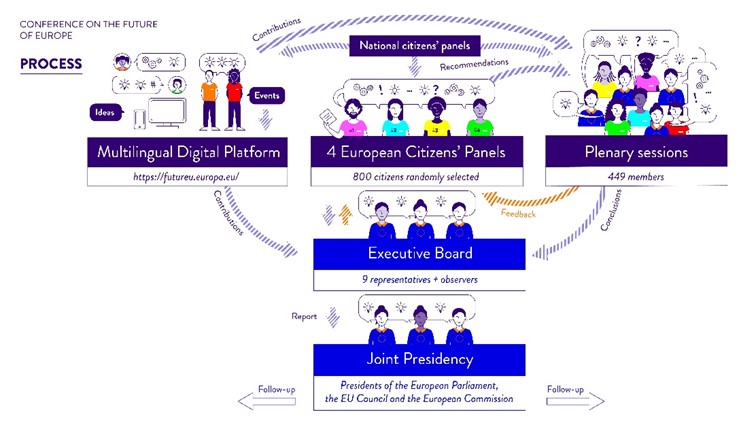
There will be four panels of 200 citizens in each, all randomly selected to ensure they represent the EU’s diversity. This includes geographic origin (nationality and urban/rural), gender, age, socioeconomic background, and level of education. At least one female and one male citizen per member state is part of each panel. The plenary will include 20 representatives from each Panel. A third of each panel will comprise young people (age 16–25).

In its efforts to engage young people, a European youth event was created in the form of EYE2021, which took place 8–9 October 2021. It brought together 10,000 young people (18–30 years old) online and in Strasbourg, to shape and share their ideas for the future of Europe. Many other events are ongoing and planned.

Process map for Conference on the Future of Europe

The plenary

The plenary will discuss the proposals made by the citizens’ panels. Popular ideas from the digital platform are to be adopted and included in the final report prepared by the conference executive board and addressed to the European parliament, Council and European Commission. You can see its make-up here.

Reports are compiled throughout the conference that give an overview and provide analysis of contributions on the platform. The conference plenary includes nine working groups dedicated to the following topics:

Climate change and the environment
Health
A more robust economy, social justice, and jobs
EU in the world
Values and rights, the rule of law, security
Digital transformation
European democracy
Migration
Education, culture, youth, and sport
The executive board

The executive board is responsible for taking decisions by consensus regarding the conference, its processes, and events, overseeing the conference, and preparing the meetings of the conference plenary including acquiring and following up on citizens’ input. It reports regularly to the joint presidency, which the three institutions co-chair. Mr Guy Verhofstadt, member of the European parliament, Mr Gašper Dovžan, state secretary for EU Affairs for the Slovenian council presidency and Ms Dubravka Šuica, vice-president of the European Commission in charge of democracy and demography.

The secretariat

The common secretariat includes officials representing the three EU institutions equally. It assists the work of the executive board, its representatives, and observers of the executive board, ensuring proper function, coordination, and conduct. The co-heads of the common secretariat shall attend all meetings of the executive board.


Conference timeline

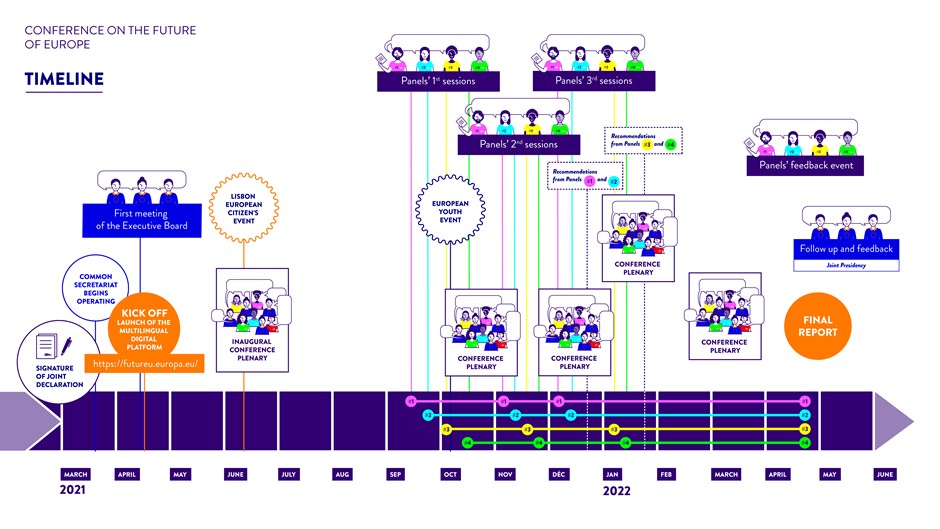
The joint declaration for the conference was signed in March 2021 and the official kick-off date was 9 May 2021, Europe Day. It is scheduled to end in June 2022. However, there is already talk underway of extending the consultation process as it is so vast in its construct, ideas and goals.

Future of Europe timeline

Democracy in action

The European parliament, the Council, and the European Commission have vowed to listen to Europeans. The conference puts citizens at the heart of this process. No matter where you are from or what you do, this is an opportunity like no other to get involved and have a say on the challenges ahead, identify priorities, and help shape the future of the EU.

After the pandemic and Brexit, it is a chance for institutions and citizens to think hard about what direction we want the Union to travel in. It is a huge opportunity to shape European law, security, sustainability, inclusivity, health, and more. It comes from the most important European values: human rights and liberal democracy, where the individual’s rights are paramount and where everyone deserves to be treated fairly and equally. Surely, it’s not only EU citizens who are interested in these values.

Register on the digital platform and start getting involved.

Are Brits Abandoning Spain?

Are Brits Abandoning Spain?

Nov 1, 2021 | Bylines, News

If you’ve been reading the UK tabloids recently, you could be forgiven for thinking there is a mass exodus of British citizens – especially pensioners – repatriating from Spain to the UK, writes Bremain Chair Sue Wilson MBE for West England Bylines.

On 3 October, the Mirror got the ball rolling with an article entitled, “Brit expats ‘leaving  Spain in droves’ as retirees abandon Costa del Sol after Brexit”. The next day, an Evening Standard headline read, “Retired British expats ‘abandon Spain in droves’”, followed one day later by the Daily Express with, “Expats leaving Spain in DROVES: Retired Brits abandon Costa del Sol”. You might have noticed a theme, and a common use of language, suggesting that they all got their material from the same source. As it turns out, that source was a single estate agent in Fuengirola, who claimed that many retired Brits were now selling up.

When these stories first appeared, I asked Bremain in Spain’s 6000+ members to comment. As our members are spread all over Spain and its islands, I was curious to hear of members’ personal experiences of British neighbours moving back to the UK. However, we were not able to find any examples of Brits moving away – rather, any migration was in the opposite direction. The Brits were – and are – still moving to Spain.


The story from Spain

It was not just Bremain that was questioning the UK media stories. English-language Spanish newspapers were also asking the same question. Mark Stucklin, a leading authority on Spanish property sales, told the Olive Press that there was no evidence of Brits “leaving in droves”. He said, “It’s completely anecdotal, there is nothing to suggest this is true”. He went on to say the “Brits are still the biggest buyers among any nationality”.

ANALYSIS: Are Brits really leaving Spain in droves because of Brexit? https://t.co/oLizfKToCN @costablancaop

— Costa Blanca Olive Press (@costablancaop) October 7, 2021

The Local Spain also investigated UK media claims, and contacted a numbers of estate agents and experts who all told a very different story. One Marbella-based estate agent said the British were still buying and selling but “there’s no mass exodus”. Engel Voeker, an estate agent from Benidorm, said, “there’s not a lot of people from England selling their homes,” adding that the situation was largely “the same as before Brexit and Covid.”

Although purchasing figures are slightly down overall post Brexit, the Provia agency in Alicante reported 600 sales to British buyers in the second quarter of 2021. Brits still represent the largest group of foreign buyers, despite the added difficulties and costs of buying property in Spain post Brexit.

Even Spanish TV had latched on to this story. They approached me directly in the hope of finding examples of Brits selling up and leaving Spain. In the end, they dropped the story when it became clear there was no evidence to support the claim of Brits leaving the country


The Brexit Effect

In 2020, the number of British residents in Spain rose by 22,000, ending the year on 381,448, according to the Spanish Ministry of Inclusion, Social Security and Migration (MISSM). That number…… had been increasingly steadily, with 90,000 being added since the Brexit referendum in June 2016.

For many, it was a case of expediting existing plans of a future move to Spain, in order to emigrate under existing EU rules. For others, it was a last-minute decision to get out of the UK while the going was good, or bad, as the case may be.

One significant effect of Brexit, affecting second-home owners, is the 90-day rule. As third country nationals, they are only allowed to stay for 90 days out of any 180-day period. The “swallows” that like to spend winter in the sun can no longer stay for more than three months at a time – previously they might have spent four to six months over-wintering in Spain. Of this group, there are a few selling up – now Brexit has moved the goalposts – but not in any significant numbers, and they were not counted in the residency figures anyway.

Brexit has now forced many British citizens in Spain to decide, once and for all, which country they wish to call home. For most of us, that was an easy decision to make – it’s Spain, and Europe, all the way. We know which side our ‘pan’ is buttered on.


Getting the facts straight

British immigrants in Spain are used to the media being liberal with the truth. Stereotypes are pervasive. We are all bridge or golf-playing pensioners, wealthy, living on the Costas, drinking in bars festooned with British flags and serving English breakfasts, and of course, we all voted for Brexit. None of that even comes close to the truth. Most Brits in Europe – even in Spain – are younger, working families, integrated in Spanish society, and Remainers outnumber Leavers by about 3-1.

Even though the number of pensioners in Spain has risen recently to 140,000 – 37% of the total – many are on low incomes, especially those on a British state pension. While some pensioners choose to return to the UK late in life, those numbers haven’t changed. Returning to the UK to spend your final years close to family has nothing to do with Covid or Brexit, just with growing old and having changing needs.

What is different about the recent spate of articles about “expats”, is the lackadaisical approach. The same story, to all intents and purposes, has been repeated without any effort, it would seem, at verifying the facts or finding alternative sources.

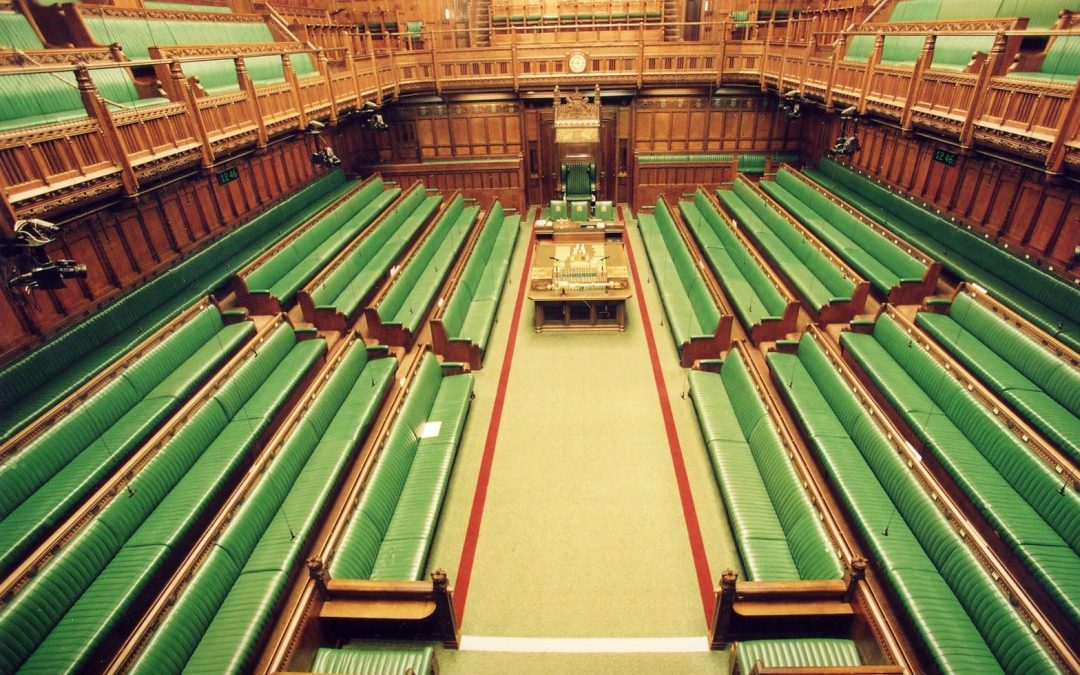
When will the government call the next election?

When will the government call the next election?

Oct 22, 2021 | Bylines, News

When will the next general election be held and what kind of impact will the pandemic and Brexit have on the choice of timing, writes Bremain Chair Sue Wilson MBE for Yorkshire Bylines. 

There has been much speculation over recent weeks and months about the timing of the next general election. Scheduled to take place in 2024, there are many factors that could influence the government’s decision – to wait or not to wait. Obviously, when given the choice, any government would choose the timing based on their assessment of their chances of success.

With any election, the time of the year can be a significant factor, as turnout can be appreciably affected by the weather. A cabinet source recently told The Mirror, “Labour struggles to get their people out more than we do which gives us an advantage”. However, there are many other factors to be considered, especially in the wake of Brexit and the pandemic.


Fixed Term Parliament Act

The reason the government can even consider holding the next election before 2024 is due to the repealing of the Fixed Term Parliament Act. In March 2021, a joint committee of MPs and peers concluded that the act was “flawed and would require major amendment even if it were to be retained”.

The government’s intention was clear, the committee said – “to return to the system in place before the 2011 Act”. Committee chair, Lord McLoughlin said the “bill means the Monarch may grant a general election on the request of the prime minister of the day”. The dissolution and calling of parliament bill is currently at second reading stage in the House of Lords. It is making swift progress towards giving the government the freedom to call an election when it sees fit.


Boundary changes

According to the Boundary Commission for England, revised proposals on boundary changes will be published, and a four-week consultation process will be conducted “late 2022”. A final report, including recommendations, will be published in June 2023.

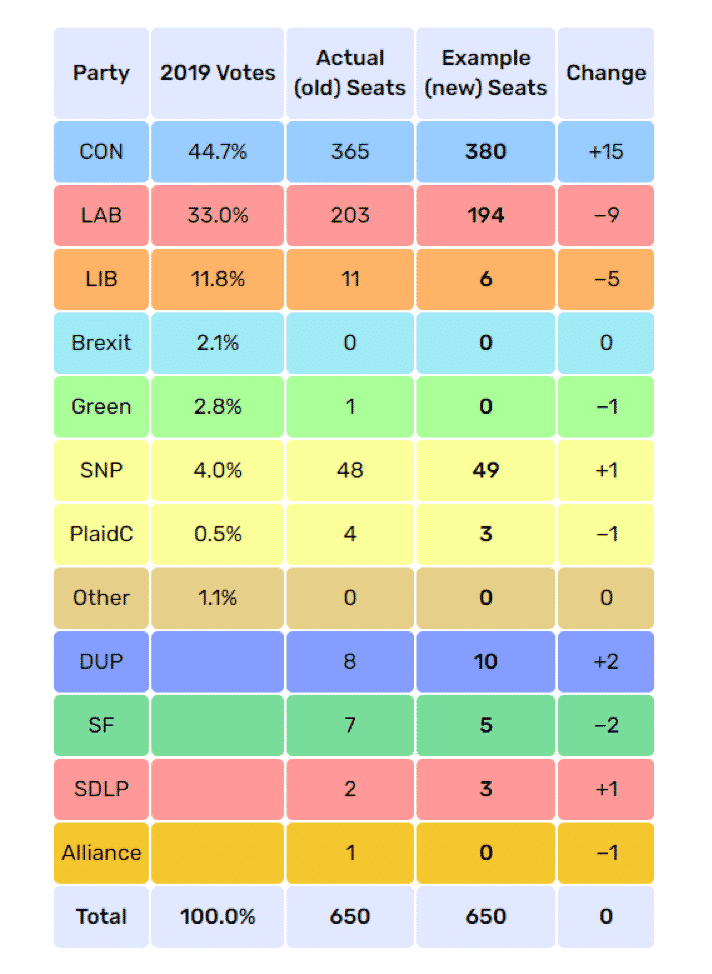
One school of thought is that the government will wait until after the boundary changes come into effect. The reason being that, if the 2019 election had been conducted under the new boundary arrangements, with every voter voting the same way, the Conservative Party would have gained 15 seats, and Labour would have lost a further nine. Even if voting patterns were to change, the Financial Times concluded that the government would gain ten new seats following boundary adjustments.

However, others have argued that the government will call an election before the changes come into effect while existing boundaries remain. Crestview Strategy’s vice president, Nicholas Varley, argued that to call an election after the boundary changes would be “an act of lunacy” on the government’s part. He argued that it takes years for MPs to “build their reputation with local voters and a change in boundaries would mean years of hard work by MPs in this parliament are deemed worthless”.

“What will be causing sleepless nights is the idea that no one in the campaign team at Conservative Central Office, or even Conservative Members of Parliament themselves, can be certain of which voters will be voting in which constituency in an impending general election. If you do not know who your electorate is how can you run a campaign? And, we aren’t just talking about not knowing the electorate in a handful of constituencies, we are talking about 90 percent of constituencies looking different.”

https://www.electoralcalculus.co.uk/bdy2023_ec_auto.html


The Brexit effect

Brexit could be a significant factor in any decision re the timing of the next election, and the government would need to be looking in two directions simultaneously. Firstly, there’s the damage already being caused by Brexit, and we haven’t even seen the worst of that yet.

Any perceived Brexit bounce that may have come from the government getting Brexit ‘done’ has surely now dissipated. If the election was to come too soon, the issues of supply chain problems, fuel shortages, empty shelves, lack of drivers, etc. etc. will be fresh in the public memory. Even if they believe the government line that those issues are due to covid, not Brexit, it’s same problem – the government has mishandled both in spectacular fashion.

Secondly, there’s the future of Brexit – the ongoing negotiations and severely troubled relationship with the EU. Not only is Brexit not done, but if the result of the latest UK posturing results in a trade war, then the picture could look considerably worse. In which case, a delay might be the best course of action for the government, in order to put as much space between themselves and the damage as possible.

That’s before they even factor in the renegotiations that are due to take place in 2025 when the trade and co-operation agreement is up for review. Assuming, of course, that it hasn’t been torn up altogether by then.

Then there are the promised Brexit benefits that have failed to materialise. The much-heralded new deal with Australia has not, as previously suggested, been signed sealed and delivered. Even the rollover EU deals are proving problematic, as the devil in the detail was overlooked. The uplands are not looking so sunny


… and then there’s covid

With regard to covid, a number of factors must surely be considered. Firstly, any capital the government may have gained from the so-called vaccine bounce has almost certainly now been lost. Then there’s the forthcoming covid inquiry that will likely reveal significant government mistakes – including many that could have been avoided and saved lives. The billions spent – in many cases wasted – will not go unnoticed, and again, the government may well want to put some distance between the fallout and the next public vote.

As for the current state of play, the UK is falling behind its neighbours in tackling covid. Despite appearances to the contrary in some quarters, covid has not gone away. The number of new cases is growing out of all proportion to similar countries, with daily case levels dangerously close to 50,000. Add in all those bereaved families and that’s a lot of people with a huge axe to grind, not even mentioning those still waiting for any sign of ‘levelling up’.


The view from Westminster

The recent government reshuffle has only added to speculation in Westminster that the PM would call an early election. However, when asked recently to comment on the possibility of a 2023 election, Conservative Party chair Oliver Dowden refused to be drawn. He recently told Sky News, “The PM has told me to make sure that the Conservative Party machine is ready to go for an election whenever it comes”. He added, “It’s not my job to call an election. We know full well that the usual electoral cycle would take us through to 2024 but that’s entirely up to the prime minister”.

In response, government figures played down Dowden’s comments, telling The Times that Boris Johnson would be more likely to wait until 2024 when the next general election is officially due.

As for the opposition, Labour strategists are increasingly considering the possibility that Johnson might even go for an election as early as spring next year. The thinking being that the government will want to act before the tax rise of businesses and workers – aimed at providing additional funding for the NHS – comes into play in April 2022.

At the recent Labour Party conference, the shadow foreign secretary, Lisa Nandy, said the party was ready for an expected election in 2023. “We could be in power in 18-months’ time. Never believe it’s not possible”.


What do the punters say?

Although the odds vary, all gambling sites agree that an early election is becoming increasingly more likely. Smarkets betting exchange said, “The chances of it being held in 2023 have continued to rise, now up to around 38 percent and that seems to make a lot of sense”.

The odds on a 2024 (or later) election range from Oddschecker on 4/7 (a 63 percent probability) to Gambling.com on 3/10 (a 77 percent probability). The odds on a 2023 election range from Oddschecker on 6/5 (a 45 percent probability) to Gambling.com on 7/2 (a 28 percent probability).

With the UK paying off the pandemic deficit, Brexit damage becoming more obvious and the impact of boundary changes, there is much to consider when making this decision. Johnson has already made it clear he wants to serve as PM longer than Thatcher. Of course, that decision will not just be down to the voting public, but also down to his own party. Trust is at an all-time low and needs to be earned. Recent events have opened the public’s eyes to the lies, the cronyism and the waste of life and taxpayers’ money.

In 2023–2024, Britain will hit record borrowing according to the Institute for Fiscal Studies and the Resolution Foundation. Both organisations predict that ahead of the next election, there will be enormous pressure on the government to balance the books.

So, from wherever you are standing, the government has some major decisions to make about whether it will be viewed more kindly sooner, or later. An election in 2023? I wouldn’t put my money on it just yet. But then I wouldn’t bet against it either!


Definitely not so he can pretend there's been better growth in the economy next year & use that to put in tax cuts in the Autumn 2022 budget, in case of an election in 2023.

Definitely not.

They'd never play politics with the economy.
They're a 'safe pair of hands' after all…

— (Social) Liberal Leigh🕷️🇪🇺🇬🇧 #FBPE #FBPPR 🔶 (@Liberal_Leigh) October 16, 2021

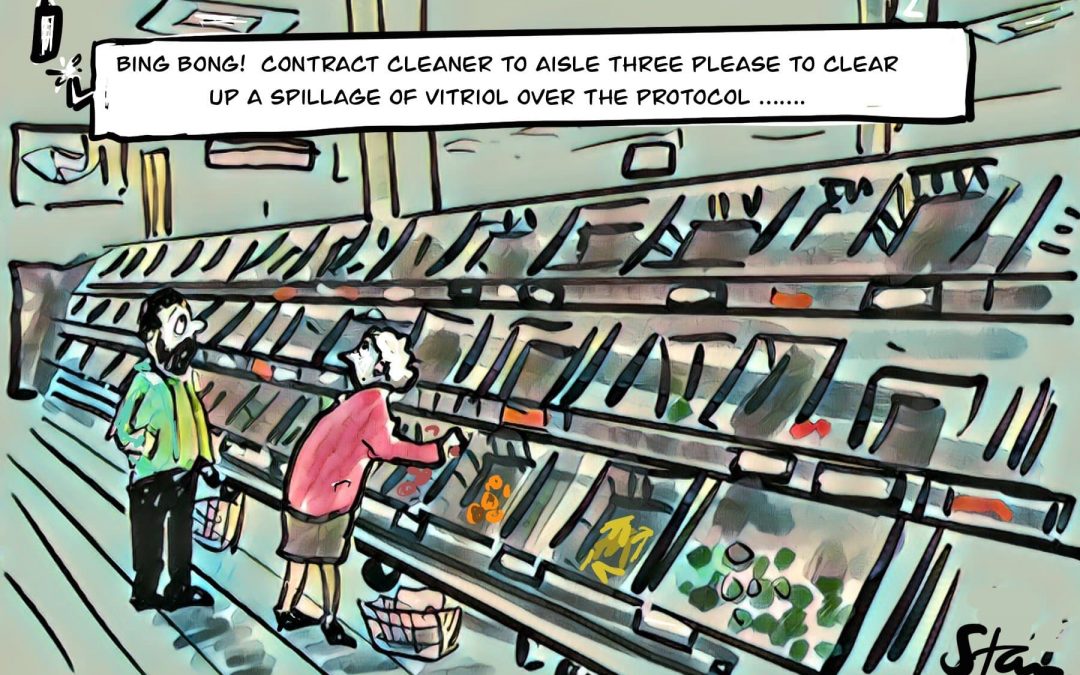
Northern Ireland protocol ‘home stretch’, or more kicking the can down the road?

Northern Ireland protocol ‘home stretch’, or more kicking the can down the road?

Oct 17, 2021 | Bylines, News

Over recent weeks, the EU has been promising to come up with practical proposals to resolve issues surrounding the Northern Ireland protocol, writes Bremain Chair Sue Wilson MBE for Yorkshire Bylines. Those “far-reaching proposals” were finally announced by vice president of the European Commission, Maros Šefčovič on 13 October. Before they were even published, however, they had all but been rejected by Brexit negotiator, Lord Frost, in what the press were labelling a “prebuttal”.

Frost had seemed determined, even before his speech in Portugal on Tuesday, to throw a spanner into the negotiating works. He had accused the EU of “not listening”, said the deal required significant changes, and demanded the removal of the role of the European Court of Justice (ECJ) in overseeing the protocol.

Irish foreign minister, Simon Coveney warned that the EU was “close to the end of the road” and accused the UK government of deliberately creating a “red line” barrier to progress. Declan Kearney, of Sinn Féin, had an accusation of his own, suggesting the government was throwing a “dead cat” on the table. He added that the EU was about to call the UK’s bluff. All before either Frost or the EU had made their official statements.

The speech, peppered with digs at the EU and half-veiled threats, was a withered olive branch delivered with menace. It seemed designed to rile the EU27 and the Commission into hardening their position | Anthony Robinson@AnthonyBylines @BylineTimes https://t.co/NDdz9qFblT

— Yorkshire Bylines (@YorksBylines) October 13, 2021

Frost’s Lisbon speech

A day ahead of the EU’s expected response to his earlier ‘command paper’, Frost confirmed his view that a hard Brexit was vital in order for Brexit, and Britain, to succeed. He viewed the removal of the UK from the customs union and single market as crucial to the success of the Brexit project – even if that wasn’t the impression given when the country was being asked to decide five years ago. Frost claimed it would be an “historic misjudgement” not to rewrite the Brexit deal.

Frost’s speech suggested that the protocol “could have worked” had it been “more sensitively implemented”, and that “the protocol represents a moment of EU overreach when the UK’s negotiating hand was tied”. Frost continued to imply that the protocol was imposed on the UK, rather than being a deal that was designed and agreed by the UK government, and “hailed by them as a masterpiece of statecraft”. Frost described the protocol as “the biggest source of mistrust” between the UK and the EU, apparently with a straight face.

For Brexit-ologists, Lord Frost's argument that a so-called hard Brexit – removal from all single market/customs union – was always vital for the project to succeed is notable. It makes sense, but was very much not what was billed before the referendum, beyond the zealots.

— Peter Walker (@peterwalker99) October 12, 2021

Guardian political correspondent, Peter Walker, questioned whether the views expressed by Frost were his own, or those of number 10. The question of whether Frost is playing bad cop, or if his approach is “part of a wider strategy”, remains on the table. Perhaps alongside all those cards we were supposed to be holding.


Reactions to Frost speech

Baroness Chapman, Labour’s shadow Brexit minister, claimed that the government was “desperate to use a tussle with Brussels to distract from their domestic failures – whether on covid, the energy crisis, or the needless culling of thousands of pigs”. She said an opportunity had been missed “for the government to reset relations with our partners in the EU after a fractious start to our new relationship”.

Northern Ireland spokesperson for the Liberal Democrats, Alistair Carmichael, said, “The same minister who just months ago was trumpeting the government’s botched Brexit deal now says it’s intolerable and has to be changed. After all the upheaval British businesses have suffered and all the challenges they face now, they need certainty and support from the government, not more pointless posturing”.

Former prime minister (now deputy PM) of Ireland, Leo Varadkar said the UK government had “acted in bad faith”. He suggested that, “the message must go out to all countries around the world that this is a British government that doesn’t necessarily keep its word and doesn’t necessarily honour the agreements it makes”. Not exactly a glowing reference for ‘global Britain’, ahead of any future trade negotiations.

Former secretary general of the European Commission, David O’Sullivan, told LBC that Frost was “hardly credible”, and asked, “Why did he sign a text that he now wants to replace nine months later?” If former Number 10 adviser, Dominic Cummings is to be believed, the prime minister was also misrepresenting, and misunderstanding, his deal.

According to Cummings, “babbling” Boris had no intention of honouring the agreement he signed in haste. Not only did he not have a “scoobydoo” about the contents, but his only interest had been in winning the election. This claim was rejected by a Downing Street spokesperson, who insisted changes to the treaty were only sought after it became clear how Brussels was implementing the deal.

So Cummings is *openly* admitting that he and others agreed to the Protocol to win a general election, with no intention of abiding by it. Reminder: that is the Northern Ireland peace process they were playing with to win an election.

— John Cotter (@John_Cotter) October 12, 2021

The EU’s proposals

Following a briefing with the European parliament, the college of commissioners and all 27 EU ambassadors, Šefčovič announced the new proposals in a press conference on Wednesday. He described the proposals as a “robust package of creative, practical solutions designed to help Northern Ireland deal with the consequences of Brexit”.

Apparently, the revised proposal had been highly contentious, with one senior EU diplomat adding that there was “blood on the floor” following efforts to get the revised proposals accepted. Several countries have expressed their displeasure, and patience with the UK is said to be wearing very thin across Europe. Some countries, not least France, are already looking at retaliatory measures. For now, however, they have been reassured by the fact that the Commission has already prepared legal action, ranging from infringement proceedings to a full-blown trade war.

The EU’s proposals are meant as a starting point to discussion, with Brussels keen to continue a dialogue, if not a negotiation. The four-part proposal consists of:

Food safety and phytosanitary rules – changes will allow for unhindered access to food products, including ‘national identity’ goods such as sausages.
Customs – an “express lane” will facilitate the movement of goods from Great Britain to Northern Ireland; customs formalities for more businesses and goods are to be cut in half; plus an 80 percent reduction on the controls and checks on a range of retail goods.
Governance – the participation of Northern Ireland authorities will be boosted, addressing concerns that NI has no say in legislation.
Medicines – proposals for legislative amendments to EU law will ensure that life-saving drugs can be move easily between Great Britain and Northern Ireland.

The EU stands united behind Northern Ireland, while also protecting our internal market.

I invite the UK government to engage with us earnestly on our package of enhanced opportunities. With these proposals, I believe we could be in the homestretch when it comes to the Protocol. pic.twitter.com/ECyhYYWB4I

— Maroš Šefčovič🇪🇺 (@MarosSefcovic) October 13, 2021

Šefčovič emphasised that the “EU stands united behind Northern Ireland, while also protecting our internal market”. He added, “Now I invite the UK government to engage with us earnestly and intensively on all our proposals. With them I’m convinced we could be in the home stretch when it comes to the protocol”. Discussions will continue later this week in Brussels.

That internal market protection Šefčovič spoke of does, of course, include maintaining the role of the ECJ. As he confirmed, “it’s very clear that we cannot have access to the single market without the supervision of the European Court of Justice.”


Whatever happened to Frost’s “excellent” deal?

I'm very pleased and proud to have led a great UK team to secure today's excellent deal with the EU.

Both sides worked tirelessly day after day in challenging conditions to get the biggest & broadest trade deal in the world, in record time.

Thank you all who made it happen.

— David Frost (@DavidGHFrost) December 24, 2020

Lord Frost’s dislike of his own deal is not a new development. Over recent weeks and months, we have grown accustomed to his criticism of the deal he previously described as “excellent”. It would appear that other Brexit-loving ministers are similarly changing their tone. No longer do we hear of the sunlit uplands, or the rosy post-Brexit future that awaits us. Rather, we hear excuses for the Brexit deal they rushed through parliament, with blame, as always, being directed at the EU.

According to staunch Brexiter Bernard Jenkin recently, the deal was signed “at a time when the government was weak and gripped by a constitutional crisis” and the nasty EU “took advantage”. Whether the Brexiters truly believe the EU is at fault or not, they are running out of excuses. They may be blind to the realities of Brexit. The rest of the world is not.

They cannot bring themselves to admit their great project is a disaster. Blaming is all they have left https://t.co/FaPHTfnzqy

— ALASTAIR CAMPBELL (@campbellclaret) October 12, 2021

Whether the UK government ever intended to honour the Brexit deal they supposedly signed in good faith, is becoming increasingly hard to accept. Even Frost himself suggested the government knew at the time that the deal was imperfect, and that it was signed merely to “Get Brexit Done”. Or more accurately, to get the election done. Every other issue, in true Conservative style, could be kicked down the road and dealt with, or blamed on the EU, later.

Frost has claimed that the EU “doesn’t always look like it wants the UK to succeed”. I’m sure the Brexit faithful will probably agree with him, but from where I’m standing, the boot is on the other foot. The state of relations between the EU is down to the UK, and Frost in particular. As for the state of the country, it looks like it’s Frost, Johnson and the Brexiters that don’t want the UK to succeed. If they do, in fact, care about our country’s future, they sure have a strange and damaging way of showing it.

When I said we would Get Brexit Done, I meant we would sign a shit deal that we had no intention of honouring, in order to win an election.#Newsnight

— Parody Boris Johnson (@BorisJohnson_MP) October 11, 2021

EU membership wasn’t a ‘long bad dream’, but that’s a perfect description for Brexit

EU membership wasn’t a ‘long bad dream’, but that’s a perfect description for Brexit

Oct 5, 2021 | Bylines, News

At the Conservative Party conference on Monday, Lord David Frost, chief Brexit negotiator, made a speech to a “pretty empty hall”, writes Bremain Chair Sue Wilson MBE for Yorkshire Bylines. In his speech, Frost claimed that Britain was entering a “renaissance” and promised to show “Brexit was worth it”. He didn’t say how long we might have to wait.
Lord Frost threatens, again, to ditch the Northern Ireland protocol

Shortly afterwards, the media was full of articles that, at first glance, could have been written weeks or even months ago. Not for the first time, headlines spoke of threats to ditch the Northern Ireland protocol and trigger article 16.

Frost (emotional about his role freeing Britain) and gets round of applause when threatens to trigger Article 16 of Northern Ireland Protocol. /2

— Peter Foster (@pmdfoster) October 4, 2021

According to FT journalist Peter Foster, Frost’s threat to trigger article 16 received a round of applause from the undersized audience. Perhaps they were old enough to remember it from earlier speeches and were enjoying a touch of Brexit nostalgia.

Frost also suggested the EU needed to make “significant changes” to the deal negotiated by (checks notes), Lord Frost himself:

“If we can agree something better, we can get back to where we wanted to be – an independent Britain with friendly relations with the EU based on free trade. But we cannot wait forever. Without an agreed solution soon, we will need to act, using the article 16 safeguard mechanism, to address the impact the protocol is having on Northern Ireland. That may in the end be the only way to protect our country – our people, our trade, our territorial integrity, the peace process, and the benefits of this great UK of which we are all part.”

The Brexit deal U-turn

We have grown accustomed to Frost, and Boris Johnson, having a complete change of heart about how wonderful, or terrible, the deal they negotiated back in December 2020 turned out to be. What was new this time was that, apart from everything all being the EU’s fault, now MPs must share the blame.

Apparently, it was MPs that forced Frost to negotiate a bad deal by passing legislation in 2019 – described as the “surrender act” – preventing a no deal scenario. According to Frost, “of course we wanted to negotiate something better”. Strange, but there seems to be no reference anywhere to Frost pointing out the shortcomings of his deal when selling it to parliament, or the public, back in 2020.


Frost continues to insist the EU is interpreting the Brexit deal in a “heavy handed” fashion. Moreover, he is still harking back to his ‘command paper’ demands from July, despite the fact that they proved unworkable then, as they do now. Frost also suggested the EU had failed to respond to his earlier proposals, despite a prompt response from European commission president, Ursula von der Leyen. Her reply was short and to the point: “we will not renegotiate”.

Lord Frost again complains the UK hasn't had a response to its 'command paper' on Northern Ireland. This is @vonderleyen the day after he sent it. I don't know which part of this is still unclear to @DavidGHFrost. ~AAhttps://t.co/z2k0fD9TH2 pic.twitter.com/dBZAQRQPRe

— Best for Britain (@BestForBritain) October 4, 2021

As Frost waits for “a formal response from the EU”, he urged them “to be ambitious”, adding that it was “no use tinkering around the edges”.


EU response to Frost’s threats

Following Frost’s speech, a spokesperson for the European commission commented:

“You will not be surprised to hear that we do not comment on the sayings or the statements of our partners or any stakeholders, whatever nature they have and however lyrical or aggressive they may be. We are not going to depart from that position in these specific circumstances at all.”

Despite the EU-bashing rhetoric we associate with Frost, he was once a Remain supporter. Back in 2016, Frost was tasked with presenting the Remain side of the EU referendum argument in a debate organised by think tank, Open Europe. Whether he believed his own arguments at the time, or believes them now, we may never know. Whether the British public will believe him may also be open for discussion.

What we can be sure of is that EU member states know grandstanding when they see it and will not be impressed. They will make every effort to be as flexible as EU rules allow, but will stand firm.

Frost may now say the “long bad dream” of EU membership is over, but for those suffering the damaging after-effects, it is Brexit itself that is providing the nightmares.

Lord Frost told the Tories today that “the long bad dream” of EU membership is over

Well, we can now only dream about petrol stations which are open, supermarket shelves which are full, and governments which regarded it as their job to make the country better not worse!

— Andrew Adonis (@Andrew_Adonis) October 4, 2021

« Older Entries
Next Entries »

Search Our Site

Sign Up to our Newsletter

Translate this Site

Official Partners

european movement

Members of

Grassroots for Europe

Follow Us on Bluesky

Latest Posts

  • Data Privacy Policy
  • Sign Up
  • Get in Touch
  • Facebook
  • X
  • Instagram
© BremaininSpain.com 2016 - 2026 General Email: enquiries@bremaininspain.com Media: media@bremaininspain.com
Manage Consent

We use cookies to optimise our website and our service.

Functional Always active
The technical storage or access is strictly necessary for the legitimate purpose of enabling the use of a specific service explicitly requested by the subscriber or user, or for the sole purpose of carrying out the transmission of a communication over an electronic communications network.
Preferences
The technical storage or access is necessary for the legitimate purpose of storing preferences that are not requested by the subscriber or user.
Statistics
The technical storage or access that is used exclusively for statistical purposes. The technical storage or access that is used exclusively for anonymous statistical purposes. Without a subpoena, voluntary compliance on the part of your Internet Service Provider, or additional records from a third party, information stored or retrieved for this purpose alone cannot usually be used to identify you.
Marketing
The technical storage or access is required to create user profiles to send advertising, or to track the user on a website or across several websites for similar marketing purposes.
  • Manage options
  • Manage services
  • Manage {vendor_count} vendors
  • Read more about these purposes
View preferences
  • {title}
  • {title}
  • {title}