enquiries@bremaininspain.com
  • Facebook
  • X
  • Instagram
  • Facebook
  • X
  • Instagram
  • About
    • Our Mission
    • The Bremain Team
    • Bremain History
    • Members’ Issues & Anxieties
    • Members’ Gallery
  • Events 2026
  • Bremainers Ask
  • Resources
    • Pro-EU Groups
    • British Embassy Updates
      • Bremain Glossary of Terms
    • Government
    • Withdrawal Agreement
    • Support & Advice
  • Votes for Life
    • REGISTER TO VOTE
    • My Vote Matters
  • Sign Up
  • Donate
  • Get in Touch
Bremain in Spain
  • Home
  • About
    • Our Mission
    • The Bremain Team
    • Bremain History
    • Members’ Issues & Anxieties
    • Members’ Gallery
  • Events 2026
  • Bremainers Ask
  • Votes for Life
    • REGISTER TO VOTE
    • My Vote Matters
  • British Embassy Updates
    • Bremain Glossary of Terms
  • Resources
    • Pro-EU Groups
    • Government
    • Withdrawal Agreement
    • Support & Advice
    • Glossary of Terms
  • Sign Up
  • Donate
  • Get in Touch
Select Page
EU Passport checks finally go digital

EU Passport checks finally go digital

Aug 13, 2025 | Bylines, News

The European Union’s new entry/exit system (EES) replaces passport stamping with facial recognition technology and fingerprint ID, writes Bremain Chair Sue Wilson MBE for Yorkshire Bylines.

After numerous delays, the European Union’s new entry/exit system (EES) will finally be introduced on Sunday 12 October. The new system will require facial biometrics and fingerprints to be taken from all non-EU citizens entering the Schengen area. Thanks directly to Brexit, that includes British tourists.

Europe’s entry-exit system (EES) begins 12 Oct

It connects all Schengen area frontiers to a central database so that the comings & goings of non-EU citizens can be more closely monitored, helping identify suspected criminals & police the 90 / 180 day limit that applies to UK & other nationalities

[image or embed]

— BremainInSpain (@bremaininspain.com) 21 July 2025 at 14:00

What is EES and what does it mean for travellers?

The new system – which has been labelled by the European Commission as the “most modern digital border management system in the world” – will replace passport stamping with facial recognition technology and fingerprint ID. Travellers will also need to provide personal details such as their name, date of birth, travel plans, proof of accommodation and medical insurance.

The collected data – which will be valid for three years – will be used to monitor the 90-day-in-180 stay limit, and for the identification of criminals and terrorists. It will also provide a record of a user’s history of travel and allow for checks against security databases held by Interpol and the Schengen Information System.

EES will be phased in over a six-month period, with different ports of entry starting the process at different times. It will apply in 29 countries in the Schengen area, including Liechtenstein, Norway, and Switzerland, even though they are not part of the European Union. The system will be fully operational from 10 April 2026.

Later in 2026, the EES system will be joined by the European travel information and authorization system (ETIAS) – a new visa requirement – at a cost of 20 Euros for three years’ travel. Under-18s and over-70s will be exempt from the fee.


New requirements to travel to Europe

Entry/Exit System (EES) for registering non-EU nationals travelling for a short stay in 29 European countries (due to start later in 2025)

buff.ly/kFRpD5t

[image or embed]

— vetbizresources.bsky.social (@vetbizresources.bsky.social) 6 March 2025 at 21:08

What British tourists can expect

Dedicated booths are being/have been installed at airports, train stations and ports to allow for the scanning of fingerprints and the taking of photos. The necessary questions that travellers will be asked will usually be done at automated kiosks. However, if the traveller is unable to answer correctly, they would then be referred to a border officer for further checks. Travel experts, such as Luke Petherbridge of ABTA, believes “more people are going to be asked these questions in the future than were in the past”, though he stressed that did not necessarily mean entry would be denied.

The UK government has been “working closely” with the European Commission, member states, local authorities and the travel industry to prepare ports for EES. Facilities at Dover, St. Pancras International and the Channel Tunnel will benefit from £10.5mn in extra governmental support. That support – at the only three ports where the French border is sited on UK soil – will ensure “EES registration is simple for anyone travelling to the Schengen area”. However, the government is warning travellers to “be prepared to wait during busy times”.

Of course, the new EES will not just apply to tourists. The RHA – the largest dedicated trade association in the UK for HGV and LGV vehicles – is so concerned about the impact of the forthcoming changes that it is calling for a professional drivers’ exemption.


What Tourists Need To Know About Europe's New Entry/Exit System Before Planning A Trip

[image or embed]

— Explore (@exploredotcom.bsky.social) 2 August 2025 at 15:04

What Britons resident in EU can expect

While Britons living in the EU have been assured they will be exempt from facial biometrics and finger printing requirements, there are still many unanswered questions.

Following the UK-EU summit in May, and the prime minister’s ‘reset’, an announcement was made that British citizens would be able to use e-gates on entry to the EU. Apart from a similar announcement in July, regarding e-gates in Germany, there has been little or no further news on the subject. Until we hear any different, it would be best for British tourists, and British residents of the EU, to assume we’ll be joining long queues along with all other third country nationals.

An update on the UK gov website urges Brits resident in Spain to swap their green certificate for a TIE card because the green paper will not travellers from the European Entry-Exit System (EES) border control system coming in this October, whereas the TIE biometric residency card will

[image or embed]

— murciatoday.com (@murciatoday.bsky.social) 8 July 2025 at 13:41

Further complications for British residents in Spain

As for those of us living in Spain – the most popular EU country for Britons migrating to Europe – the process is complicated by the fact that we must all now have biometric residency documentation. Of over 400,000 Britons living in Spain, the Spanish authorities estimate that as many as 100,000 Brits do not yet have the necessary documentation, even those that are legally resident.

Those with the older paper residency certification must now make an appointment with the local Foreigners’ Office to switch to a biometric card (TIE) as proof of residency. Failure to do so could result in being prevented from boarding a plane or ferry when returning to Spain, or even being refused entry into the country. 

To complicate matters further, it is now more than five years since the last pre-Brexit influx of UK migrants, whose temporary residence now needs replacing with a permanent one. As a result, there are now two distinct groups of British citizens in Spain searching desperately for appointments before 12 October. With available appointments in the most populated areas as rare as hen’s teeth, it looks like we’re all going to have to put up with queueing for some time yet. Thanks, Brexit!
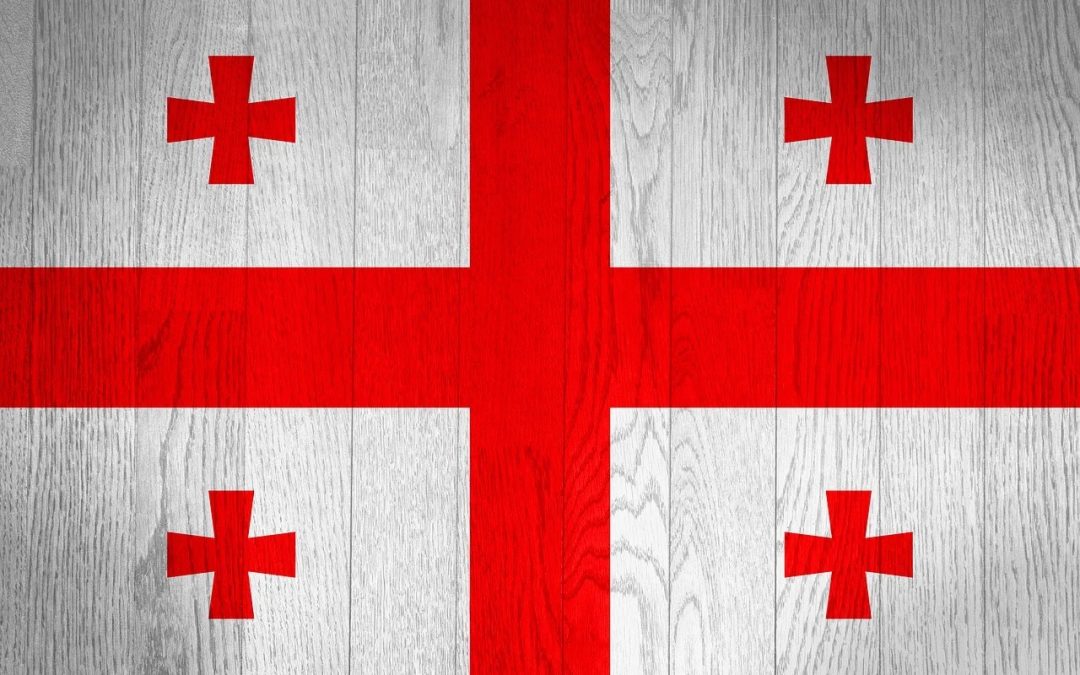

Democracy on the Brink in Georgia

Democracy on the Brink in Georgia

Jul 31, 2025 | Bylines, News

“Democracy can collapse faster than we think”: urgent warnings from Georgia spotlight rising authoritarian threats across Europe and the West, writes Bremain Treasurer Helen Johnston for Yorkshire Bylines. 

On 8 July, Grassroots for Europe hosted a Round Table webinar on the state of government and democracy in the USA and Europe. One of the key speakers was the former British ambassador to Georgia, Alexandra Hall Hall, who drew parallels between events there and in America, pointing out that democratic collapse can happen faster than we think.

First-hand testimony from Georgia

A last-minute guest speaker at the webinar was Georgian politician Dr Grigol Gegelia. Elected in the recent elections as a member of the Lelo Strong Georgia coalition, he is boycotting Parliament with the rest of the opposition in protest against the authoritarian, Russian-backed Georgian Dream government.

His description of the rapidly deteriorating situation there, including, shockingly, the detention of a fellow party worker minutes earlier, could not have been timelier for illustrating Alex’s warnings about the danger to democracy in America and Europe.

Georgians have been protesting for over 200 days now, with protesters subject to arrest, beatings, torture, imprisonment and heavy fines. In December 2024, Saba Buadze, who was also elected under the Lelo Strong Georgia banner, told me he believed Georgian Dream is capable of anything, and the use of repressive methods will increase: “We are at the stage of autocracy, and we are going downhill now.” Dr Gegelia’s words bear this prediction out only too grimly.

Targeting opposition parties

In January, the government set up a temporary commission to investigate alleged crimes committed by the UNM government that came into power following the 2003 Rose Revolution. Opposition politicians  – regardless of their connections to this period – are being summoned to appear and risk imprisonment if they refuse. Key opposition leaders in Georgia have been jailed, sentenced to seven or eight months in prison and banned from holding office. According to Amnesty International, the commission has been instrumentalised to target former public officials for their principled opposition: “It has become a tool of political repression, not of parliamentary scrutiny, used to lock away political opponents ahead of local elections.”

Dr Gegelia explained that although the “temporary investigative commission was ostensibly set up to probe into alleged crimes committed by the UNM government in 2003–2012, it is basically a device to put the entire opposition on trial and then jail them for refusing to attend, because they knew that none of us would ever do so. If I’m summoned to attend, I will not do so, so I will also be fined or imprisoned for up to a year”.

Just before the webinar began, one of Dr Gegelia’s colleagues was stopped for a drug search and detained. The government denies that drug checks are being used to target protesters and political opponents, but, as Dr Gegelia said, “there were no plausible reasons to expect any such arrest”, and a number of those detained were activists or members of opposition parties.

Sliding towards dictatorship in Georgia

Dr Gegelia believes that Georgia could soon tip over into a complete, full-blown dictatorship. “They’re arresting activists and now introducing additional laws designed to curb all forms of political protest”, such as the Foreign Agents Registration Act. Ordinary protesters are deterred by extortionate fines – amounting to four to five months of the average Georgian salary – with provisions allowing for arrest if the fines go unpaid.

“They’re trying to deploy the entire machinery of law against their own citizens, against all forms of dissent, to silence all of us and those of us that will not be silenced, especially those working on international lobbying.”

When Dr Gegelia and colleagues from three other parties visited the Baltic states in January, the prime minister accused them of engaging in acts of sabotage: “He effectively gave a green light for prosecution services and others to potentially try us for crimes carrying sentences of seven to 15 years.”

Controversial local elections

Local elections are due to be held in Georgia in October. Some opposition parties have chosen to boycott them, while others, including Dr Gegelia’s Lelo party, have decided to stand. He argues that “we should use every platform possible, even where you don’t believe you can win. We do not believe that will serve to legitimise the regime, because we plan, while participating in those elections, to also call on all our friends and partners throughout the world to continue to speak out, act, sanction the regime’s people, isolate them as much as possible”.

He also acknowledges that other opposition groups have criticised his party for its stance (indeed, there is also internal dissent: Saba Buadze has resigned his post in disagreement, although he remains a party member). Dr Gegelia similarly recognises that the elections will not be free or fair, but “our purpose is to open up a new battlefront, to give people another dynamic, another possibility to engage, to fight and reclaim whatever we can”

Sanctions and international pressure

Dr Gegelia appealed for democracy activists to put pressure on Western governments to impose stricter sanctions. It seems Georgian Dream had hoped to draw on a “striking alignment” of values and ideology with the Trump administration. However, the US ambassador recently described the Georgian Prime Minister’s open letter to Trump and JD Vance as “threatening, insulting, unserious”. Legislation currently under consideration in the US Congress would authorise sanctions to counter the influence of Russia, China, and Iran in Georgia. The Georgian government regards the legislation as biased and hostile.

Nevertheless, Dr Gegelia believes the government currently fears the UK more than the US. Apart from possible channels for joint action with Europe, the UK could also act independently. Britain has already warned businesses in Georgia that they would face sanctions if they assist Russia in evading existing measures. On 4 July, Stephen Doughty, the Secretary of State for Foreign, Commonwealth and Development Affairs, noted that: “the UK’s support for the Georgian people’s Euro-Atlantic aspirations remains steadfast, and we stand ready to assist in any return to a trajectory towards European values and democratic norms”.

On 14 July, the UK government stepped up the pressure on Georgia in a video address delivered by British ambassador Gareth Ward, stating that: “The UK Foreign Secretary and other European partners have called on the Georgian government to release unjustly detained politicians, journalists and activists, repeal repressive legislation and engage in national dialogue with all relevant stakeholders to find a way out of the current situation”.

On 21 July, Doughty confirmed that the UK has downgraded bilateral cooperation and is considering further measures, urging Georgian Dream “to reverse course and engage in inclusive national dialogue with all stakeholders in Georgia’s future”. Georgian prime minister Irakli Kobakhidze lashed out with a Trumpesque response, saying, “This is a statement saturated with disinformation…there are serious problems in Great Britain in terms of media pluralism, in terms of media freedom, in terms of the influence of the ‘Deep State’ on the media”.

The EU increases the heat

Since Dr Gegelia spoke to us, the EU has also turned up the heat on the Georgian regime. In July, MEPs voted to endorse a report which “deplores the backsliding of the rule of law as well as the growing Russian influence on the ruling party, Georgian Dream”, followed by a joint letter issued by European Foreign Ministers expressing deep concern over the “deteriorating situation in Georgia”.

The EU high representative for foreign affairs, Kaja Kallas, responded to an open letter from Georgia’s former president, Salome Zurabishvili, saying that the attack on democracy by Georgian Dream is becoming increasingly severe and Georgia’s visa-free regime with the EU is at risk over concerns about democratic ‘backsliding’.

Georgia’s ruling party’s response mirrors that of the UK, describing the joint letter as “saturated with Soviet-style disinformation and false accusations”. Prime Minister Kobakhidze once again defended the foreign agents law, claiming it was necessary to defend Georgian “peace and stability” against foreign influence.

Individual EU member states are also increasing diplomatic pressure, with messages in recent days from the Dutch minister of foreign affairs and the French ambassador to Georgia, Sheraz Gasri. On 15 July, Giorgi Gakharia, the leader of the For Georgia party, met with Poland’s foreign minister, appealing for “unified and coordinated actions by the European Union, the United Kingdom, and the United States in supporting the Georgian people”.

This appeal is reflected in Dr Gegelia’s closing words to the Round Table audience: “In summary, we need action, and we need sanctions: sanctions do work. The regime is scared of sanctions, especially UK sanctions, because many of them are obviously hoping to find a safe haven for themselves and their money in the UK. Like the Russian oligarchs, they’ve bought properties, and they’ve tried to find some quiet spots to keep their money. So, they’re very scared of any threat to that. That is my message to all of you, as friends of democracy in Georgia and worldwide.”


Crackdown on Palestine protesters sparks outrage across UK

Crackdown on Palestine protesters sparks outrage across UK

Jul 23, 2025 | Bylines, News

Protesters face arrest for wearing pro-Palestine badges as UK cracks down on dissent amid growing global outcry over Israel’s actions in Gaza, writes Bremain Chair Sue Wilson MBE for Yorkshire  Bylines.

Ever since the start of Israel’s war on Gaza, protesters have been willing to stand up and be counted, to call out Israel’s actions for what they are – genocide – “a crime committed with the intent to destroy a national, ethnic, racial or religious group, in whole or in part” (UN definition). That task has recently become even more problematic, bringing with it the prospect of police arrest for peacefully speaking the truth. Or just for turning up and sporting a badge.

Multiple protests, multiple arrests

Over the weekend, protesters took to the streets across the country – in Edinburgh, Truro, Manchester, Bristol and London – in support of the Palestinian people. More than 100 non-violent protesters were arrested, some carried away by police officers while others were led away in handcuffs. Those arrested included an 81-year-old former magistrate and a woman in her 80s who was seen walking with a stick.

The protesters could receive up to a six-month sentence simply for wearing a badge or T-shirt, or be charged with a criminal offence punishable by up to 14 years in prison, for supporting the work of Palestine Action.

It's utterly mad.
These people are the opposite of terrorists.
THEY WANT PEACE.
The police know they're not terrorists.
The government knows they're not terrorists.
Yet, on the Home Secretary's orders, they're being arrested under the Terrorism Act.
www.theguardian.com/uk-news/2025…

[image or embed]

— George Monbiot (@georgemonbiot.bsky.social) 20 July 2025 at 07:27

Government overreaction

Founded in 2020, Palestine Action is a British pro-Palestinian protest network with the stated goal of ending Israeli apartheid. It describes its actions as “non-violent yet disruptive”. Following damage to two aircraft at RAF Brize Norton two weeks ago, the government proscribed Palestine Action as a “terrorist group” under the UK’s Terrorism Act 2000. As a direct result, any protester can now be arrested for being a member of the group or for showing support – even if that support is nothing more than wearing a T-shirt or badge or displaying a placard.

A request from Palestine Action’s barrister to temporarily block the government ban was refused after a High Court judge ruled the claim was “insufficient to outweigh the strong public interest in maintaining the order in force”. A further legal challenge took place on Monday 21 July when co-founder of Palestine Action, Huda Ammori, sought permission for a full judicial review of the proscription. Her barrister, Raza Husain KC, said the home secretary’s decision to proscribe the group was “repugnant” and an “authoritarian and blatant abuse of power”. A decision is expected on 30 July

People are protesting, governments remain largely inactive

While the public may be protesting against Israel’s treatment of the people of Gaza, the world’s governments have been slow to speak out or to act. There seems to have been considerable reluctance to call out the genocide – even when the evidence has seemed overwhelming – and even more reluctance to impose sanctions on Israel. But hopefully, that may be about to change.

Many countries are now raising their voices and increasing their condemnation, as demonstrated at a recent 30-nation meeting in Columbia. A number of countries from the global south have agreed on measures they say will “restrain Israel’s assault on the Occupied Palestinian Territories”. The measures include blocking the supply of arms and a ban on ships transporting weapons.

Closer to home, yesterday the UK joined 25 international partners in issuing a statement, calling for the war in Gaza to end now. The words used in this declaration are the strongest issued so far by the UK. The statement condemned the “inhumane killing of civilians, including children, seeking to meet their most basic needs of food and water” and called on “all parties to protect civilians and uphold the obligations of international humanitarian law”. It concluded: “We are prepared to take further action to support an immediate ceasefire and a political pathway to security and peace for Israelis, Palestinians and the entire region.”

Two-tier policing or governing?

However, the arrests at pro-Palestinian protests, especially when compared to police actions against far-right protesters in Essex, have again raised questions about the prospect of two-tier policing. While over 100 have been arrested for protesting peacefully, displaying banners and wearing T-shirts, violent clashes outside a hotel for asylum seekers resulted in just six arrests. That’s despite eight officers being injured, objects being thrown and police property being damaged. Thankfully, there have been no reports of anyone breaking into the hotel, though two security staff were assaulted.

The crimes committed in Essex will likely amount to little more than criminal damage or public order offences. That is not in the same league as terrorism, but perhaps in both cases the police could be forgiven for simply applying the law of the land.

What is different is the character of the law in the two cases. The law that bans protest in support of Palestine Action was brought in hastily and seemingly without proper thought for the consequences. This law, and its consequences, are entirely the fault of the Home Office, and worthy of the government’s authoritarian predecessors. It must be reversed, for the sake of British democracy and the right to peaceful protest, before it’s too late.


Migrants are not the problem

Migrants are not the problem

May 18, 2025 | Bylines, News

I am an immigrant – a British citizen living in Spain. I’m not an ‘expat’. In fact, I hate the term, conveying as it does a certain superiority that is neither accurate nor justified. I am a migrant – no better or worse than any other foreigner that has chosen to make their home in a different country, writes Bremain Chair Sue Wilson MBE for Yorkshire Bylines.

As a British citizen living in the EU, I’m acutely aware of attitudes towards migrants, both at home and abroad. I have always – most especially since Brexit – been deeply conscious of how well I am treated in my new home country. I have been welcomed by my Spanish neighbours with warmth and kindness and made to feel part of the family. It is an attitude that has been reflected – both in rhetoric and action – by the Spanish government, and one our own British government would do well to replicate.

Spain promoting the benefits of immigration

President Pedro Sanchez has been very vocal on the benefits of immigration to the Spanish economy. Not only has he championed the need for migrant workers in a country with an ageing population, but he’s also announced measures to help with integration, insisting that Spain has “both the need and the capacity to integrate”.

In October 2024, Sanchez described the Spanish people as the “children of migration” and suggested making “a migration policy that our elders can be proud of”. He called on the government, and the country, to create a strategy that would guarantee the future of the country’s grandchildren, and that of the welfare state.

UK government demonising immigrants

In stark contrast, the British government – in an apparent attempt to out-manoeuvre Reform UK – have moved farther right on immigration than most of us could ever have expected or wished for.

When Labour came to power, their manifesto spoke of – amongst other things – economic growth, fixing the NHS and having a “stronger and safer relationship with the rest of the world”. Ironic, then, that recent changes to their immigration policy will likely have a negative impact on each of those pledges, reliant as they are on the support of hard-working foreign workers.

Recent rhetoric from both Prime Minister Keir Starmer and Home Secretary Yvette Cooper has been increasingly anti-immigrant, and very different from their earlier stances when in opposition. Unsurprisingly, given the language used, there has been considerable condemnation of the latest government position from many quarters, including from with the Labour Party itself.

Keir Starmer’s anti-immigration rhetoric isn’t just a dog whistle — it’s a foghorn to the far right.

It echoes Enoch Powell & fuels hate. Last summer, a hotel housing asylum seekers was set on fire. This is the deadly cost of pandering to racism.

Shame on the Prime Minister.

[image or embed]

— Zarah Sultana MP (@zarahsultana.bsky.social) 14 May 2025 at 18:28

Toxic language for a toxic policy

Labour’s recent pledges on immigration are promising to reduce net migration and the reliance on overseas workers. As political aims, those promises may be largely welcomed. What was not welcomed – or warranted – was the horrifying, dog-whistle language in Starmer’s recent speech.

The prime minister referred to the UK as an “island of strangers” – terminology that immediately elicited comparisons to Enoch Powell’s infamous ‘rivers of blood’ speech in 1968. Following the criticism, No 10 then defended the tone of the speech saying that “tough words and tough policy are required to solve tough problems”.

All rather different from the Starmer of 2020 who said, “we welcome migrants, we don’t scapegoat them,” and who said we must “make the case for the benefits of migration, the benefits of free movement”. Those were the days

Making foreigners feel unwelcome

As if changes in tone and policy re migrant numbers were not enough, the latest nail in the coffin for foreigners living in the UK is a change in policy re settlement status. For those already traumatised by changing attitudes towards migrants thanks to Brexit, the latest plan – to make them wait 10 years before applying for a right to stay indefinitely – must seem particularly cruel.

How the EU will view these developments, and the impact on their citizens, ahead of the EU/UK summit, remains to be seen.

Living in Spain, I feel lucky to be treated with kindness and respect by both the government and its people. Thanks to the Tories and Brexit, I lost any remaining pride in my birth country but looked to the new Labour government with hope and optimism. With a large majority, a leader with apparent intelligence and integrity, and the promise of ‘change’, anything seemed possible.

Despite the damage caused by Brexit, UKIP/Reform UK and the Tories, surely things were about to improve. Sadly, not – it would appear that appeasing the right, rather than defending the left is where we’re at.

Labour still has the chance to be different, to be radical, to be compassionate. They must not squander it. They won’t get many more chances to prove they are any different, better than the alternatives. If they fail to listen, we’ll all be the losers.


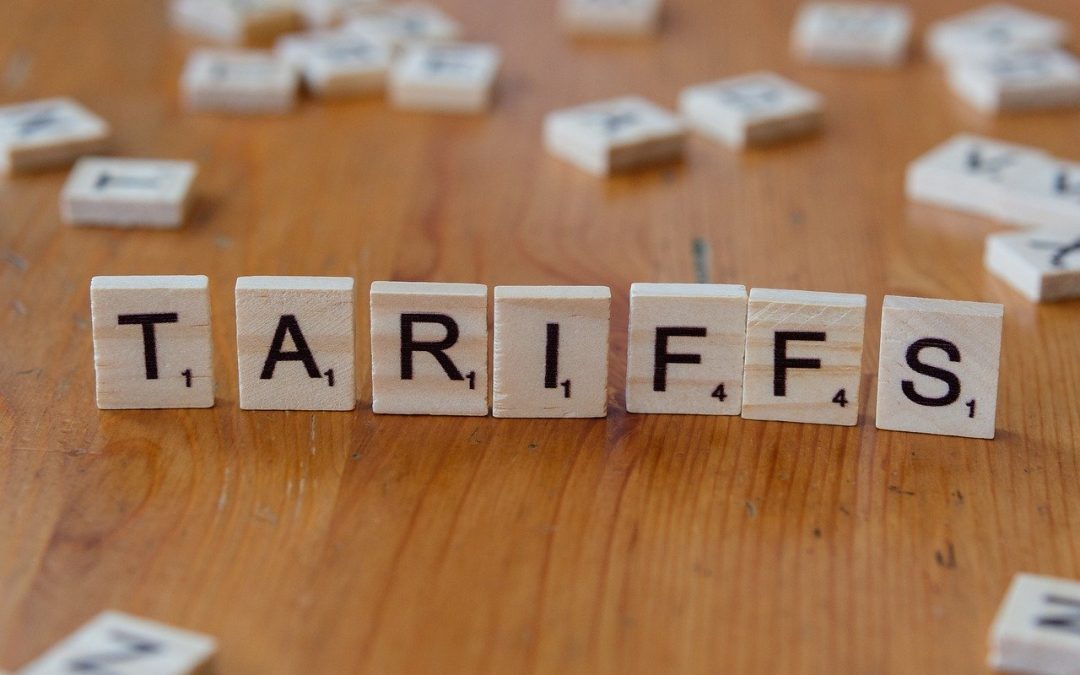
The UK should not try to appease Trump on tariffs

The UK should not try to appease Trump on tariffs

Apr 10, 2025 | Bylines, News

The government needs to get off the fence, embrace trade talks with the EU and accept there is no ‘special relationship’ with the US, writes Bremain Chair Sue Wilson MBE for Yorkshire Bylines.

Since Donald Trump announced his Liberation Day tariffs, the major players in global trade have been planning their retaliation. Despite Trump having now paused these retaliatory tariffs for 90 days for everyone except China, the unpredictability of his U-turns and volatile decision-making is keeping everyone on edge, and the baseline 10% tariff remains. Whether formerly friend or foe, ally or adversary, countries around the world will be taking the next three months to prepare swift and proportionate responses.

The UK, on the other hand, is clinging to the belief that a ‘special relationship’ with the US still exists, regardless of anything President Trump says or does.

🇺🇸TRUMP: THESE COUNTRIES ARE CALLING US UP, KISSING MY ASS

That's what Donald Trump said about the countries on which the US imposed tariffs.

💬"Please, sir, make a deal.

I'll do anything.

I'll do anything, sir". pic.twitter.com/RMWkDgS5eZ

— NEXTA (@nexta_tv) April 9, 2025

Please, sir, may we have a deal?

When Trump attended a fundraising dinner hosted by the National Republican Congressional Committee (NRCC) on Tuesday, he was expected to make a short after dinner speech. Instead, he spoke at length about his policy agenda, the need to protect the Republican majority in the upcoming midterm elections, and, of course, tariffs. (The less said about Hannibal Lecter, the better!).

Despite the overwhelming evidence of worldwide stock market chaos since his original tariff plans were announced, Trump declared, “we’re making a fortune in tariffs”. While it may be true that some Americans are making a fortune, your average US consumer looked set to bear the brunt of the resulting price rises. Even the world’s richest man, Elon Musk, had withdrawn his support for Trump’s tariffs, perhaps due to the value of shares in his own companies having taken a nosedive.

In his NRCC speech, Trump also claimed that countries around the world were willing to “do anything” to get a deal. Foreign leaders, he said, were so desperate to strike a US trade deal that they were “calling us up and kissing my ass”.

Though not Putin, of course, as no tariffs had been imposed on Russia. Draw your own conclusions.

Please sir, Mr Trump sir, may we please have a deal sir, please sir, please? https://t.co/u0L6pThBiv pic.twitter.com/taiXeFsL4W

— Andrew Parnall (@dontbrexitfixit) April 9, 2025

Keeping all options on the table

On the same day Trump was making his speech, Prime Minister Starmer was appearing before the liaison committee and was questioned about negotiations with the US. On digital services, Starmer said he was prepared to consider tax cuts for tech billionaires like Musk and Jeff Bezos, even if that required changes to the online safety bill. Which rather begs the question: if the government is prepared to water down one bill or policy for a deal with our ‘special’ friends across the pond, which others bills or policies might be at risk?

Not the NHS, said the PM. Starmer told the committee he has ruled out selling access to the NHS to American companies, though Trump would likely demand full access in exchange for a deal. Trump is proposing “a major tariff on pharmaceuticals” imminently – a move designed to force more manufacturing giants to relocate to America.

With regards to a trade deal with America, Starmer advised the committee that, “we have to keep our options on the table and do the preparatory work for retaliation if necessary. But I think that trying to negotiate an arrangement which mitigates the tariffs is better”.

Still seemingly determined to avoid any “knee-jerk” reaction, Starmer insisted UK businesses want a “calm and collective response”, and “nobody wants a trade war”.

Keir Starmer faced awkward moments as he was pressed by senior MPs at a wide-ranging Liaison Committee session on subjects including tariffs, benefits and votes for 16 year olds.
www.mirror.co.uk/news/politic…

[image or embed]

— BremainInSpain (@bremaininspain.com) 8 April 2025 at 23:53

Not-so-special relationship

While Starmer refuses to rule out potentially striking back at US tariffs, he continues to maintain the existence of the ‘special relationship’. What once would have been described as a strong alliance is now a risky association with an unreliable partner – one that relies too much on a shared history and ignores the fact that today’s America is a very different beast from our longstanding ally.

Of course, the importance of cooperation – especially on defence and security – should not be understated. When Starmer met with Trump recently in the White House, he said, “No two countries have done more together to keep people safe,” adding that no two militaries “were more intertwined”. America’s changing policy on the defence of Ukraine could put that theory to the test.

"We don’t need to choose, but we urgently need to prioritise and both the economics and public opinion point in one direction – towards 1.5% GDP growth with Europe."

👉 Our CEO @pimlicat.bsky.social on why we need to prioritise our relationship with the EU over the US.
www.lbc.co.uk/opinion/view…

[image or embed]

— Best for Britain (@bestforbritain.bsky.social) 4 April 2025 at 10:48

Time to take sides

The British government’s apparent urgency in striking a deal with Trump might be commendable, but trade deals – even much smaller ones – generally take years, not weeks or months. Just ask the Tories, who tried and failed to secure a US trade deal on numerous occasions.

Leaving the US aside, and with Trump becoming ever more unreliable and unpredictable, there has never been a better time to strengthen relationships elsewhere, especially on our own doorstep. The fact that Starmer and his government remain so intransigent when it comes to the EU – and Brexit in particular – shows an unwillingness to listen or to be flexible when the situation demands.

There has never been a better time, a more important time, to take sides. Diplomacy apart, the UK cannot keep a foot in both camps in an attempt to appease an authoritarian president. As Naomi Smith, CEO of Best for Britain says, “If you stand in the middle of the road, you’ll get hit by traffic coming from both directions”, and the results won’t be pretty

Real change comes from embracing the EU

As Starmer said himself in the run up to last year’s election, “it’s time for change”. Time for Labour to make a U-turn and embrace the EU – a mere “reset” of UK/EU relations will not be enough. Time to abandon the government’s damaging, incomprehensible red lines and negotiate a deal with partners that share our goals, values and geography. Time to get back to the negotiating table with the grown-ups and leave the tantrums to the toddlers.

Let us apply caution and consideration by all means, but let’s not get left standing all alone with nothing to show for it but our principles. Only a win-win agreement is worth negotiating, and that kind of deal is just not in Trump’s vocabulary.


Freedom of speech – a basic human right that is under threat

Freedom of speech – a basic human right that is under threat

Mar 26, 2025 | Bylines, News

While claiming to champion free speech, Trump and Vance’s actions both at home and abroad tell a very different story, writes Bremain Chair Sue Wilson MBE for Yorkshire Bylines. 

Politicians of all political persuasions acknowledge that freedom of speech is a fundamental human right. But they often disagree on who is allowed to exercise this hard-won civil liberty.

For the far-right – and Donald Trump’s America in particular – the right to free speech is reserved only for those who share the same undemocratic views. While touting the importance of free speech at every opportunity, President Trump, Vice President Vance, and their sidekick Elon Musk have done everything they can to limit opportunities for dissent.

Speak freely, but only if you agree with me

Whether it’s threatening journalists with prosecution, slashing funding for universities that allow peaceful protests, or attacking anyone who tries to protect their First Amendment rights, the Trump government attacks opinions that don’t align with its policy. This is despite Trump declaring, without a hint of irony, in his State of the Union address that he had “stopped all government censorship and brought back free speech in America”.

One of the latest casualties of Trump’s crackdown on “radical propaganda” is the cancellation of federal funding for the Voice of America. The international news organisation, which reaches hundreds of millions of people worldwide every week, was set up during World War II to counter Nazi propaganda. All 1,300 employees have been put on paid leave. This seems to be part of a broader trend to undermine independent media. But who needs a free, independent press anyway? Certainly not Trump, Vance or Musk.

Perhaps JD Vance could come back to Munich and give everyone in Europe a refresher of his gripping TedX Talk on "freedom of speech". ~AA pic.twitter.com/4pgep2BA1D

— Best for Britain (@BestForBritain) March 4, 2025

Europe in their sights

But the hypocrisy doesn’t stop at US borders. As if the attacks on democracy and freedom at home weren’t bad enough, the US government is also attacking Europe. While restricting the freedom of Americans to express themselves openly, JD Vance accused Europe, while attending a security conference in Munich recently, of depriving its own citizens of freedom of speech. For good measure, Vance also criticised European governments for ignoring the will of the people (now, where have I heard that before?) and for failing to halt the immigration of undocumented people. According to Vance, Europe has retreated from its “most fundamental values – values shared with the USA”.

JD Vance, "The entire idea of Christian civilisation that was formed in Europe"

"Europe is starting to limit the free speech of their own citizens"

"If Germany allows more immigrants come in from countries that are totally culturally incompatible with Germany, Germany will have killed itself"

[image or embed]

— Farrukh (@implausibleblog.bsky.social) 15 March 2025 at 15:18

No sooner had Vance attacked European values abroad than the insult was repeated on American soil. When a French researcher was expelled from the States for expressing a “personal opinion” on Trump himself, it sparked a diplomatic row.

The academic, who had his personal laptop and mobile phone confiscated, was on an assignment for the French National Centre for Scientific Research. He was accused of sending “hateful” and “conspiratorial” messages that reflected “hatred towards Trump” and could be “described as terrorism”.

How this fits with the CIA’s definition of terrorism – “the calculated use of violence to create a general climate of fear in a population and thereby to bring about a particular political objective” – is anyone’s guess.

Seems that Trump’s boast to have: “brought free speech back to America” only applies if he agrees with what is being said.

www.lbc.co.uk/world-news/d…

[image or embed]

— Otto English (@ottoenglish.bsky.social) 20 March 2025 at 07:49

The UK must avoid making the same mistakes

While the threat to free speech and expression in the UK may not match the insane levels of undemocratic activity in the US, there are some worrying signs. For example, according to Human Rights Watch, the British government is failing to uphold our democratic freedoms, particularly the right to peaceful protest. Furthermore, legislation requiring universities to take “reasonable steps” to promote free speech – the Higher Education (Freedom of Speech) Act 2023 – looks likely to be scrapped.

Our own far-right politicians, whether of the Reform UK or Tory variety, have also proven time and again that they are in favour of free speech – but only their own, not that of their opposition. Heaven help any minority or ‘woke’ commentator who expresses an alternative opinion.

Your voice matters. You have the right to say what you think and demand a better world. You also have the right to agree or disagree with those in power, and to express these opinions in peaceful protests.

Freedom of expression is a human right. Everywhere. pic.twitter.com/3k27ubQRHR

— Amnesty International USA (@amnestyusa) September 16, 2024

Freedom of expression is a basic human right that should be defended at all costs. We can only hope that our own government learns the lesson and doesn’t follow the far-right of the US or the UK down an undemocratic path.

Dr Martin Luther King Jr said the ability to speak one’s mind was no less a human right than is freedom from more painful and obvious abuses. Although the French writer and philosopher Voltaire may not actually have coined the phrase, “I disapprove of what you say, but I will defend to the death your right to say it” it remains the acid test of such freedoms.

Even Musk said, back in 2023, “If we lose freedom of speech, it’s never coming back”. How ironic then that he, Trump and Vance are now trying so hard to take that right away.

We face growing threats to free speech. Perhaps we need to ask ourselves if we can afford to let this right be eroded by those who claim to protect it.

« Older Entries
Next Entries »

Search Our Site

Sign Up to our Newsletter

Translate this Site

Official Partners

european movement

Members of

Grassroots for Europe

Follow Us on Bluesky

Bremain in Spain

@bremaininspain.com

16088 Followers 11832 Following 7662 Posts

A pro-EU campaign group set up to oppose Brexit, protect the rights of British migrants living in Spain/EU & to rejoin. We believe freedom of movement is a force of good; in a democracy free from division & interference; equality.
www.Bremaininspain.com

Latest Posts

Bremain in Spain

@bremaininspain.com

See Bluesky Profile
  • Get to this post

    Bremain in Spain @bremaininspain.com 2 hours

    'What goes around, comes around'!
    ❤️ 11 🔄 1 💬 1
  • Get to this post

    Bremain in Spain @bremaininspain.com 2 hours

    Well said
    ❤️ 35 🔄 9 💬 1
  • Data Privacy Policy
  • Sign Up
  • Get in Touch
  • Facebook
  • X
  • Instagram
© BremaininSpain.com 2016 - 2026 General Email: enquiries@bremaininspain.com Media: media@bremaininspain.com
Manage Consent

We use cookies to optimise our website and our service.

Functional Always active
The technical storage or access is strictly necessary for the legitimate purpose of enabling the use of a specific service explicitly requested by the subscriber or user, or for the sole purpose of carrying out the transmission of a communication over an electronic communications network.
Preferences
The technical storage or access is necessary for the legitimate purpose of storing preferences that are not requested by the subscriber or user.
Statistics
The technical storage or access that is used exclusively for statistical purposes. The technical storage or access that is used exclusively for anonymous statistical purposes. Without a subpoena, voluntary compliance on the part of your Internet Service Provider, or additional records from a third party, information stored or retrieved for this purpose alone cannot usually be used to identify you.
Marketing
The technical storage or access is required to create user profiles to send advertising, or to track the user on a website or across several websites for similar marketing purposes.
  • Manage options
  • Manage services
  • Manage {vendor_count} vendors
  • Read more about these purposes
View preferences
  • {title}
  • {title}
  • {title}