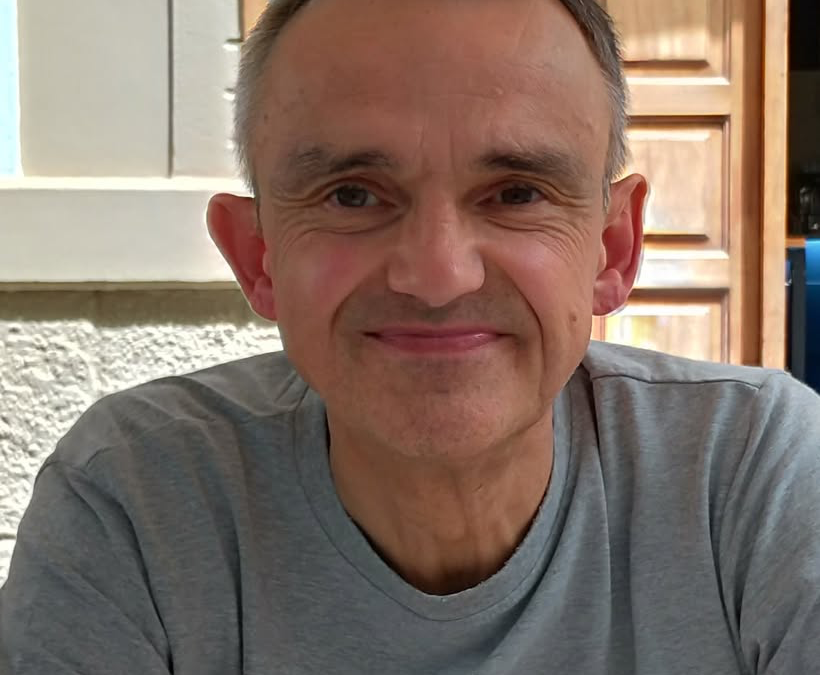
Mark English is Policy and Media Advisor to European Movement UK and an expert on how the EU functions. Mark was a university teacher, business journalist, and UK civil servant before joining the European Commission, where he worked for almost 25 years, first on education programmes and later on single market policy and economic reform. He then became a spokesperson in the President’s team and for the Irish Commissioner. He was Head of Media for the EC’s London office for six years before a secondment to the European Parliament as a communications manager dealing with tackling disinformation. After serving as adviser to the EC’s director for communication, he joined EMUK part-time in 2022.
Sarah Calvert : How has the EM changed its messaging strategy over the year, and how do you think it will evolve in the future?
Our core message has, since Brexit, been consistent: the UK’s place is in the EU. But emphasis has evolved. Under Conservative governments we focused on the disaster of Brexit and – pending reversing it – demanding achievable things. For example, we opposed the disastrous original draft of the Retained EU Law Bill and advocated for the UK to associate to the Horizon Europe programme.
Under Keir Starmer, we used every available hook to push for ditching the (in)famous ‘red lines’ before the next election – we will never know whether Starmer would have done that if he had remained in power…but sticking rigidly to them contributed to his downfall.
Andy Burnham has made clear applying to join the EU is an option for the next parliament. So we have pivoted to focus on arguing positively for that choice, dovetailing with our comprehensive rebrand.
We now have to convince voters that their own and the UK’s future will be better inside the EU and that there is a viable path to that. We should be ambitious, realistic and honest about the trade-offs and challenges. That is what our Heart of Europe 2036 target is about.
Michael Soffe : Do you think the UK system is “ready” or even “able” to combat “disinformation” leading up to the next General Election?
There is no perfect solution. Neither should we despair. That is what Russia and other perpetrators of Foreign Information Manipulation and Interference (FIMI) want!
Evidence suggests multiple attempts to interfere in democratic elections. However, UK and other intelligence services say there is little evidence of those attempts succeeding. A massive interference operation recently failed to bring about the election result Russia wanted in neighbouring Moldova. Others can learn from how Moldova defended its democracy..
One of the keys is effectively regulating tech platforms – the EU’s Digital Services Act and the UK’s Online Safety Act and linked regulations share similar virtues and flaws. The EU has been more robust on using competition law to limit tech power. The jury is out on whether its ‘Democracy Shield’ will be effective. Member states have resisted attempts to give the EU wide powers in this field.
Another key is educating the public – the EU and the UK need to do more on this.
A third key is responding based on science. That sometimes means using rebuttals and ‘mythbusters’, notably where ‘disinformation’ is ‘validated’ by mainstream media. In other circumstances, those tactics help spread falsehoods rather than combat them. A strategy that is always right is positive and effective messaging on the issues that bad actors misrepresent.
Mike Cashman : We have a clear message from Terry Reintke about the EU’s readiness to see the UK rejoin. In Mark’s view, from the EU side, what factors would accelerate the UK’s return to the EU, and what would slow it down?
I’ll pick three factors for each scenario:
Accelerate
1/ A positive approach from the UK government, accepting the conditions Michel Barnier recently referred to and ‘selling’ membership to UK voters;
2/ A clear, large, resilient and stable majority in the UK wanting to join;
3/ A dramatic turn in world affairs, such as a Russian incursion into the Baltics, or Trump launching further foreign adventures with catastrophic economic effects (we should not wish for 3/ !)
Slow down
A/ The ‘Farage factor’: fear that a future Reform or Conservative government would reverse the process;
B/ A far-right government in France or (less likely) Germany. A far-right government might block UK accession. It could also cause a crisis that would leave the EU no ‘bandwidth’ for negotiating with the UK. And it could turn UK voters against joining;
C/ Political complications in the EU or the UK. For example, an internal EU conflict over budgetary or rule of law issues. Or an inconclusive UK election result, long negotiations over forming a government or splits in the cabinet.
Finally, the European Parliament has limited power to affect accession issues. The key actors are the Commission and the member states. Any single one can block the process at any stage.
Ruth Woodhouse : In the current climate of hate, hostility and radical anti-migrant rhetoric, what gives you hope?
I think the ever-wider recognition in the UK that leaving the EU was a mistake, the willingness of the Burnham government to reopen the issue and to instigate a ‘national conversation’ and the broad welcome from the EU side are all reasons for hope. Along with what I hope is only the beginning of Farage’s and Reform’s well-deserved slide into disrepute and irrelevance.
David Eldridge : Having seen the European Commission and the European Parliament from the inside, what reforms would you like to see in the EU institutions?
During my 26 years as an EU official, I saw a lot of reform in the administration, most of it for the better. But it is rarely quick. The EU has no alternative but to take decisions by consensus, which takes time.
I think when I first joined the Commission, there was not enough control from the centre – the President’s office and the Secretariat-general. Now there may be too much – individual Commissioners and their staff can feel disempowered.
Personally, I think there is little point in discussing far-reaching ‘federalist’ reforms, because they will not happen. They would require treaty change and referendums – with uncertain results – in many Member States. Partly but not only, for that reason, several member states are implacably opposed. And it only takes one to block the whole process.
There might be more mileage (kilometrage?), with more countries set to join the EU, in moving towards what its proposers call a multi-speed Europe, with different levels of integration for different members. Much of that could be done through accession treaties, the ‘enhanced cooperation’ already in EU treaties and through building opt-outs into future EU laws, rather than wholesale treaty change.
Sue Wilson : The pro-EU mood music at the Labour conference seems to have moved. Can we begin to believe that rejoining will be in the Labour and other parties’ manifestos come the next election?
I think there is a good chance of that. The Prime Minister has said so and other pro-European parties cannot afford to trail in Labour’s wake, so are likely to become even more pro-join. But it is not a foregone conclusion – a lot will depend on effective campaigning, by EMUK and others, that helps convince not only voters but also the Westminster ‘bubble’ and key stakeholders, notably the business community. That is what our Heart of Europe 2036 target is all about.
Steven Wilson : What sort of commitment/action would it take from the UK government for the EU to take us seriously again after all the problems we have caused?
You are right that there is a continuing hangover of distrust. Relations with the UK are also far from the top of the EU’s ‘to do’ list. On the other hand, the UK coming back asking to join would be a significant political win for the EU side.
I do not think the Commission or any member state would block opening negotiations with the UK. But it is the EU that determines how fast those negotiations proceed. It ‘holds all the cards’ vis-à-vis any applicant country.
The UK will need to understand that. It will need to demonstrate serious commitment to rapidly (re)aligning UK legislation with EU law and to overcoming domestic political challenges. It will need to refrain from exceptionalist demands (NB – we will NOT in practice need to join the euro and the EU might not even want us to).
The UK should also make a positive case – though not in the form of arrogant-sounding public proclamations – on how having the UK back will benefit the EU, economically, in the security and defence field, and perhaps in better equipping it to defend democracy and European values.
Lisa Burton : Just how much of a threat to the EU are the AFD in Germany, or Le Pen’s Rassemblement National in France? Is it overhyped, or could it truly damage how the EU functions?
I do not think the threat overhyped.
Le Pen has retreated from Frexit, now French voters have seen Brexit! But her programme is incompatible with EU membership. She promises a referendum to amend the French constitution in ways conflicting with the EU Treaties. She proposes unilaterally to cut France’s EU budget contribution in half – putting France at daggers drawn with the Commission and other member states. Le Pen’s economic programme – like that of her far-left rival Jean-Luc Melenchon – could create a ‘Liz Truss effect’ at the heart of the eurozone. An EU-wide economic crisis could follow.
I cannot see Le Pen following Giorgia Meloni’s conciliatory path. However, I think the damage to the French economy could be so immense that she would in the end have to back down. The EU should survive a Le Pen presidency.
The AfD is a long way from being a federal governing party, as others will not share power with it. Parts of it are so extremist – one activist recently called for Germany to retake Alsace-Lorraine – that even Le Pen will not work with it. The unlikely event of the AfD gaining power would be existential for the EU.