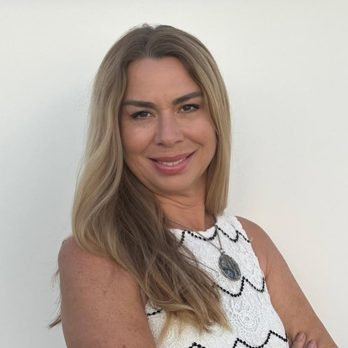
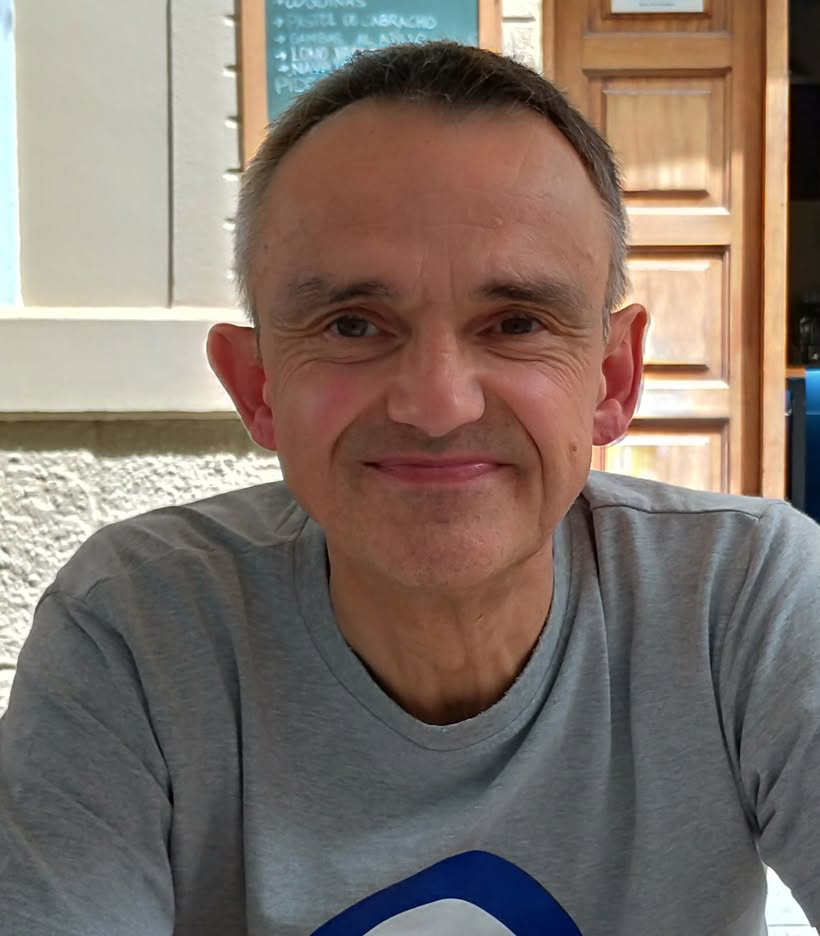
Originally from the Rhondda Valleys, South Wales, Lisa lives in the Canary Islands. She is the owner/director of a distribution company that operates in the UK and EU. She has been Bremain In Spain’s vice chair since 2020 and is now our newly elected Chair. She is also a member of the national council of European Movement UK and chair of its Conduct Committee.
Ruth Woodhouse : Do you feel that European Movement UK is sufficiently high-profile, and how could it be more so?
As the oldest UK pro-EU group, founded in 1949 with Winston Churchill as a founding member, EMUK wasn’t particularly well known outside political circles. That has changed significantly. Membership has grown from around 5,000 in 2020 to 26,000 today, with 100+ local groups, hundreds of activists, and a vast 300k supporter base. Nevertheless, becoming a household name remains a challenge.
Raising EMUK’s profile has been a priority, and we are getting there. You now regularly see and hear EMUK figures quoted across the media, on Radio 2, LBC and even GB News, with a particularly good relationship with The Independent.
Is that where we want to be? No. Are we on the right track? Yes. But in a media landscape that thrives on division, a calm, sensible voice can sometimes be the hardest to project.
Michael Soffe : How has Brexit affected running a UK-based business from Spain?
Oh yes! For 20+ years my business has distributed home entertainment media as a retailer and wholesaler: vinyl, CDs, Blu-ray/DVDs, Box Sets, movie merch, computer games and so on.
Before Brexit, Amazon ran a pan-European programme that let us distribute stock across Amazon’s EU warehouses based on demand. Around 20% of our sales went through this system, and we have never recovered around 80% of that business.
We were familiar with customs paperwork because we sell business-to-business globally, but Brexit made trading with the EU much more complicated. We now have to provide country-of-origin information for around 400,000 products and navigate much more bureaucracy. Even though we export daily, things still go wrong sometimes. It takes more time, more staff hours, and more money. It’s harder, slower and more complicated.
Helen Johnston : Do you think the stereotypes promoted in the British press regarding British people living in Spain and other European countries are problematic for our campaigning, and what can we do to counter them?
Yes, 100%. And I also think that British migrants in Spain are more stereotyped than those in France or Belgium, say. The perception that huge swathes of us voted for Brexit is a prime example: as is the argument that we are not a burden, never claim benefits, etc., but somehow migrants to the UK are. It’s all nonsense, of course. It’s hard to change this; people in the UK aren’t really interested in us, and newspapers only want clickbait, but I think one of the best approaches is to highlight individual stories and explain the issues British migrants face, while calling out disinformation when we see it. Emotions work better than facts.
Sue Wilson : What do you think Bremain does best and what do you think we could improve on?
Bremain punches well above its weight and is well known among politicians, activists, and the media, and has strong relationships with organisations such as the Embassy. This stems from the early campaigning, and your high-profile court case, our work with other pro-EU organisations, and features such as Bremainers Ask. Above all, it’s our committed members who continue to contribute to the conversation, campaign, lobby, and keep the goal of rejoining the EU alive.
I do think we could better highlight our unique position as a community of British citizens living in Spain and experiencing the consequences of Brexit first-hand. Sharing more members’ stories and issues would make what we do more personal, relevant and distinctive, while also giving us stronger material for media and social media. Doing this effectively and efficiently with the time available is the problem.
Steve Burnham : Do you think EU membership erodes the sovereignty of member states?
Simply put, no, and this is something the Brexiters never quite understood. No country is truly sovereign, because that would require complete isolation or total autonomy, which is almost impossible in today’s interconnected global world and economic co-dependency. Every time a nation signs a trade deal and agrees to rules, joins an international organisation, signs up to international laws, joins a coalition like NATO, etc., it gives up some sovereignty, because it abides by rules it did not solely make. Modern-day sovereignty is more about a nation’s ability to maintain domestic control and economic strength while resisting foreign coercion.
Karen Tuck : Do you feel that an MP for us Brits living overseas would be helpful in letting Westminster understand the issues we face; after all, we are currently unrepresented as British Citizens in Europe and the UK?
Yes, 100%. Our MP’s do not understand the issues we face, particularly post-Brexit. You may be aware that Bremain is part of a coalition effort by New Europeans and Unlock Democracy calling for overseas constituencies. We have provided evidence to select committees on this, and I have studied other nations’ systems. What is clear is that the UK government is not very good at franchising its overseas nationals. The French are excellent at doing so and allow several voting methods for their overseas citizens. It’s the system I’d like to see replicated for UK nationals abroad.
Next Month
Mark English is Policy and Media Advisor to European Movement UK and an expert on how the EU functions. Mark was a university teacher, business journalist, and UK civil servant before joining the European Commission, where he worked for almost 25 years, first on education programmes and later on single market policy and economic reform. He then became a spokesperson in the President’s team and for the Irish Commissioner. He was Head of Media for the EC’s London office for six years before a secondment to the European Parliament as a communications manager dealing with tackling disinformation. After serving as adviser to the EC’s director for communication, he joined EMUK part-time in 2022.
Please email your questions to us no later than Saturday 10 October.