
With a background in mobile phone strategy across Europe and Asia, Farrukh is dedicated to understanding and delivering solutions based on new technology. He regularly attends industry-leading conferences and has spoken on the subject to the EU in Brussels.
Farrukh currently runs a video platform, Implausibleblog, delivering lifestyle content via social media, focusing on understanding consumer behaviour with regards to digital content and digital advertising. He is a regular commentator on the political landscape, having generated over 1.6 billion impressions on Twitter/X.
Lisa Burton : You have always been very outspoken on Brexit. Has it had any direct or personal effect on your life or profession?
At first, Brexit didn’t affect me directly: it was more an ideological frustration. It never made sense to me to limit our ability to live, work, and study on the continent we’re part of, or to isolate ourselves from our nearest neighbours.
But as I became more vocal online, some brands chose not to work with us. Implausibleblog used to be just lifestyle fun: food, fashion, travel and tech. The addition of news has changed our dynamic and increased our reach such that we get in a day what we used to get in a month, in terms of impressions and engagement. The Highlights tab on Twitter helps us show some of our non-news content.
That was initially disappointing and even a little disheartening. I understand brands want to stay politically neutral, but staying silent is exactly what helped deliver Brexit in the first place. So, I made a personal vow: as long as I have the platform, I’ll continue expressing my views, because without voices like these, we risk ending up in an even worse situation.
Interestingly, some staff at the very brands that cut ties would privately tell me they appreciated my honesty, liking and engaging with my political content in private. I also see the same frustration in many people, but they feel unable to express it publicly. Having made the decision to speak out, I find myself considerably more at peace.
It feels strange to live in a time where speaking sincerely is more of a luxury than a right freely exercised by many. We can communicate instantly across the globe, yet doing so effectively and honestly remains difficult. Navigating brand neutrality in a corporate-driven world is a challenge, but thankfully some, like Lush, take a more direct approach. It gives hope that, one day, others may follow suit. How bad does it have to get before people are willing to speak out?
On a lighter note, I have many friends across Western Europe, and I’m grateful that, at least for now, Brexit hasn’t curtailed my ability to travel and visit them.
Valerie Chaplin : What do you think re the current state of the Government and do you think the UK will rejoin the EU?
The Government seems lost and confused, desperate to deliver growth while fully aware that Brexit is holding the UK back yet pressing ahead regardless. After the chaos and ideological excess of Johnson, Farage, and others, we’ve entered a new phase where even pro-European voices feel powerless to pull the UK closer to the EU.
Even small, sensible measures, like regulatory alignment, provoke outrage from Brexit hardliners. Labour risks abuse and accusations of ‘betrayal’ no matter what it does, so if it’s going to act, it might as well commit fully rather than tiptoe around it.
I don’t see Keir Starmer steering the UK back into the EU anytime soon. His reluctance to challenge populist misinformation or confront the far right reinforces the perception that Labour lacks the courage to lead on this issue. While there are voices within the party advocating closer ties with Europe, they remain marginal, on the fringes rather than shaping meaningful policy.
It was refreshing to hear Mayor of London Sadiq Khan recently call for joining a Customs Union and the EU Single Market before the end of this parliament, framing the next election as a de facto vote on EU re-entry. Given Labour’s 15 major u-turns since taking office, this may be their only path to a second term. Yet Starmer’s leadership has often been a letdown, so one can only hope Labour appoints someone stronger to guide the nation into the election.
Steven Wilson : Spain has been at the forefront of criticism of Israel & the US. Do you expect others, including the EU itself, to voice similar opposition?
Pedro Sánchez has shown that it’s possible for a liberal democracy to uphold its values without being subjugated to another nation’s folly, especially when military action violates international law.
We see occasional sparks of dissent across Europe, but not enough momentum. Europe and the US share much culturally and democratically, it’s like we’re cousins. While there are differences, from climate policy to food standards, common ground remains. Yet I don’t see enough European voices speaking up right now. Until we apply fairness equally and have the courage to call out our allies when they act wrongly, little will change.
A stark illustration of this is the recent interview between The Economist editor-in-chief Zanny Beddoes and Tucker Carlson. I used to be a fan of the publication, critical of Carlson. Today, it feels reversed, Carlson spoke with more moral clarity than Beddoes. It’s a new, upside-down norm we must navigate. What’s missing is a collective European political response to these crises. We saw one approach to Russia’s attack on Ukraine and a very different one to Israel’s strikes on Gaza. Now, as war with Iran grows unpopular across Europe, meaningful criticism is still lacking.
I don’t want fewer ties between the UK, EU, and US. I want better standards, objectives, and a collective approach to peace and stability. Diplomacy shouldn’t disguise rightful criticism; otherwise, the public is left frustrated with weak, vague statements from politicians.
Anon : Should the King’s state visit to the US be cancelled?
In my view, yes. It’s hard to see how he could attend in good conscience while the US is flouting international norms, and President Trump is actively trolling our Prime Minister, Keir Starmer. Even if I’m no longer a fan, he’s still the UK’s PM.
How can we persuade the Government that mimicking far-right immigration policies is doing more harm than good, not least to themselves?
Labour has entered office with good ideas, but poor planning and delivery have forced repeated U-turns. Pension means-testing was set too low, the two-child benefit cap flip-flop exposed contradictions, and MPs were suspended for supporting policies the Government now celebrates.
Worse, in trying to appeal to the public, Labour has abandoned its values on immigration. Instead of promoting the benefits immigrants bring, as Canada’s Mark Carney has done gracefully, Labour is echoing hardline, far-right talking points. Home Secretary Shabana Mahmood’s immigration stance, now backed by Conservative leader Kemi Badenoch, is a glaring sign of how wrong the approach has gone.
This is a tone problem from the top. Starmer has chosen the easy path: mimic the Conservatives and Reform UK to appeal to a disenfranchised audience, rather than explain why a fair, progressive immigration policy benefits the country. In doing so, he alienates the left and centre, and fails to unify the wider public.
After 14 years of Conservative chaos, we deserved stability, integrity, and decency. Instead, Starmer has repeatedly abandoned those principles for short-term political gain. Unless Labour finds a new direction, I don’t see the party recovering under his leadership.
Sue Scarrott : With so many pressing matters needing Government attention, such as Brexit, cost-of-living, privatised water scandals, state of the NHS/Care sector, FPTP voting system etc, what should be the Government’s main priorities?
Nobody expected Labour to fix 14 years of austerity and division overnight, real repair will take time. In a crisis, good leadership first rallies people, sets a bold tone and direction, then methodically tackles issues.
Labour has fallen short here: messaging has been weak and inconsistent, and “growing the economy while making Brexit work” feels contradictory and uninspiring. Gaslighting the nation that post Brexit trade deals make up for the loss in GDP from being in the EU really is insulting.
Labour’s policies often seem driven by fear rather than ambition. Labour scaled back its strong green industrial revolution over bond-market fears, yet clear communication of its benefits (jobs, cheaper energy, security) might have won support for the investment.
The top priority must be genuine vision and ambition: end defensive spin, reject narrow interests, and lead with strong principles. Why, for example, no full ban on offshore donations? Because Labour themselves have received millions in donations from off-shore firms. Labour can’t fix the broken system if they themselves are exploiting it.
Principles first, then sharper, positive messaging. Traditional media will criticise anyway, but bolder choices would gain huge backing from online and new media. I’d love something positive to tweet about, not immigration policies so awful they’re endorsed by Kemi Badenoch.
20 months after the landslide, it’s odd to say, but Labour’s priority needs to be a clearer vision and better execution. The 15 major U-turns reflect poor delivery, not necessarily bad ideas. If the winter fuel allowance cap was set higher, it could very well have been a Labour success story right now.
People want to recapture that electric election-night energy, the surge of hope, the bold momentum to rebuild Britain after years of stagnation. Instead, the Government under Starmer and Reeves has settled into a cautious, low-momentum style that’s increasingly reminiscent of Harry Enfield’s Kevin the Teenager: sulky, defensive, moaning “it’s so unfair!” at every challenge, lacking the drive and spark that once inspired voters.
Matt Burton : You have over 120,000 followers on X. Have you seen your engagement drop or rise since Elon Musk took over?
I began posting political content before Musk’s takeover, and I haven’t noticed any major change in overall reach: the more followers I gain, the greater the potential visibility. What I have observed, however, is that follower count isn’t as crucial as posting frequency. That said, having more people see a post initially does help amplify its reach.
One thing that can be disheartening is seeing a post receive 10,000 likes while another, equally valid post, gets only 50. Often, reach isn’t determined by content quality, which can be frustrating, especially for videos that take far more time and effort. But this is a common experience across social media, not just X.
Recently, I’ve noticed a platform-driven change. According to Grok, it was introduced in January 2026, but I only really noticed it in March. Now, if I like posts about flowers, I start seeing more flower content; if I like posts about food, I see more food. It’s reminiscent of X’s early days when it was old-school Twitter, and it’s refreshing to see how quickly the algorithm can respond to what you actually want to see, almost in real time.
What all of this really shows is that it’s not the content itself but the platform that determines reach, scale, and visibility. We’ve shifted from a culture of sharing and expressing views freely to one where some content is amplified, some is limited, and some lands somewhere in between. As a result, content is often shaped to fit perceived algorithmic preferences rather than simply reflecting what you want to say. And it doesn’t help that most social platforms operate the same way. They are designed to capture attention and spark engagement, which is a curious way of conditioning human interaction.
David Eldridge : Can Starmer survive?
At a time when the UK is being drawn into conflict with Iran, even as Labour insists it is not engaging in an offensive role, Keir Starmer appears far more level-headed than any of the Conservatives. Yet it is frustrating to hear the repeated line of “defensive, not offensive,” when UK bases are being used to arm bombers, and we know strikes are occurring in Iran. What began as a commendable stance of standing up to Trump and avoiding entanglement now seems undermined, with the country being pulled in from the sidelines.
On the question of Starmer’s survival as Labour leader, the initial optimism has given way to concern. His response to the Farage riots was promising, but subsequent actions suggest a decline: from the “island of strangers” remarks, to publicly calling for the resignation of the former West Midlands chief constable over a misjudgement, despite having made his own far greater error by ignoring advice and appointing Peter Mandelson anyway.
Starmer, Yvette Cooper, and Shabana Mahmood were all impressive in opposition. But in office, they have changed. Mahmood has taken a hardline stance on immigration and asylum, aligned with Kemi Badenoch’s approach. Cooper endorsed proscribing a group later deemed lawful by the UK High Court. And Starmer jumped on the antisemitism bandwagon over the Maccabi fan ban, unable to distinguish between public safety and antisemitism, despite the Green Party leader, who is Jewish, stating it was not antisemitic.
Can Starmer survive? Perhaps. Many Labour voters demonstrate the same loyalty to a leader that Conservatives have long exhibited. In an ideal world, leaders would be held to the same scrutiny as opposition figures. But British politics is increasingly driven by loyalty, regardless of actions or errors. That’s why Boris Johnson survived for so long, and why Starmer might as well. 20 months after the landslide, it’s odd to say, but Labour’s priority needs to be a clearer vision and better execution. The 15 major U-turns reflect poor delivery, not necessarily bad ideas. If the winter fuel allowance cap was set higher, it could very well have been a Labour success story right now.
People want to recapture that electric election-night energy, the surge of hope, the bold momentum to rebuild Britain after years of stagnation. Instead, the Government under Starmer and Reeves has settled into a cautious, low-momentum style that’s increasingly reminiscent of Harry Enfield’s Kevin the Teenager: sulky, defensive, moaning “it’s so unfair!” at every challenge, lacking the drive and spark that once inspired voters.
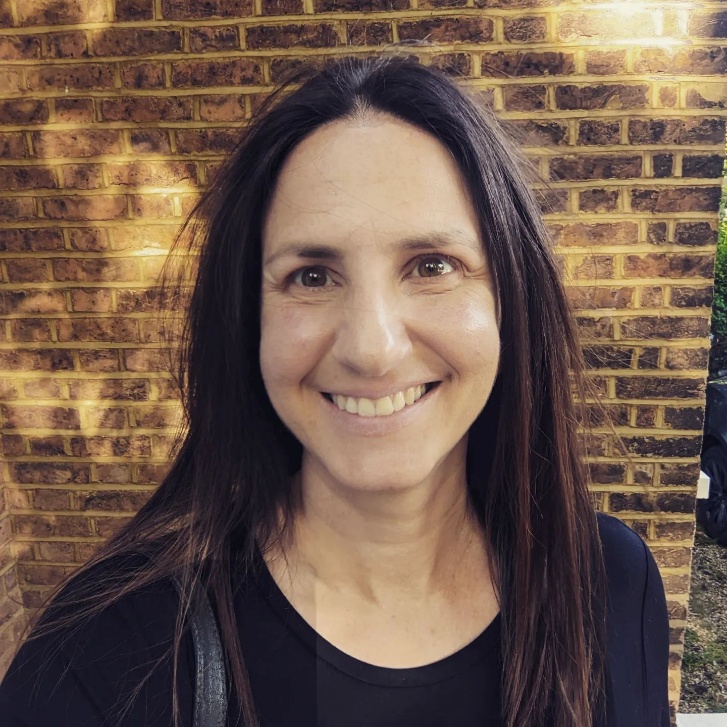
Coming next month … Professor Christina Pagel
Christina is professor of operational research at University College London, using mathematical tools to support delivery of health services. She is also President Elect of the UK Operational Research Society and a Fellow of the Academy of Medical Sciences.
Since January 2025, she has been tracking the authoritarian actions of the Trump administration (trumptractiontracker.info) and writing about their implications for the US and internationally.
Christina is passionate about healthcare and defending liberal democracy and is a regular commentator on social media, with 66k followers on Bluesky and 176.5K followers on X.
If you would like to submit a question(s) for Christina for consideration, please email us no later than noon on Wednesday 8 April.