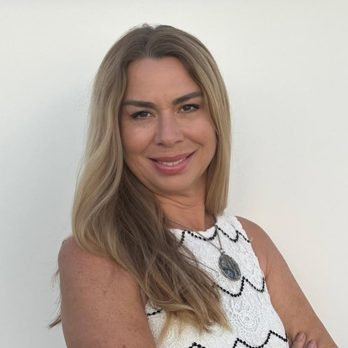
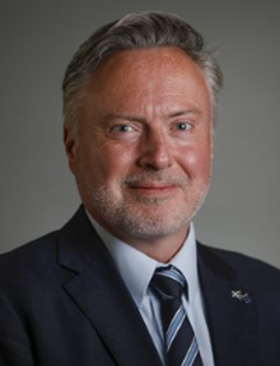
Alyn Smith – Scottish National Party MSP
As well as being the MSP for Stirling, Alyn serves as Convener of the Criminal Justice Committee and Deputy Convenor of the CPG on Tourism. Prior to being elected to the Scottish Parliament, Alyn served as the MP for Stirling for 5 years and as an MEP in Brussels for 16 years, where he represented Scotland.
Alyn continues to be a strong advocate for independence in Europe and serves as the Vice President of European Movement Scotland.
Michael Soffe : If you had one piece of advice for those of us who wish to “Rejoin”, what would it be?
Don’t fight old battles and don’t expect any favours. We’re not special – the EU’s first priority will, quite rightly, always be the members inside the club, not others outside (however near or far). Even in the last few weeks, we have seen a supposedly serious UK think-tank come up with a lamentable blueprint that was full of “cakeism” nonsense but did not have any reference to the overriding fact that the EU has its own interests too.
Ruth Woodhouse : To what extent is the Scottish parliament able to engage with the UK parliament regarding Brexit and future relationships with the EU?
Pretty limited. There is the Partnership Assembly, which some folks are very excited to be part of, but in my experience it is ineffectual and disengaged even from a Westminster perspective. We’ll take what opportunities we can to engage and be vocal. I’m hoping to be the Convener of the EU Cross Party Group in Holyrood and welcome all engagement, but the primary talks are government-government and pretty patchy.
Andrew Hesselden : How can we influence the Scottish and UK governments to see the value in mutual Freedom of Movement of People (in Europe) once again?
We don’t need to convince the Scottish government. I hope the fact the former PM talked of “an island of strangers” keeps him awake at night. There might be more of an opportunity going forward but I have my doubts. My suggestion would be that the campaign stresses that which has been lost can be got back and focuses on those advantages we win with EU membership. Sadly, I’m not sure many people articulate it beyond passport queues.
Lisa Burton : Many young people have grown up knowing only post-Brexit Britain. How do we make the case for Europe to a generation that never experienced freedom of movement?
This is one of my biggest worries. You don’t miss what you’ve never had. Same as when tuition fees were introduced in England, it became the new normal within a couple of years so quickly due to student turnover. The Irish European Movement have a lot of good materials on EU advantages which could be repurposed, but there remains a pressing need to make folks aware that there are huge life-changing advantages with EU membership they’re not getting.

Matt Burton : Having served in the European Parliament, Westminster and Scotland, what differences in political culture struck you the most? What could each learn from the others?
My biggest point would be to scrap First-Past-the-Post as soon as possible. If you are an ambitious politician and want to get things done, knowing that you will at some point need the votes of your opponents for things you care about gives an entirely different context to discussion and personal interactions across parties. In Brussels and Holyrood no vote will be won without a majority; as nobody has a majority, it will always need to be a compromise. The idea that FPTP delivers firm government is a fiction; it delivers politicians who think in terms of goodies and baddies.
David Eldridge : In two speeches as a departing MEP you famously asked the EU to “leave a light on” and to not let Scotland down. How are they doing on those fronts?
There’s no doubt in my mind that if, as, and when Scotland votes for independence, we will have allies aplenty who are keen to help us through the process. Equally, I don’t expect the EU to do us any favours or do our job for us. We presented a proposal for the Northern Ireland regulations to cover Scotland also but given this did not have UK support where there was sympathy for us, the EU was not going to step into the constitutional order of a third country. Where NI was different was that it had several international agreements with an EU member state.
Steven Wilson : How do you square the circle between the arguments for being part of a union (EU) and the arguments for leaving a union (UK)?
Because much as they use the same words they are self-evidently not the same thing. My local bowling club has a President – she doesn’t get to live in the White House or illegally bomb Iran. The EU and UK are political constructs with different histories and to my mind the UK has served its time. Scotland can build a new state on ancient foundations but fit for the next decades.
Susan Scarrott : Is there still a strong desire by Scottish voters to rejoin the EU?
Yes, not unanimous obviously but we’re at settled will levels of support, 73% at the last opinion poll and that is without much of a campaign. This would also be far higher but for the Scottish politicians of UK parties not being able to articulate their views because their head office says no.
Next month
With Sue Wilson retiring next month, and assuming the proposal is ratified at our AGM, Lisa Burton will be taking over as Chair of Bremain in Spain. So, what would you like to ask the new chair? Please email your questions to us no later than Tuesday 8 September.