Bremainers Ask …… Madeleina Kay, EU Supergirl

Bremainers Ask …… Madeleina Kay, EU Supergirl

This month in our feature Bremainers Ask, we talk to EU Supergirl Madeleina Kay. Maddy is a writer, illustrator and political activist from Sheffield and  is Young European of the Year 2018, awarded by the European Parliament and the Schwarzkopf Foundation .

Maddy has been interviewed on television and radio on programmes such as Daily Politics, Channel 4 News, Question Time and Any Questions. She also wrote and illustrated  “Theresa Maybe in Brexitland”. She takes an active role in campaigning and produces artwork for multiple Remain projects, including Bremain in Spain (see pic below). Maddy can often be seen campaigning with Alba White Wolf, her white German Shepherd. 

Madeleina Kay with artwork for Bremain

Barbara Leonard Why do you think so many young people are not politically active?

Madeleina Kay: This is something that I speak about a lot and I do get some stick for criticising the apathy of young people. But I find it incredibly frustrating that my peer group are so disengaged from the political debate and unconcerned about the impact of Brexit on their future. I have seen some promising shift in attitudes recently, there has definitely been more young people turning up to marches and events or sending me messages and engaging online. I 100% support other grassroots youth activists who campaign along side me, but it is sadly my experience that the majority of people who are campaigning against Brexit are older people who are doing so on behalf of their children and grand-children. 

It was one of the reasons why I chose to drop out of University to campaign full time. Because there weren’t any youth activists or voices being heard and because I felt very isolated amongst my peer group at university. I would come to classes and be talking about the latest developments in the Brexit saga and they would be talking about who threw up in whose toilet the night before. 

There are many reasons why we see this trend in participation in the political debate. I think it all stems from a lack of political education in our schools – people don’t engage with things they don’t understand. And the level of knowledge about UK politics, never mind EU politics is abysmal. I believe quite passionately that we should have compulsory civic education that teaches people about how to be good citizens and active participants in democracy. I also think giving votes to 16-17 year olds is the best way to engage people in the political debate from a young age and hopefully set the precedent for life-long participation in our democracy.

Other ways to engage young people would be to widen the range of voices on UK media, our political narrative is dominated by pale, male and stale career politicians who fail to represent the diversity of British society. People are bored to death of listening to them and many just switch off to any news on Brexit. But politics is fascinating, and highly dramatic (the current state of British politics is like a soap opera!) if we can make the debate more engaging through how it is communicated, we will widen the audience for the messages we are trying to share. I think comedy, humour, satire, music, protest songs, cartoons, badges and stickers are all great, alternative ways of engaging people’s attention and sharing our message. The “Bollocks to Brexit” stickers are especially popular with the youth at music festivals.


Maddy at EU Parliament

Pat Kennedy: How do you think your incredible journey in the fight against
Brexit may have changed your future plans?

Madeleina Kay: The UK’s vote to leave the EU has been a life changing experience for many people across our continent.

Brexit affects all of us in the EU by stripping away our rights, damaging our future opportunities and devastating the economic and social prosperity of our country.

For me personally, the last 2 and a half years has been an unimaginable roller coaster of an experience, emotionally and physically exhausting, whilst also being exciting, dramatic and deeply fulfilling. I have learned a lot as an activist over their period – nobody ever taught me how to be a political campaigner – but I’ve figured it out as I go along, analysing and responding to what has been successful and wasn’t hasn’t. I was always very good at “self learning” as a student – less so at doing what I am told! I am also conscience I have improved as an artist, writer and performer – They say “practice makes perfect” – but the experiences and opportunities I have had, and the work I have put in myself shows in the quality of my illustrations and performances now compared to when I first started. 

I am proud of everything I have achieved and incredibly grateful to all the people who have supported me along the way. As someone that has always been a fairly solitary character, this journey has taught me the power of people and communities to come together, speak out for what they believe in, love and support each other and achieve great things.


Michael Frederick Phillips: Where do you see your future, Maddy – Illustrator, Teacher, Musician, Politician or something else?

Madeleina Kay: I get asked this question quite regularly. A lot of people assume that my campaign is purely about stopping Brexit and come March 29th that will be the end of “EU super girl” and I will go back to my life before as a Landscape Architecture student.

Maddy on PV March 20 Oct

But the reality is my activism is much bigger than just Brexit, I want to address the fundamental issue of Euroscepticism and populism that has resulted in Brexit, that also threatens member states across the EU. The EU continues regardless of what happens with Brexit and I am very keen to work with pan European campaigns to improve participation in European democracy (especially youth turn out for the 2019 May parliamentary elections), to promote European values, history and culture, to improve education and understanding of the European parliament and, if need be, to lead the campaign to take the UK back into the EU (in the horrific instance that Brexit occurs). 

I also campaign on a variety of other issues, one of my children’s books is about refugees and I go into Primary schools to give assemblies; another book is about the ‘Save Our Trees’ campaign in Sheffield; I am also heading a vegetarian/vegan food labelling ECI; My work as an activist will not cease with Brexit. And in that capacity I hope to continue to utilise my skills as an artist, a musician and a writer. For me, creativity is a means of exploring, engaging and communicating ideas, and as long as we have an imperfect world there will be battles to fight.

Alastair Stewart: Why do you think the government are so reluctant to hold a second referendum?

Maddy with Guy's fridge

Madeleina Kay: Brexit originated in the Conservative party, they have manufactured the crisis we are currently suffering, it is a symptom of the internal dispute within their party.

David Cameron thought that holding a referendum on EU membership would solve the dispute, instead he has unleashed untold evils and furthered divisions within his party and the UK as a whole. 

Theresa May’s government are now bound by the outcome of that vote because they promised to deliver on the result of the referendum, even against the national interests. If the Conservative government deliver a People’s Vote, particularly one that turned a Remain result, the fury and vitriol within their own party would reach boiling point, the rabid Eurosceptics would see their victory thwarted and they will never accept that. I think it is just a sad but recurring instance of the Tories putting party before country. Personally I think we will only achieve a people’s vote if we shift the Labour party’s position. If Labour, Lib Dem, SNP, Plaid Cymru & Green parties back a people’s vote, we only require a handful of principled Tory MPs to rebel and we’ve achieved the means of changing the course of history for the better and getting our country back from the brink of this disaster.

Madeleina Kay

The Chipper Family

Archie Chipper (age 10, almost 11): Does Alba White Wolf enjoy going on anti-Brexit marches?

This is a very good question because Alba White Wolf doesn’t have a choice – it’s me, or my Dad that decides whether she goes out campaigning! So its our responsibility to make sure she is happy and safe. Lots of people ask whether she minds wearing the costumes, because I often put a t-shirt, bandana or a silly collar on her – but she doesn’t mind that at all! She’s lets me put it on her without complaint and she never pulls it when we are out. However, Alba White Wolf is very anxious because she is a rescue dog. We got her when she was 6 months old, she had been born on a puppy farm, so she wasn’t socialised properly and she was very traumatised. She is now 3 years old and she is much calmer than she was, but she still gets stressed out by other dogs and tired easily at the marches – But my Dad gets tired easily so he usually takes her home for a nap when they’ve both had enough! I’ve actually had to stop taking her with me so often, because it is very difficult travelling with a dog; trying to find pet friendly hotels, restaurants, most event venues won’t allow dogs in, I can’t take her on the London Underground because you have to carry dogs on the escalators, I also stay with lots of different people and they have pet cats (Alba is crazy for cats!) We took her to the Wooferendum dog march in October and she enjoyed that – she was actually better behaved when there were lots of dogs than when there is just a few – She is a White German Shepherd and she likes to round them up and lead the pack! My Dad tells me that she is always very sad and mopey when I leave her at home and she doesn’t play with her toys – So I think the answer is yes: she would rather be marching with me than left home alone!

Oscar Chipper (age 12.5): How many boyfriends have you had?

Madeleina Kay: Given that I am a super girl, you’d be disappointed to know: not very many. I’m far too busy fighting Brexit to find time for a boyfriend! In fact for the last 2 and a half years I’ve actively avoided it! But I’ve always been a bit of a “lone wolf” – and the boys I have dated have never been that nice to me – so maybe I need to learn to pick better ones?! That can be my mission after we stop Brexit! I have met some fantastic, inspiring and caring people through campaigning and made memories and friendships that will always stay with me. 

At the People’s Vote March on Oct 20th, Maddy recorded this video for Archie and Oscar who were unable to get to London:

Jo-Jo Chipper: What is the most unusual public appearance you’ve been asked to do for the Remain cause?

Madeleina Kay: This is a difficult  question; It depends how you define “unusual”. In terms of media appearances, the final episode of the Daily politics show, which consisted of a “Summer tea party” on a blazing hot day in June, with a mad set of cardboard cut-out politicians, interspersed with real politicians and an impersonator who were rotated in a “speed dating” style fashion, around a table with coffee mugs full of lemonade and a chocolate caterpillar cake that melted in the heat. The presenter asked us some fairly bizarre and trivial questions, like “How is the Brexit Crime fighting going?” without time to give any meaningful response. It was a suitably Alice in Wonderland level of bizarre for a tea party.

But in terms of events I have been invited to; travelling to Warsaw to speak and perform at the Schuman Foundation report on the Brexit and Remain campaigns was an amazing opportunity. Speaking at Manchester Design Festival, was a privilege that commended my achievements as an “artist” as much as a “political activist”. But my favourite grassroots events have to be the boat parties – we’ve done 2 now on the Thames – The first time I dressed as a pirate, the second as a sailor. They are so much fun, we have a great time and the videos/photos from the trips are always very strong.

Madeleina Kay

Thanks to Maddy for taking part, next month we have Labour MEP Seb Dance answering your questions. You can read more about Maddy on her website here: Alba White Wolf

Sue Wilson talks Brexit on Europeans In!

Sue Wilson talks Brexit on Europeans In!

Listen to Europeans In Brexit Special on Barcelona City Fm, covering the history of Brexit, an interview with Sue Wilson, chair of Bremain in Spain and find out about her legal challenge to stop Brexit! Co-hosted by Annette Pacey and Amy Holden. Sue features from about 23 minutes in but have a listen to the whole piece as it’s all about Brexit and worth listening to. 

Votes for Life Campaign Update

Votes for Life Campaign Update

Harry Shindler MBE emailed us today to send the following message to supporters of the Votes for Life campaign. His case will be heard at the European Court of Justice on November 26 2018. 

Harry Shindler MBE

Update on the ECJ ruling of Nov 26th 2018

Summary from the Action for Expats Crowdjustice page – 

The ruling given on 26th November in Luxembourg is disappointing.  “Catch 22” one might say.   It can be read in full HERE.

To summarise: the service of Article 50 Notice and the negotiations have not resulted in any loss of citizen rights since the final agreement is not yet signed and there has been no ‘final act’. The Article 50 Notice is only ‘preparatory’.  So the court cannot make any ruling until the rights have been lost (!). 

By that time the UK will be out of the EU. Catch 22 indeed. 

Note however that the ruling implicitly admits that the Article 50 Notice itself is NOT a final act, merely preparatory. That may be of some help to the Maugham case currently being heard in the CJEU.

It is astonishing that the judges made no mention of the core claim of the case: the discrimination against those UK citizens who were denied a vote in the 2016 referendum.  Surely this is matter of EU law in itself , and should not depend on proof of loss of other rights?

Julien Fouchet will be submitting an urgent appeal to the Court against its ruling of 26 November within the next few days.  We need to raise more funds. The target will be increased to £60,000. Please support if you can, and share this call for funds with others.   Thanks from all at the AFEV team.  Harry Shindler never gives up, nor will we! 

You can read the ruling in full by clicking here and The Guardian’s report on the ruling here.

Don’t stop, let’s have a People’s Vote!

Don’t stop, let’s have a People’s Vote!

A Bremain in Spain People’s Vote Toolkit 

Following on from the incredible success of the People’s Vote March on Oct 20th 2018, we at Bremain in Spain want to provide you with all the information and tools required to ensure that we keep up the pressure and momentum to secure a People’s Vote on the final Brexit deal, with the option to Remain.

We need the support of all of our members and to make things easier, we have brought together links to all current and upcoming campaigns and events. You can choose to participate in as many as you would like, but would suggest that you join in all. Please don’t forget to share far and wide with family and friends – just copy and paste the link into your Facebook timeline or share it on Twitter. 

This video below will hopefully motivate you to get writing and clicking! All of the links from the video are listed underneath. 

Best for Britain
Let Us Decide

Best for Britain –  Demand a People’s Vote on the final Brexit deal – with an option to Remain – by writing to your MP today. 

Demand your vote 

Your voice counts.Tell your MP you want a Final Say on Brexit by leaving a Voicemail.

Final Say App

Politicians have had two and a half years to make Brexit work. Parliament is deadlocked. The best way forward is to take this decision back and let the British people vote. It is time to let us decide.

I want the final say on our terms with the EU, with an option to stay in.

Let Us Decide

People, not politicians, must have the final say.

Write this Wrong – MPs will vote on the final Brexit deal in just a few weeks. It looks like it’ll either be a bad one or no deal at all.

But there’s another option – a People’s Vote on the Brexit deal. So we can judge for ourselves whether it’s what we were promised.

They’ll only do it if they feel enough pressure from voters. So take a minute now to email your MP:

Personalise the template email. Even just a sentence on why you want a vote.

Write This Wrong

Include your full address. So your MP knows you live in their area. Be polite…. Your MP is more likely to respond.

Write This Wrong

Letter Storm

Not Buying It – Write to your MP today. People’s Vote have  made it really easy:

1 Tell them what worries you most about the Government’s miserable deal
2 They’ll personalise a message for your MP

Write to No 10

Just email the PM and tell her that you want a People’s Vote – simple!

Email the PM

10 Downing Street
Houses of Parliament

Write to any Peer

Beginning of email/letter… Dear Lord/Lady X
End of email/letter… Yours sincerely
Envelope… The (Rt Hon. the) Lord/Baroness X

Address your email to a specific member and send to: contactholmember@parliament.uk

Bulk emails to members are not accepted. If more than six copies of the same email are received, all will be deleted and you can only send six per day.

There is a list of some Peers’ personal email addresses in the Files section of the Bremain Facebook Group.

Write to a Peer


People’s Vote Petition

We, the undersigned, demand a People’s Vote on the Brexit deal.

People’s Vote Petition

People's Vote
Final Say

The Independent Petition

In 2016, the people were given their say on the principle of whether to stay in the EU or leave.

Now the facts are becoming clearer, it’s time for the people to have the final say on the real deal – before it’s too late.

Christian Broughton, Editor, The Independent

The Independent Final Say Petition


Some further useful lobbying tips:

Writing to MPs (Some info courtesy of Scientists for EU and the 48%)

Write a personal message and send it directly to your MP, explaining how Brexit affects you and your family and be clear about the action you are asking them to take, e.g. support a #PeoplesVote referendum, support the Overseas Electors Bills. Ask what you can do to support them to back you. Please also cc the Chief Whips – Julian Smith ( julian.smith.mp@parliament.co.uk ) for the Conservatives and Nick Brown (nick.brown.mp@parliament.co.uk ) for Labour.

Here are some quick and effective golden rules to mention in your letter:

  • If you’re disenfranchised, try adding this 

‘As a British citizen living in Spain, I, like many others, have no representative in Parliament. Therefore, whilst I appreciate that you are under no obligation to reply to communication from anyone who is not a member of your constituency, I would ask you to make an exception.’

You could also add that you still have influence in their constituency as you have family & friends living there.

  • Ask him/her to be prepared to reject the deal if it’s bad (which it will be).
  • Tell them that the deal must be judged in comparison to what we’ve already got.
  • Tell them that the criterion for good/bad is what it means for the health, security and finances of you (and your family and the community you live in).
  • Tell them that they should not support a deal if their constituents don’t.

Writing directly to your representative is one of the most effective means of making your voice heard, and is vitally important at this late stage. If you have already written – your job is to ask as many friends and family members to write too. Offer to help them, show them a copy of your letter, do everything you can to make them pick up a pen (or open their laptops) and get them to write.

If you don’t get a reply, don’t give up and write again. Keeping in regular touch over Brexit is a good idea so keep their inbox full. Just because they may not have responded does not mean that they have not taken notice. The more correspondence they receive, the more concerned they are likely to be.

If you are a member of a political party, you have the right to contact the party Leader directly. As a British citizen, you have the right to contact any member of the Cabinet & Shadow Cabinet – you just need to be clear that you are writing to them in their official capacity i.e. Dear Mr Secretary of State for Exiting the European Union.

Write to regional UK media (Courtesy of Best for Britain)

While many people dismiss local media as no longer relevant, we can be sure of two things:

MPs read and pay attention to it.

17% of people in the UK get almost all of their news from local print media.Almost one in five (17%) use printed local or regional newspapers and one in seven (15%) say they use social media for local news.

Because of this, it’s important that we engage local press and it’s easier than you’d think.

Firstly, make a note of your local papers and how you can get in touch both by email and on the phone. Use a search engine like Google to find the local paper relevant to your U.K. constituency. Next, we can do two things:

Make the local press aware of actions you’re taking as part of Bremain in Spain to
fight for a No Brexit/peoplesvote/Votes for Life option to be on the table.Make sure you mention that you’re disappointed if your MP hasn’t publicly supported a No Brexit option.

Write in to your local paper’s opinion page expressing your unhappiness if your MP hasn’t publicly supported keeping the option of No Brexit/People’s Vote on the table. Talk about how Brexit is affecting you and your family and why you’re disappointed in your MP. The more personal, the better. If they are supportive, then it’s always good to thank them publicly. You can also mention you’re a member of Bremain in Spain.

Social sharing

While you may already be connected with Bremain in Spain on social media, if you’re not already, a great way to influence your friends and family is to share our posts and add your reasons for sharing. You can share articles directly from our public Facebook Page, website or any article once opened in our closed Facebook group. Don’t forget to like and share friends’ posts. 

Think about beginning the post with something neutral that personalises the piece like “this matters to me because” or “this is a really interesting read because” as opposed to starters like “another obvious reason why we shouldn’t leave.” We want to try and open up space for a conversation and not shut it down.

If friends and family comment, decide whether it’s helpful to have an exchange or just let it go. This can be the hardest thing to do (we all feel passionately!) but sometimes it’s the best way.

You can check our social media profiles regularly for new content.

If you don’t already, follow us on Twitter (@Bremaininspain) and like and follow our Facebook Page. Join Bremain as a member and receive our monthly newsletter – Bremain in Spain

 
Petitions

Here’s a link to all Brexit related petitions: Brexit Petitions

Court cases

There are several extremely important Court cases coming up and we would ask that you support them as much as possible either financially by donating or sharing on social media:

Action for Expat Votes – being heard in the EU court in Luxembourg on 26th November, which is fighting for those who could not vote in 2016 and are EU citizens. If this court case  wins – a BIG problem for Brexit. This is the case involving Harry Shindler MBE who has been very supportive of our Votes for Life Campaign. Action for Expat Votes

You can also like and follow Bremain’s Votes for Life Facebook Page

UKinEU Challenge – which has been given a 2 hour Oral hearing on Friday 7th December: ”Unusually for this type of matter, the Government will also be attending and making representations via its top Barrister, First Treasury Counsel, Sir James Eadie QC. Sir James represented the Government in the Gina Miller Article 50 proceedings: ‘R (Miller) vs Secretary of State for Exiting the European Union’ As many of you are aware, the lead claimant is our Bremain in Spain Chair, Sue Wilson and the other claimants are Bremain members too. Click for the  UKinEU Challenge Crowdjustice page or visit their Facebook Page

Wightman case – will be heard on November 27 at the ECJ to determine if Article 50 is revocable. More information can be found here.

Fair Vote Project – asking for a public inquiry into the EU referendum result and the alleged illegal activity. More information can be found here.

If you would like further advice or support about lobbying, please get in touch with us enquiries@bremaininspain.com


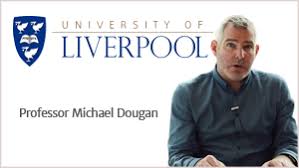
Bremainers Ask….. Michael Dougan, Professor of EU Law University of Liverpool

Bremainers Ask….. Michael Dougan, Professor of EU Law University of Liverpool

The latest of our Bremainers Ask…. feature, where Bremain in Spain members ask topical questions of prominent individuals involved in the European Union debate, is with Michael Dougan – Professor of European Law and Jean Monnet Chair in EU Law at the University of Liverpool.

He is an established academic authority on EU constitutional law and Joint Editor of Common Market Law Review – the world’s leading scientific journal for European legal studies.  Michael’s work has also contributed to wider public and political debates about European law, e.g. through written evidence to numerous UK Parliamentary enquiries, as an expert witness before various Parliamentary select committees and external advice to a range of UK public bodies and Union institutions.  Michael’s public engagement activities, including videos of his lectures before and after the 2016 UK referendum, received extensive public and media attention and he continues to be a popular authority on the matter for individuals and groups all around the world.

Univ of Liverpool Prof Dougan

Pat Kennedy: What would your solution to the Irish Border be?

Prof Dougan: The Irish border problem is entirely of the UK Government’s making. After the referendum, the Government announced that the UK would be leaving the Single Market and the Customs Union. That inevitably means having a customs and regulatory frontier with the EU – including the Republic of Ireland. But the Government also promised there would be no return to a hard border on the island of Ireland – which the Government has consistently defined as having no physical infrastructure or indeed related checks and controls. The only feasible way to deliver that promise is for Northern Ireland to remain (de facto) within the Customs Union and at least parts of the Single Market (even if the rest of the UK does not). Yet the Government repeatedly insists that Northern Ireland will be leaving the Customs Union and the Single Market along with the rest of the UK and there will be no new trade barriers erected within the UK itself – a prospect the Government describes in increasingly apocalyptic terms as an existential threat to British constitutional integrity. However, the only way to avoid that prospect is… for the UK as a whole to remain within the Customs Union and the Single Market – so we’re right back where we started! In other words: the UK Government has been promising irreconcilable things to different groups of people. The only real question is: who is going to end up being disappointed by the eventual outcome? The most obvious solution to the whole mess is to cancel Brexit, of course. Otherwise, the Government could drop its ideological “red lines” and agree for the entire UK to stay within the Customs Union and Single Market – not because I think that is a sustainable model for the UK in the long term, but because it solves the Irish border problem while also making it much easier for the UK to rejoin the EU as quickly as possible. By default, we have the EU’s proposal for Northern Ireland to remain within the Customs Union and related elements of the Single Market – while trying to find ways to minimise the need for and visibility of checks between Northern Ireland and Great Britain. For its part, the UK Government has still failed to publish any more developed or credible alternative plans for the backstop. Recent statements from the UK Prime Minister do at least give us some insight into the Government’s thinking: for example, even the backstop should be defined in terms which cover the entire UK territory (not just Northern Ireland); but there should be an option to extend the post-withdrawal status quo transitional period (as an alternative to triggering that UK-wide backstop); though either such model would then have to contain provisions allowing for its termination (since any more indefinite UK-wide backstop or transitional period would remain utterly unacceptable to Leave supporters). The problem is: the UK Government is floating those ideas on the assumption that a solution to the Irish border problem can be and will soon be found at the level of the overall future EU-UK relationship – so that both the backstop and an extended transition are guarantees that might only be needed for a few months (if they are ever needed at all). That assumption flies in the face of every rational analyst’s view – that frictionless trade (of precisely the sort required to avoid a hard border in Ireland) is simply not possible once the UK leaves the Customs Union and the Single Market; no alternative future relationship, no matter how close (and certainly not the fantastical “Chequers Plan”), can deliver the same result. At some point very soon, the conundrum will have to be solved. Because as the EU has made clear: without a workable and acceptable backstop, the entire negotiations could break down. And if that happens: it means no withdrawal agreement; no transitional period; and the prospects for a reasonably prompt negotiation on the future EU-UK relationship set back considerably. Yet such a “no deal” scenario is perhaps the worst possible outcome for Northern Ireland and the Republic – since it risks precisely the prospect of an immediate customs and regulatory border and a direct threat to economic, social and political stability – something the UK’s contradictory promises in the Joint Report of December 2017 would then do precious little to help.

Ruth Woodhouse: You address a lot of student bodies. What is the mood amongst young people on Brexit?

Prof Dougan: It’s true that an important part of my current activities is knowledge exchange – sharing the results of my ongoing research around Brexit not only with my fellow academics but also with wider public and policy audiences. In particular, I give a lot of public talks: the University of Liverpool estimates that I’ve delivered or participated in face-to-face lectures, Q&As, panel debates etc for over 15,000 people across the UK since February 2016. I try not to refuse any bona fide invitation to speak from a citizen group or NGO – and the University of Liverpool are very generous in covering my travel and accommodation needs – though I have had to introduce a “two per week” rule (albeit not always rigorously enforced) just to limit the amount of time I spend on trains and in Premier Inns. But funnily enough, not many of my invitations are for student events or indeed to address younger audiences. I usually speak to audiences largely made up of middle aged (and often but certainly not entirely middle class) citizens: angry, knowledgeable, motivated and impassioned – but certainly not young! Of course, there is absolutely nothing wrong with that. Far from it: informing the public about Brexit, let alone fighting Brexit, requires engagement with / the mobilisation of every section of society. And my experience is just that: we know there is a lot of student interest in and younger activism around Brexit. That was evident from even a glance around the national march in London on 20th October 2018.

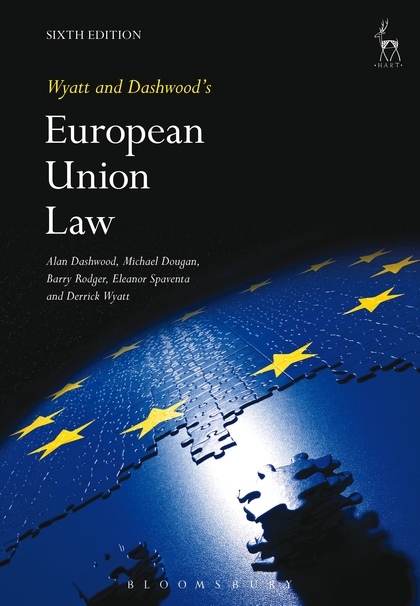
European Union Law

Alex Kennedy: Professor Catherine Barnard, another prominent expert on EU law, is also from Northern Ireland. Is there something about EU law which is particularly attractive to Northern Irish academics?

Prof Dougan: In December 2017, Leiden University organised a major conference to celebrate the 60th anniversary of their Europa Institute for the study of (what is now) EU law. Due to a last minute change in the programme, I was asked to offer a few comments on the position of Ireland in the whole debate about Brexit as well as wider EU reform. I made two introductory points: first, Ireland’s record as a fundamentally stable democracy fully engaged in the institutions of European cooperation is second to none; and secondly, Irish citizens (from the North as well as the South) have made an incredible contribution to the study and practice of EU law and indeed continue to work prominently (even disproportionately, given the relatively small population) at the forefront of such an international discipline. It would be an interesting research project for a social scientist to explore why that might be the case. It might be that people from smaller countries (especially those which have been on the receiving end of the imperial ambitions of their larger neighbours) understand and appreciate more readily the limits of “national sovereignty”, the value of rules-based international cooperation and the potential for collective action to expand the possibilities of national influence. It might well be that it is easier for the smaller participants in a multi-national union to feel more comfortable with complex, multiple, overlapping and mutually enriching identities: after all, I can happily feel like a Belfast boy, Northern Irish, Irish, British, Scouse and European – all at the same time, each one providing a unique and important part of my own sense of identity. It is also quite possible that, for many people from Northern Ireland, European integration provides such a successful model for overcoming historical legacies of conflict and division through peace building and finding ways for different communities to live and work together harmoniously and productively. Or there might be other explanations. And we need to wonder: are such features and qualities unique to Ireland (North or South)? And what should we make of the fact that Northern Ireland is also home to some of the most ideologically fanatical and delusional Europhobes of all, i.e. in the form of the Democratic Unionist Party?

Professor  Dougan wades through the rhetoric of Chequers and “chuck Chequers” to deliver another insightful reading of the UK and EU position as the clock ticks on Brexit.

Sue Scarrott: With timescales tight, how can we engage with those suffering from Brexit ‘apathy’ or those who believe Brexit won’t affect them?

Prof Dougan: It’s easy to understand why people feel apathy towards Brexit. I often feel it myself. But I find the best cure is to recite the main reasons for regarding the 2016 referendum and its aftermath as the most idiotic and self-damaging act any developed country has inflicted upon itself since 1945. 1) The referendum campaign itself made a mockery of the UK as a mature and responsible democracy.
2) The genuine risk that the UK might experience systematic regulatory and administrative malfunction upon withdrawal, particularly if we end up with no transitional period to protect us from the Government’s own woeful lack of preparations.
3) Even without any such short term disasters: Brexit is so self-evidently a disastrous act of long term and profound national diminishment – squandering our leadership and influence within one of the most important international organisations on earth, and through it, an important part of our leadership and influence in the world at large.
4) The vast waste of time and energy and money and resources that is being poured – not into trying to improve our country and the lives of its people – but simply into trying to limit the self-inflicted damage that Brexit will bring (is already bringing).
5) For millions of people now and into the future, their life choices and horizons have been diminished: many of the freedoms and opportunities and protections and aspirations that I have taken for granted throughout my entire life will no longer be open to you, or to your children, or to your grandchildren.
6) The stirring up of deep seated bigotries and long-lasting social division that will tarnish our collective morality and undermine our social cohesion for years to come.
7) Even if there were no other cause for concern, no other cause for complaint: the very fact that millions of people, here and across the rest of Europe, have seen their lives and futures thrown into uncertainty and anxiety is an unforgivable act of cruelty for which the Leave Campaign deserves to be called out as utterly morally bankrupt.
8) The damaging legacy of what happens when a democracy normalises, legitimises and indeed actively rewards and encourages systematic dishonesty by its political leaders.
9) Last but not least: for many of the leading Leave Campaigners, leaving the EU is not just an end itself. It is merely a means to further their ulterior political objectives: ill-defined and confused, but still very dangerous, hard right dreams of some sort of political, economic, social and cultural revolution in the UK. Let’s not forget the depressing correlation between many of the leading Leave campaigners and other politically and socially regressive ideologies: from climate change denial, to the return of capital punishment, opposition to equality legislation, the final destruction of the welfare state, and other hard neo-liberal economic preferences – all reflecting their natural affinity with the hard American right. And let’s not forget that Brexit hasn’t just fuelled support for anti-rational, socially divisive, politically aggressive movements in this country but elsewhere too. In America and all across Europe, Brexit has become an inspiration for nationalists and populists. See what can happen when you lie big, when you play on people’s fears, when you offer up enemies rather than solutions? You can win too! So any time I feel tired or bored or fed up with Brexit, I remind myself: this isn’t just about Brexit. It’s also about the fundamental values that we want our country to respect and represent. And for the fundamental values that we want to see reflected in the world around us. That usually works.


Prof Dougan on “Why the EU matters to you: five key reasons why the EU needs to exist”.

Sandra Stretton: Does Brexit detract from the work you were doing prior to the Referendum?

Prof Dougan: I’m an EU constitutional lawyer. By its very nature, EU constitutional law is a broad but also very fast changing subject: at any given time, there might be dozens of developments going on across the legal system which are of potential constitutional interest; and in the blink of an eye, entirely new fields of enquiry can appear out of nowhere (or indeed disappear into history). The challenge for myself and my colleagues in the discipline is to decide which developments to concentrate on studying in greater detail versus which ones we should just be aware of and keep an eye on. Whichever choices we make, the objective is always the same: to know how the EU system fits together, to understand the dynamics which are shaping its development, to draw out the key patterns and themes and to critically assess their significance for the overall system of European cooperation. From that perspective, Brexit isn’t a distraction or detraction at all: it’s one of several contemporary developments with significant implications for EU constitutional law – alongside, e.g. the continuing programme of Eurozone reforms, the serious “rule of law” problems in Poland and Hungary, debates about the changing nature of Union citizenship and free movement rights, contentions around the legal and policy responses to third country migration and the operation of the Schengen system etc. My only choice was whether to pay Brexit close attention versus whether just to keep an eye on it and concentrate on some other major development/s. Obviously, I chose the former – though the choice was certainly not a purely intellectual one. Perhaps the most important factor influencing my decision to spend a lot of time researching around Brexit was, of course, the fundamental importance of Brexit for the future of the UK and its people. I feel very strongly that it’s important for academics to offer their expertise and skills to help better inform their fellow citizens and (as far as possible) political leaders about such crucial decisions. That is particularly true when the leading proponents of Brexit – a contemptible gang of charlatans and demagogues if ever there were one – have employed tactics and arguments which (in their sheer dishonesty and cynicism) are the complete antithesis of the basic principles of scientific research and evidence-based, rational policymaking which lie at the heart of my own profession.

Many thanks to Professor Dougan for taking the time to answer our questions. We look forward to following his insight into Brexit through his You Tube videos and articles.