Bremainers on ITV News

Bremainers on ITV News

On November 26 2019, ITV News Europe Editor, James Mates, came to Nerja and Malaga to interview Bremainers Frances Gillard, David Fenton, Tamara Essex, Judy Farrar, Michael Soffe and Bremain Vice Chair John Moffett. Not everyone made the edit for the News at Ten bulletin but we really appreciate them all taking part. 

The full article by James can be accessed here – ITV News

Many thanks to James Mates, Natalie Wright producer, Dan the cameraman and everyone at ITV News for helping to highlight some of the issues facing British citizens in the run up to GE19. Thanks also go to Emilio Mojon Marquez, Hotel Manager, and the team at the Parador de Nerja for allowing us to film in their beautiful gardens – Parador de Nerja

Here’s the background to the story from Bremain Vice Chair John Moffett:

‘On a regular basis, we get requests from journalists from around the globe – but it’s always something special when one of the UK’s main broadcasters gets in touch with us at Bremain. On Monday morning, there I was in a Mercadona car park in Nerja planning to go shopping when I decided to check my e-mail and noticed that there was an urgent request from ITV News for candidates in the Málaga area for an interview on Tuesday or Wednesday. I messaged Sue and within minutes she had posted in both the Málaga and Southern Spain Bremain regional groups.

They specifically wanted a Bremain spokesperson to talk about tactical voting so, once I got home, I replied to say that I would be happy to do it. Sue has always done the vast majority of TV interviews, but as they were in my area it was time for me to step up, despite my nerves. By mid afternoon we had a good handful of willing volunteers and we were just waiting to hear back from ITV News. It turned out that they were en route from London and the reply we received was that they thought they had enough people lined up so we stood down our volunteers. However, they still wanted to interview me.

As has happened regularly, things can go pear shaped at the last minute, so I was expecting them to cancel. Nevertheless, I made suggestions about a time and place and waited for them to reply. At 11:30 p.m. Monday night, I gave up and turned the light off, expecting the interview to be called off, but by the time I woke at 7:15 a.m. the next day, ITV News had confirmed – and this time said it was OK for others to come along, too. Lying in bed I quickly tagged our volunteers to see if they could make it at such short notice and I was thrilled when some changed plans to be there.

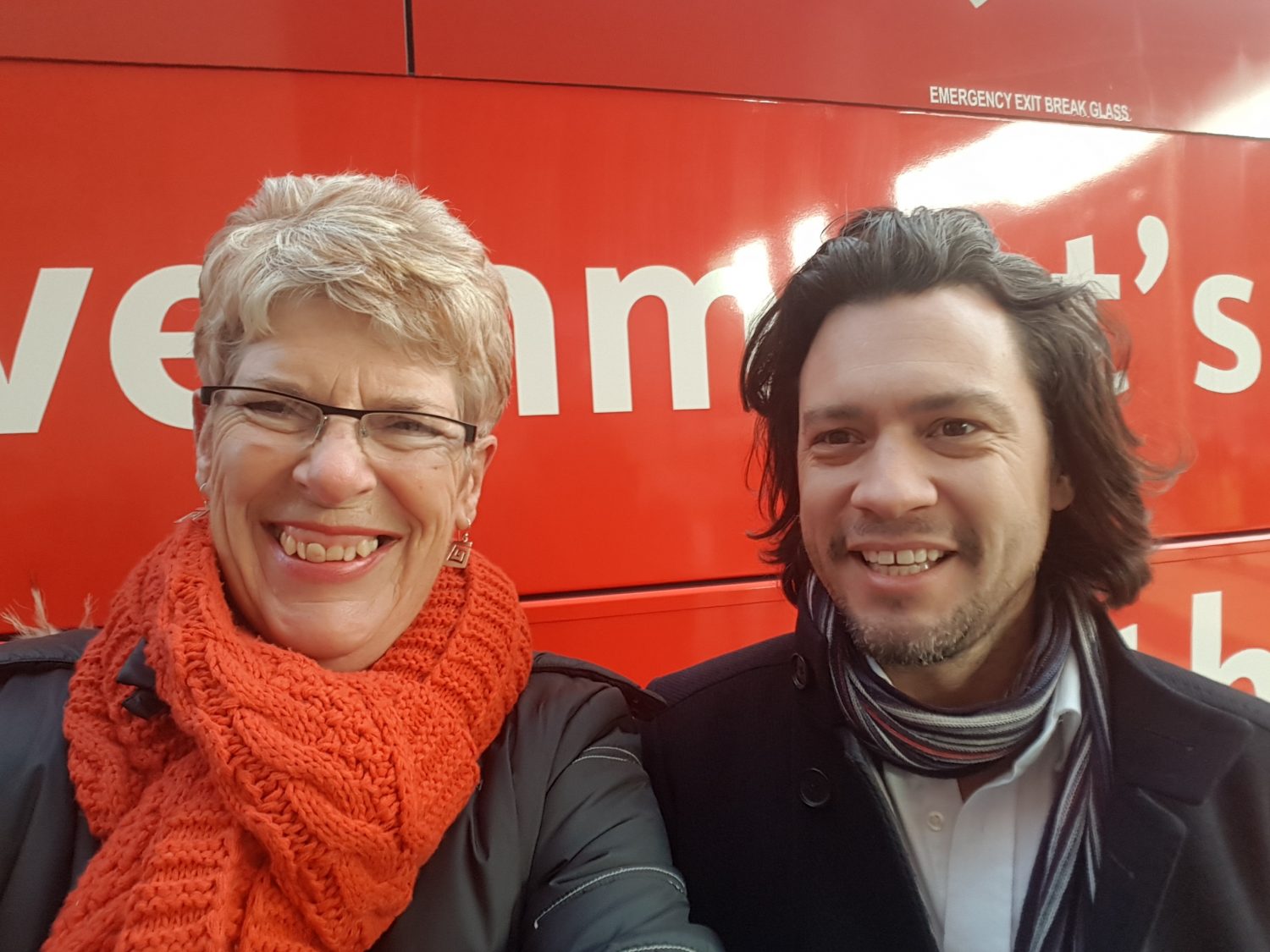
We met in Nerja at the Balcón de Europa hotel café – Frances Gillard, Barbara Hartley, Candace Edwards, David Fenton and me. We were having coffee when a familiar face popped into view hiding behind dark glasses in the hope we wouldn’t spot her… it was the Bremain Lobby Group’s star Ruth Woodhouse, who had really come along to offer moral support. Before long, the ITV News team messaged me to say that they were there and I went to meet them: James Mates, ITV News Europe Editor, Natalie Wright, Producer, and Dan the cameraman. As well as being much taller than I had imagined, James was charming and also very knowledgeable. He was able to name the previous MPs from our constituencies. We all sat and had a coffee while Dan set up shop, but the parakeets and noise from adjacent building work proved too much for our location.

Off we walked along Calle Carabeo to another viewing spot where some filming took place, only to be halted again when workmen started digging up pavements nearby. David and Candace had the great idea of using the Parador de Nerja resort, so David and I headed off to ask permission. We bypassed the queue at reception and the waiter in the garden café said it was OK – so back to get the others. However, we’d just got started when suddenly there was a man waving his arms at us, saying that we couldn’t film without permission. He was the hotel manager who had just come on duty, so our timing couldn’t have been worse! He asked what we were filming and David and I explained but he said that because it was a state owned property, we had to e-mail him with details of the participants, which news outlet and why. He said that he would contact HQ and normally got permission within minutes so I started typing!

The ITV crew had other appointments planned – including Tamara Essex, Judy Farrar and Michael Soffe, who had been contacted independent of Bremain – so time was of the essence. But, true to his word, the manager, Emilio, was back to say that we had permission. Phew! James and the crew got set up and we ordered drinks – by this time I was ready for a beer so ordered one, not expecting to be the only one and forgetting that it would be on camera but why not act like the stereotypical Brit I thought!

Frances and David had agreed to be interviewed with me, and James asked questions of all three of us, moving the microphone on the table as we went along. Very soon we forgot that we were being interviewed and it was more like a chat. Frances and David were very articulate and did a great job explaining the situation of UKinEU and describing how Brexit would affect us as well as giving their views on election issues. The clip was shown on News at Ten on Wednesday night and is now available on our Website here.

So it just goes to prove that no matter what we plan in advance, things can go wrong! As always, Bremainers will persevere to ensure that our voices are heard. Many thanks to Frances and David in particular but also to those who came along for moral support.’

Bremain BrexElection Briefing

Bremain BrexElection Briefing

Welcome to Bremain in Spain’s first Brexit/Election update on the weeks’ news. We have given a “taster” of each article and if you would like to read the whole story please click on the link. We plan to produce the Bremain BrexElection Briefing each week right up to the General Election on 12 December. Please click on the links under the introduction to read the full stories. 
General election 2019: How popular are the party leaders?

In recent weeks, the polling company Opinium has asked voters whether they approve or disapprove of the job that each party leader is doing – or, in the case of Boris Johnson, how they think he is performing as prime minister. None of the four leaders (comparable figures are not available for the SNP’s Nicola Sturgeon) emerges as especially popular.

(Sir John Curtice BBC News 17 November)

Labour pledges fox hunting crackdown with plan to boost rural police numbers

Labour’s Shadow Environment Secretary, Sue Hayman, said a £4.5m fund would be used to almost double the number of officers tasked with prosecuting wildlife crimes from 88 to 170. The cash boost will come as part of the party’s wider commitment to increase frontline police numbers, and will see rural crime units given new resources to tackle illegal hunting.

(John Johnston PoliticsHome 18th November)

Boris versus Binface: The barmiest battles in Britain’s ‘Brexit election’

Brexit will dominate the campaign, and will probably decide the result. But in these extraordinary times — Guy Verhofstadt joked this week that Netflix couldn’t hope to compete with British politics — it is not surprising that there are some unusual local battles shaping up. From Boris to Count Binface — and a French resident who doesn’t even want your vote — here are some of the oddest constituency contests to watch out for.

(Alastair Jamieson euronews 19 November)


BinFace

Commons Confidential: Your weekly dose of gossip from around Westminster.

Invisible Chancellor Sajid Javid is growing frustrated at appearing in public as regularly as Lord Lucan. Cynical liar Boris Johnson’s guarantee that he’ll remain at the Treasury if the Tories win is as redeemable as the Prime Minister’s sweet nothings to scorned Jennifer Arcuri. Javid increasingly frets, I hear, that Downing Street vetoing a head-to-head TV debate with John McDonnell is a vote of no confidence. The Tory leader’s control of his Chancellor is a parallel universe to Labour, where the shadow chancellor controls the leader.

(Kevin Maguire New Statesman 20 November)

Disinterest Looks To Be The Only Winner In This Election

Picking a “least worst” candidate is not the most inspiring choice, but for most of us, this lacklustre election campaign leaves us with just that. Who do we not trust least? Whose rash spending pledges are the least unconvincing? In the race to the bottom, the biggest risk for the two main parties is that people will bail out on them – make a new choice entirely, spoil their ballot paper or just not turn out at all. An election which seemed to take an age to call could pass us all by in a blur of indifference. Which isn’t healthy.

(Jimmy Leach Huffpost 21 November)

Chancellor skewered on TV over Boris Johnson’s wrong claim he’ll give workers £500

Sajid Javid was made to squirm by Charlie Stayt on BBC Breakfast as he was challenged over Boris Johnson’s incorrect statements on Tory policy in Teesside yesterday. The policy would see the Tories raise the threshold that earners start to pay National Insurance Contributions (NICs) from £8,632 threshold now to £9,500 in 2020/21. And eventually it would be raised to £12,500 – but there is no date for that yet. Only then would the rise be worth what Boris Johnson pledged – £500 a year. The initial rise is only worth about £85 a year, the IFS think tank said.

(Tom Davidson Mirror 21 November)

Labour in voter registration push as Tories target overseas home buyers

Labour leader Jeremy Corbyn will urge millions of eligible voters to register before the deadline as the Tories announce plans to raise stamp duty for people from overseas buying UK property. The news comes as the leaders of the four-largest Westminster parties prepare to clash in another TV set-piece on Friday evening. It comes as a two-hour long episode of Question Time from 7pm in Sheffield on BBC One, where an audience will quiz Prime Minister Boris Johnson, Mr Corbyn, Liberal Democrat leader Jo Swinson and Scottish First Minister Nicola Sturgeon for 30 minutes each. 

(ITV News Report 22 November)

Conservatives would force rail unions to operate services during strikes

The Conservative Party has pledged to end all-out rail strikes by proposing a law that would require some services to operate during industrial action. Rail providers and unions would be forced to sign “minimum service agreements” that would lay out the number and role of staff who would remain at work in the event of a strike.

(Joanna Whitehead iNews 23 November)

We hope you have enjoyed reading all the above extracts from important news stories published over the last 7 days and would welcome any comments you may have.

Happy No Brexit Day Mk iii!

Happy No Brexit Day Mk iii!

Bremain started the month of November celebrating the fact that we’re still in the EU. We asked our members to take photographs at midnight on October 31st – we wanted to know how they had celebrated our continued membership of the EU, on what should have been Brexit Day (again).

Our chair, Sue Wilson, organised her own party at a local restaurant on the outskirts of her village. Rather than hire a fleet of taxis, Sue hired the local ‘Tren Chu-Chu’ for the occasion, which was duly decorated with flags & placards. Here’s how some of our other members celebrated:

Our very own #Bremainernow

Our very own #Bremainernow

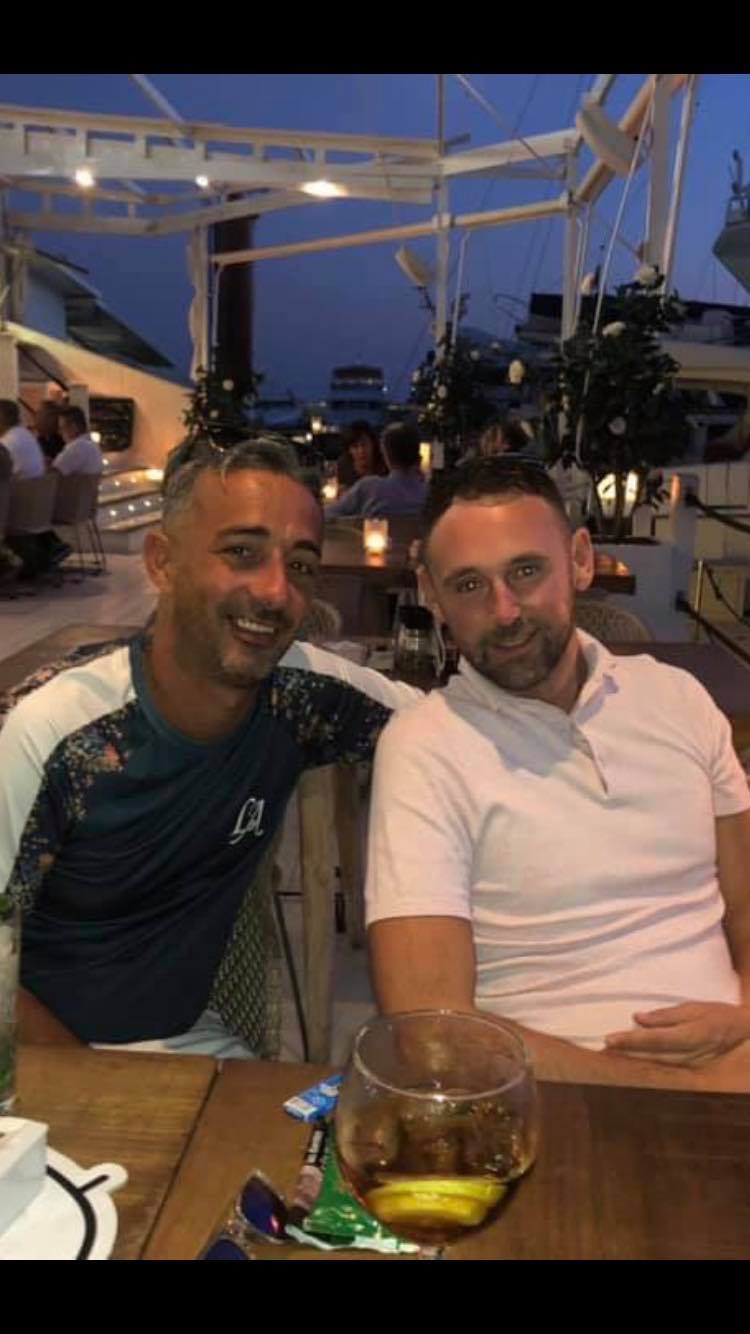
Brennon and Jamieson Robbinsleigh

Sorry seems to be the hardest word.

I suppose you could say I’m one of the first millennials being born in 1980 but my background and upbringing was far from progressive or new age, with strong old school working class roots and a service personnel family I was all too familiar with what I now call the “Rule Britannia” doctrine. 

Neither did I ever live in an area where I had an opportunity to mix with people of different ethnicities or cultures, but that didn’t stop everyone within my circles from being an expert on immigration.  When austerity really started to bite with schools, hospitals and housing waiting lists all falling into terminal decline, those messages I would hear in those same circles and the media really sunk into my subconscious, if you had asked me then I would have been unmovable on the opinion that all the fault lied with immigration, – that immigrants were taking our hospital beds, welfare cheques and council flats. 

Then the EU referendum came around, and I was prime candidacy ready for the bait of the whole Vote Leave and Farage’s narrative of take back control.  We all know the scripted lies by now; close the borders, the bus, Turkey joining, the easiest deal in history, etc., etc.  But I fell for it, I voted to leave proudly feeling like I was doing my country a service.

Then something happened to me.  This passion that was stirred in me grew and in the ensuing months after the referendum I started taking a real interest and asking myself more and more questions.  The months went on and it slowly started to dawn on me; I got it wrong, – really wrong. 

I have learnt so much about the workings of the EU and economic globalisation and the more I learnt the more the EU made sense to me.  My hostility just ebbed away as I learnt that they are not our enemies and cooperation is always better than competing individual self interests – coming together as 28 neighbouring nations on areas we agree upon only is a no brainer, isn’t it?  I don’t remember during the campaign anybody saying that 95% of the time we agreed with whatever new EU regulation was coming into force and most of the time the U.K. was front and centre architects to it. 

And little did I realise then how EU immigrants were making an invaluable contribution to our society and economy, enriching our cosmopolitan cultures with new foods, fashions, ideas and designs.  That EU immigrants pay more into the NI system than they take out.  That they are doing so many of the lowest paid and hardest jobs we refuse to do ourselves – caring for our sick and elderly, picking our fruit, waiting our tables or cleaning our hotel rooms. 

I also learnt that the vast majority of the media is right wing propaganda where the sheer scale of deliberate misrepresentation about the EU and immigration is genuinely shocking and an abuse of the freedom of speech they enjoy. 

I also met my husband a year after the referendum, who was planning to move to Spain at the time.  He was an undecided floating voter who reluctantly voted leave but who is now a staunch fan of the EU.  We finally made that move just this year and living here for 10 months has only validated further my journey from a leaver to a remainer.  Seeing first hand people from all EU countries mingling together in unison is truly joyful to witness. 

My husband uses a fire extinguisher analogy to explain the U.K. take on the EU.  And it is this.  The EU might decide that all fire extinguishers have to be bright yellow with pink stars.  Those on the leave side we decry with outrage how dare the EU dictate what colour our extinguishers should be.  Those on the remain side we say how wonderful it is that 28 countries can come together like this and agree on adopting something universally so that they are visibly the same to anyone everywhere. 

I take the latter view now.  So I am sorry for my vote, I’m sorry I didn’t know more then and I hope I can make it right somehow.

Brennon Robinsleigh from Kent now lives in Altea

Bremainers Ask….. Mike Galsworthy

Bremainers Ask….. Mike Galsworthy

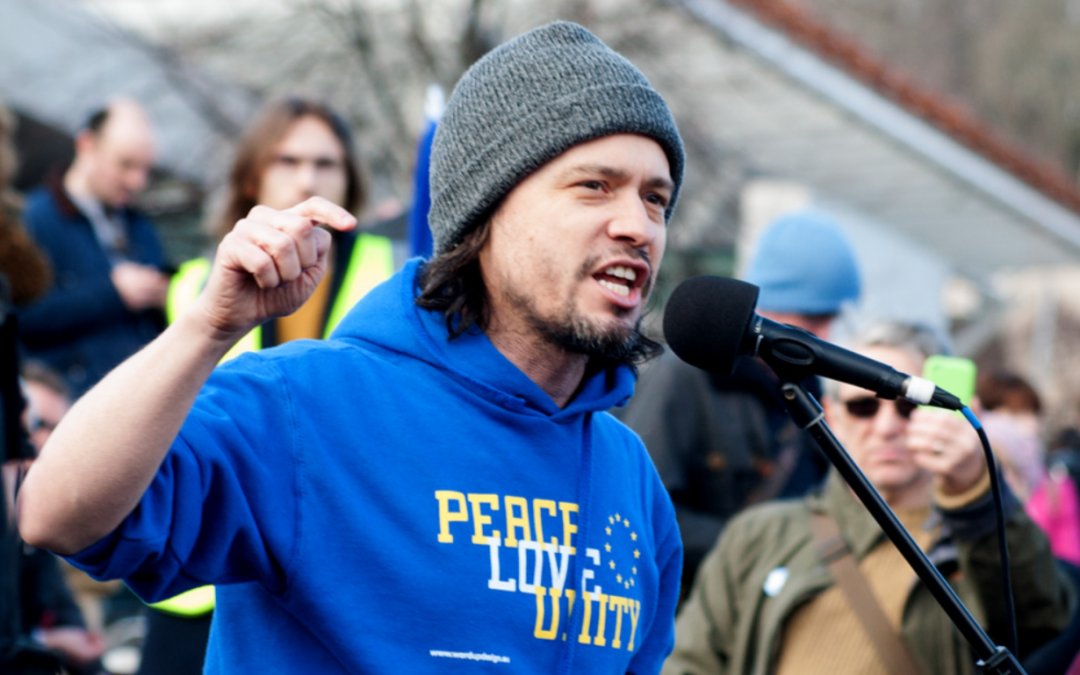
This month’s edition of “Bremainers Ask” features Dr. Mike Galsworthy, Director of Scientists for EU, which he co-founded in May 2015. He is also Director of NHS for a People’s Vote. These are two of the founding groups of the PV campaign. Mike is also Head of the Social Media Intelligence Unit (SMIU) and a Director of the March for Change team. Previous to initiating the campaigns, Mike was an independent consultant in research and innovation policy. His work before that was in health services research, based at UCL and the Royal College of Anaesthetists. Below, he answers a selection of questions put forward by Bremain members.

Roy Stonebridge: Once Brexit is cancelled, how will the UK begin to attract back foreign scientists and other talent who have left or become disenchanted with the UK over the last 3 years?

Mike Galsworthy: Hi Roy. A lot will come down to the tone of the country at the time. Will it suddenly look like an attractive place for scientists to work in? Yes, the pound would bounce and free movement would be back in force – hopefully with favourable visa rules for non-EU researchers too, Theresa May’s limits axed and the length of time students can stay after their degrees still two years. However, if the country is racked with political division and vitriolic narrative towards foreigners, that’ll hurt our attractiveness. So one of the best ways to mitigate against that would be to invest in abandoned communities. You can also, like Switzerland which also has free movement, require businesses to advertise jobs locally before they advertise to the rest of the country or internationally. That way you’re clearly protecting local communities. Then you need a public awareness campaign about just how many jobs for Brits foreign entrepreneurs create and how much boost foreign researchers provide to our world-leading universities and with it our students. Finally, you need more projects between universities – making sure that local communities are improved by their universities and can see that universities have their back and improve their local businesses, communities and opportunities.

Tracy Rolfe: What effect would Brexit have on medical research?

Mike Galsworthy: Hi Tracy. If you want the fullest answer to that question, you can read this!

What’s that? It’s probably the first ‘impact assessment’ done on health, health research and Brexit. In 2017, before the Government got caught bragging about impact assessments they hadn’t done, we actually did one and published it in ‘The Lancet’. We looked at what soft Brexit, hard Brexit and “failed Brexit” (i.e. no-deal Brexit) would mean for everything around healthcare, health research and medical research. In short – it is bad impacts across the board, with no-deal Brexit being the worst. Specifically, it impacts our role on the Horizon 2020 science programme (about 20-30% of which is in health/medicine). Theresa May’s deal would have preserved most of that – a no-deal trashes it. Inward investment into all science has dropped. In the pharma industry, companies have spent tens of millions shifting parts of their processing to the European mainland to prepare for changes in rules. If we leave the single market for medicines, then we suddenly become a smaller market which is devastating for our role in testing new medicines. Switzerland and Canada get their cutting-edge medicines 6 months after the EU on average. We’ve already lost the European Medicines Agency with 900 jobs, attendant industry and tens of thousands of business visits a year. That hugely hits our medical innovation ecosystem. Leaving the Single Market also hits the medical devices industry, as divergent rules make for a barrier. Hiring talent becomes harder with the utter mess left around free movement and citizens’ rights. This also then impacts on hospitals and the medical research they can do if they are stretched for money, collaborations and funds.

Pat Kennedy: Do you believe the Remain message is getting through and if not, why not?


Mike and Sue

Mike Galsworthy: Hello Pat. Not as much as we would like, of course! The major breakthrough has been that we now have enough parliamentarians to fight for the cause. The critical balance has been tipped and now Johnson is running a dead government which is handed instructions by a very live parliament. However, we still need to shift more public opinion. Although polling shows that more people think the Brexit vote was a bad idea than a good idea – and that gap is growing, nevertheless, there are many people who are buying the “just get on with it” narrative. They know Brexit is a mess, but just want to see it “done”. Now of course we know that “doing” Brexit means opening Pandora’s Box and causing more chaos – this isn’t yet cutting through as it should. Many people want to follow the path of least resistance… We *also* need the positive message about the future we all want – and that must be in the form of climate change demands, preserving jobs and traditions and tackling inequality – then showing why the EU structure is critical to achieving those. We’ll need communities peripheral to our own (e.g. youth on climate issues, conservatives on farming traditions) to help carry those messages.

Pat Laing: How much damage do you think Gove caused with his “we’ve had enough of experts” comment?

Mike Galsworthy: Not much, actually. The anti-expert sentiment was alive and well at the time – and that statement brought it all to a head. In a way, Gove called it out for us. During the referendum, our Scientists for EU Facebook page got so many messages about us being paid shills of the EU, on the gravy train etc. etc. It was just a case of attacking anyone who supported the EU by making personal accusations about motivation. All experts got thrown under the bus for the same thing. It was very hard to combat against by explaining, in detail, why that wasn’t the case. As soon as Gove said that thing – he gave us the perfect phrase to point at. If not experts, then whom do you trust? In fact, if you see public polls on who people do trust, nurses, doctors, scientists and teachers are still up there with journalists and politicians at the bottom. We just have to be very careful that we (like I said in my answer to Roy) make sure that we as scientists and experts always show how we have the backs of the average person in the street – how what we do is to the benefit of them and their kids, not ourselves.

Sue and Mike Galsworthy

Debbie Williams: Given how active a campaigner you are, how does your family feel about all the time given over to campaigning? How do you manage the work/campaign/life balance?

Mike Galsworthy: Hi Debbie – “Good one!” calls out my partner, Caroline, as I read out that question to her! Yes, it’s tricky. I don’t have a work/campaign balance as I’ve been doing this full-time now since the end of 2015. So it’s all about the campaign/life imbalance. Unfortunately, I’m a bit obsessive about this. And after setting up Scientists for EU, Healthier IN (which became NHS Against Brexit which became NHS for a People’s Vote), the Social Media Intelligence Unit, the funding plan for local Facebook pages and March for Change (with Tom Brufatto and others), I think it’s fair to say I’ve stretched myself quite thin and left little time for family life or relaxation time. The constant demands of internal politics, fundraising, and keeping up with the wild Brexit politics take a toll and I feel desperately guilty for not spending as much quality time as I should with friends and family – or often being preoccupied at such moments. So I have to keep reminding myself that it’s a marathon not a sprint – and I regularly need others to prompt me to take a break.

Elena Remigi: You have always been very supportive of the rights of the 5 million people living in limbo. How could we communicate with those that fail to understand our struggle?

Mike Galsworthy: Well, Elena, I should be asking you this as you’ve worked so tirelessly in this area. It’s really, really hard, I know. Everything seems to be fighting for attention – and the lives of those left in limbo seem to get side-lined in the noise again and again. I also know about the abuse that our non-Brit EU citizens have faced on social media simply for telling their stories – particularly women. It’s very depressing. I think sometimes the stories don’t cut through because many Brits don’t value their fellow EU citizens here as much as they should. When they hear the stories, they just think “stop complaining, you’ll be alright”. The mood is one of disinterest. We might do well to campaign on positives of immigration – how much it has helped build Britain. Getting out stats about how much foreign entrepreneurs have contributed to British jobs and the stats around how much Brits love high-skilled immigrants. Or how much Brits recognise the value of those that come to help in the care sector. That’s an easy win on validating how right the Brits are to love what immigrants can do. Then you point out how badly *the Government* has treated those very people that the British public (and British families) love and value. I think that is a powerful way to do it. But it needs more finances and more highly-visible champions.

Many thanks to Mike for taking part. You can read more about Scientists for EU here.