Mixed emotions on stepping out …..

Mixed emotions on stepping out …..

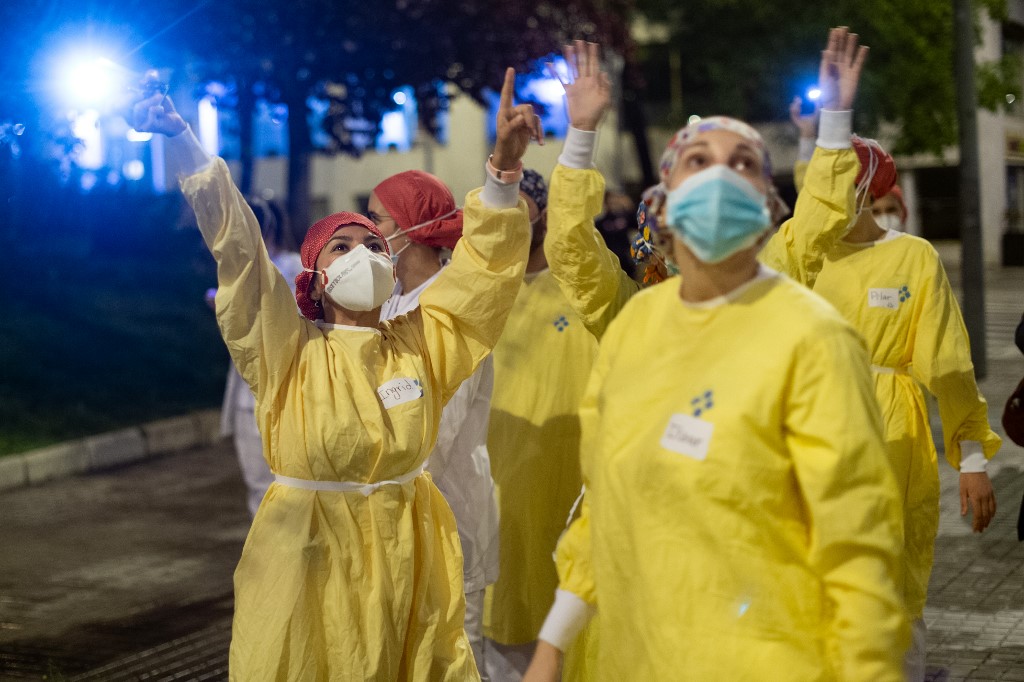
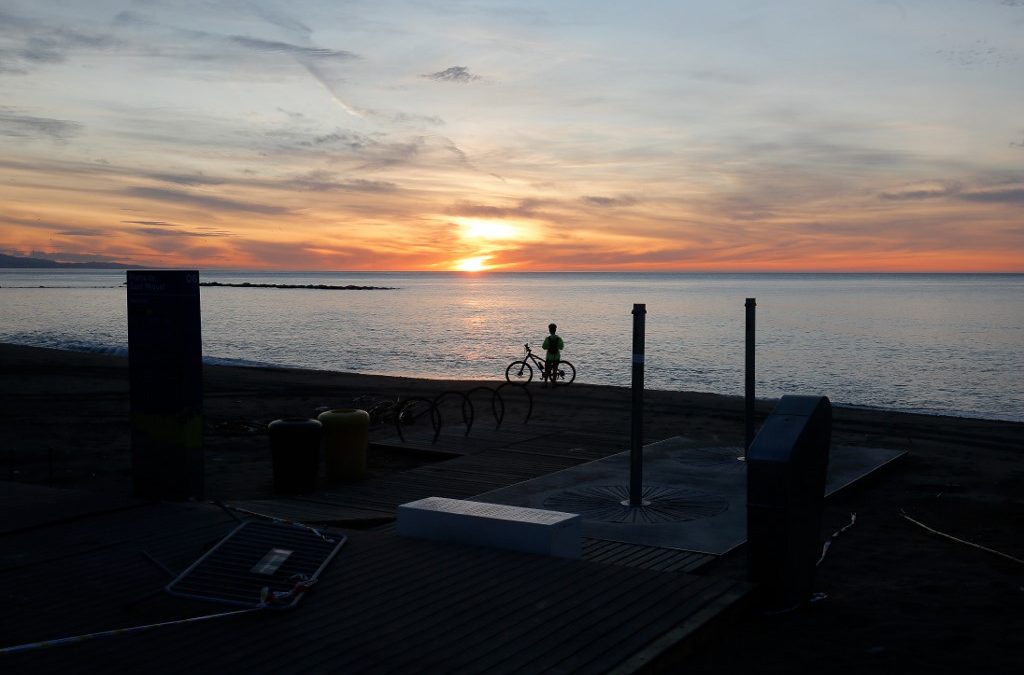
As I stepped outside my front door on Saturday, after weeks of lockdown, it was with mixed emotions. Like millions of people across Spain, I was eagerly anticipating my first walk, having been no further than the rubbish bins for seven weeks. Sharing the experience with my husband was a bonus.

On a beautiful spring morning, in our beautiful village, the feeling of freedom was one I had expected. The feeling of nervousness was one I had not.

Lockdown has caused many of us to consider what we’ve most been looking forward to once restrictions are lifted. The simple pleasures in life – such as taking a stroll with my other half – rank high on my list. It never occurred to me that going for a walk might make me concerned for our safety.
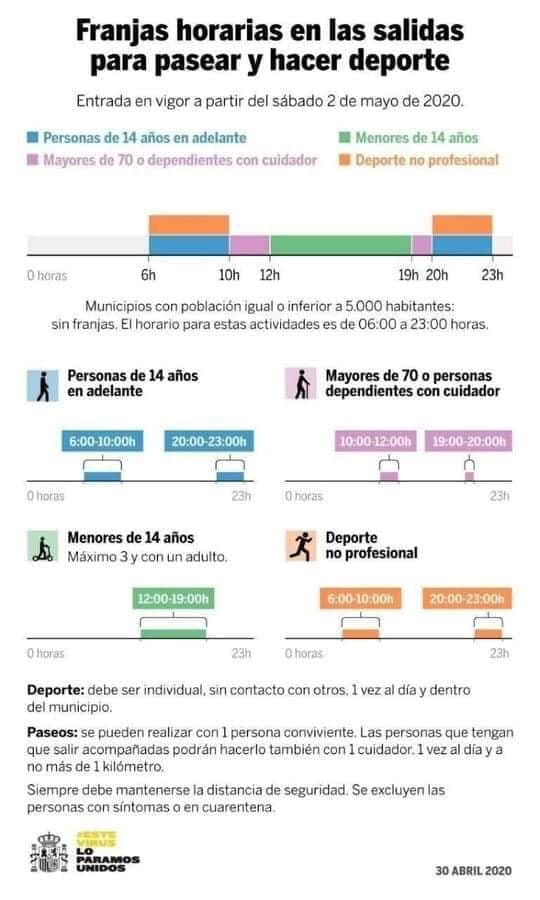
 

The ways in which we’ve come to terms with lockdown – both the implementation and de-escalation – vary a lot according to our age, personal circumstance and even personality.

Those living in flats will have experienced a very different lockdown to those with gardens. The experience of city dwellers will not reflect that of those living in the countryside. Families will have reacted differently to those isolated and alone.

You can read the article in full at The Local.

Bremainers Ask ….. Ian Dunt

Bremainers Ask ….. Ian Dunt

Ian Dunt is editor of Politics.co.uk, author of Brexit: What The Hell Happens Now? and a host on the Remainiacs podcast. His new book, How To Be A Liberal, is out later this year.


Ruth Woodhouse :Do you feel that the current coronavirus situation is bringing countries together or, especially in the case of the UK, driving them further apart?

This is a fascinating question. The reality is it does both. Taking the downside first: borders are closed, all over the world. It’s hard to get a more obvious example of national distancing than that. And on a less obvious level, some of the squabbles seen in Europe this month over the financial response, for instance on mutualised debt, have brought back the euro zone crisis demons and revealed that deep split between fiscally conservative countries and the rest. That has the capacity to do much more damage to Europe than Brexit has.

But there are reasons to be positive too. All countries face the same threat and share the same purpose under Covid-19. It is only by seeing what works in other countries and emulating them that we can succeed. So there is a chance here, if we take it, to make the case for internationalism – for countries working together to share expertise, equipment, and evidence.

Roy Stonebridge: It seems almost inevitable that we will arrive at the end of 2020, in the midst of a virus led global recession. How could UK possibly contemplate any changes to the trading arrangements with the EU in such circumstances?

Well if the government was half-way sane it would not consider this. But then, if it was halfway sane, it wouldn’t have got us in this position in the first place. People often assume that No.10 will be sensible if the crunch comes, but pretty much all the evidence of the last few years suggests that’s unlikely.

However, there are a few differences this time. Some leading Brexiters have expressed support for extension. To be honest, probably the best way of achieving an extension is for Remainers to not demand it. If it gets folded into the culture war, it’ll be lost.

One thing is true though: you can judge the government’s Covid-19 response by the Brexit extension. If they do not request an extension, they are doing Covid-19 wrong. This disease should be demanding all their time. If they have any capacity for anything else, they have not understood the magnitude of it.

Christine Jones:If it hadn’t been for Brexit, what might you have been doing for the last 4 years?

Oh God. The lost opportunities. More time down the pub, more time reading books, less time reading about the allocation of fish stocks in the European quota system.

Ian with Gina Miller

I used to write about other liberal issues: Drug policy reform, free speech, immigration, civil liberties, prison policy. I miss that. Not enough journalists cover it, so when you drift off, you feel you’re letting the side down. But unfortunately, there’s no chance of getting back to it any time soon. The nationalist wave is not receding. And anyone who believes in liberalism, reason and internationalism owes it to themselves to stand up against it. To be honest, as long as we can hold our head up high in a few years’ time and say that we played our part in trying to stop this thing, we’ll be able to consider it time well spent.

Tracy Rolfe: What impact do you think Keir Starmer’s election as Labour leader will have on our medium- to long-term chances of rejoining the EU?

Potentially significant. He is electable. That’s not to say he will be elected, but at least he can be, which is more than we can say about the last Labour leader. He is also a Remainer. He has done enough, over the last few years, to earn our trust on that. If he sees an opportunity to rejoin, he will take it.

But the best thing we can do to make that happen is to lay off him. There should be no pressure for any attempt to rejoin in the short term. We should be aiming to make sure rejoin is a manifesto commitment in the election after next. And that can be done.

As my colleague on Remainiacs, Naomi Smith, says: ‘The first rule of Rejoin club is you do not talk about Rejoin club.’

Remainiacs

Lisa Ryan Burton: Do you think Keir Starmer will face the same level of criticism from the British media that Jeremy Corbyn faced, or will his background and character make it much more difficult for the press to paint him in such a negative way?

He will face much less. There are very simple reasons for this. He does not seem to actively dislike Britain. He has basic competence. This seems obvious, but the previous leader was seemingly incapable of it.

However, he will still be attacked. The press are largely – outside of the Guardian, the Times and the FT – cheerleaders for Boris Johnson. That won’t change. They’ll look to undermine Starmer. If he’s clever though, he can sidestep this. And the way to do it is to speak over their heads, utilise the opportunities offered by impartiality rules on broadcasters, not treat the media as a tribal enemy, and triangulate the government position – try to turn the debate on issues in which you appeal to their base in order to expand the opportunities you have in your own territory.

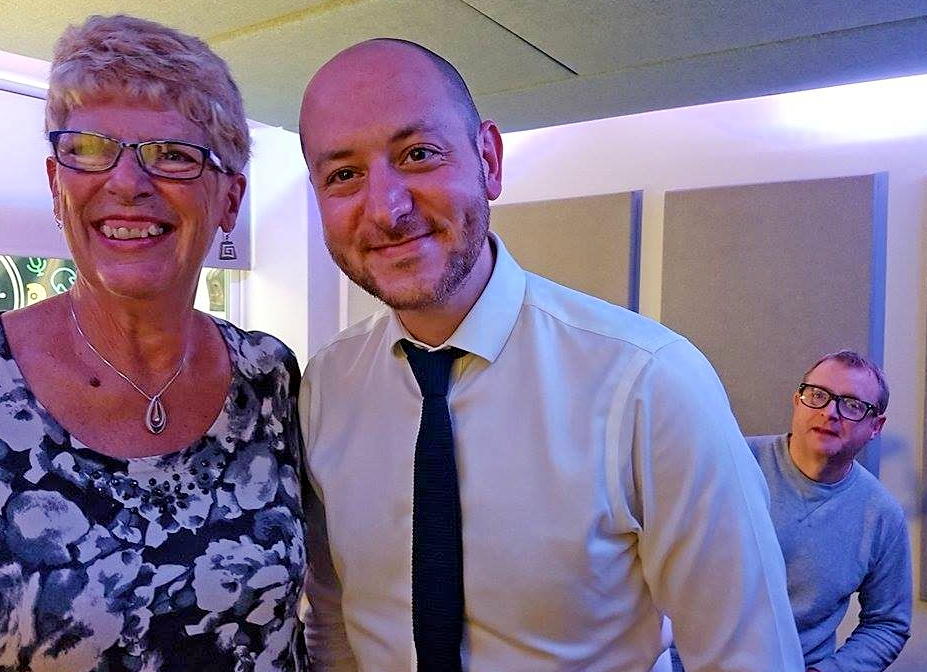
Sue Wilson and Ian Dunt

Stewart Luscott-Evans: Has the coronavirus pandemic changed your views about Brexit in any way, or has it reinforced your beliefs?

Neither really. Brexit still seems a bloody silly idea. But it’s not like the EU response has been so magnificent that it particularly helps in the other direction either.

If anything it makes me worry about how the EU handles its own Covid-19 crisis. It must do better this time than it did in the bond crisis. It must demonstrate solidarity, the basic principle on which it is based. There’ve been a few examples of that – Macron’s rhetoric, Merkel’s use of equipment provision. But the efforts by Germany and the Netherlands to kill off attempts at really broad-ranging mutualisation of debt measures doesn’t bode well. It’s not enough to smuggle compromises into haphazard initiatives which go under the radar. It needs big visible measures that don’t just work, but are seen to work.

For decades now, national leaders have been able to claim credit for the good things the EU does, and blame it for whatever they don’t like. The EU facilitates this by stuffing big projects into boringly titled stability mechanisms and the like. That has to stop. They need to fix the policy. And they need to fix the way the policy is presented. The severity of the crisis provides a moment in which to achieve that, in a really eye-opening and effective way. I hope they take it. Although I must say that the early indications are not good.

Many thanks to Ian for taking part. Next month we talk to Jessica Simor QC. 

Now is not the time to go it alone

Now is not the time to go it alone

On Friday April 24th, Michel Barnier held a press conference in Brussels to report on trade negotiations between the UK and EU. The virtual talks took place last week, with two further rounds of negotiations scheduled for the weeks beginning May 11th and June 1st.

Media descriptions of the EU’s reaction varied from “disappointing” to “Barnier launches a blistering attack”, with many commenting that Barnier had accused the UK of “failing to engage”.

Based on earlier Brexit negotiations, it was no surprise that the UK and EU had different approaches. The EU produced a 350-page text, which Barnier proudly presented at the press conference. The EU text covers every topic and is available online for everybody. The UK, in contrast, produced a document covering just seven areas and insisted that the content remained confidential.

Barnier stated that “our objective for tangible progress has only been partially, very partially, met this week.”

He emphasised the need to progress on all fronts and spoke of the tight timescale, which means agreements on some areas must be reached by the end of June.

Boris Johnson readily agreed to this timescale when earlier negotiations were finalised. In fact, Barnier accused Johnson of rowing back on commitments made in the Political Declaration, which was signed in conjunction the Withdrawal Agreement in winter 2019.

In a statement released later, a UK government spokesman said: “This was a full and constructive negotiating round” but tentatively agreed that progress between the two sides being “limited”.

You can read the article in full at The Local.
 

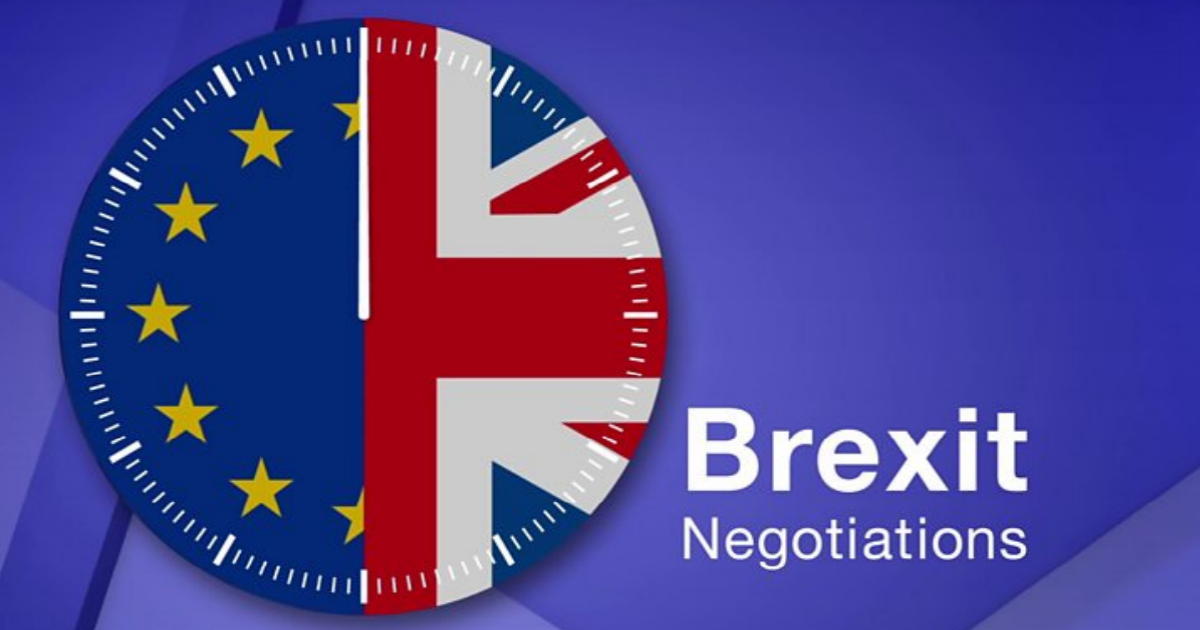
Brexit Negotiations
Coronavirus and Brexit – time to delay?

Coronavirus and Brexit – time to delay?

Sue Wilson of Bremain in Spain calls for the UK to extend the Brexit transition period so it can focus resources on beating the coronavirus.
 
‘Brexit has, quite rightly, not topped anyone’s priority list recently, either in the UK or EU. Most resources are being directed at fighting the coronavirus outbreak, leaving little room for progressing the Brexit trade negotiations.

The British government has redirected resources, including 25,000 civil service staff who were exclusively working on Brexit before the virus outbreak. Seemingly, only the UK negotiating team, led by David Frost, has kept its eye firmly on the Brexit ball.

An extension to the transition period was always preferred by those people (mostly Remainers) who were worried about the lack of time for negotiations – especially as international trade deals generally take years to complete, even in normal circumstances. The present circumstances are far from normal.

With the trade talks delayed, and the tight time frame shortened further, even Brexiteers are calling for a delay.

Furthermore, businesses are now begging for a delay, and much of the British public – including 36 percentage of leave voters – is also in favour. An extension to the transition period is now seemingly the “will of the people”.’

SPAIN-HEALTH-VIRUS-HOSPITAL

‘While the prevention of a hard Brexit is still my goal, this isn’t about frustrating Brexit. It is about dedicating every penny, minute and ounce of effort to saving the country from a deadlier crisis.’

You can read the full article in The Local.

Bremainers Ask ……. Revisited Part Three

Bremainers Ask ……. Revisited Part Three

With the changing political landscape, Bremain invited former contributors to our Bremainers Ask feature for their thoughts on the subject. Before the current coronavirus crisis, we asked them to comment on where we are now, how they see things moving forward and what we pro-Europeans should be focusing on in the future.

Last month, we brought you the thoughts of Harry Shindler, MBE, Kyle Taylor & Steve Bray. Here is the final instalment, & grateful thanks to all our contributors.


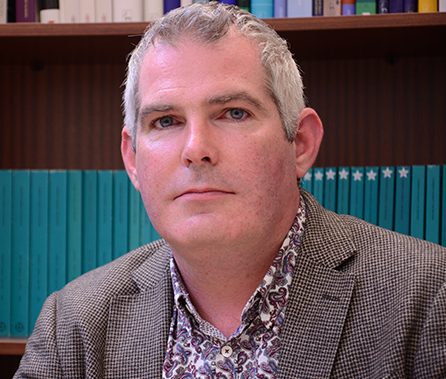
Professor Michael Dougan

EU Law Expert, Liverpool University

Website

Twitter


Prof Michael Dougan

On paper, Boris Johnson may have “got Brexit done”: the UK is no longer a Member State of the European Union.  But in practice, many of the real questions about future relations between the UK and the EU remain to be settled.

On the one hand, the UK Government under Boris Johnson has at least pulled free of the excruciating period when leading Leave campaigners, and then the administration of Theresa May, promised all things to all people and either believed or pretended that that could ever possibly happen in reality.  The current UK position on future relations with the EU is at least possessed of greater internal coherence and demonstrates a higher level of political realism.

On the other hand, the cost of such clarity is that the UK Government is driving headlong towards a serious rupture in relations with the EU – a far cry from many of the Leave fantasies made back in 2016 and repeated consistently thereafter – and crucially, that will be true regardless of whether there is a deal or whether there is none.  The British decision to rule out any transitional extension only exacerbates the situation by making “two regulatory changes” more likely in due course.  And of course, there remains a shocking contradiction between Johnson’s propaganda about “Global Britain” as the champion of free trade versus the reality of a Government poised to commit the single gravest act of economic segregation in modern history.

Besides the damage which will inevitably flow from the UK’s decision deliberately to dislocate and distance itself from the Union, that choice also has various important internal consequences for the UK itself: for example, the customs tensions affecting Northern Ireland will only grow in proportion to the degree of Great Britain’s divergence from Union law; and the same is true as regards the management of internal trade between England, Scotland and Wales.  But most of all: why is the Johnson Government so obsessed with the power to diverge from Union regulatory standards, many of which are only minimum in nature and do not prevent the UK from pursuing higher levels of protection?  Perhaps “taking back control” is just an exercise in nationalist political rhetoric.  But it seems more likely that the Tories do indeed harbour a dream of dismantling the UK’s adherence to Europe’s distinctive socio-economic model.

Moreover, the UK’s increasingly abrasive approach to the future relationship also poses serious challenges for the EU itself.  Above all: the risk of an aggressive competitor on its very doorstep, actively undertaking market deregulation and encouraging social dumping as an alternative economic model; as well as constantly engaging in attempts to undermine the political unity and solidarity of the Member States – with the UK’s post-withdrawal but still essentially Leave-driven leadership potentially motivated by the belief that the relative success of their precious Brexit can best or indeed only be demonstrated by the relative failure of the equally hated EU.  Even looking beyond the current generation of Tory politicians in office: the further and harder the UK does drift away from the European fold, the more difficult life will eventually be, even for a new administration more sympathetic to close relations with or indeed renewed membership of the Union.

For readers of this newsletter, it is also bitterly disappointing to see that the question of onward movement rights across the EU27 even for those UK nationals protected under the Withdrawal Agreement are not explicitly on the negotiating agenda – despite the two parties having repeatedly claimed that the issue would indeed be addressed in their “future partnership” talks.  It may take some noisy lobbying to make sure the issue doesn’t just drop off the agenda (again).

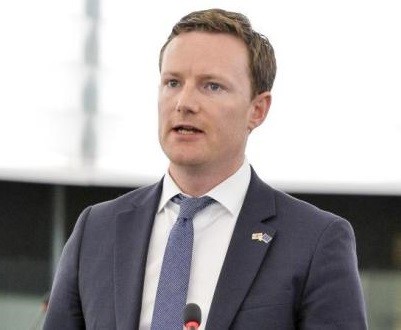
Seb Dance

Seb Dance

Labour politician, former MEP

Facebook

Twitter

So here we are. And we thought Brexit was bad enough. In fact, it was so bad that, having had quite enough of the dramatic highs and lows of the past three years my husband and I booked a trip as soon as I left the European Parliament to get away from it all. It was great! We had a fantastic time at the beach, the pool and an overland trip down the Malay Peninsula. I briefly forgot about the pain of losing the fight against Brexit and the sheer stress of it all. I remember joking one evening that whatever came next couldn’t be as bad as all that!

Fast-forward a few weeks and I am writing this on the eve of what is a likely announcement from the Prime Minister that we will have to stay indoors for the foreseeable future, an order that I know has already been in place in Spain for some time. We are afraid to go out, we give every passer-by a very wide berth. On the few occasions we do venture out we put on disposable latex gloves and a facemask – as much to protect anyone we come into contact with as ourselves.

We are living through something that is not just extraordinary, but which has profound consequences for our future. It is a global crisis, which will be far worse than 2008 in its impact. We must not let the UK government off the hook by letting them absorb the impact of Brexit into that of COVID-19, hoping no-one will notice. It would be reckless in the extreme to strangle a nascent recovery by pursuing an ideological agenda at a time when we need consensus and clear thinking to prepare us for the future.

Right now, we need to look after ourselves and our loved ones. We will get through this. And when we do, we must never give up on our fight: to create a world where we don’t divide each other on the basis of nationality but one where we are free to live our lives where we want, the way we want.


Many thanks to all of our Bremainers Ask contributors who have taken part in our Revisited series. Bremainers Ask will be back next month with Ian Dunt, Editor of Politics.co.uk and host of Remainiacs