
enquiries@bremaininspain.com
  • Facebook
  • X
  • Instagram
  • Facebook
  • X
  • Instagram
  • About
    • Our Mission
    • The Bremain Team
    • Bremain History
    • Members’ Issues & Anxieties
    • Members’ Gallery
  • Events 2026
  • Bremainers Ask
  • Resources
    • Pro-EU Groups
    • British Embassy Updates
      • Bremain Glossary of Terms
    • Government
    • Withdrawal Agreement
    • Support & Advice
  • Votes for Life
    • REGISTER TO VOTE
    • My Vote Matters
  • Sign Up
  • Donate
  • Get in Touch
Bremain in Spain
  • Home
  • About
    • Our Mission
    • The Bremain Team
    • Bremain History
    • Members’ Issues & Anxieties
    • Members’ Gallery
  • Events 2026
  • Bremainers Ask
  • Votes for Life
    • REGISTER TO VOTE
    • My Vote Matters
  • British Embassy Updates
    • Bremain Glossary of Terms
  • Resources
    • Pro-EU Groups
    • Government
    • Withdrawal Agreement
    • Support & Advice
    • Glossary of Terms
  • Sign Up
  • Donate
  • Get in Touch
Select Page
Secret Summit admits Brexit isn’t working

Secret Summit admits Brexit isn’t working

Feb 15, 2023 | Bylines, News

Was this secret summit the first tentative step towards reversing the unmitigated disaster that is Brexit? We can only hope, writes Bremain Chair Sue Wilson MBE for West England Bylines.


On Thursday and Friday last week (9-10 February), a cross-party ‘secret summit’ on Brexit was held at Ditchley Park in Oxfordshire. The meeting, which included high-level politicians from both Remain and Leave camps, as well as prominent businessmen, was so ‘secret’ that by Sunday it was all over mainstream media.

The meeting was entitled: “How can we make Brexit work better with our neighbours in Europe?” In an introductory statement, it was acknowledged that “so far the UK has not yet found its way forward outside the EU”. Not only that, but Brexit is “acting as a drag on our growth and inhibiting the UK’s potential”.

The news brought hope to pro-Europeans that perhaps, at last, politicians of all persuasions were willing to discuss the failings of Brexit, and our future relationship with Europe, with some openness and honesty. Brexiteers, on the other hand, were screaming “sell-out”.

Brexit is crumbling.
Only pride and embarrassment now stand between us and the admission that the best possible future for the UK lies in #RejoinEU. @UKLabour are you listening?
Revealed: secret cross-party summit held to confront failings of Brexit. https://t.co/4irtvMHW0l

— Ted Page #FBPE #FBPA #RejoinEU (@wild_ted) February 12, 2023

Brexiteer response

Brexit-supporting backbench MP, John Redwood, was quick to complain on Twitter. “Instead of talking of sell-out at private conferences”, he said, “the UK establishment needs to complete Brexit and use its freedoms.” He added that the government should pass the Protocol bill to make Northern Ireland fully part of the UK and in order to “take back full control of our fish for starters”. Not sure what he had in mind for the main course.

Former UKIP leader, Nigel Farage, said the “full sellout of Brexit was under way”, adding that the Tory party had “never believed in it”. Deputy Chairman of the ERG, David Jones, said the fact that the meeting was held in secret raised suspicions that the aim was to have “closer constitutional links” with Europe. Let’s hope so!

"Lord Frost last night warned of a plot to undermine Brexit after leading Remainers held a secret summit on EU relations."

And leading Brexiters, including Gove and Gisela Stuart. But presumably that detail doesn't fit Frostie the no-man's narrative… https://t.co/NLq9xhpZoE

— Edwin Hayward 🦄 🗡 (@edwinhayward) February 12, 2023

Brexit is unravelling, says Frost

Despite walking away from his Brexit role, and taking no responsibility for his wonderful, then awful, Brexit deal, Lord Frost is never one to miss an opportunity to supply unwanted advice and comment. Again. Ad infinitum.

Frost accused those senior politicians taking part – such as Michael Gove, David Lammy, Peter Mandelson and David Liddington – of wanting to “unravel the deals we did to exit the EU in 2020” and to “stay shadowing the EU instead”. He said that the government, which had been elected with a huge Brexit mandate, needed to “fully and enthusiastically embrace” the advantages of Brexit, adding that “Brexit doesn’t need ‘fixing’”.

Despite his former – and now hard to believe Remainer – beliefs, Frost spends a lot of effort looking for ways to criticise those tasked with delivering Brexit. If he spent half as much time searching for mythical Brexit benefits, he might be more useful. Or at least, more muted.

Former Brexit negotiator Lord Frost has slammed a secret summit on improving relations with the EU as a way of 'unravelling' Britain's exit from the EUhttps://t.co/u0QBHecy7D

— LBC (@LBC) February 13, 2023

The Downing Street position

A spokesman for Downing Street stated that PM Rishi Sunak had been unaware of the summit meeting held last week. It was a response that surprised no one as Sunak often seems ‘unaware’ of activities going on right under his nose. On a trip to Oldham, Sunak said he was “proud to vote for Brexit” and that, as PM, he was “keen to make sure we deliver the benefits”.  Whatever they may be. If he knows, he’s not telling.

With the UK and EU edging closer to an agreement, and Sunak saying little about his plans for the controversial Protocol Bill, no doubt Lord Frost, the ERG and Brexiteers will be watching him closely for further signs of “unravelling”. They are also pushing for the tearing up of thousands of EU laws, under the Retained EU Law bill.

Sunak may try to give with one hand and take with the other, in an effort to please all parties – not least US President Biden – over Brexit and the Protocol. But this will just further cement opinion that he is ineffective and indecisive.


What did the summit achieve?

If the meeting itself didn’t stay secret for long, the outcome of the discussions may take longer to surface. A confidential source described the meeting as “constructive”, saying that the “main thrust of it was that Britain is losing out, that Brexit it not delivering, our economy is in a weak position.” 

The aim was to move on “from Leave and Remain”, to discuss “the issues we now have to face” and how to get into “the best position” for having a conversation with the EU about changes to the UK-EU trade and cooperation agreement. That agreement is subject to renewal, revision or termination every five years. The current deal expires, and is up for renegotiation, in 2025, so getting into the “best position” soon is vital.

“Secret cross-party summit held to confront failings of Brexit”

Siri, show me a headline that encapsulates the weapons-grade idiocy of Brexit and the cynicism of politicians willing to carry on damaging the country because they dare not admit how horrendously they’ve failed us.

— sarah murphy (@13sarahmurphy) February 11, 2023

While it’s shocking that it has taken this long, the fact that Tory and Labour politicians – on both sides of the Brexit debate – are now having grown-up conversations (we assume), is a step forward. Considering the extensive and obvious damage that Brexit has wreaked, better late than never.

However, there is still a long way to travel. Despite the participants seeming acceptance that Brexit is failing, and a huge shift in public opinion, both Tories and Labour still seem to want to “make Brexit work”. They can’t.

They can tinker around the edges. They can work more closely with Europe where there is common ground. They can even work together to improve the Protocol. But they cannot “make Brexit work”.

Until there is a ‘secret summit’ to discuss re-joining the Single Market, the Customs Union or the EU itself, then they are merely offering a sticking plaster solution when what’s needed is major surgery.

Nice try. Good start. Now get on with it!
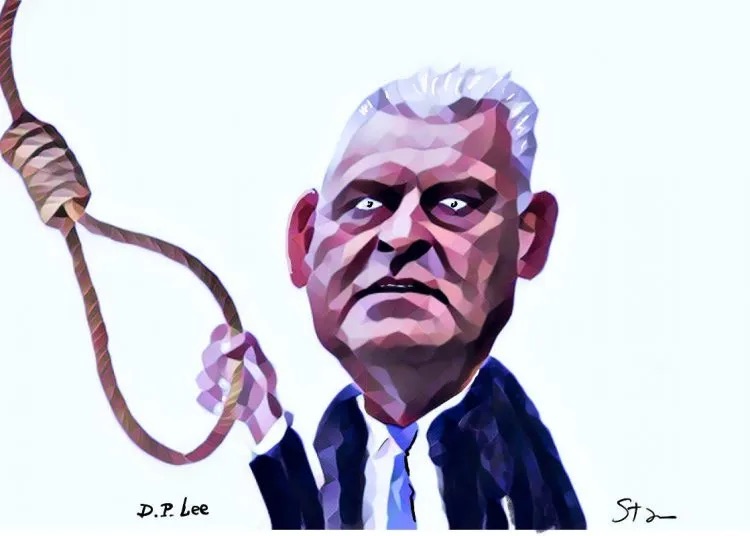
Bring back the death penalty says 30p Lee Anderson

Bring back the death penalty says 30p Lee Anderson

Feb 13, 2023 | Bylines, News

With our human rights already under threat, it’s difficult to trust a leader who believes Lee Anderson is the answer to any question, writes Bremain Chair Sue Wilson MBE for Yorkshire Bylines.

Newly elevated deputy chairman of the Conservative Party, Lee Anderson, is no stranger to controversy. Whether he’s picking a fight with Steve (Mr Stop Brexit) Bray, suggesting food bank users have a “budgeting problem”, or using a friend to pose as a swing-voter on camera, Anderson is a dab hand at stirring up trouble. And he seems to rather enjoy it.

Anderson was promoted in Rishi Sunak’s recent reshuffle, leaving many surprised, if not astounded, by the prime minister’s decision. With Sunak’s credibility already being questioned, Anderson’s advancement only raised more doubt about the prime minister’s judgement. Perhaps, considering Anderson’s latest comments regarding the death penalty, Sunak himself is now having second thoughts about the wisdom of his decision. If he isn’t, he certainly should be.


“100% success rate”

In an interview with The Spectator, Anderson expressed his support for the reintroduction of the death penalty by saying that “nobody has ever committed a crime after being executed”, describing it as a “100% success rate”. His comments forced the prime minister to note that neither he, nor the government, shared Anderson’s view and a return of the death penalty was not government policy.

Anderson went on to say that “certain groups” (presumably left-wing wokerati types) would complain that “you can never prove it”. He suggested that video evidence was strong enough proof to warrant an execution. It was an argument that fell apart on the appearance of a doctored video of Anderson himself confessing to a crime on social media, proving how easily video ‘evidence’ can be manipulated.


It’s the ‘will of the people’

Fellow Conservative MP and death penalty supporter, Scott Benton, was quick to defend Anderson’s stance, by suggesting that it was a policy “supported by a majority of the public”, as well as many of his Blackpool South constituents. Not only were the “liberal elites”, the media and Twitter “detached from the public” but any outcry was an example of the “usual leftie hysteria”.


Usual leftie hysteria following @LeeAndersonMP_ comments on the death penalty. It’s supported by a majority of the public, and my constituents, in certain cases. Another example of the media, liberal elites and Twitter being detached from the public.

https://t.co/ttvFT8OQdE

— Scott Benton MP 🇬🇧🏴󠁧󠁢󠁥󠁮󠁧󠁿 🍊 (@ScottBentonMP) February 9, 2023

Whilst I can’t speak for Benton’s constituents, it is certainly not true that the majority of the British public are in favour of the death penalty. In a recent YouGov poll, only 14% of Britons showed strong support for the death penalty, with a further 26% tending to support, making a total of 40%. Amongst Conservative voters, that total rose to 58% support in total. By comparison, amongst Labour voters, support fell to just 23%.

There was also a vast difference in levels of support dependent on age, with only 22% of 18–24-year-olds supporting capital punishment. For the over 65s age group, support rose to 54%. If Benton is to be believed, then presumably his constituents are elderly Tory voters yearning for an England that no longer exists, and that should be consigned to history. Along with his views on capital punishment.


No defence for the indefensible

Arguments commonly used in favour of the death penalty – usually in the case of murder – are that it serves as a deterrent, it provides closure for the families of victims and that it dispenses justice, of the biblical eye-for-an-eye variety. However, these arguments do not hold up.

According to Amnesty International (and others), there is no evidence to support the argument that the death penalty deters crime any more than long prison sentences. In addition, states that have a death penalty – often those with authoritarian regimes – do not have lower crime or murder rates than those that do not.

Even within the most vigorous of legal systems, miscarriages of justice do happen, and innocent people have, and still are being, executed. The other compelling argument against capital punishment is that it is simply morally wrong. Taking a human life is completely unethical and sets a bad example to society.


The global view

According to the Death Penalty Information Centre, 70% of nations have now abolished capital punishment. However, 60% of the world’s population live in countries where the death penalty is retained, including the highly populated China, India and the United States – the only G7 country to still have the death penalty. In 2021, 579 executions were recorded – a increase of 20% over the previous year. The highest numbers of executions took place in China, Iran, Egypt, Saudi Arabia and Syria (in that order).

Our own Human Rights Act (HRA) came into force in October 2000, incorporating the European Convention on Human Rights (ECHR) into domestic British law. Article 2 of the HRA protects the right to life and states:

“Everyone’s right to life shall be protected by law. No one shall be deprived of his life intentionally save in the execution of a sentence of a court following his conviction of a crime for which the penalty is provided by law.”


But the Human Rights Act, which protects many other basic human rights as well as the right to life, is currently under threat from justice minister and deputy PM Dominic Raab. His ‘bill of rights’ has been described by Liberty as a “wrecking ball” which would “smash your rights and freedoms”. Maybe Sunak should have a word, if he can work up the nerve.

We have come to expect a certain dangerous rhetoric from our government of late – in particular from the Home Office. So, it’s hardly a stretch to believe there might be more death penalty supporters lurking in government behind Anderson and Benton.

With a government that seems drawn to authoritarianism, and with many rights and legal protections under threat, we need to be vigilant.

Our right to life may not be under threat, but it’s increasingly difficult to trust a prime minister, or government, that believes Lee Anderson is the answer to any question.

Looking for a well-paid job? Be an MP!

Looking for a well-paid job? Be an MP!

Jan 23, 2023 | Bylines, News

Send in your application now. Never will you get a better chance to grab what’s rightfully yours. Sue Wilson MBE, Bremain Chair, writes for Yorkshire Bylines.

As the UK faces a severe shortage of labour and skills, 80% of small firms are struggling to recruit suitably skilled staff. With 1.19 million vacancies across the country, perhaps there has never been a better time to be a job-seeker. Assuming, of course, that you have the right skills for the job, and the remuneration and benefits are sufficient for your needs.

Whilst a career in healthcare, social care, hospitality, construction, farming or logistics might appeal, there are other opportunities becoming available that you might want to consider. With more vacancies likely to appear in the coming months, have you ever considered a career in politics? It pays well, comes with generous expenses, and rules that apply to ordinary folk can – it would seem – be broken with impunity.


Remuneration

First, let’s talk pay. As from April 2022, the basic pay for a Member of Parliament in the House of Commons is £84,144 per annum. Compared to average UK earnings of £33,000, that’s none too shabby. But the good news doesn’t stop there. Not only can you expect an above-average pay rise each year, but you get to vote on it yourself. No nasty bosses trying to supress your wages, and your real bosses – the British public – have no say at all!

The size of the remuneration package alone is impressive, but there’s another big difference between MPs annual income and the UK average. The Office for National Statistics figures are for a full-time job. MPs, on the other hand, don’t all work full time, with many able to hold down other lucrative employment, and not discouraged from doing so.


MPs have earned £17.1 million since 2019, on top of their £84k annual salary

£2.5 million – Theresa May
£2.1 million – Jeffrey Cox
£1 million – Boris Johnson

The Westminster Accounts, an exposé by Sky News and Tortoise Media. pic.twitter.com/dSdlyFfLtB

— Farrukh (@implausibleblog) January 8, 2023

Generous expenses

In many jobs where employees are required to travel, claims for petrol, transport, even taxis are the norm. Overnight stays require reimbursement for accommodation and meals and are par for the course for your average sales rep or business person. As an MP, however, you can expect so much more.

While subsidised lunches are not uncommon in certain industries, few can rival the offering, or the prices, available in the House of Commons dining room. And we’re not talking about a simple soup and sandwich. We’re talking ribeye steak, smoked salmon or lamb loin. Yes, please! Though you might have to watch your calorie intake, you won’t have to worry about the prohibitive cost of fine dining affecting your pocket.

latest menu from the House of Commons MPs dining room pic.twitter.com/R9Gf2v9Bsw

— The Lady J of Tay (@brawday) August 28, 2022

But that’s not all. You can also claim rent for accommodation in London, even if you don’t live very far away, and claim for heating costs. At a time when the country is suffering an energy crisis, rest assured that as an MP, you won’t need to worry about spiralling electricity or gas bills.


Helen Whately has been named as the Conservative MP claiming the highest rent expenses at £3,250 a month.

As an MP and Minister, she is paid an annual salary of £113,612. https://t.co/COJBRj8Tne

— Mark Flack 🟨🟥 #IStandWithJeremyCorbyn 🇵🇸 🥀 ✊ (@mflack66) January 19, 2023

There appears to be no limit to how much, or for what, MPs can make an expenses claim. In the year ending 30 September 2022, the amount claimed by MPs was £135,810,637.87 for a total of 123,858 claims, and it’s not untypical for a single MP to claim hundreds of thousands of pounds on expenses. In fact, if it’s allowed, why wouldn’t you?

Historically, it has also been possible to claim for the most bizarre of non-political expenses, such as the heating of one’s stable. Ah, but I don’t have any horses or a stable, you say. Well never mind. Once you’re an MP you’ll probably be able to afford both!


Fringe benefits

Of course, not all the benefits of being an MP are financial ones. A benefit to many a rough diamond is the ability to be able to hold down a well-remunerated job whilst also being rude, offensive, and in some extreme cases, even downright creepy with your staff. Although there are, of course, appropriate policies and procedures in place to protect employees – likely due to some over-zealous HR type – these seem to be largely ignored, or at least, worked around.

But, there’s more. If you fancy a bit of rule-breaking, you can be secure in the knowledge that rules that apply to ordinary people may not apply to MPs. Or even to Cabinet Ministers or PMs! Fancy not wearing a seat belt? No problem – just pay the fine. Forgetting to pay your taxes? Cough up and stay out of jail. Telling mistruths to parliament? De rigueur. And if you’re short on ideas, there are plenty of colleagues with previous experience that’ll be only too happy to share their rule-bending tips while promising honesty, integrity and accountability.

Sunak promised honesty, integrity and accountability on the steps of Number 10. Not only has he been fined again for breaking the law, but Zahawi has been fined as well. It’s time they all went. It’s time for a general election.

— Chris Bryant (@RhonddaBryant) January 20, 2023

There’s one final positive about seeking work in Westminster as opposed to a similarly demanding role in the non-political world, and that’s your previous experience. Or lack of it. Whilst any existing skills and experience would, of course, be useful, they are not a pre-requisite. Even cabinet ministers can acquire their even better paid roles without having the relevant qualifications. A doctor as health minister or an economist as chancellor? What a daft idea.

Of course, there are MPs that work extremely hard, that represent the needs and wishes of their constituents, and that challenge the strategy, rhetoric and policy of those in charge. They do so with considerable energy, grace and commitment, and in the face of considerable abuse and at great personal cost. The country would benefit enormously if there were far more like them.

However, as long as MPs are able to earn, and to claim, such vast sums of money, and are seemingly able to break rules that apply to others, then Westminster will continue to attract those only in it for themselves.

So, send in your application now! Never will you get a better chance to grab what’s rightfully yours!

Are we framing Brexit from the wrong perspective?

Are we framing Brexit from the wrong perspective?

Jan 13, 2023 | Bylines, News

As UK public feeling shifts back to a pro-European stance, is it time to positively charge the nature of the conversation? Bremain Chair Sue Wilson writes for Yorkshire Bylines. 

Although it has taken far too long to materialise, Brexit is finally up for discussion. Endless tales of Brexit damage now fill the media, even of the right-wing variety. Polls now regularly show that the public have not only turned against Brexit, but are increasingly in favour of a return to the single market, the customs union, and even the EU itself.

That change in public opinion has come about without any benefits of EU membership even being mentioned. Not only that, but public support for Brexit has fallen away despite blatant governmental mistruths about our abilities to act as an independent nation over, for example, the vaccine roll-out or support for Ukraine.

The fact that the public and the media can now clearly see the elephant in the room is progress, and welcome, even if it hasn’t yet trickled down to our parliamentary representatives. But any talk of Brexit now follows an ill-advised path, that of fear, doom and gloom. It has become a negative story of damage and failure, and it’s eerily reminiscent of the underlying negativity (albeit prophetic) of the cross-party Remain campaign.


Project Fear

The pre-referendum approach taken by David Cameron’s government and their pro-European allies in the opposition – labelled as ‘Project Fear’ by the Leave campaign – was a failure waiting to happen. Not only did the government fail to grasp the nation’s desperate desire for change, but their pessimistic campaign provided little factual information about the EU itself and, crucially, very little hope.

What was missing then, as now, was any celebration or explanation of the benefits of our 40-year long relationship with our friends and closest neighbours. Instead, the Leave campaign mendaciously persuaded the majority of the voting public that any benefits were nothing to do with the EU, or at the very least, would not be lost when we left.


EU achievements and tangible benefits

Before Brexit, most people’s knowledge of the benefits of EU citizenship was sketchy at best and misinformed at worst. Having since experienced the loss of many valuable rights, their absence has made our hearts fonder. We better understand now how little we knew of the EU and how much we took for granted.

Less familiar still, were the key achievements of the European Union, as they see and promote them. The list of the EU’s four key achievements on the European Union website is no doubt the envy of democracies across the globe:

  • A continent in peace
  • Freedom for its citizens to live, study or work anywhere in the EU
  • The world’s biggest single market
  • Aid and development assistance for millions of people worldwide

Peace and stability

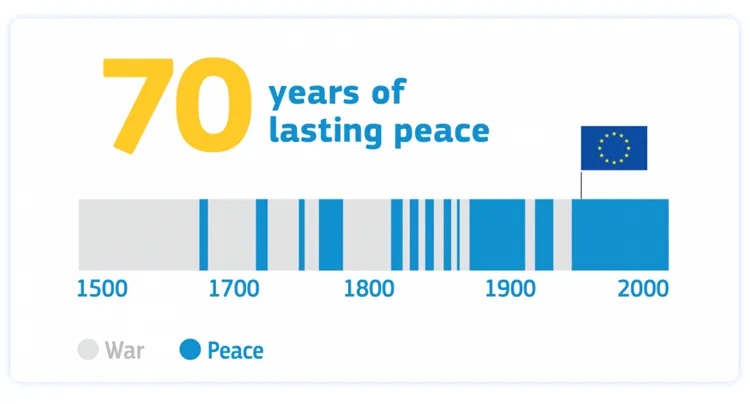
The foremost achievement of the EU has been decades of peace across the continent. Following World War II, Western European countries sought closer political ties, with the aim of achieving economic growth and military security. Decades later, Europe has now seen “70 years of lasting peace” – the longest period in its history.

In accordance with this unbroken “peace, stability and prosperity”, the EU continues to foster “democracy, fundamental freedoms and the rule of law – across the globe”. As a result, it was awarded the Nobel Peace Prize in 2012.

The war in Ukraine has proved the value of collaboration and cooperation with our neighbours for the benefit and security of all. Ukraine is now en route to becoming an EU member itself, having been granted “the status of a candidate to accession” in June 2022. No doubt the people of Ukraine understand only too well the benefits that EU membership will bring.


The single market

Where other benefits of EU membership may not be as well understood, the benefits of single market membership are more widely appreciated, even by Brexit supporters. In fact, many prominent Brexiters regularly assured the public that the benefits of single market membership would still be ours outside of the EU.

The single market allows for four freedoms of movement – of goods, services, money and people. Even some staunch Brexiters appreciate the value of the first three. However, the free movement of people was painted as the cause of unacceptable (to them) levels of immigration. Thanks to the likes of Nigel Farage and his toxic ‘breaking point’ poster, EU citizens, along with the EU itself, were effectively ‘othered’ in the eyes of some of the public.


Nobody is making a positive case for immigration

If there is one benefit of EU membership that’s crying out for a positive political campaign, it’s immigration. ‘Taking back control’ of our borders and reducing immigration was a rallying cry of the Leave campaign. The fact that before the referendum the British public did not appear to have a problem with EU citizens coming to the UK to live, work or study, didn’t factor into their thinking.

Apart from ignoring the positive aspects of EU immigration – on our economy, trade and culture – taking back control of our borders has not worked. Although EU immigration is down since Brexit, net migration numbers are now reaching record levels at over 500,000 in 2022. This at a time when businesses are begging the government to make it easier for them to employ staff from the EU.

Not only does the UK need migration from the EU, but we desperately need to change the dialogue. EU citizens have had a positive impact on our economy, trade and culture and have been our family, friends, colleagues and neighbours, for decades. Our country needs a return to the days of friendship, cooperation and tolerance – qualities we used to be proud of and which were the envy of the world.


The loss of freedom of movement affects us the most

Whilst it’s incredibly sad and damaging that EU citizens are leaving the UK, or have stopped coming, they at least are left with other options. EU citizens still have their freedom of movement across Europe, can move around with ease, and are welcomed with open arms.

UK nationals, on the other hand, have lost the automatic opportunity to live, love, study, work and retire in 27 EU countries. It’s not impossible to move to the EU post-Brexit, but it is considerably more complicated and expensive and no longer an option for everyone. For example, those relying on a UK state pension as their sole source of earnings would no longer meet the income threshold for retirement in Spain.

Not only is it more difficult to plan a life in the EU, but over 2500 Brits that had already made that commitment are now being expelled and sent back to Blighty. It would rather seem as though the EU are better at taking back control of their borders than the UK appears to be.

1000s of Britons expelled from EU. An unelected Eurocrat should not comment on the words of an elected politician. BUT it is sad to recall PM Johnson said “British people will still be able to go to work in the EU; to live; to travel; to study & buy homes” https://t.co/R5AQ0UEMto

— Graham Blythe (@EUEdinGraham) January 7, 2023

Recent polls tell us that Brexit is no longer the “will of the people”. That pervasive idiom was used by politicians as justification for the hardest Brexit possible, and should it go horribly wrong, either the public at large, remain supporters, or the EU were to be made the obvious scapegoats.

Whether Brexit ever really was the will of the people is highly debatable. What isn’t debatable is that Brexit no longer has public support, even if our politicians refuse to accept the facts.

It’s high time we all took a fresh look at Europe. Whether it’s gradually increasing our engagement with our neighbours or a full-on campaign to become EU members again, it’s time to be honest about the benefits, rights and opportunities that we threw away.

The public and some voices in the media are beginning to shine some light on the reality of post-Brexit Britain. Sadly, in Westminster, burying heads in the sand is still in vogue.

Brexit denial and fear is as strong in political (and some media) circles as it ever was. It’s time to inject some truth, hope and optimism into the discourse and build progressively toward a more positive future for all.

What can Britain expect from Brexit in 2023?

What can Britain expect from Brexit in 2023?

Jan 5, 2023 | Bylines, News

When it comes to Brexit, political opinion doesn’t yet match what’s happening on the ground, but it’s edging closer by the day, writes Bremain Chair Sue Wilson MBE for Yorkshire Bylines.

As we start a new year, it’s only natural to look forward with a degree of trepidation, hopefully tempered with a dollop of optimism. Whether you are taking stock from a personal standpoint or thinking more widely about our country’s future, like it or not, Brexit will be a factor. Perhaps a very significant one.

You don't need to search for very long before the answer is presented to you… It's been a disaster.https://t.co/XHKsDx0XwI

— European Movement UK (@euromove) January 1, 2023

A shift in public opinion on Brexit in 2022

A noticeable difference during 2022 has been a change in public opinion towards Brexit. With the impact of the pandemic and the war in Ukraine no longer disguising the true damage of the UK having left the EU, polls are regularly demonstrating a shift in public attitude. In addition, the media have become more vocal on the subject, regularly calling out the losses to trade, the damage to the economy and the threat to our rights.

Not only are the public turning against Brexit in record numbers, but according to the latest poll, two-thirds now support a future referendum on EU membership. You will, however, still struggle to find political parties supporting this dramatic change in opinion. Our politicians – unlike the majority of the British public – are still in denial; still trying to ‘make Brexit work’.


Encompassing reduced trade, diminished investment, being the only major economy not to have returned to its pre-pandemic size and a £40bn annual hit to tax revenues, the wreckage of Brexit is all around us but our politicians will still not acknowledge it. https://t.co/b6czeYX1aI

— Brexitshambles (@brexit_sham) January 1, 2023

The bad news

Whether it’s Labour’s version of Brexit, or the Conservative’s, the major threats over the next 12 months will come directly from our own government. With no realistic plans to improve trading with the EU, and any new trade deals unlikely to come close to compensating for Brexit losses, the road to economic recovery is a long way off.

The British Chambers of Commerce is predicting that the UK economy will not start to grow again until the last quarter of this year and that investment will continue to fall by 1.8%. Their annual expectation for GDP growth – broadly in line with forecasts from the Bank of England and the Office for Budget Responsibility (OBR) – is at -1.3%. The OBR are also predicting a rise in unemployment thanks to the economic slump. Ironically, this comes at a time when employers are struggling to find desperately needed staff, some closing their doors for good as a result

But despite the very real concerns relating to the British economy, some of the biggest Brexit threats will come from government legislative proposals. Whether it’s the drive to remove our right to protest (public order bill) or the threat to our Human Rights (bill of rights bill), we need to be paying close attention to government legislation. Let’s also not forget the Northern Ireland protocol bill, which threatens to break international law and further damage our global reputation.

Perhaps one of the most worrying legislative threats – to our health, safety, working, environmental standards – comes from the so-called ‘Brexit freedoms bill’ (retained EU law (revocation and reform) bill). At the end of the year, if the bill is not stopped or seriously amended, all EU protections of our rights and standards will fall away unchallenged. Surely by then only true followers of the Brexit cult will still believe that any government promises to protect, or even improve, our rights, are safe in their dirty hands.


He literally told us he didn’t believe in holiday pay…

And the Retained EU Law Bill is his brainchild

So let’s not be shocked to learn this means the end of protections like:

Holiday pay & equal pay for women

These are the real Brexit benefits

…and they were never for us. pic.twitter.com/CQAtP10NPo

— Marina Purkiss (@MarinaPurkiss) December 29, 2022

If you really want to give yourself a fright this year, you only need listen to the home secretary expressing her views on immigration and Rwanda. And if that’s not enough to keep you awake at night, then take a close look at our deliberately underfunded public sector – especially the NHS – and be very, very afraid.


The good news

While we may still be some distance from rejoining the EU, it is becoming increasingly common to hear talk of rejoining the single market and/or customs union. Not that we can expect either to come about in 2023, but we can expect to hear more businesses, more industries, more media, and even perhaps more politicians daring to debate the previously undebatable. While a change in public perception of Brexit may not yet have shifted political opinion, surely it must soon.

Already the third year without you 💔

To all our friends in the UK:

We still miss you.

And of course, we want you back.

Whenever you are ready.

HAPPY NEW YEAR 🇪🇺❤️🇬🇧#StrongerTogether pic.twitter.com/WXG13LO39O

— Terry Reintke (@TerryReintke) December 31, 2022

One thing we can be relatively certain of is that this is the last full year of a Conservative government, hopefully for a decade at least. Though don’t expect those in power to give up without an ugly fight and a further considerable waste of taxpayers’ money.

This year sees Ireland and Denmark celebrating the 50th Anniversary of joining the EU. Had it not been for Brexit, we would be joining those golden anniversary celebrations. In fact, had it not been for Brexit, there’s a long list of things we would, could, should be doing.

Brexit has stolen so much from us, both individually and nationally. It will continue to do so for some time yet, and for as long as this government holds on to power. But whatever the future holds, we must be vigilant and active, and we must hang on to the hopes that a new year promises.

I’m going to enjoy 2023. But I can’t help thinking about the joy to come in 2024 when it comes to a general election. In the meantime, if you dislike this government and you’ve had enough of Brexit, get your boots on! There’s work to be done.

« Older Entries
Next Entries »

Search Our Site

Sign Up to our Newsletter

Translate this Site

Official Partners

european movement

Members of

Grassroots for Europe

Follow Us on Bluesky

Latest Posts

  • Data Privacy Policy
  • Sign Up
  • Get in Touch
  • Facebook
  • X
  • Instagram
© BremaininSpain.com 2016 - 2026 General Email: enquiries@bremaininspain.com Media: media@bremaininspain.com
Manage Consent

We use cookies to optimise our website and our service.

Functional Always active
The technical storage or access is strictly necessary for the legitimate purpose of enabling the use of a specific service explicitly requested by the subscriber or user, or for the sole purpose of carrying out the transmission of a communication over an electronic communications network.
Preferences
The technical storage or access is necessary for the legitimate purpose of storing preferences that are not requested by the subscriber or user.
Statistics
The technical storage or access that is used exclusively for statistical purposes. The technical storage or access that is used exclusively for anonymous statistical purposes. Without a subpoena, voluntary compliance on the part of your Internet Service Provider, or additional records from a third party, information stored or retrieved for this purpose alone cannot usually be used to identify you.
Marketing
The technical storage or access is required to create user profiles to send advertising, or to track the user on a website or across several websites for similar marketing purposes.
  • Manage options
  • Manage services
  • Manage {vendor_count} vendors
  • Read more about these purposes
View preferences
  • {title}
  • {title}
  • {title}