Rejoin Ramble

Rejoin Ramble

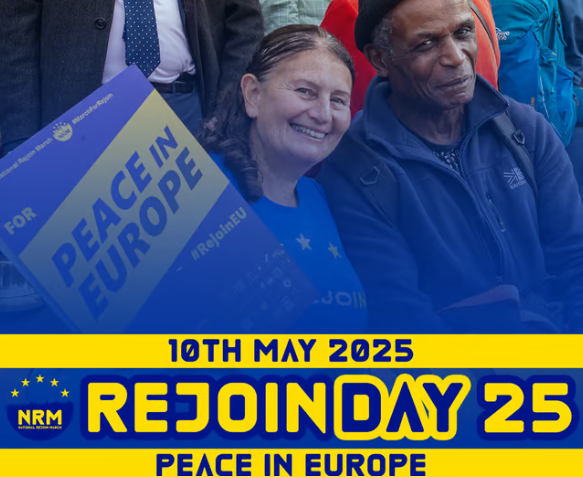
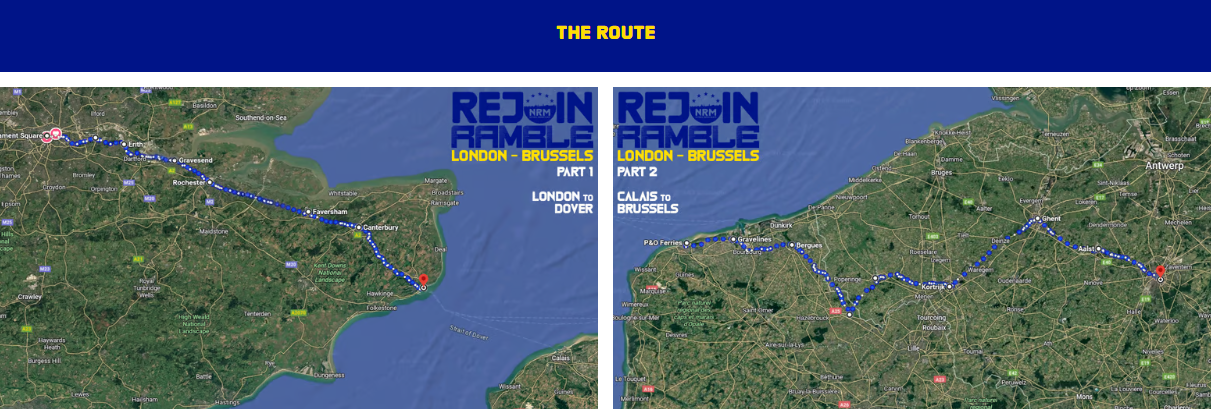
Next year, from Saturday 23 May to Friday 5 June, the National Rejoin March are planning an extra special event. The Rejoin Ramble will see the NRM team of Peter Corr, Clare Hall and Ceira Sergeant walk 255 miles from London to Brussels. On arrival, they will deliver a booklet full of your comments on why we want to rejoin the EU.

There are many ways you can contribute:

  • Add your comment for inclusion in the booklet here
  • Make a donation to cover the Ramble costs here
  • Join the send off in Parliament Square on Saturday 23 May at 8.00 a.m.
  • Join the send off in Dover on Friday 28 May at 8.00 a.m.
  • Join the reception in Brussels on Friday 5 June at 6.00 p.m.
  • Join the NRM team on any of the legs, on any of the 14 consecutive days, in England, France or Belgium (daily average 19.6 miles)

Or, for the really ambitious (and fit), why not join for the entire ramble?

Further information is available on the Rejoin Ramble webpage, including how you can join the NRM team for any/all of their ramble.


Bremain in Spain will be taking part. Why not join in the fun and show the EU just how badly we want our citizenship back?

Bremainers Ask…. Marsha de Cordova MP

Bremainers Ask…. Marsha de Cordova MP

Marsha de Cordova has been the Labour MP for Battersea since 2017, serving in Keir Starmer’s Shadow Cabinet as Shadow Secretary for Women and Equalities. She is a member of the Socialist Campaign Group and has been Second Church Estates Commissioner since 2024.

Marsha is Co-Chair of the UK-EU Parliamentary Partnership Assembly, having been appointed in 2024.

Ruth Woodhouse

Why are Labour seemingly so afraid to challenge the anti-migrant narrative of Reform UK, and indeed appear to be positively enabling it?

This directly speaks to the crucial issue of standards and the responsibility all politicians share to maintain honest and respectful debate.

I am deeply concerned that the migration debate has become toxic, in part because the left has underestimated how easily racism and far-right extremism can infiltrate mainstream political discourse. This complacency has led to a misguided approach, one that tolerates far-right rhetoric and, at times, repeats it while ignoring the serious risks involved. In some cases, when the repercussions of doing this become clear, some politicians have retreated from their harmful statements. However, by then the fear and division have already taken root in our communities.

We must confront the far-right’s anti-migrant narrative decisively and hold ourselves to a higher standard of political discourse – one grounded in truth, respect, and inclusivity. Giving ground to far-right discourse on migration will only strengthen the far-right and weaken our message to communities.


Lisa Burton

When can we expect to see the details and implementation of the youth mobility scheme between the UK and the European Union?

As I’m not a government minister, I don’t have the specifics of the negotiations.

However, based on several indications from the Chancellor and the Minister for Europe, it’s clear the Government is committed to advancing the scheme. This includes promising signs of working towards association to the brilliant Erasmus+ programme.

After multiple discussions with Ministers, I’m optimistic they aim to make substantial progress ahead of the next UK-EU Summit in May.
 

 Matt Burton

What would you say to pro Europeans who feel that Labour is not going far or fast enough with resetting the UK’s relationship with the European Union?

I represent Battersea – a constituency that voted overwhelmingly to remain in the European Union and a place where thousands of Europeans live – and I fully share the frustration many feel about the ongoing challenges as result of Brexit. This includes issues around the cost of living, reduced cultural exchange, and the pressure on small businesses that my constituents experience every day.
Throughout my time as an MP, I have consistently championed a pro-European vision. Across Battersea, it’s clear just how much a closer, more constructive relationship with the EU could improve people’s lives.
That said, it’s important to remember the state of our relationship with the EU before this Government took office. Less than eighteen months ago, conversations were simply not being had and there was no sign of life between the UK and EU. Since then, we’ve seen real progress: this Government has reopened dialogue, laid the groundwork for deeper cooperation on a range of issues, and, crucially, demonstrated a genuine willingness to work with our closest neighbours to confront the world’s most pressing challenges.

I am hopeful that from this standpoint, further change will flow.


Susan Scarrott

Have lessons been learned from the Brexit referendum campaign – where there were few positive messages regarding our relationship with the EU – rather than simply reacting to the negatives that Reform is still perpetuating?

We only need to look at the outcomes of last May’s UK-EU Summit to see change here. The tone of our relationship has shifted, and we are now hearing the right messages about the value of working together.

The Government is putting forward the argument that we need our neighbours to build a safer, more stable and peaceful world. We are also pressing the value of cultural exchange for young people’s opportunities and emphasising the objective truth – that it is better for our economy and for trade to work with the EU rather than against it.

There is a renewed confidence to Government communication on EU affairs, which is very welcome given the dire state of the conversation less than six years ago.


Anon

As a former Secretary of State for Women and Equalities, what positive changes for women have you witnessed over recent years and what more needs to be done to ensure equality?

Gender-based violence remains one of the most serious challenges we face in achieving women’s safety and equality. For many in Battersea, this issue struck painfully close to home with the horrific murder of Sarah Everard in 2023.

Since then, however, we have begun to see meaningful progress. The introduction of Raneem’s Law in February marked an important step forward, bringing domestic abuse specialists into 999 control rooms for the first time. A new criminal offence for spiking will soon be created under the forthcoming Crime and Policing Bill, showing the Government is serious in its commitment to halve violence against women and girls in the next decade.

I was also buoyed by the appointment of Dr Mary-Ann Stephenson as the new Chair of the Equality and Human Rights Commission. Having had the privilege of working with her and the Women’s Budget Group during my time as Shadow Minister for Women and Equalities, I know she brings a wealth of expertise, integrity, and compassion to the role – qualities that will be essential in defending and advancing women’s rights and equality.

Next month

Bremain’s Annual General Meeting will take place online on Saturday 22 November. You can register here to attend.

Members, whether attending or not, are invited to put questions to the Bremain Council. We will also feature the best questions/answers in next month’s newsletter.

If you wish to submit a question for consideration, please email us no later than Wednesday 12 November. Please indicate in your email if you would prefer your question to include your name, or if you prefer it to be discussed and published anonymously.

Strengthening The Institutions We Rely On

Strengthening The Institutions We Rely On

by Helen Johnston for Yorkshire Bylines

A new report finds that the UK’s arm’s length public bodies are highly vulnerable to politicisation.

Earlier this month, we reported on a talk by Professor Christina Pagel of University College London (UCL) at a Grassroots for Europe  webinar about the Trump Action Tracker project, documenting the systematic dismantling of democratic institutions in the United States by the Trump regime.

Now, a new report, ‘Strengthening the institutions we rely on’ by Pagel and her colleagues Luke Flynn and Martin McKee at the UCL Policy Lab and the London School of Hygiene and Tropical Medicine (LSHTM) respectively, finds that the UK’s top scientific institutions, from the Met Office to the UK Health Security Agency, have inadequate institutional defences to prevent potential political interference.

Learning from the US experience

The tracker shows that under Donald Trump, independent institutions in the US have been systematically attacked in a number of clear areas:

With its populist, far right, nationalist agenda, the Reform Party is on the rise. We can see only too clearly how Nigel Farage is reading, and following, the Trump playbook. Professor Pagel explained that, as she watched events unfold in the States, she began to wonder: “What can we do that is a bit more positive than just tracking this kind of doom spiral. Do we need to protect British institutions if a right-wing populist government came into power here in four years’ time?” Her ANCHOR (Advancing National Commitment to Health and Science, Open Data & Resilient Oversight) project examines how UK institutions can be protected by understanding the US experience.

Identifying weak points

By mapping the independence of 24 arms-length bodies (ALBs), specifically involved in producing or publishing evidence or holding governments to account, the project aims to identify and counter potential vulnerabilities. Results for eight key bodies are shown below (taken from the Report’s executive summary).

Reassuringly, they show that the Office for National Statistics (ONS) is already substantially protected from interference. But some other vital bodies have very little independence. The UK Health Security Agency has the right to publish without interference, but it could be abolished rapidly, with no parliamentary oversight. This is effectively what the Tories did to its predecessor, Public Health England, in the middle of the pandemic.

The most vulnerable aspect across all the ALBs studied is that of independent appointments. The 2015 Grimstone Review significantly weakened the powers of the Commissioner for Public Appointments. Independent panels draw up a shortlist of candidates, but the new rules allow ministers to override their recommendations and pick whoever they want:

“Given what’s happened in the US, I think we can all see where that can go wrong.”

There is already evidence of interference in the independent functioning of some key bodies. While acknowledging the limitations of the UK’s parliamentary sovereignty, Pagel believes strengthening public accountability mechanisms can at least ensure parliamentary and public scrutiny of proposed changes to remit, funding or leadership, and so slow or prevent potential authoritarian shifts. “There is obviously a democratic argument that ministers should set overall strategy, but within that, ALBs should have the ability to set priorities on how to meet that strategy.”

How populists exploit vulnerabilities

The UCL Policy Lab report published today examines how the resilience of these key bodies can be strengthened to protect them from a populist government. According to Pagel: “We only need to look across the pond to the actions of the second Trump administration in the USA to see how a coordinated attack on institutional guardrails can rapidly undermine the independence of federal agencies and diminish evidence-based governance. This was not done through sweeping, time-consuming legal reform, but through the calculated exploitation of a series of structural vulnerabilities.

“We’ve seen how the replacement of agency leadership, purges of internal watchdogs and legal re-engineering have been weaponised in the USA, not to mention the slashing of funding and the suppression of research, and it is vital the UK learns lessons from this before it is too late.” 

The report highlights how around one-third of the independent bodies studied lack statutory status, meaning their existence, powers and functions are not defined and authorised by an Act of Parliament, leaving them at risk of being redefined or even abolished behind closed doors.

Co-author Professor Martin McKee (LSHTM) says: “We compare the current situation to a castle with open gates and holes in its walls. This may not matter when there is peace but, when a threat arises, these weaknesses really matter.”

The report recommends: 

  • Increasing legal and statutory protection – Parliament should expand statutory underpinning where needed, especially for ALBs involved in regulation, scrutiny, or advice. It should protect against ministerial overreach.
  • Supporting independence in leadership – The Civil Service should adopt appointment procedures that limit the direct involvement of ministers beyond setting the strategic direction of a post.
  • Resilient funding models – Sponsoring departments should safeguard medium-term funding by expanding multi-year funding settlements to support sustainability and delivery and build on experience with existing practice.
  • Strengthening accountability – Parliament should strengthen accountability by requiring ALBs to produce parliamentary accountability reports, which the National Audit Office would review.
  • Setting priorities and safeguarding operational autonomy – Priority setting must reflect a balance between democratic oversight, the public interest and institutional independence.
  • Protecting the freedom to publish – Legislation should protect the right of ALBs involved in scrutiny, regulation, or public health to publish independently, without needing the prior consent of ministers.
  • Framing the national conversation – Ministers should publicly support the ALBs for which they are responsible and avoid using pejorative language or creating politically motivated bodies.

There is broad public agreement for these principles: polling for the report, carried out by More in Common, found 71% of Britons said it is more important for ALBs to be independent of the government, rather than controlled by it. Across all demographics, the public agreed that a key argument in favour of independent ALBs is that “politicians aren’t experts in many areas”.


Fighting back

The other participants in the webinar where Pagel introduced the ANCHOR project wholeheartedly endorsed the ideas behind it. Tom Brake of Unlock Democracy noted that, in opposition, Labour was very much in favour of restoring, for example, the independence of the Electoral Commission. Now it is in power, it prefers to leave the Tory changes on the statute book. “There are many examples of things that the government could be doing now to try to defend defenders better, should there be a change of government to one which seeks to do exactly the sort of things that Trump is doing in the US.”

Mike Galsworthy, chair of European Movement UK, agreed: “More democracy needs to happen in terms of empowering citizens’ voices, so that citizens can comment on, organise on, and resist power structures in politics … I think ANCHOR is a fantastic start to buttress the system”.


Original article by Helen Johnson for Yorkshire Bylines: https://yorkshirebylines.co.uk/politics/strengthening-the-institutions-we-rely-on/

Helen Johnston is a freelance translator who has lived in Spain for over two decades. She is on the council of the Bremain in Spain, and is the ‘Europe outside the UK’ member of the Grassroots for Europe Council.

TIME to SWITCH

TIME to SWITCH

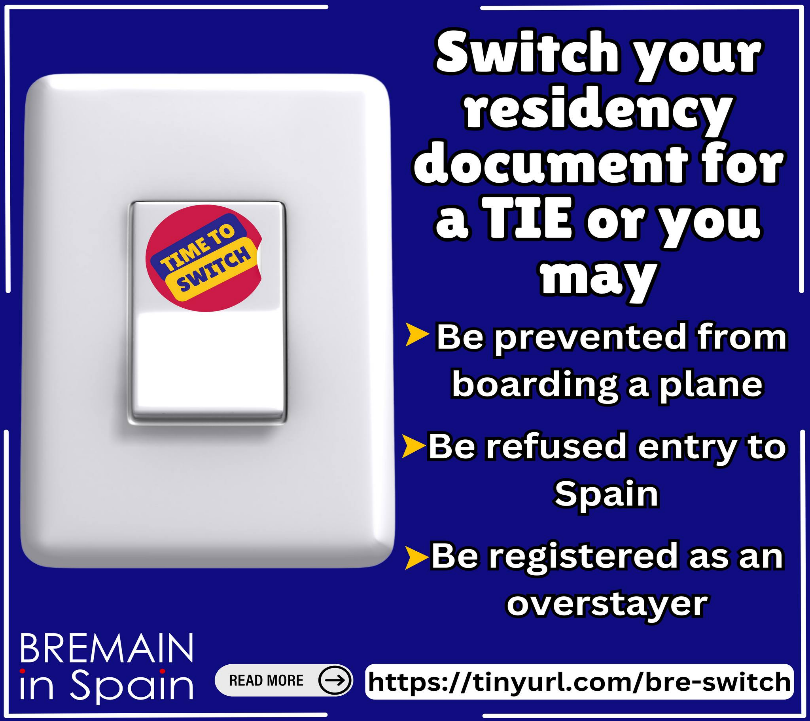
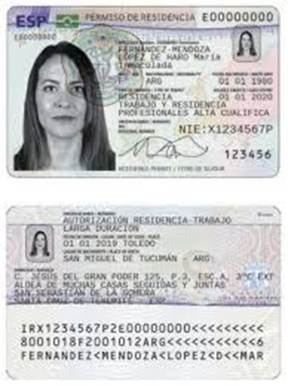
Are you the holder of a green residency document in Spain? Then it’s time to switch to the Tarjeta de Identidad de Extranjero (TIE) – the best way to demonstrate your post-Brexit rights and to facilitate easier travel.

The majority of British residents have already made the switch. So, get ahead of the rush and make the change now.

While the green document/card continues to prove residency status within the country, it is not recognised outside of Spain. Furthermore, with the new Entry Exit System (EES) due to be implemented October 2025, only a TIE will exempt you from the new border controls and ensure you are allowed entry into Spain.

Confirmation from the Spanish Government

“ATTENTION: WITH THE ENTRY/EXIT SYSTEM COMING INTO OPERATION, BENEFICIARIES OF THE WITHDRAWAL AGREEMENT WILL BE REQUIRED TO OBTAIN A TIE (FOREIGN IDENTITY CARD) TO BE EXEMPT FROM THE NEW CONTROLS ESTABLISHED BY THIS SYSTEM.”

“With the upcoming entry into operation of the new computer systems for crossing external EU borders, the Foreigner Identity Card (“TIE art. 50 TEU”) will be the only document allowing beneficiaries of the Withdrawal Agreement to be exempt from having their time spent in the EES counted and from requesting a travel authorisation through ETIAS….

Therefore, the registration certificate ……. will not be sufficient to avoid these controls.”

Entry Exit System

An announcement regarding the implementation of the EES is expected in the coming months. The new system will use facial recognition technology and will require Britons travelling in Europe to provide fingerprints.

However, Britons living in the EU will be exempt from these requirements as long as they can produce a biometric identity card – in the case of Spain, that will be the TIE. The old green residency card will not be sufficient.

For more information on the EES, read the EU’s FAQs here

Risks of failure to switch

Whilst a failure to switch to the TIE won’t affect your residency rights within Spain, there could be serious consequences when travelling outside of the country.

Those risks could include:

  • Being prevented from boarding a plane or ferry, when returning to Spain
  • Being refused entry to Spain
  • Being treated as a tourist and having your days in the country counted
  • Being registered as an “overstayer”, which in turn could result in being questioned, fined, deported or even banned from re-entering the country

Switching to a TIE will also make life easier for you in Spain as more organisations are requiring the production of a TIE, especially when dealing with them online.

Residency appointments

Demand for appointments to facilitate the switching of residency documentation is likely to be high over the coming months for 2 reasons:

  • The forthcoming implementation of EES
  • The conversion of Temporary Residency cards to Permanent Residency cards by 10s of 1000s of Britons who moved to Spain 5 years ago, ahead of Brexit

The authorities have confirmed that additional appointments are being made available, though demand is still very high in Barcelona.

NB – It is not necessary to visit your nearest office but be aware that you can only make appointments in the province in which you reside.

Useful links

Make an appointment here

Find your local offices here

More information can be found here:

So, don’t delay – switch to a TIE now!

Events 2024

Events 2024

5 December – Europe calling
Online – 18.00 – 19.30 CET
The next chapter – Where is Europe headed & who leads it?
Speaker: Prof. Alberto Alemanno
Register to attend here


Festival of Europe

5 December – European Movement Scotland
Online – 19.00 – 20.30 GMT
Common Ground: Scotland’s European path
Speakers: David Martin & Alyn Smith
Register to attend here

Festival of Europe

3 December – Grassroots for Europe
Webinar – 17.00 – 18.30 GMT
Europe’s Democracy in deeper danger
Speakers: Peter Geoghegan, Wojciech Przybylski, Dr. Nina Shingelia
Register to attend here

Festival of Europe

2 December – European Movement UK
Webinar – 18.30 – 19.30 GMT
National identity, Britishness and Pro-Europeanism: the role of national identity in the journey back to Europe
Speakers: Caroline Lucas, Prof. John Denham
Register to attend here

Festival of Europe

17 November – North Herts for Europe
Online – 17.00 – 18.15 GMT
Brexit & British Farming
Speaker: Liz Webster – founder of Save British Farming
Register to attend here

Festival of Europe

17 November – Bremain AGM
Online Meeting – 11.30 – 1.30 CET
Join Bremain in Spain to hear all about our goals & strategy, our spending & our annual report. There will also be ample opportunity to put questions to the Bremain Chair & Council.
Find out more information here
Register to attend online here

Festival of Europe

28 October – LibDems in Europe Round Table
Zoom Webinar – 18.30 – 19.30
Topics for this session to include:
– Online voting for British overseas electors should be possible
– The liberal response to migration
To attend the meeting, use this link

Festival of Europe

25 October – Make Votes Matter
Webinar – 17.00 BST
Our Democratic Futures: A discussion about electoral reform in the US, Canada, & the UK. Why Proportional Representation is needed & what the routes to reform might look like.
Speakers: Lee Drutman, Hina Bokhari, Dennis Pilon
Register to attend here

Festival of Europe

23 October – UK in a Changing Europe
In person/live on Slido – 20.00 – 21.15 BST
Reflections on election success, the state of British politics and the future role of the Lib Dems.
Speaker: Layla Moran MP
Register to attend here

Festival of Europe

17 October – European Policy Centre
Zoom Webinar – 10.00 – 11.00 CET
EU-UK relations – Towards deeper cooperation in defence and security
Speakers: Juha Jokela, Richard G. Whitman, Almut Möller
Register to attend here

Festival of Europe

15 October – UK in a Changing Europe
Live on Slido/YouTube – 13.00 BST
Minorities report: the attitudes of Britain’s ethnic minority population
Speakers: Prof. Anand Menon, Sophie Stowers, James Kanagasooriam, Zain Mohyuddin
Register to attend here

Festival of Europe

7 October – North Herts for Europe
Online Zoom – 19.00 – 20.15 BST
What can Labour really do about Brexit?
Speaker: Peter Foster – author of What went wrong with Brexit, and what can we do about it.
How far can the new government reset relations with the EU given the “red lines”?
Register to attend here

Festival of Europe

28 September – National Rejoin March III
In person event, London – 13.00 – 17.00 BST
Join Bremain at the march/rally – further details to follow on NRM website
Donate to the march here
Join the dedicated Bremain march group here

Festival of Europe

17 September – UK in a Changing Europe
Live on Slido/YouTube – 13.00 – 14.00 BST
Can Labour really reset the UK’s relationship with the EU?
Speakers: Prof. Anand Menon, Jill Rutter, Catherine Barnard, Jannike Wachowiak, Joël Reland
Register to attend here

Festival of Europe

14 September – Thank EU for the Music
In person event, London – 15.00 – 19.30 BST
6th Annual flag give-away at the Last Night of the Proms.
For more information & to register your interest, volunteer here or sign-up to the event on Facebook here

Festival of Europe

12 September – Power to the People Group
Webinar (in 10 languages) – 19.00 CEST
All Aboard – How can citizen assemblies shape our democracies?
Speakers: Art O’Leary, Prof. Kalypso Nicolaidis, Niccolo Milanese, Sarah Handel, Brett Henig, Alexiane Terrochaire (+ others tbc)
Register to attend here

Festival of Europe

3 September – UK in a changing Europe
Live on Slido/YouTube – 13.00 – 14.00 BST
Parliament resits – the policy landscape: discussing the key policy changes facing the UK
Speakers: Prof. Anand Menon, Ben Zaranko, Jill Rutter, Sarah Hall, Jonathan Portes
Register to attend here

Festival of Europe

2 September – Institute for Government
Webinar – 13.00 – 14.00 BST
Parliament returns: What next for British politics? – the opportunities & challenges ahead
Speakers: Emma Norris, Alex Thomas, Giles Wilkes, Dr. Hannah White
Register to attend here

Festival of Europe

6 August – Open Britain
Online event – 18.30 – 19.45 BST
Post-election discussion : how a new government can restore democracy, rational debate & fact-based policy making.
Speaker: Will Hutton
Register to attend here

Festival of Europe

17 July – UK in a Changing Europe
Live on Slido/You Tube – 13.00 – 14.00 BST
Exploring the prospects for the European Political Community hosted by the new UK government
Speakers: Prof. Anand Menon, Nathalie Tocci, Ilke Toygur, Susi Dennison
Reserve your place here

Festival of Europe

19 June – Unlock Democracy/Make Votes Matter – Online webinar – 19.00 – 20.30 BST
Countdown to polling day – what do the polls really tell us re public opinion, politicians & the state of the nation?
Speakers: Sir John Curtice, Prof. Maria Iacovou
Register to attend here

Festival of Europe

17 June – EU/UK Forum Annual Conference
Online – 10.30 – 17.00 CEST
Addressing the evolving dynamics of EU/UK relations
Speaker: Maroš Šefcovic, EC VP
More information here

Festival of Europe

13 June – Conservative European Forum
Online – 18.00 – 19.00 BST
Between Putin & Trump: the chance for a UK/EU reset
Speakers: Timothy Garton Ash, Isaiah Berlin
Register to attend here

Festival of Europe

30 May – Radix Big Tent
Webinar – 18.00 – 19.00 BST
How would an alternative economic & political philosophy remake a better Britain?
Speakers: Will Hutton, Vicky Pryce
Register to attend here

Festival of Europe

29 May – European Movement UK
Online – 18.30 – 19.30 BST
The fight for the ECHR: What is at stake?
Speakers: Andrew Cutting, Dominic Grieve, Jessica Simor KC
Register to attend here

Festival of Europe

22 May – Open Britain
Online – 19.00 – 20.00 BST
This time no mistakes: How to remake Britain
Speaker: Will Hutton will be discussing his latest publication
Register to attend here

Festival of Europe

15 May – UK in a Changing Europe
In person/Live on Slido – 19.00 BST
Unlocked – how Britain can heal post-Brexit divisions & how a Labour government would differ from the Tories in their international approach
Speaker: Lisa Nandy MP
Register to attend in-person here
Register to attend online here

Festival of Europe

7 May – UCL European Institute
Online – 17.45 – 19.45 ST
Britain’s future relationship with the EU – a German perspective
Speakers: Annette Dittert, Mike Galsworthy
Register to attend here

Festival of Europe

24 April – UK in a changing Europe
In person/live on Slido – 19.00 BST
Unlocked – reflections on elections past & an insight in election number crunching ahead of the general election
Speaker: Sir John Curtice
Register to attend here

Festival of Europe

18 April – Best for Britain
Livestream event – 9.00 – 10.00 BST
Crisis of Confidence: How do we restore trust in politics?
Speakers: Naomi Smith, Ros Taylor, Damian Lyons Lowe
Register to attend here

Festival of Europe

17 April – European Parliament Liaison UK
Online discussion – 15.00 – 16.00 BST
Parliaments in dialogue: EU-UL security policy co-operation – State of play & outlook
Speakers: David McAllister MEP, Alicia Kearns MP, Prof. Malcom Chalmers
Register to attend here

Festival of Europe

16 April – Grassroots for Europe – Round Table
Zoom webinar – 17.00 – 18.30 BST
Women’s role in Democracy & Peace
Speakers: Gina Miller, Helen Maguire, Julie Ward, Kati Systa, Jane Morrice
Register to attend here

Festival of Europe

14 April – N. Herts for Europe
Webinar – 17.00 – 18.30 BST
Brexit: What Rejoiners know, and Brexiters don’t
Speaker: Jonty Bloom
Register to attend here

Festival of Europe

4 April – N.E. Surrey for Europe
Online – 19.30 – 21.00 BST
Join us on the road back to Europe. What’s next for Rejoin?
Speaker: Mike Galsworthy
Register to attend here

Festival of Europe

3 April – WWW Worldwide Wednesday
Online – 20.00 – 21.00 CEST
Rebuilding Britain & Europe’s future hope together – assessing the challenges & opportunities
Speakers: Sir Nick Harvey, Graham Bishop
Register to attend here

Festival of Europe

23 March – Day for Rejoin 2024
In person events – across UK/EU
Get the date in your diary now & watch out for further details. Or organise your own event.
More information here

Festival of Europe

19 March – ECAS Conference 2024, Brussels
In person/Online – 09.30 – 13.00 CET
State of the Union Citizens’ Rights – Towards a stronger democracy that leaves no one behind
For further information email: mailto:claire.morotsir@ecas.org
Register to attend here

Festival of Europe

​18 March – European Movement UK
Webinar/Live stream – 19.30 – 21.00 GMT
British Politics in crisis: Post-Brexit, how do we reclaim the soul of our country?
Speakers: Gina Miller, Gavin Esler
Register to attend here

Festival of Europe

14 March – E. Kent for Europe – UK
In person/online – 18.00 – 19.30 GMT
Learn more about EM’s past significance, 75 year history and its important role in building back our relationship with Europe
Speaker: European Movement UK CEO, Nick Harvey
Register to attend in person here
Register to attend online here

Festival of Europe

12 March 2024 – UK in a Changin Europe
Live on Slido/YouTube – 13.00 – 14.00 GMT
Discussing the Spring 2024 Budget & the potential impact on the UK economy
Speakers: Anand Menon, Jill Rutter, Sarah Hall,
Ben Chu, Jonathan Portes
Register to attend here

Festival of Europe

12 March – Make Votes Matter
Online webinar – 19.00 GMT
The stability compromise: real or imagined?
Speakers: Cat Smith, Dillon Difford
Register to attend here

Festival of Europe

11 March – Institute for Government
Online event – 12.30 – 13.30 GMT
Fixing the centre of Government – launching the final report of the IFG’s Commission on the centre of government
Speakers: Sir John Major, Gordon Brown
Register to watch livestream here

Festival of Europe

5 March – UK in a Changing Europe
Live on Slido/YouTube – 13.00 – 14.00 GMT
Referendums no more? Are referendums off the agenda?
Speakers: Joelle Grogan, Joseph Ward, Matt Qvortrup, Meg Russell
Register to attend here

Festival of Europe

29 February – NE Surrey for Europe
In person/Online – 19.30 – 21.30 GMT
How we can work towards rebuilding o0ur relationship with Europe
Speaker: Mike Galsworthy
Register to attend here

Festival of Europe

22 February – European Movement UK
Online – 18.30 – 19.30 GMT
Face the Music – we need a new deal for musicians
Speakers: Jon Collins, Maura McKeon, Yvonne Wanke, Mike Edwards, Michael Anderson
Register to attend here

Festival of Europe

20 February – UK in a Changing Europe
Live on Slido/YouTube – 13.00 GMT
UK-EU foreign, security and defence cooperation beyond Ukraine
Speakers: Anand Menon, Iain Gill, Richard Whitman, Jannike Wachowiak, Nicolai von Ondarza
Register to attend here

Festival of Europe

7 February – Make Votes Matter
Zoom webinar – 18.30 – 19.30 GMT
The launch of ‘P.R. Delivers’ general election campaign
Speakers:  Femi Oluwole, Jim Williams, Andy Berriman, Steve Gilmore
Register to attend here

Festival of Europe

25 January – London 4 Europe
Zoom Webinar – 18.45 – 20.00 GMT
EU Environmental Policy – its relevance post Brexit
Speakers: Nigel Haigh, Klajdi Selimi, Michael Nicholson
Register to attend here

Festival of Europe

23 January – UK in a Changing Europe
Live on Slido/YouTube – 13.00 GMT
3 years of the Trade Cooperation Agreement
Speakers: Anand Memon, Catherine Barnard, Pedro Serrano, Lindsay Croisdale-Appleby
Register to attend here

Festival of Europe

21 January – North Herts for Europe
Zoom Webinar – 17.00 – 18.15 GMT
Reasons to Hope & Reasons to Despair over Britain rejoining the EU
Speaker: Nick Tyrone
Register to attend here

Festival of Europe

16 January – Patients not passports
Zoom Webinar – 19.00 – 20.30 GMT
A series of Government anti-migrant plans looks set to exclude all but the richest from migrating and families will be torn apart by the new Immigration Health Service.
More information, should you wish to join the campaign, is available here
Register to attend the event here

Festival of Europe

9 January – UK in a Changing Europe
Live on Slido/YouTube – 13.00 – 14.00 GMT
The year of elections – focusing on elections in USA, UK & EU.
Speakers: Anand Menon, Rob Ford, Sara Hobolt, William Galston
More information here
Sign up to watch the event here

Festival of Europe