Bremainers Ask Revisited – Hopes and Fears for 2024

Bremainers Ask Revisited – Hopes and Fears for 2024

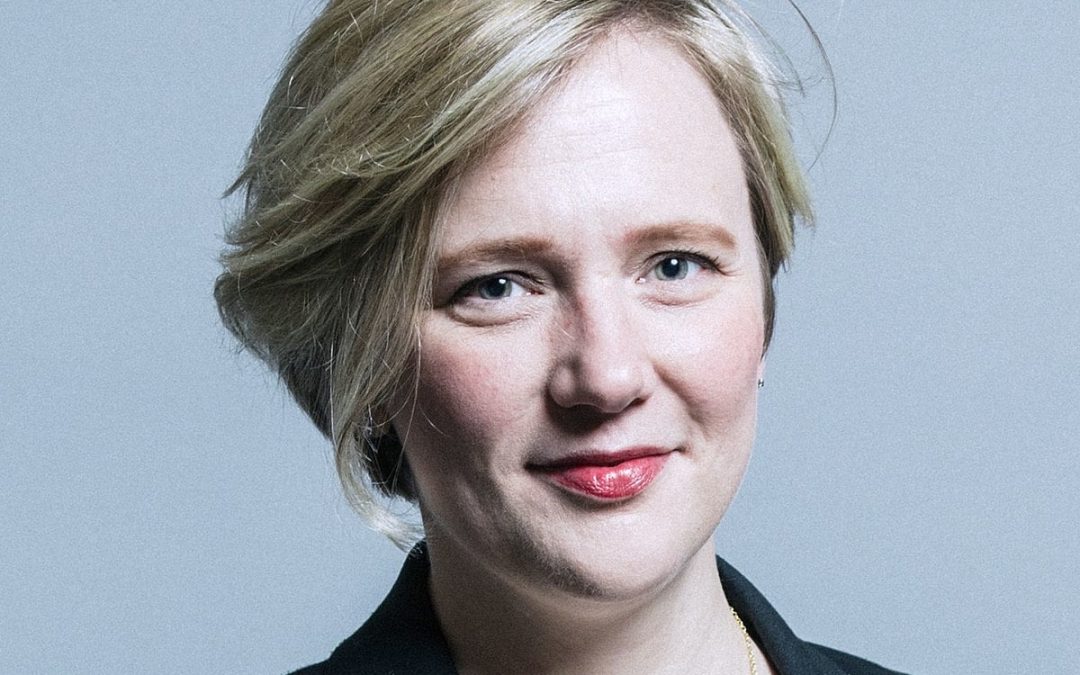
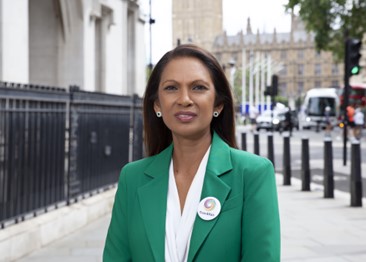
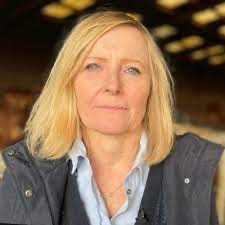
Gina Miller: I fear the damage Brexit delusion is doing to our country, but election year brings real hope

Since the United Kingdom left the European Union at the start of this decade, the inevitable cost and disruption that comes with Brexit reality and the UK being a third country are coming home to roost, post-pandemic.

Full border checks on EU imports have been delayed five times – but come the end of this month, Brexit Britain must face the music. New border controls on animal and plant products have been dressed up by Ministers as a new-and-improved “Border Trade Operating Model”. Yet, according to Sky News, the changes will cost businesses £330m a year, on top of considerable additional costs for energy, staff, overheads and supplies during 2023.

Nearly half of SMEs are saying they’re spending 20-60% more than in 2022. Additionally, the Energy Bill Discount Scheme is set to end in March 2024, which will only make things worse with even higher bills, as the energy crisis is set to continue due to global uncertainty. These additional costs will inevitably be reflected in shopping baskets.

This is my first fear for 2024 – that a Britain already struggling with a prolonged and bitter cost of living crisis will be uniquely subject to more hardship as the Brexit damage deepens.

The Red Sea crisis has thrown international shipping into havoc, resulting in us experiencing the greatest challenge to global supply chains since the Covid-19 pandemic and the 2021 disruption of the Suez Canal. The prices charged for containers transporting an estimated 12% of global trade, worth more than $1tn (£790bn), via longer routes will have a huge knock-on effect on many goods. Companies as diverse as Tesla, Electrolux, IKEA, and Volvo are all ringing alarm bells – many are already halting production.

Add in the severe drought affecting the Panama Canal, the war in Ukraine, curtailed grain shipments via the Black Sea, and more frequent extreme weather, and I, like many, am left in fear of the impact on global supply chains.

The urgency to adapt and reroute not only comes with serious financial consequences – but also dramatic environmental impacts. Increases in shipping traffic, leading to severe changes in underwater noise, will affect fish stocks and marine mammals. Before the Red Sea crisis, if shipping was a country, it would be the sixth largest greenhouse gas emitter worldwide. Now, ships coming from Asia to Europe and the UK are being rerouted around the southern tip of Africa, emitting more carbon dioxide. Emissions will also be increased as manufacturers turn to more air freight.

The EY ITEM Club, a leading UK economic forecasting group, now says there is a “good chance” that the UK slipped into a technical recession at the end of 2023 – meaning we had two negative quarters in a row. While the reality of this will be confirmed to be true, or not, in February when the official GDP data is posted – it comes as no surprise.

In these circumstances, our country can no longer afford the delusion and conceit that there are Brexit benefits. The evidence that Brexit is costing the UK around £100 billion a year due to our economy being 4% smaller than it would have been following pre-Brexit trends is undeniable. UK business investment is growing 19% more slowly than the G7 average, with the negative impacts of Brexit predicted to gradually escalate, reaching some 5-6% of GDP, or about £2,300 per capita by 2035.

Another fear is that people blame the entire political system for the crisis they are experiencing. That mistrust and apathy leads to voters either staying at home or being attracted by populist propaganda, as we’re seeing with the Reform Party.

I set up the True & Fair Party to tell it as it is on Brexit, on political reform and the necessity of a health and happiness economy centred on wellbeing. To bridge the growing division permeating through our conversations, communities, and country.

The increased support we are getting, particularly in our top target constituency of Epsom and Ewell, is giving me hope for 2024.

Covid has muddied the waters in terms of damage to the UK, but the pandemic also delayed the harm of leaving the union. And there is no denying real harm is being done to almost every sector. The Britain that gifted Boris Johnson a thumping majority in 2019 is no longer the Britain we live in. The wave of post-Brexit delusion he rode is crashing on the rocks of reality.

Many people now know they were sold a pup – election day will be judgement day. With the polls consistently at between 58%-63% to rejoin the European Union (close to 70% if you strip out the over 65s), I am hopeful that the next election will result in a Government that recognises that Britain’s place is back inside the EU.

The Liberal Democrats and large parts of the Labour Party are alive to this reality. They know it in their hearts, but they dare not speak their mind. The True & Fair Party is here to give a voice to voiceless voters who say it’s time to end the pretence and start on the road to rejoin.

Even one True & Fair seat in Parliament after the next election would strike an enormous blow against Brexit and keep the flame for rejoining well and truly alive.

Achieving that is my overriding hope for 2024. If you want Britain back around the top table in Europe, join with me to make it happen.


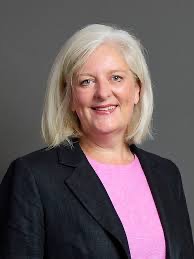
Prof. Juliet Lodge: My hopes for 2024

Peace. Gentleness. Fairness. Equity. Tolerance. An end to poverty and tyranny. Political honesty. Governments respecting and serving citizens and upholding international law.

Looking just at the UK, evidence that Tory Brexit has busted Britain inundates us daily. I hope that we recall the relative calm of life pre-2016 and recognise that we neither have to continue to expect and accept misgovernment, nor shrug off emerging evidence of tawdry mismanagement, complacent, socially uncaring, lazy, ignorant and arrant incompetence, ministerial lies and depraved bungocracy. We did better then and we can do better in 2024.

My hopes for 2024 include us learning from and working with our EU partners, contributing to democratic renewal domestically and building democratic resilience in the reforming EU. We share the EU’s hopes and investment in combating disinformation, and commitment to frustrate foreign interference and corrupt players gaming democracy with malign intent.

I hope that critical reflection can triumph over the fake certainties implied by binary black or white options, and the lure of automated, inevitably biased decisions. 2024 must start the process to end the deprivation imposed by limiting choice, whether by biased humans or by big online platforms. Choice must be shared and cherished so we can try to be innovative in trying to realise a better world, not least for our younger generations and children. Wouldn’t we welcome the EU Childrens’ Participation Platform and efforts to ensure equality for all, no matter how challenging?

Only vandals would drag us out of the ECHR, so I hope that 2024 will see the UK electing a Government of integrity, willing to face the need to be a sane, safe, trustable, tolerant, fair, empathetic, constructive, ethical and forward-looking player on the world stage. One committed to realising the best for ordinary people. One informed enough to understand that kindness, commitment to upholding human rights, sustaining the rights we had in the EU Charter of Fundamental Rights and boosting a welfare state, is not weakness but a sign of a mature society.

I hope that the UK, like the EU, will act on the need for constitutional change and reform; that a UK Government will have the vision to include proportional representation in its aspirations for a fair society; that it will show understanding and realism over Northern Ireland; and that it will be courageous and bold enough to insist on the swift restoration of rights scammed from us all, unions, women and children since Brexit.

I want the deceit over the UK’s need to adhere to high EU standards, and to be in the customs union and the single market to end and be replaced by openness over why mutual removal of physical, technical and virtual borders between the UK and EU were realised in the first place: we all benefit from the four freedoms of movement of goods, services, capital and people. The disingenuous stupidity of the Conservatives’ divisive hostile environment perverts what the UK is and can again be.

People in the EU value EU citizenship and are more aware of its benefits, as are we, as the loss of it hits home, harming the lives of those with family across the EU and our ability to travel around Europe unencumbered by border delays. I hope 2024 will see the restoration of mutual freedom of movement between the EU and UK for families, and for anyone wanting to enjoy the advantages of ErasmusPlus. There is much we could learn from the EU to become more equal and inclusive. There is much we could choose to do together to combat those exploiting immigration from countries outside the EU.

There is also a great deal we could learn from the EU on AI and valuing and protecting individual rights, privacy, autonomy and integrity. We cannot afford morally, let alone economically, to deviate from EU standards, norms and values.

Like so many of us across Europe, I hope for open, humane, climate-protecting Governments of conscience, committed to facilitating public participation, public understanding of how societies work, and using public money for the public good and community.

A general election in the UK before the Euro-elections to the European Parliament in June would be welcome.

I hope 2024 brings and entrenches ethical Government by design and default in the UK and EU as the norm not the exception.


Peter Corr: My biggest hope for 2024, year of elections, is that my fears don’t actually come true.

Watching progress towards Rejoin has been satisfying, although also frustrating. Seeing the polling numbers slowly but surely increase for Rejoin, while simultaneously, politicians going backwards. Such as Ed Davey of the Liberal Democrats joining Starmer in pretending Brexit can work, or that people aren’t talking about Brexit anymore, while all the things he claims they are talking about are directly caused by or made worse by Brexit. I want to see this Government gone, but it’s really hard to consider supporting other politicians who are also clearly lying to our faces to get into power.

The Tories have gone full batshit, to paraphrase a certain MP. Or have they? I believe the Rwanda farce has one goal and that is to force ‘leaving the ECHR’ onto the agenda. They could even put it in their manifesto, and make the whole election about it. Like a crap sequel to the Brexit election of 2019. Would enough of the country fall for that? I don’t think so, but I also never believed we’d vote for Brexit, so maybe I’m not the best judge. One of my biggest fears is definitely the thought that the crazy policies this lot have been coming out with lately could be given an actual mandate.

Over in the land of guns, it seems more and more likely by the day that Trump will win the election. What will that mean for the war happening in Europe right now? The EU should hurry up and fast-track Ukraine’s membership before then if that’s possible. As a side note, if it is possible, I don’t see why the UK rejoining can’t also be fast-tracked. Just a thought. I think Trump winning would have serious implications for NATO, Ukraine, Palestine and, well, the whole world. Another of my biggest fears.

With World War III being openly discussed by military experts and the media, along with even conscription – I think this should be a fear for all of us. Would I be comfortable, as a veteran myself, seeing either of my children being conscripted into the forces? Absolutely not. War is never the answer. But if it were not a choice, I would genuinely rather see them be conscripted into an EU Army than the British Army led by our own lying politicians. And that includes a government led by Starmer.

So, with dark news wherever you turn, it’s more important than ever to positively campaign for our hopes in 2024. That’s what we’ll be doing at National Rejoin March, which continues to grow and gain traction, both online and offline. It’s giving people hope and giving me hope. The team and everyone I meet along the journey helps me forget the Ed Daveys, the Sunaks and the Trumps of the world. My biggest hope of 2024, apart from for my fears not coming true, is that our collective hope will begin to translate into action by our politicians.

n the February newsletter we will be featuring Prof. Chris Grey who is Emeritus Professor of Business and Management Studies at Royal Holloway, University of London. Since 2016 Chris has been writing the Brexit & Beyond Blog, and he is the author of Brexit Unfolded.

If you would like to submit any questions for Chris for consideration, please email them to enquiries@bremaininspain.com no later than Wednesday 7 February.

Bremainers Ask 2023 highlights

Bremainers Ask 2023 highlights

What did this year’s contributors have to say about rejoining the EU?

Gina Miller: What do you think will be the path and timescale to rejoining the EU?

Under EU law, the UK is now a third country, so it would have to reapply and undergo the whole accession procedure from scratch, under Article 49 of the Treaty of European Union. Art. 49 states that “any European State” which respects the common EU values and is “committed to promoting them may apply to become a member of the union”. These values include “human dignity, freedom, democracy, equality, the rule of law”. In other words, even though our present Government is lurching to the right, we would still qualify.

On average, it has taken approximately nine years for recent members to join, from submitting a membership application to signing an accession treaty, for example Cyprus, the Czech Republic, Estonia, Hungary, Latvia, and Lithuania. But our having been members for 40 years would be a huge advantage over these countries. The fact that we have not diverged significantly from EU rules and regulations post Brexit is also beneficial. New border checks on EU imports have been delayed for a fifth time until January 2024, and the requirement for UK manufactured goods to have a UKCA instead of a EUCA mark from 2025 has been scrapped.

In other areas we are actively aligning with the EU: Horizon; aligning with the EU timeline for phasing out petrol and diesel cars; new food standards; and recoupling our electricity trading with the EU.

The question is purely a political one. It took Sweden and Finland only three years from application to the signing of an accession treaty. I see no reason why this time frame is not feasible for the UK, especially as we now have Poland and Ukraine as supporters of us rejoining.


Dominic Grieve: Why are our politicians so reluctant to talk about Brexit and rejoining the EU when the public have demonstrably changed their minds?

The public has clearly concluded that Brexit has not worked out as they hoped, but that is a different thing from saying they want to go back in. Returning will not be on the same terms we enjoyed when we left and will be a complex negotiation. This is why politicians avoid the issue. As time passes, however, it will become unavoidable, as it becomes obvious that there is no substitute to our building a much closer relationship with the EU.


Mike Galsworthy: How could a future rejoin campaign learn from the mistakes of 2016 to make a positive case for selling EU membership to British voters next time round?

Well, that’s why the rejoin campaign is starting right now and learning right now! You cannot wait on last minute persuasion; you have to try and win before the contest itself actually starts. For me, the biggest lesson from 2016 was exactly that. By 2016, the Leave side had campaign veterans championing Brexit. They’d been at it for 25 years. They knew each other, they’d tested lines on it, toured around, found financial backers and sympathetic media. The Stronger In campaign, when it came together in late 2015, was constructed of people who were woefully naïve on matters European, and green as green could be on campaigning. So, for me, lesson one has always been to build, train and fully equip the army long before the battle. And if you look at what we have actually built since 2016, it is quite phenomenal. We have lots of veterans around, lots of hard knocks, lots of experience and lots of local groups who have lived through the tough times. We’ve built character and resources – community online and community knowledge about our core arguments – and now we’re really building central capacity at pace.

That’s the primary lesson. The second lesson is to be able to go out and meet people at their point of need. The huge comms errors of both Stronger In and People’s Vote was to think that endlessly repeating “economic damage” and “we demand a people’s vote” as pretty much catch-all campaign messages was going to turn people around.

Society is much more granular. People care about their own and their community identities, and community priorities. Yes, Vote Leave was saying “take back control”, but they were also going into actual communities and telling them “take back control so you can catch more fish from your own waters”, “take back control and scrap the stupid common agricultural policy”, “take back control of immigration to clear out these Eastern European workers that are sleeping six men to a room and undercutting what you can reasonably charge”, “take back control so we can get your Bangladeshi family over here once we stop the flood of European free movement taking their place”.

You see? That’s how the messaging was tailored to meet people at their point of need/desire. Yes, it was all BS and shamefully so, but it was all based upon what different communities wanted. When did PV do anything like that? We absolutely need to understand community need – and meet those communities at their point of need with our offerings, but unlike the Leave campaign, make sure they are solid promises and those communities stay onboard all the way to delivery. Brexit is failing because the promises didn’t hold up. Rejoin will be a success if the promises do.

Prof. Juliet Lodge: Many believe that the EU would be cautious about considering any UK application to rejoin. Do you agree?

Yes and no. Yes, because the Conservative Governments appear to have flippantly squandered achievements and wallow in toddler theatrics instead of genuinely seeking to have a constructive, working relationship with our closest allies and partners.

Yes, because there seems to have been a lack of understanding at the most basic level about how we worked when in the EU, and how the EU has worked (well) and developed progressive political agendas and policies without us. Yes, because purely from the point of view of presentation, too many Government and opposition politicians display deep ignorance about political realities in Europe and the UK’s increasingly irrelevant position in it.

And yes, because many feel that Article 50 should not be invoked frivolously in the expectation that its consequences can be overturned the moment things don’t quite accord with what the state who invoked it wanted. I feel that Article 50 should never have been included years later as an amendment to the original founding treaties. When the EU was created, there was no clause to leave it. European integration was the promise to work to solve problems together, in effect, forever.

No, because many EU leaders and politicians and officials, business and civil society representatives would welcome us back in the EU as soon as possible. Why? The UK co-created some of the greatest steps leading the EU to become what it is today: freedom of movement, the single market (warts and all), cooperation on defence and security, ErasmusPlus, health, climate, food and safety standards, police and judicial cooperation, and many more. The UK helped draft and agree some of the regulations which are acknowledged as genuine world standards, including the GDPR.

The friendship group created by Terry Reintke MEP is looking after ‘our star’ until we return to the EU as members. By then, many of those who knew the UK as a constructive EU member may have retired so we can’t just rely on them to be our advocate. But we can do our bit on a people-to-people basis to sustain, expand and deepen our links. Above all, we can show that a country outside the EU, which has a bigger pro-EU movement than any of the EU’s current members, is educated, interested, dynamic and a trustworthy partner who would add value to the EU.

It’s our job to educate ourselves in order to give our children a fighting chance of being in the EU, enjoying the opportunities that arise from having shared values and a commitment to democracy and working together with their European peers to improve the well-being of their communities. Isolation on a global stage is daft, on a regional stage it heralds oblivion.

Siobhan Benita: Do you foresee the UK rejoining the EU? If so, what would be the timescale and steps on the way?

I absolutely foresee the UK re-joining the EU. As time passes, the economic damage that Brexit has caused for the UK will become increasingly obvious and fewer and fewer people will be prepared to defend it (or even admit they voted for it). We are already seeing a shift in the narrative with papers like The Telegraph and Daily Mail running articles highlighting some of the negative consequences of Brexit. In addition, pressure for the UK to re-join will come from younger generations as they reach voting age and want to access all the freedoms that we previously enjoyed as part of EU membership.

Given that I would like us to re-join the EU tomorrow, the timescale will never be as quick as I want but I do think it’s possible for it to happen in a matter of years rather than decades. In terms of the main steps along the way, the immediate priority is to get the Tories out with tactical voting at the next general election. I also believe that we desperately need electoral reform and a move to a more proportional system should ensure that we never again have a government with so much power but so little reflection of the voting public as a whole.

Bremainers Ask ……  Annette Dittert

Bremainers Ask …… Annette Dittert

Born in Cologne, Annette Dittert is a German author, filmmaker, correspondent, and journalist and regular commentator on British politics and Brexit. She has worked for ARD German TV since 2001, as a war correspondent in Poland, a senior correspondent in New York, and since 2008 as bureau chief in London.

In 2019, Annette was awarded the title of “political journalist of the year” for her reporting on Brexit.

Steve Wilson : British political moves to the right/far-right have been equated to the politics of Germany in the 1930s. Is this a fair assessment and what can we learn from the lessons of history?

No, I do not think you can compare this to the situation of Germany in the 1930s. Although British politics have moved to the right, and the Tories have been undermining liberal democracy and the rule of law again and again, so far, I think the centre holds. The Covid Enquiry, the Partygate enquiry, and also the Supreme Court and its judgment on Rwanda show that the British institutions safeguarding democracy in Britain are still there. 

David Eldridge : Do you think the UK will rejoin the EU? What would the process and timescale be?

I think this will not happen in the near future. Simply because Labour has no mandate to do it after the next election, after having promised not to rejoin. AND: Brussels isn’t ready to even think about it before it can be sure that Britain comes back with all political parties being for it. The last thing the EU needs is another member being half-heartedly for rejoining and then leaving again. 

Lisa Burton : How much do you think Brexit enabled the rise of the populist far-right in Europe and do you think the tide is now turning against them with election results such as in Poland?

I do not think that Brexit enabled the rise of the populist far right in Europe. That kind of politics is happening all over the world at the moment – If anything, it has stopped it for a while as Brexit is still seen as a  failure even amongst most far right parties in Europe. And yes, what is happening in Poland currently is encouraging to see, although I don’t think it will turn the tide. Wilders in the Netherlands has just shown the opposite. And in Germany the AfD keeps polling around 20%.

Fi Cooper : Do you think that the problems experienced in Britain by our departure from the EU have strengthened ties between the remaining 27 nations? 

Yes, I do think so. The fact that Britain didn’t manage to break that union during the negotiations has surely been a good thing for the EU. 

Anonymous : Do you think Keir Starmer, once in power, will be forced to change his stance on Brexit and, if so, what might that look like?

I hope so, but it might take a long time, probably he won’t be able to do it before a potential second term, but it’s hard to make serious predictions on that now, as there are so many moving parts to it. 

Valerie Chaplin : What are your thoughts on UK politics and how far they have swung right?

I have made my point many times, that Brexit was (amongst other things) basically a coup by a very right-wing elite that got Brexit done with empty promises based on lies. As the polls now show, a majority of the British people have understood this and want the Tories out of Government. So, the pendulum might swing back again next year. Let’s see.

Bremainers Ask …… Gina Miller

Bremainers Ask …… Gina Miller

Gina Miller is a dynamic businesswoman, activist and now, a UK political party leader. In 2012, Gina co-founded the True and Fair campaign, and has campaigned on issues as diverse as modern-day slavery, domestic violence, special needs, inequality, social justice, and online abuse.

She is probably best known for taking the Government to the Supreme Court for attempting to implement Brexit without Parliamentary approval and for successfully challenging the government over the prorogation of Parliament in 2019. She has since launched the True & Fair party and will stand for Parliament in the forthcoming election.

Tracy Rolfe : What do you think will be the path and timescale to rejoining the EU?

Under EU law, the UK is now a third country, so it would have to reapply and undergo the whole accession procedure from scratch, under Article 49 of the Treaty of European Union.

Art. 49 states that “any European State” which respects the common EU values and is “committed to promoting them may apply to become a member of the union”. These values include “human dignity, freedom, democracy, equality, the rule of law”. In other words, even though our present Government is lurching to the right, we would still qualify.

On average, it has taken approximately nine years for recent members to join, from submitting a membership application to signing an accession treaty, for example Cyprus, the Czech Republic, Estonia, Hungary, Latvia, and Lithuania. But our having been members for 40 years would be a huge advantage over these countries. The fact that we have not diverged significantly from EU rules and regulations post Brexit is also beneficial. New border checks on EU imports have been delayed for a fifth time until January 2024, and the requirement for UK manufactured goods to have a UKCA instead of a EUCA mark from 2025 has been scrapped.

In other areas we are actively aligning with the EU: Horizon; aligning with the EU timeline for phasing out petrol and diesel cars; new food standards; and recoupling our electricity trading with the EU.

The question is purely a political one. It took Sweden and Finland only three years from application to the signing of an accession treaty. I see no reason why this time frame is not feasible for the UK, especially as we now have Poland and Ukraine as supporters of us rejoining.


Keith Glazzard : Keir Starmer has identified areas of common interest as the basis of regular consultation between the UK and EU. If Labour wins the next election, do you see any way of extending that idea towards eventual EU membership?

It is very hard to understand Labour’s strategy. The idea that a Labour Government would be able to cherry-pick is for the birds. The integrity of the single market is paramount to the EU. If we were to join the single market, what would be the EU’s incentive to offer us more? We would be in the position of having no say, no input, no vote on any committees, rules, or the future direction of travel. I am not a supporter of this option – especially after speaking to the EFTA members.

If Starmer’s starting point is to utilise the renegotiation clauses in the Trade and Cooperation Agreement that accompanies the Withdrawal Treaty, that would allow sector-by-sector solutions that would be hugely beneficial to the UK and could be a very pragmatic path to rejoining. Bearing in mind the polls are already consistently at between 58% – 63% for rejoin, I’m still unclear what Starmer is waiting for?


David Eldridge : Prior to the last election, you set up a website and conducted a poll encouraging tactical voting against the Conservatives. This time you have set up the True and Fair Party, presumably with the aim of standing against Labour and Conservative and therefore discouraging tactical voting. Please can you explain this change of strategy?

In 2017 when I set up Best for Britain, tactical voting was the right strategy to dent what was looking like a 100-seat majority for the Tories. It also helped our success that there were no other competing or misleading tactical voting sites.

In 2019, the Remain United tactical voting website was aimed at helping people to elect remain supporting, centrist MPs. Unfortunately, the Corbyn effect meant that good people like Monica Harding, Dominic Grieves, Luciana Berger and David Gauke, who we were supporting, all lost their seats. It also did not help that there were several other tactical voting websites that were masquerading as independent but were not.

Since 1998, I and others have been campaigning for reforms to strengthen our machinery of government, to replace our naive ‘good chap’ model of government with codified, legal requirements for those we elect and pay. To bring in wide-ranging but pragmatic constitutional and electoral reforms to modernise our democracy, improve governance, and combat the corruption that has earned us the nickname ‘Londongrad.’

These have been very difficult messages to get across to the electorate. But, after COVID, partygate and the corruption and disgraceful behaviour we have seen in Parliament in recent years, the public can see how broken and rotten our system is. People are thinking ‘they are all the same’ and feeling politically homeless. That the system is rigged with no redress, no matter how scandalously politicians behave. The sentiment of ‘them and us’ is becoming widespread, resulting in the apathy that we have already seen in recent by-elections, leading to very worrying low voter turnout figures. It is to the people who are saying “none of the above”, who abhor the status quo, that the True & Fair Party is offering a new choice.


Steve Wilson : Assuming you succeed in becoming MP for Epsom and Ewell, what will be your first order of business?

The national policies I would be relentlessly vocal about are enshrining the prerogative [powers in law (we cannot have a Prime Minister with largely unfettered powers); proportional representation; and rejoining the EU. Locally, a completely new vision for high streets and city centres: bringing health, well-being and community hubs into the High Street.

Helen Johnston : A new petition calling for a general election is gaining enormous support. What are the pros and cons of an early versus a later election date and do you think the timing would make a difference to the scale of the Conservative loss?

There are so many rumours and theories going around that it’s very difficult to tell what will happen.

Now that the Conservatives have repealed the Fixed Term Act, Sunak can call an election whenever he feels inclined to do so. The current Parliament first sat on 17 December 2019 and will automatically dissolve on 17 December 2024, with polling day expected to take place 25 days later (excluding bank holidays and weekends).

There are many factors Sunak will be weighing up, including:

Inflation is 6.7% today and is likely to carry on decreasing. The Bank of England expects inflation to fall to around 5% by the end of 2023, then to keep on falling during 2024 and reach its 2% target in the first half of 2025. The Government will claim it is their success, though this is largely not true. But there are still upside risks to the inflation outlook, likely reflecting recent stickiness in core inflation, meaning people will still be feeling it in their pockets.

The combination of falling inflation, and a budget with tax cuts and other fiscal bribes, could see Sunak call an election in May, maybe rolled up with the local May elections as they have done in the past. This has these huge political advantages for the Tories:

It stops the fractional infighting (‘lancing the boil’ as senior Tories have relayed to me) and allows them to rebuild their party in opposition sooner rather than later.
Local elections in May are expected to result in the Conservatives losing hundreds of seats and councils, and the London mayoral elections, which would be disastrous.
Sunak would avoid being replaced (several people are circling to take over – Braverman, Farage, Badenoch, Mordaunt – even Truss!) ahead of a late general election.
It would stop the haemorrhaging of supporters and members to the Reform Party.
I’m told another phrase being used by the Tories is ‘damage limitation’. They expect to limit losses, or at best scrape through, if they go early, do a pact with Reform UK (looking at the last two by-elections such a pact would have resulted in the Conservatives holding on to both Tamworth and Mid-Bedfordshire) and don’t allow Labour time to spell out their policies.
The other view is that the election will be called at the end of the short Parliamentary sitting next September, with the election in late Autumn. As you will recall at all the Party conferences this year, the repeated message was these were the last conferences before the next General Election. The financial assessments are that the worldwide picture will be better in autumn 2024. If America reduces interest rates, it’s likely Europe and Britain will follow, so an autumn 2024 election is economically more attractive.

This timing also has the advantage of being after a long parliamentary summer recess, when there is no real scrutiny and people are less politically engaged over summer, and a low turnout, which would help the Tories.

The disadvantages are that migrants’ Channel crossings are likely to rise over the summer, while the mortgage crisis may deepen as more people face the end of their current fixed rates around summer.


Tony Isaac : Is there any way that the Conservatives could turn things around and win the next election?

See my answer above but, in essence, yes. The maths here is important. For Labour to have even a one seat majority, they need to win 124 seats. For a stable majority of 30 they need to win 153 seats. If the by-election swings are not replicated at the general election (historically the case), there is no Tory/Reform UK pact, Labour and LibDems don’t have an agreement in certain crucial seats, Labour do not win back the seats they need in Scotland, and voter apathy remains at the levels our True & Fair polling is finding (with turnout in the low to mid 30% range), the Tories could hold on to power. Every seat matters.


Lisa Burton : Previously you have spoken about MPs having contracts of employment, which makes sense and would allow a lot more accountability. Do you think any of the other parties would consider backing it?

The simple answer is no. The main three parties would not back many of the policies, the political reforms, that we at True & Fair believe are essential to strengthening our democracy and making it fairer. These include no second jobs  including media shows), reforming the House of Lords to be a purely secondary chamber providing oversight, electoral reforms such as compulsory voting, reforms to political advertising and media ownership. They are even resistant to putting the Nolan Principles onto a legal footing. This was a major factor in my decision not to stand for Labour or the LibDems.


Valerie Chaplin : We are all working together to encourage more people to join the Rejoin movements and are struggling to engage the younger generation, especially as Brexit and the loss of freedom of movement, Erasmus etc. affects them the most. How do we resolve this?

Our experience is that young people are very exercised about Brexit and the damage being done to their options, opportunities, and security. If you strip out the over-45s from rejoin polls, over 70% of people under 45 want to rejoin. It is an utter betrayal of the younger generations by the main parties that they talk about rejoining being for future generations. How much more damage do they need to see? How many young people will they sacrifice with their cowardly leadership?

We engage with more young people than many other parties do, and they tell us they don’t feel anyone cares about them, that they have no voice, no representation. We have to find a different narrative, to emotionally engage with them, find different channels of communication. It was very evident at the recent National Rejoin March in London that our movement must pursue other ways of reaching young people. A very practical strategy is to get young people to speak to other young people.

If you, your family or your friends live in the Epsom, Ewell and Leatherhead constituency, and would like to help Gina out with her campaign, she would welcome your support on the ground. You can make contact with Gina’s team via her website – just click on the Volunteer button.

Next month

Annette Dittert is a German author, filmmaker, correspondent, and journalist and regular commentator on British politics. She has worked for ARD German TV since 2001, as a war correspondent in Poland, a senior correspondent in New York, and since 2008 as bureau chief in London. In 2019, Annette was awarded the title of “political journalist of the year” for her reporting on Brexit.

If you wish to submit a question for consideration, please send your question(s) to: enquiries@bremaininspain.com no later than Wednesday 8 November.

Bremainers Ask ……… Dominic Grieve KC

Bremainers Ask ……… Dominic Grieve KC

Dominic Grieve was Attorney General (2010-2014), served as Shadow Home Secretary and was MP for Beaconsfield (1997-2019), as well as chairing Parliament’s Intelligence and Security Committee.

He is also president of the Franco-British Society, holder of the Legion of Honour award and a visiting professor in Law, Politics and Human Rights at Goldsmiths University London. He was a prominent Remainer, proposed many Brexit amendments and called for a second referendum.

For his work on civil liberties and the rule of law, Grieve was recognised with two awards: Parliamentarian of the Year in 2005 and in 2014 he received a Lifetime Achievement award from Liberty. He now serves as Vice President of European Movement UK.

Ruth Woodhouse : How can a cross-party approach to rebuilding ties with the EU be achieved when there is such extreme polarisation within politics today?

There is no doubt that the process by which we joined the EEC in the 1970s was enabled by the development of a significant cross-party consensus that it was in our national interest to do so. But such a consensus can emerge again driven by the realities of our geo-political position in Europe. As the heat generated by Brexit cools, there are already signs of greater realism in the two main parties on this issue. This emphasises for me that rebuilding ties with the EU can be done a stage at a time.

Michael Soffe : As an ex-Attorney general – do you believe that we will ever see a legal process that will end in some “Leave” MPs being found guilty of criminal charges in some way?

No, there will be no such criminal process and nor is one desirable. Self-deception and misleading others as a consequence is not a crime, even if it is an undesirable aspect of democratic politics and history will judge some politicians very harshly over their behaviour. But to progress we cannot spend our time seeking some form of retribution on those who have landed us in this mess. We need to persuade them to our way of thinking.

Steven Wilson : Looking back on the earlier parliamentary battles over Brexit, is there anything you wish you, or others, had done differently? 

I think I can really only speak for myself on the matter. The principal criticism directed at me and others in the Conservative Party who argued for a second referendum is that it contributed to making Theresa May’s “soft Brexit” impossible and the same criticism is also made with more force against Labour. But Labour were never going to take responsibility in Opposition for helping carry out Brexit in any form and I took the view that the Brexit Theresa May wanted was both a poor outcome in itself, but also wholly unachievable in view of the attitude of the “Hard Brexiters” in the Conservative Party. So I don’t think my approach made any difference although I did worry about it at the time. If Labour had swung behind a second referendum, then it was possible we could have had one. But it will always be unclear if the result would have reversed that of the first.

Anon :Can the Conservative Party ever be rescued from the far-right extremists, and if so, how, and by whom?

It can be rescued and will doubtless be at some point in the future when the right wing that has high-jacked it is wholly discredited.  But this will not necessarily follow defeat at the next election, as history shows that parties fail initially to learn lessons from defeats and often become more illogical and extreme in the short term, helped by the fact that any new leader (and Sunak will not survive defeat) will be picked ultimately by the members who are no longer representative of Conservative voters at all.

Dominic Grieve

Valerie Chaplin : Why are our politicians so reluctant to talk about Brexit and rejoining the EU when the public have demonstrably changed their minds?

The public has clearly concluded that Brexit has not worked out as they hoped, but that is a different thing from saying they want to go back in. Returning will not be on the same terms we enjoyed when we left and will be a complex negotiation. This is why politicians avoid the issue. As time passes, however, it will become unavoidable, as it becomes obvious that there is no substitute to our building a much closer relationship with the EU.

Helen Johnston : As a lawyer with a long-standing interest in human rights, how do you feel about recent reports that members of the Government are pushing for the UK to leave the ECHR?

It troubles me very much that our adherence to the ECHR is now in question with members of the Government. The ECHR may not be perfect and its interpretation by the European Court of Human Rights at times not what some would wish. But it is one of the great successes of UK soft power in raising human rights standards in Europe and has been beneficial to us as well. Leaving would mean leaving the Council of Europe, wrecking our Trade and Co-operation Agreement with the EU and having to exit the Horizon programme, because shared adherence to the ECHR underpins data sharing. It is also irreconcilable with the Belfast/Good Friday Agreement that requires us to adhere to it. I also cannot see the slightest advantage to our doing this. It is not going to make it any easier to return illegal migrants, as the main problem is that their countries of origin will often not co-operate to take them back.

Lisa Burton : Do you think we may see a split in the Conservative Party if they lose the next general election?

The Conservative Party may split, but that depends on what happens after the election and who becomes leader. It is unclear how many Conservative MPs will remain and what their views are, and this will be critical to whether or not they can find a common policy approach round which to rally.

David Eldridge : What should Parliament have done differently to achieve the aim of stopping the hard Brexit we ultimately got?

I have in part tried to answer this in question 3 above. I think a hard Brexit was inevitable. Theresa May ruled out the softest of Brexits and Labour then refused to support her less soft version, and she did not have the majority to carry it in the face of ERG Conservative rebels. So, all forms of Brexit were doomed to be unachievable until Johnson won his large majority through Corbyn’s folly at failing to appreciate his own unelectability, helping to deliver the hard Brexit Johnson and his supporters wanted.

Coming next month

We are delighted to announce that Gina Miller has agreed to feature in our Bremainers Ask in October. 

Gina is probably best known for taking the government to the Supreme Court for attempting to implement Brexit without parliamentary approval and for successfully challenging the government over the prorogation of parliament in 2019. She has since launched the True and Fair Party and will stand for parliament in the forthcoming election.

If you would like to submit a question for consideration, please email us no later than Sunday 8 October at enquiries@bremaininspain.com

Bremainers Ask……  Professor Michaela Benson

Bremainers Ask…… Professor Michaela Benson

Michaela is a sociologist with expertise in migration, citizenship and identity. She is particularly known for her research on lifestyle migration, the middle classes, and Britain’s relationship to its emigrants and overseas citizens at moments of major political transformation, including Brexit. Her research projects include Brexit and British citizens in the EU and Rebordering Britain and Britons after Brexit (MIGZEN).

Valerie Chaplin : What is your opinion on the Government’s Illegal Migration Bill, sending people to Rwanda, or housing Asylum seekers in barges?

Where do I start… I want to stress that I fundamentally oppose the Government’s Illegal Migration Act. In my opinion, making people criminals for coming to the UK through unauthorised routes and deporting them to Rwanda—or Ascension Island—with no future right to claim asylum in the UK is part of a wider agenda to undermine the ECHR and UN Refugee Convention. Housing them in disease-ridden accommodation is no way to treat other humans. I see this legislation as the culmination of the UK’s Hostile Environment brought in first under the Conservative-Liberal Democrat Coalition and Home Office Policy that has increasingly sought to demonstrate that they can pick and choose who comes to the UK and on what terms. Since the New Plan for Migration, anti-asylum rhetoric and related legislation have become a bedrock of the Government’s ambitions to demonstrate that they have ‘taken back control’ of the UK’s borders after Brexit. But with devastating consequences for the lives of those fleeing for their lives from conflict and persecution.

A cheeky plug, My colleague Nando Sigona and I discussed some of this in the latest episode of our podcast Who do we think we are? You can listen here.


Debbie Williams : What do you think about the Withdrawal Agreement? Strengths and weaknesses?

I’m going to focus here on the Withdrawal Agreement and Citizens’ Rights. Very simply, at least it managed to secure the residential rights of British citizens in the EU/EEA and EU/EEA nationals in the UK. I think that being circumscribed around this issue was a problem—which I know that a lot of you are dealing with. Leaving the issues of onward free movement and cross-border workers to the Trade and Cooperation Agreement (TCA) prolonged uncertainty among those whose lives relied on this, and often with significant consequences for their ability to continue their lives as before. So much more I can say, but have run out of space… I am sure that you all have your opinions about what could have been done differently.


Clarissa Killwick : How important is it to change the perception of Britons abroad, (both in the eyes of the public and government), is it achievable, and if so, how?

It’s really important because misconceptions matter. Working on the issue of what Brexit meant for British citizens living in the EU, I came face-to-face with this all the time—whether trying to get the attention of journalists, government officials, and other academics. At times, advocating for your rights it felt like talking to a closed door because they had already decided who you were. But I kept on trying to debunk these misconceptions.

There will be no immediate change in perception, but it is important to challenge these. When it comes to providing case studies to journalists or politicians, make sure it is not who they would expect (in terms of age, race, employment etc.). If you are in one-to-one conversation, you can ask people whether they have friends or family members who have emigrated from the UK, and more often than not they will (the British population abroad is equal to 10% of the resident population of the UK after all).

Michael Soffe : How do we even start to change the mindset of so many British people that migration is a good and necessary thing for the UK when we have such a hostile UK press?

I think that it is important to register that there is a difference between the politicisation of the migration in the UK press, and what the general public think. Sometimes I think that the rhetoric is pumped up to try and solicit support for the Government’s agenda precisely because they do not have the consensus of the general public. However, that is not to say that we should be complacent. We should start close to home and think about how we talk about migration. I take my inspiration from Migrant Rights Network and their Words Matter Campaign.


Lisa Burton : Do you believe significant numbers of undocumented British are currently in Europe?

I am really concerned about this, and I have been warning about people falling between the gaps and the long tail of Brexit. In short, there are certainly undocumented British citizens living in the EU/EEA. I would not be able to hazard a guess at how many, but I would rather turn attention to the implications of this for their lives. As these are human lives, any number is significant. And the question is whether enough has been done to reach them.

In the short term, and depending on where they live, it might have no consequences. Being undocumented—and thus without a legal status in your country of residence—is a highly precarious position to be in, and it will undoubtedly have consequences in the future in terms of their access of services and healthcare, accessing rights and entitlements. And I also want to highlight that this might be through no fault of their own. There will be those who were not in a position to advocate for themselves during the implementation period—children in care, those in ill health and incapacitated—and others who for whatever reason were not aware that they had to do anything to secure their rights. These are just the headlines of what the implications may be and who might be impacted.


Molly Williams : What have you learnt about the British diaspora? The biggest surprises and inaccuracies?

I have been conducting research into British emigration for the past twenty years, and what has surprised me the most has been how little this is discussed. On both sides of my family, people have emigrated from the UK—I have family on four continents. I even emigrated myself as a child. So, I have always known that people left, and that they maintained relationships with their friends and families back in the UK. The per capita rate of emigration from the UK makes it one of the highest in the world, with the result that most people could probably name someone they knew who had emigrated. But it is not a topic of public or political discussion (although it is coming back onto the political agenda a bit because of fears of brain-drain within the Health and Social Care Sector). Importantly, until the mid-twentieth century, emigration was Britain’s migration story. What changed? Stay tuned to find out more … seriously, I am just working through this in my research.


Matt Burton : Is there now enough data to show changes in migratory patterns of British citizens emigrating to the EU pre-Brexit, when we had Freedom of Movement, and post-Brexit without?

Not yet! We know that people are still leaving—the latest stats show an estimated 92,000 British citizens left the UK in the year ending December 2022. Importantly, and linked to question about surprises, the UK does not actually keep records of everyone leaving the country. Nor do they have a way to do this. But back to the question, it will take a while to accumulate enough data to get patterns about where people are going. But I think a more important question will be about whether there are shifts in the demographics of who is emigrating in respect to level of education, occupation, age, and income etc. and how that maps onto destinations around the world given differences in domestic immigration controls.

Next month – Dominic Grieve KC

Dominic Grieve KC is one of the Tory rebels stripped of the whip by Boris Johnson in 2019 for refusing to back a no-deal Brexit. The MP for Beaconsfield from 1997 to 2019, he served as attorney general from 2010 to 2014 and chaired Parliament’s Intelligence and Security Committee for four years. He is a visiting professor in Law, Politics and Human Rights at Goldsmiths, London University. His work in Parliament on civil liberties and the Rule of Law was recognised by two awards – Parliamentarian of the Year in 2005 and in 2014 by a Lifetime Achievement award from Liberty. On 30 June this year European Movement UK announced his appointment as Vice President.