The Withdrawal Agreement – How it affects you!

The Withdrawal Agreement – How it affects you!

The Withdrawal Agreement is an international agreement between the UK and the EU that sets out how the UK’s membership of the EU would end. It runs to hundreds of pages on various topics, but the section on citizens’ rights will likely be of most interest to our members.

All of the topics below and more can be FOUND HERE on the European Commission’s website.

The Citizens’ rights section answers questions, including:

  • Who is protected by the Withdrawal Agreement?
  • What does the Withdrawal Agreement protect?
  • Residence rights

And a range of guidance documents on various topics, including:

  • Citizens’ rights
  • Rules for UK nationals with multiple immigration statuses
  • Rules for family members joining UK nationals
  • Permanent Residence
  • Absences and loss of residence status.

The Withdrawal Agreement in full can be found HERE

Events 2025

Events 2025

20 December – Better with EU
Livestream – 16:00 – 23:59 GMT
Christmas Special telethon, with comedy, live music acts, a quiz & political commentary
Hosted By: Ben Chambers, Lee Rudd
More information here

16 December – Institute for Government
Online – 12.30 – 13.30 GMT
The Trump challenge: Chaos, confusion and government communications
Speakers: Katy Balls, Simon Baugh, Alastair Campbell, Alex Thomas, Jill Rutter
Register to attend here

15 December – Make Votes Matter
Online – 19.30 GMT
Christmas Special – Reflecting on the progress of the PR campaign
Speaker:
Peter Tatchell
Register to attend here

8 December – N. Herts for Europe
Online – 19.00 – 20.15 GMT
Brexit & British Politics
Speaker: Maximilien Robespierre
Register to attend here

3 December – European Movement UK
Online – 18.30 – 19.30 GMT
In the Room with Putin, Obama & Johnson
Speakers: João Vale de Almeida, Molly Scott Cato
Register to attend here

26 November – Institute for Government
Webinar – 16.00 – 17.00 GMT
Autumn budget 2025: What is Rachel Reeves’ plan for the economy?
Speakers:
Dan Haile, Jill Rutter, Giles Wilkes, Nick Davies
Register to attend here

22 November – Bremain in Spain AGM
Online – 11.30 – 13.00 CET
Agenda will include a review of our spending, our Annual Report, our proposed strategy for the coming year, ratification of the Bremain Council and your opportunity to put questions to the Bremain Chair and Council.
To submit a question in advance, email us
Register to attend here

19 November – Institute for Government
In person (London)/online – 18.00 – 19.15 GMT
The UK-EU ‘reset’: Six months on
Speakers:
Baroness Ashton, Prof. Anand Menon, Calum Miller MP, Sir Ivan Rogers, Jill Rutter
Register to attend here

19 November – Institute for Government
In person (London)/online – 10.00 – 11.00 GMT
How successfully have Labour run public services?
Speakers:
Ambe Dellar, Stuart Hoddinott, Cassia Rowland, Stephen Bush
Register to attend here

11 November – UK in a Changing Europe
Live on Slido/YouTube – 13.00 – 14.00 GMT
Confronting foreign policy challenges
Speakers:
Anand Menon, Fiona Hill, Rana Mitter, Timothy Garton Ash, Margaret MacMillan
Register to attend here

30 October – Agora Group
Online – 12.00 – 13.30 UK time
The age of backlash – the ECHR & the new political reality
Speakers: Derek Hand, Adam Bodnar, Andrew Forde, Mikael Madsen, Alice Donald, Colin Harvey, Veronika Fikfak
Event Programme here
Register to attend here

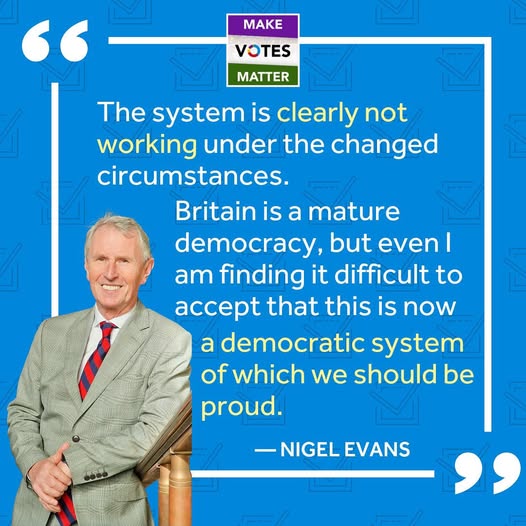
27 October – Make Votes Matter
Online – 18:30 UK time
Is It Time for Conservatives to Consider Proportional Representation
Speaker: Nigel Evans
Read the Article here
Register to attend here

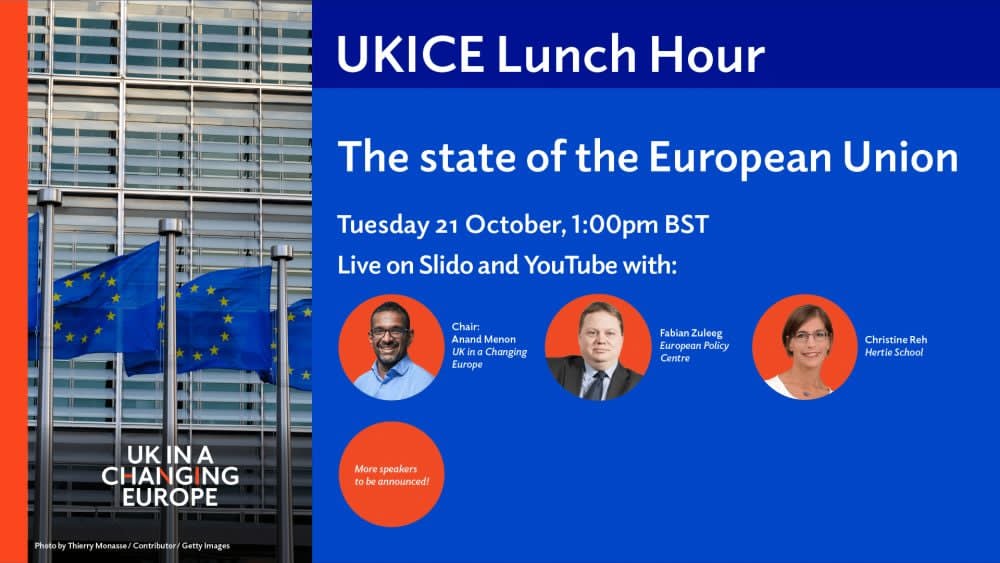
21 October – UK in a Changing Europe
Live on Slido/YouTube – 13.00 BST
The state of the European Union
Speakers:
Anand Menon, Fabian Zuleeg, Christine Reh
More info here
Register to attend here

13 October – Make Votes Matter
Online Zoom – 18.30 – 19.30 BST
Temper Trap: How Proportional Representation tames the far right.

Discussing the key findings of a recent report on how PR systems act as a balancing force.
Read the report here
Register to attend here

Festival of Europe

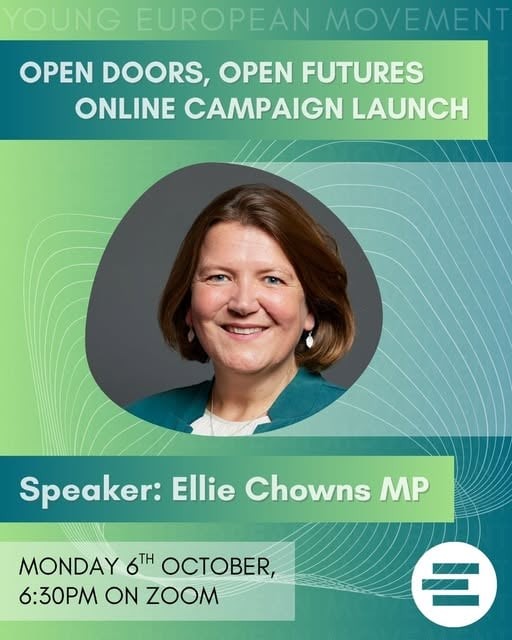
6 October – Young European Movement
Online Zoom – 18.30 – 19.30 BST
Open doors, open futures – Campaign launch.
Panel discussion on Erasmus+ & the Youth Experience Scheme
Speakers:
Ellie Chowns, Andrew Hadley MBE, Maria Kurinna, Alfred Quantrill, Haydyn Osborne-Brooks
Register to attend here


Festival of Europe

30 September – Led by Donkeys
In person (London)/online – 20.30-22.30 CET
In conversation with columnist Zoe Williams
Speakers: Led by Donkeys:
Ben Stewart, James Sadri, Oliver Knowles, Will Rose
More Information here
Book in person (range of prices) & livestream tickets (£15) here

Festival of Europe

17 September – Stop Trump Coalition
In person event – London – 14.00 BST
Trump is coming to the UK for a full state visit to London and Windsor, where he will be hosted by the King.
Join the demonstration against the state visit and let the US President that neither he, nor his brand of far-right politics is welcome in Britain.
Register your interest here

Festival of Europe

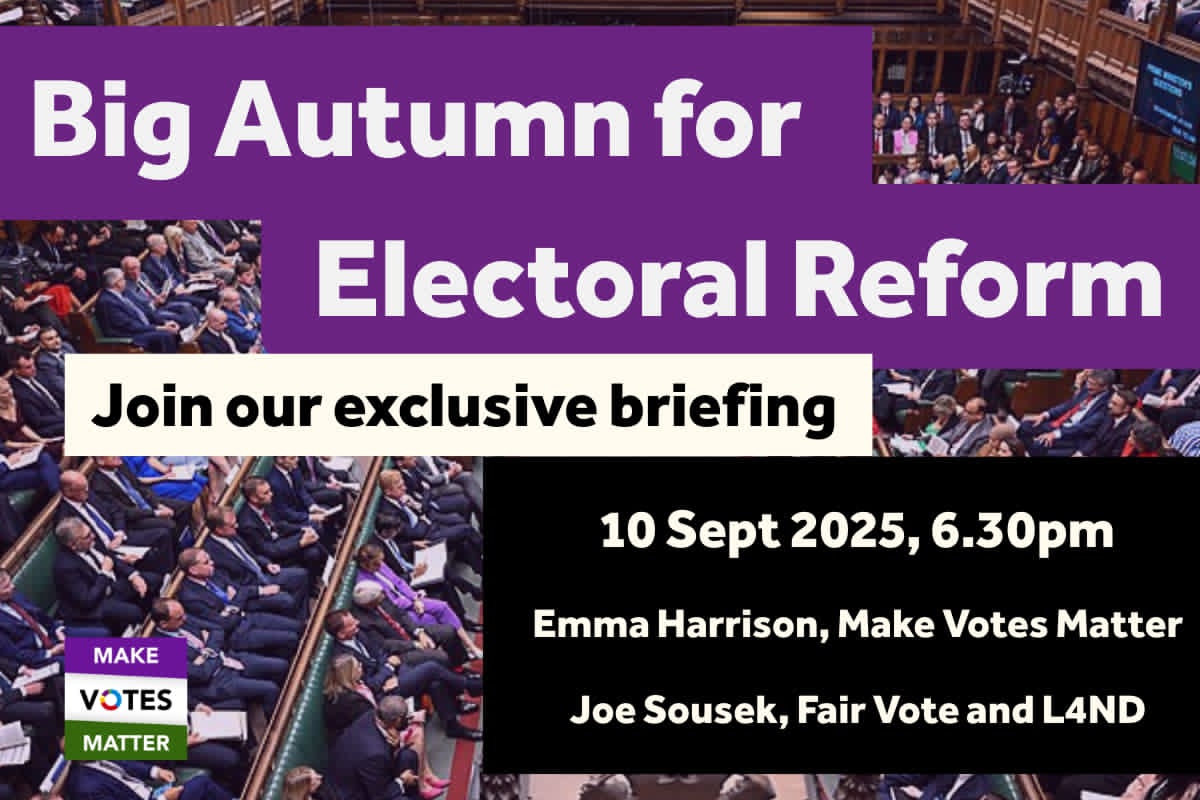
10 September – Make Votes Matter –
Online Zoom – 18.30 BST
This autumn could be a game-changer for electoral reform with the English Devolution and Community Empowerment Bill (2nd reading), Democracy Day and Elections Bill (2nd reading).
There’ll be a push for PR for the HOC and an amendment for a National Commission on Electoral Reform.
Register to attend here

Festival of Europe

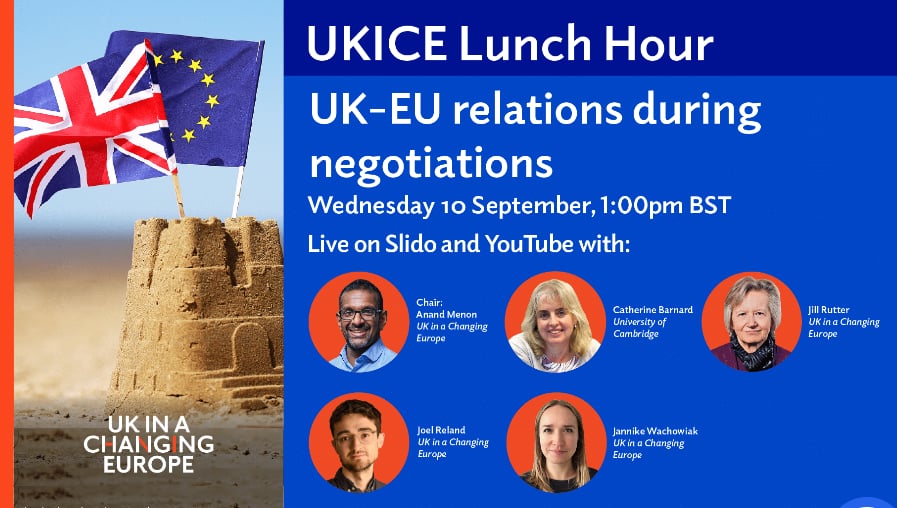
10 September – UK in a Changing Europe
Live on Slido/YouTube – 13.00 BST
UK/EU relations during negotiations
Speakers:  Anand Menon, Catherine Barnard, Jill Rutter, Joël Reland, Jannike Wachowiak
More information here
Register to attend here

Festival of Europe

9 September – Stop Trump Coalition
Online Zoom – 17.00 BST
How do we resist the return of fascism, defend democracy, end war & genocide & defend human rights?
Speakers: Luke Cooper, Mary Kaldor, Judith Levine, Seema Syeda, Ananya Vajpeyi, Vincenzo Fiore
Register to attend here

Festival of Europe

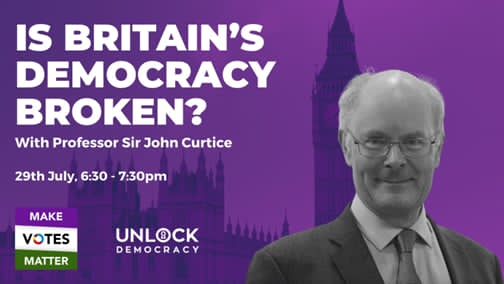
29 July – MVM/Unlock Democracy
Webinar – 18.30 – 19.30 BST
Is Britain’s democracy broken? – Our politics isn’t working & we need to act fast to fix it.
Speaker: Prof. John Curtice
Register to attend here

Festival of Europe

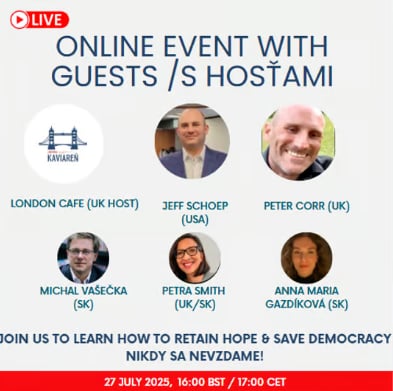
27 July – London Cafe
Online Webinar – 16.00 – 17.00 BST
Change is possible – How to retain hope & save democracy
Speakers:
Peter Corr, Jeff Schoep, Petra Smith, ​Michal Vašečka, ​Anna Mária Gazdíková
Register to attend here

Festival of Europe

17 July – European Movement UK
Online webinar – 18.30 – 19.30 BST
What next for EU/UK cooperation on energy climate & environment?
Speakers: Caroline Lucas, Simon Saunders
Register to attend here

Festival of Europe

8 July – Grassroots for Europe Round Table
Open webinar – 18.30 – 20.00 BST
Resisting the Trump Assault: will American democracy survive & what can we do to help?
Speaker: Alexander Hall Hall
Register to attend here

Festival of Europe

2 July – APPG on Citizens’ Rights
In person (HOC)/Online – 14.30 – 16.00 BST
The rights of EU citizens in the UK and Britons living abroad and the challenges facing Britons abroad in securing representation in the UK
Speakers: Manuela Perteghella MP, Elena Remigi, David Sapiro
To attend in person, email New Europeans
Register to attend by Zoom here

Festival of Europe

29 June – N. Herts for Europe
Online Zoom – 17.00 – 18.15 BST
Why Reform will win the next general election – and what that means for Brexit
Speaker: Nick Tyrone
Register to attend here

Festival of Europe

26 June – New European People’s Forum AGM
Online – 16.00 CET
Shaping Europe from the ground up.
Speaker: Xhabir Deralla, CIVIL – Center for Freedom
Register to attend here

Festival of Europe

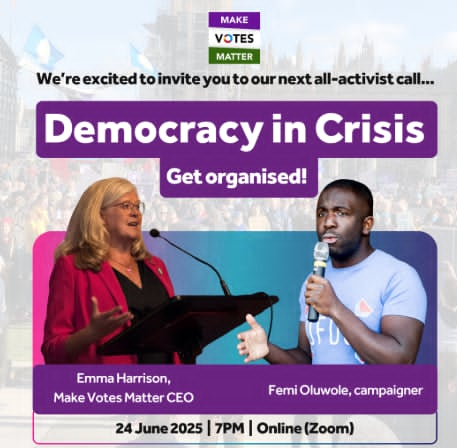
24 June – Make Votes Matter
Online Zoom – 19.00 BST
Democracy in Crisis. Get organised!
Discussing the call for PR.
Speakers: Emma Harrison, Femi Oluwole
Register to attend here

Festival of Europe

4 June – In Limbo Roundtable event
Webinar – 11.30 – 12.45
How Brexit has affected the lives of citizens of UK in EU and EU in UK.
Speakers: Molly Scott Cato, Nicholas Hatton, Lisa Burton, Veronique Martin, Miles Martin, Elena Remigi
More information here

Festival of Europe
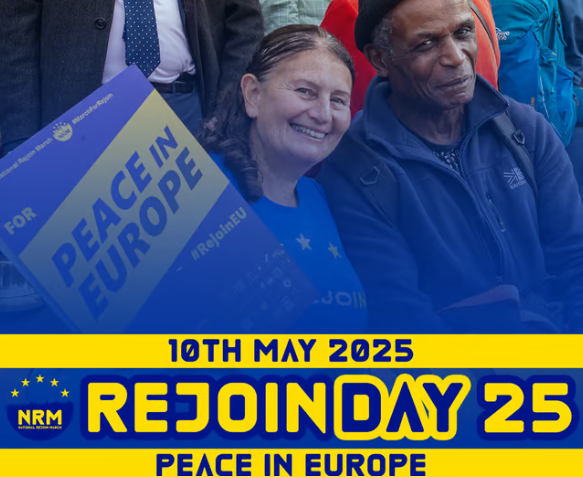
8/9/10 May – National Rejoin March
In person – 3 days of events UK
On 8th, 9th & 10th May, there will be a number of events across the UK celebrating VE Day, Europe Day & Rejoin Day.
More information available here
Festival of Europe
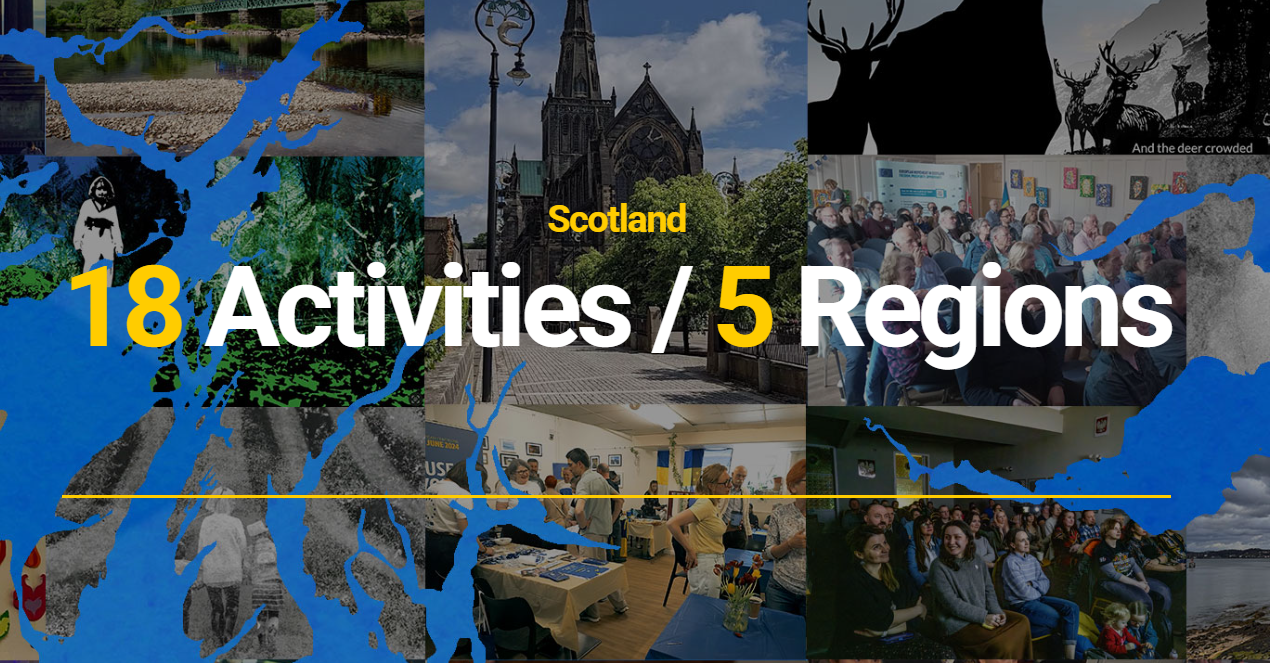
3 – 11 May – Festival of Europe Scotland
In person – 18 Events across 5 Regions
2nd annual Festival of Europe Scotland taking place annually around Europe Day to celebrate the values and benefits of peace, democracy and cooperation amongst Europe’s nations.
More information available here
Festival of Europe
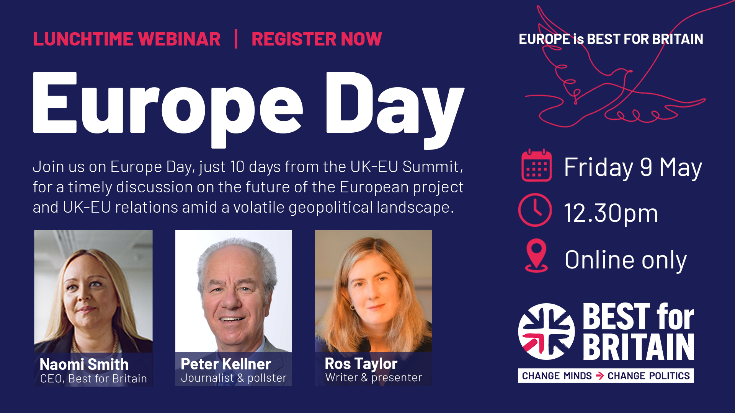
9 May – Best for Britain
Online – 12.30 BST
Join us on Europe Day, just 10 days before the UK/EU summit, for a timely discussion on UK/EU relations amid a volatile political landscape.
Speakers: Naomi Smith, Peter Kellner, Ros Taylor
Register to attend here
Festival of Europe
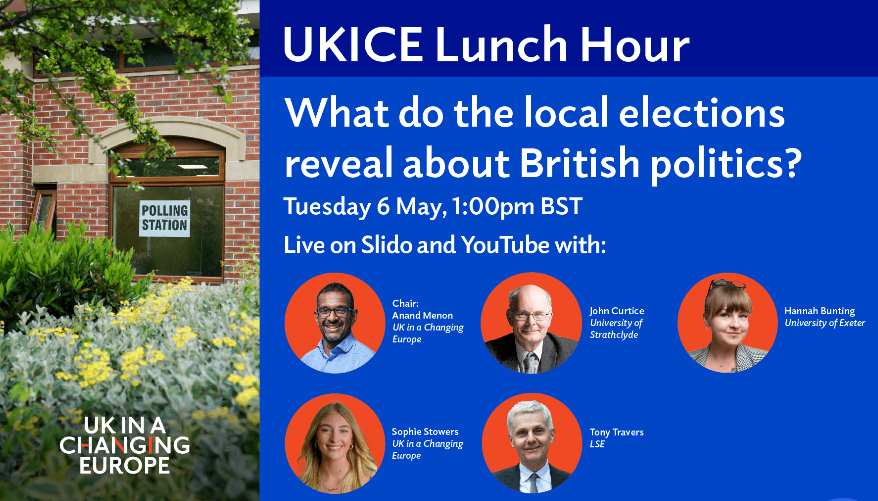
6 May – UK in a Changing Europe
Live on Slido/YouTube – 13.00 – 14.00 BST
What do the local elections reveal about British politics?
Speakers: Anand Menon, John Curtice, Hannah Bunting, Sophie Stowers, Tony Travers
More information available here
Register to attend here
Festival of Europe
13 April – N. Herts for Europe
Online – 17.00 – 18.15 BST
Issues facing Brits in Spain & Europe post Brexit
Speaker: Lisa Burton, VC Bremain in Spain, EM UK board & council member
Register to attend here
Festival of Europe
9 April – Global Justice Now
Online – 19.00 – 20.15 – BST
Trump, Tariffs & the US trade deal: What are the consequences of imposing this oligarchs’ agenda on the world?
Speakers: Nick Dearden & Ruth Bergan
Register to attend here
Festival of Europe
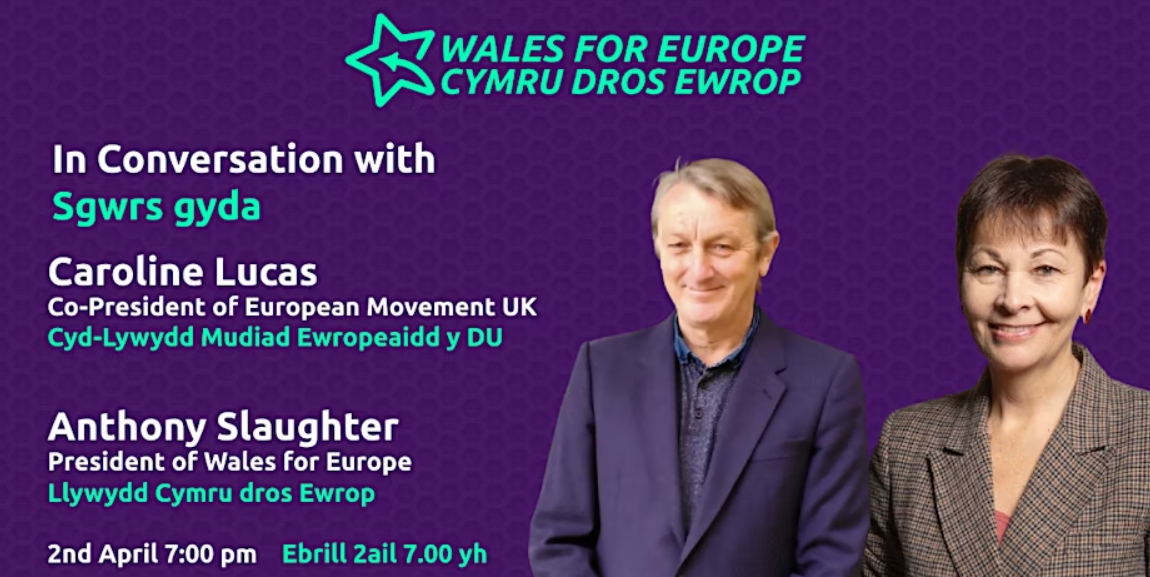
2 April – Wales for Europe
Online – 19.00 BST
In conversation with ……..
Speakers: Caroline Lucas & Anthony Slaughter
Members only – join here
Register to attend here
Festival of Europe
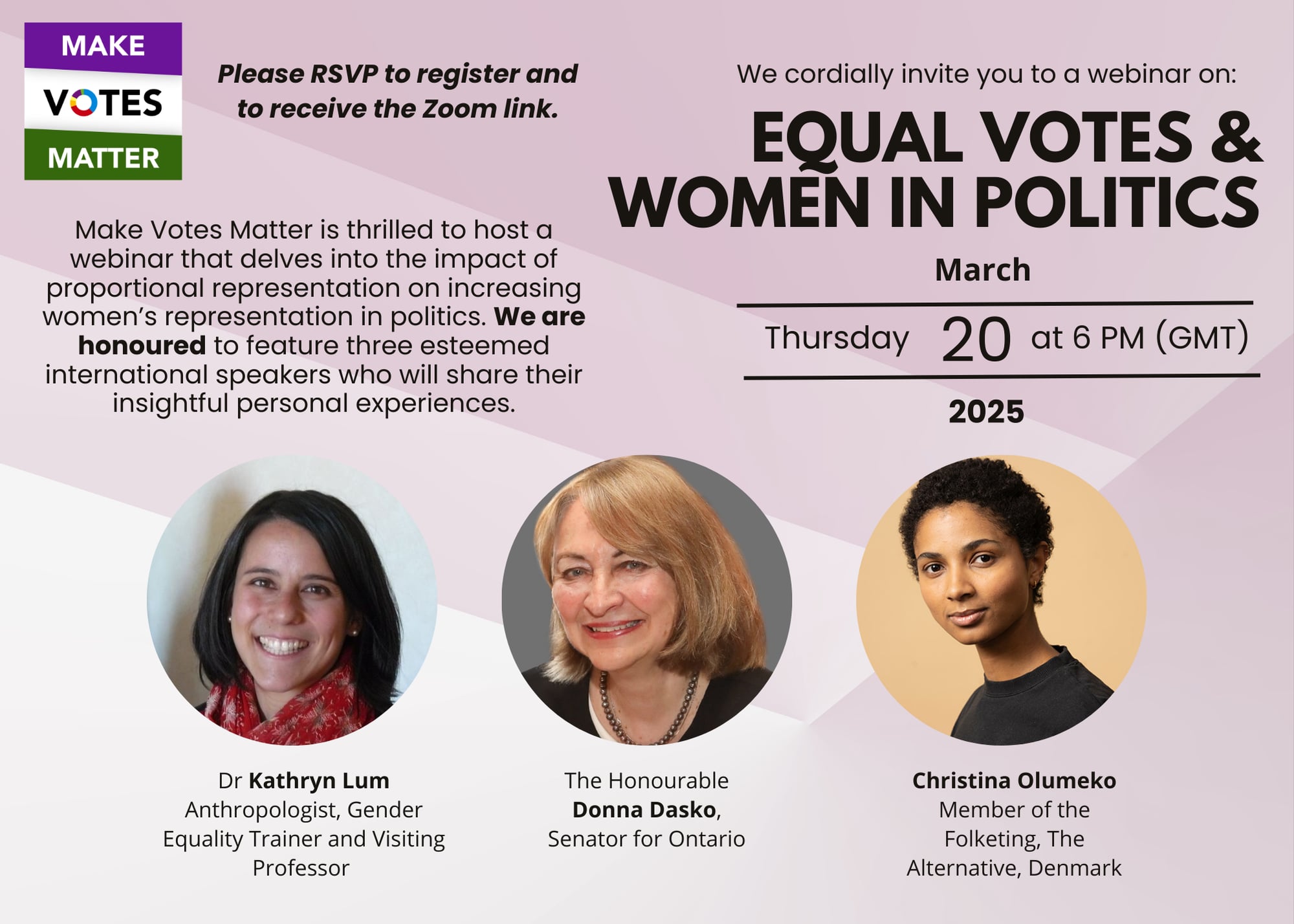
20 March – Make Votes Matter
Online via Zoom – 18.00 – 19.00 GMT
Equal Votes & Women in Politics: the impact of PR on increasing women’s representation in politics
Speakers: Dr. Kathryn Lum, Donna Dasko, Christina Olumeko
Register to attend here
Festival of Europe
12 March – Labour Campaign for Free Movement – Online via Zoom – 19.30 GMT
Instead of opposing Reform’s immigration policy, Labour are copying it. Help the fight back to find a better alternative.
Register to attend here
Festival of Europe
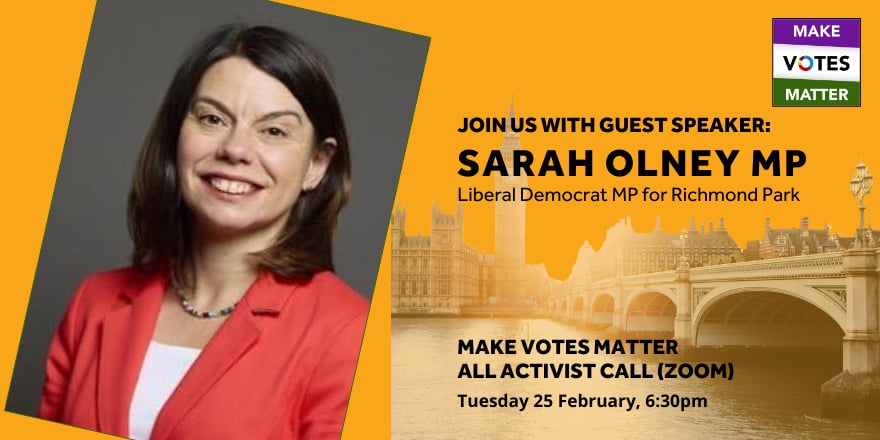
25 February – Make Votes Matter
Online via Zoom – 18.30 GMT
All activist meeting, as part of ongoing cross-party talks. Topics will include PR, current activities & upcoming plans.
Speaker: Sarah Olney MP
Register to attend here
Festival of Europe
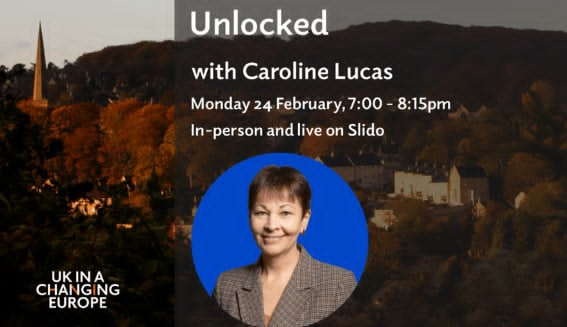
24 February – UK in a Changing Europe
In person/live on Slido – 19.00 – 20.15 GMT
Unlocked: the fight for social and climate justice and better politics
Speaker: Caroline Lucas
Further information here
Festival of Europe
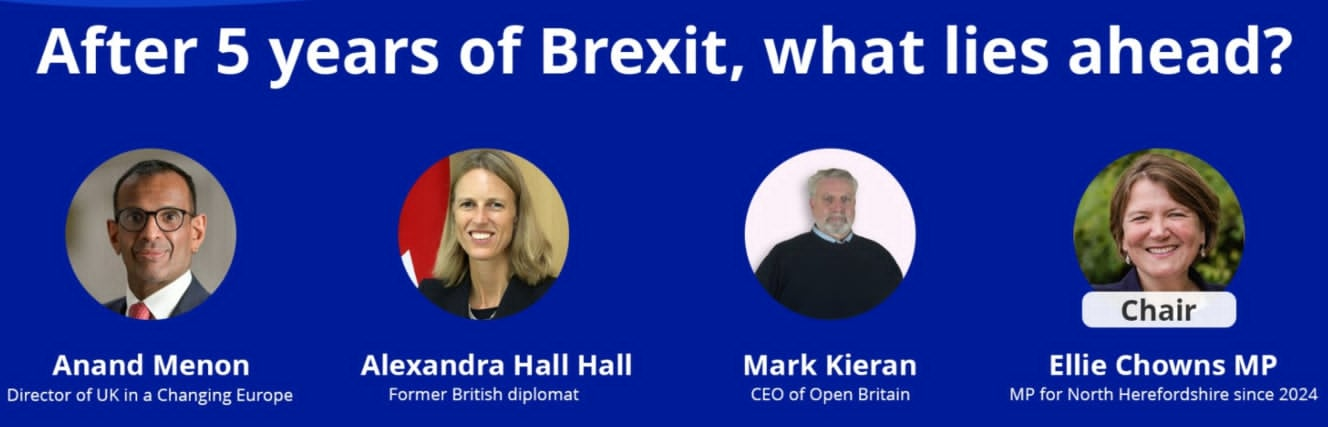
19 February – European Movement UK
Online – 18.30 – 19.30 GMT
After 5 years of Brexit, what lies ahead?
Speakers: Anand Menon, Alex Hall Hall, Mark Kieran, Ellie Chowns
Register to attend here
Festival of Europe
15 February – European Movement UK
In person/online – 10.30 – 17.00 GMT
Grassroots conference: speeches, workshops. To attend in person, you must be an EM member or affiliate.
Speakers: Caroline Lucas, Emma Knaggs, Mark English, Joe Meighan
Register to attend here
Festival of Europe
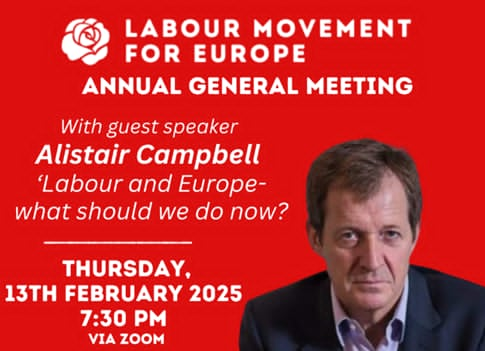
13 February – Labour Movement for Europe
Online – 19.30 GMT
Annual General Meeting, plus a discussion on: ‘Labour and Europe – what should we do now?’
Speaker: Alistair Campbell
For LME members only – join here
Register to attend here
Festival of Europe
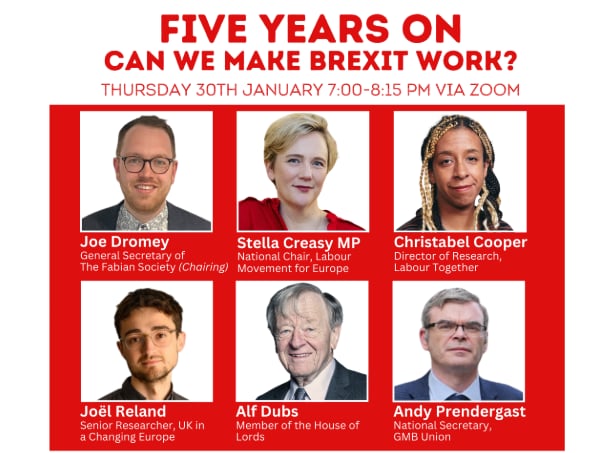
30 January – Labour Movement for Europe
Zoom Webinar – 19.00 – 20.15 GMT
Five years on, can we make Brexit work?
Speakers:
Joe Dromey, Stella Creasy, Christabel Cooper, Joel Reland, Alf Dubs, Andy Prendergast
Register to attend here

Festival of Europe
23 January – Independent
Online – 20.00 – 21.00 CET
Will the Brexit headache ever end?
Almost 8 years on & Brexit-related issues are as prominent & divisive as ever, & concerns abound about the damage being caused.
Speakers: Stella Creasy, Mark Francois, Clare Fox & Prof Anand Menon
Register to attend here

Festival of Europe
18 January – European Movement Staffs
In person/Online – 15.00 – 16.30 GMT
Why the UK should rejoin Erasmus +
Speakers: Cecilia Jastrzembska, Kanika Safiya, Matt Pointon & Klajdi Selimi
More information here
To attend in person, register here
To attend via Zoom, register here

Festival of Europe
16 January – European Movement Scotland
Online – 19.00 – 21.00 GMT
What does a Trump presidency mean for Europe?
Speakers: Alyn Smith, Lord Kerr
Register to attend here

Festival of Europe
15 January – Cambridge for Europe
Webinar – 19.30 CET
Is there any good news? The challenges we face & nurturing the seeds of hope.
Speaker: Alex Hall Hall
Register to attend here

Festival of Europe
15 January – APPG on citizens’ rights
In person/Online – 16.00 – 17.00 GMT
Organised by New Europeans and Unlock Democracy, the agenda will cover overseas constituencies & postal voting issues from EU.
Speakers: Tom Brake, Mike Tuffrey, Sue Wilson, Clarissa Killwick & Dr. Ruvi Ziegler
Further information here
To take part online, register here

Festival of Europe
14 January – European Movement UK
Webinar – 18.30 GMT
Raising awareness of EMUK Erasmus+ Campaign & discussing planned action day on 25 January.
Register to attend here

Festival of Europe
12 January – N. Herts for Europe
Online – 17.00 – 18.15 GMT
More Chicanery with the Digital Immigration System in Brexit Britain.
Speaker: Cosi Doerfel-Hill (the3million)
Register to attend here (voluntary donation of £3)
Festival of Europe

7 January – Young European Movement
Online – 17.00 – 18.30 GMT
Eradicating violence against women & girls; Empowering Europe.
Speakers: Cecilia Jastrzembska, Dorothy Herson, Hannah Phillips, Sara Harris
Register to attend here


Festival of Europe
Rejoin Ramble

Rejoin Ramble

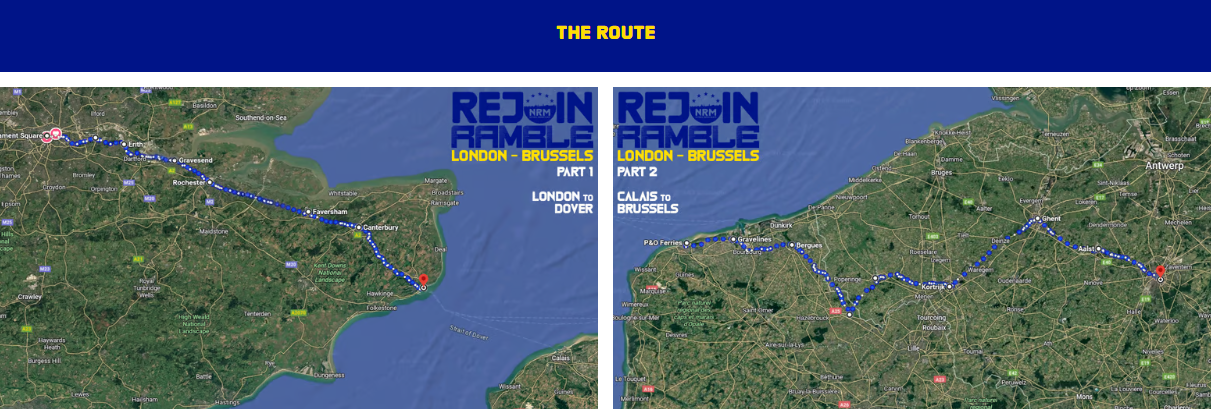
Next year, from Saturday 23 May to Friday 5 June, the National Rejoin March are planning an extra special event. The Rejoin Ramble will see the NRM team of Peter Corr, Clare Hall and Ceira Sergeant walk 255 miles from London to Brussels. On arrival, they will deliver a booklet full of your comments on why we want to rejoin the EU.

There are many ways you can contribute:

  • Add your comment for inclusion in the booklet here
  • Make a donation to cover the Ramble costs here
  • Join the send off in Parliament Square on Saturday 23 May at 8.00 a.m.
  • Join the send off in Dover on Friday 28 May at 8.00 a.m.
  • Join the reception in Brussels on Friday 5 June at 6.00 p.m.
  • Join the NRM team on any of the legs, on any of the 14 consecutive days, in England, France or Belgium (daily average 19.6 miles)

Or, for the really ambitious (and fit), why not join for the entire ramble?

Further information is available on the Rejoin Ramble webpage, including how you can join the NRM team for any/all of their ramble.


Bremain in Spain will be taking part. Why not join in the fun and show the EU just how badly we want our citizenship back?

Bremainers Ask…. Marsha de Cordova MP

Bremainers Ask…. Marsha de Cordova MP

Marsha de Cordova has been the Labour MP for Battersea since 2017, serving in Keir Starmer’s Shadow Cabinet as Shadow Secretary for Women and Equalities. She is a member of the Socialist Campaign Group and has been Second Church Estates Commissioner since 2024.

Marsha is Co-Chair of the UK-EU Parliamentary Partnership Assembly, having been appointed in 2024.

Ruth Woodhouse

Why are Labour seemingly so afraid to challenge the anti-migrant narrative of Reform UK, and indeed appear to be positively enabling it?

This directly speaks to the crucial issue of standards and the responsibility all politicians share to maintain honest and respectful debate.

I am deeply concerned that the migration debate has become toxic, in part because the left has underestimated how easily racism and far-right extremism can infiltrate mainstream political discourse. This complacency has led to a misguided approach, one that tolerates far-right rhetoric and, at times, repeats it while ignoring the serious risks involved. In some cases, when the repercussions of doing this become clear, some politicians have retreated from their harmful statements. However, by then the fear and division have already taken root in our communities.

We must confront the far-right’s anti-migrant narrative decisively and hold ourselves to a higher standard of political discourse – one grounded in truth, respect, and inclusivity. Giving ground to far-right discourse on migration will only strengthen the far-right and weaken our message to communities.


Lisa Burton

When can we expect to see the details and implementation of the youth mobility scheme between the UK and the European Union?

As I’m not a government minister, I don’t have the specifics of the negotiations.

However, based on several indications from the Chancellor and the Minister for Europe, it’s clear the Government is committed to advancing the scheme. This includes promising signs of working towards association to the brilliant Erasmus+ programme.

After multiple discussions with Ministers, I’m optimistic they aim to make substantial progress ahead of the next UK-EU Summit in May.


 Matt Burton

What would you say to pro Europeans who feel that Labour is not going far or fast enough with resetting the UK’s relationship with the European Union?

I represent Battersea – a constituency that voted overwhelmingly to remain in the European Union and a place where thousands of Europeans live – and I fully share the frustration many feel about the ongoing challenges as result of Brexit. This includes issues around the cost of living, reduced cultural exchange, and the pressure on small businesses that my constituents experience every day.

Throughout my time as an MP, I have consistently championed a pro-European vision. Across Battersea, it’s clear just how much a closer, more constructive relationship with the EU could improve people’s lives.

That said, it’s important to remember the state of our relationship with the EU before this Government took office. Less than eighteen months ago, conversations were simply not being had and there was no sign of life between the UK and EU. Since then, we’ve seen real progress: this Government has reopened dialogue, laid the groundwork for deeper cooperation on a range of issues, and, crucially, demonstrated a genuine willingness to work with our closest neighbours to confront the world’s most pressing challenges.

I am hopeful that from this standpoint, further change will flow.


Susan Scarrott

Have lessons been learned from the Brexit referendum campaign – where there were few positive messages regarding our relationship with the EU – rather than simply reacting to the negatives that Reform is still perpetuating?

We only need to look at the outcomes of last May’s UK-EU Summit to see change here. The tone of our relationship has shifted, and we are now hearing the right messages about the value of working together.

The Government is putting forward the argument that we need our neighbours to build a safer, more stable and peaceful world. We are also pressing the value of cultural exchange for young people’s opportunities and emphasising the objective truth – that it is better for our economy and for trade to work with the EU rather than against it.

There is a renewed confidence to Government communication on EU affairs, which is very welcome given the dire state of the conversation less than six years ago.


Anon

As a former Secretary of State for Women and Equalities, what positive changes for women have you witnessed over recent years and what more needs to be done to ensure equality?

Gender-based violence remains one of the most serious challenges we face in achieving women’s safety and equality. For many in Battersea, this issue struck painfully close to home with the horrific murder of Sarah Everard in 2023.

Since then, however, we have begun to see meaningful progress. The introduction of Raneem’s Law in February marked an important step forward, bringing domestic abuse specialists into 999 control rooms for the first time. A new criminal offence for spiking will soon be created under the forthcoming Crime and Policing Bill, showing the Government is serious in its commitment to halve violence against women and girls in the next decade.

I was also buoyed by the appointment of Dr Mary-Ann Stephenson as the new Chair of the Equality and Human Rights Commission. Having had the privilege of working with her and the Women’s Budget Group during my time as Shadow Minister for Women and Equalities, I know she brings a wealth of expertise, integrity, and compassion to the role – qualities that will be essential in defending and advancing women’s rights and equality.

Next month

Bremain’s Annual General Meeting will take place online on Saturday 22 November. You can register here to attend.

Members, whether attending or not, are invited to put questions to the Bremain Council. We will also feature the best questions/answers in next month’s newsletter.

If you wish to submit a question for consideration, please email us no later than Wednesday 12 November. Please indicate in your email if you would prefer your question to include your name, or if you prefer it to be discussed and published anonymously.

Strengthening The Institutions We Rely On

Strengthening The Institutions We Rely On

by Helen Johnston for Yorkshire Bylines

A new report finds that the UK’s arm’s length public bodies are highly vulnerable to politicisation.

Earlier this month, we reported on a talk by Professor Christina Pagel of University College London (UCL) at a Grassroots for Europe  webinar about the Trump Action Tracker project, documenting the systematic dismantling of democratic institutions in the United States by the Trump regime.

Now, a new report, ‘Strengthening the institutions we rely on’ by Pagel and her colleagues Luke Flynn and Martin McKee at the UCL Policy Lab and the London School of Hygiene and Tropical Medicine (LSHTM) respectively, finds that the UK’s top scientific institutions, from the Met Office to the UK Health Security Agency, have inadequate institutional defences to prevent potential political interference.

Learning from the US experience

The tracker shows that under Donald Trump, independent institutions in the US have been systematically attacked in a number of clear areas:

With its populist, far right, nationalist agenda, the Reform Party is on the rise. We can see only too clearly how Nigel Farage is reading, and following, the Trump playbook. Professor Pagel explained that, as she watched events unfold in the States, she began to wonder: “What can we do that is a bit more positive than just tracking this kind of doom spiral. Do we need to protect British institutions if a right-wing populist government came into power here in four years’ time?” Her ANCHOR (Advancing National Commitment to Health and Science, Open Data & Resilient Oversight) project examines how UK institutions can be protected by understanding the US experience.

Identifying weak points

By mapping the independence of 24 arms-length bodies (ALBs), specifically involved in producing or publishing evidence or holding governments to account, the project aims to identify and counter potential vulnerabilities. Results for eight key bodies are shown below (taken from the Report’s executive summary).

Reassuringly, they show that the Office for National Statistics (ONS) is already substantially protected from interference. But some other vital bodies have very little independence. The UK Health Security Agency has the right to publish without interference, but it could be abolished rapidly, with no parliamentary oversight. This is effectively what the Tories did to its predecessor, Public Health England, in the middle of the pandemic.

The most vulnerable aspect across all the ALBs studied is that of independent appointments. The 2015 Grimstone Review significantly weakened the powers of the Commissioner for Public Appointments. Independent panels draw up a shortlist of candidates, but the new rules allow ministers to override their recommendations and pick whoever they want:

“Given what’s happened in the US, I think we can all see where that can go wrong.”

There is already evidence of interference in the independent functioning of some key bodies. While acknowledging the limitations of the UK’s parliamentary sovereignty, Pagel believes strengthening public accountability mechanisms can at least ensure parliamentary and public scrutiny of proposed changes to remit, funding or leadership, and so slow or prevent potential authoritarian shifts. “There is obviously a democratic argument that ministers should set overall strategy, but within that, ALBs should have the ability to set priorities on how to meet that strategy.”

How populists exploit vulnerabilities

The UCL Policy Lab report published today examines how the resilience of these key bodies can be strengthened to protect them from a populist government. According to Pagel: “We only need to look across the pond to the actions of the second Trump administration in the USA to see how a coordinated attack on institutional guardrails can rapidly undermine the independence of federal agencies and diminish evidence-based governance. This was not done through sweeping, time-consuming legal reform, but through the calculated exploitation of a series of structural vulnerabilities.

“We’ve seen how the replacement of agency leadership, purges of internal watchdogs and legal re-engineering have been weaponised in the USA, not to mention the slashing of funding and the suppression of research, and it is vital the UK learns lessons from this before it is too late.” 

The report highlights how around one-third of the independent bodies studied lack statutory status, meaning their existence, powers and functions are not defined and authorised by an Act of Parliament, leaving them at risk of being redefined or even abolished behind closed doors.

Co-author Professor Martin McKee (LSHTM) says: “We compare the current situation to a castle with open gates and holes in its walls. This may not matter when there is peace but, when a threat arises, these weaknesses really matter.”

The report recommends: 

  • Increasing legal and statutory protection – Parliament should expand statutory underpinning where needed, especially for ALBs involved in regulation, scrutiny, or advice. It should protect against ministerial overreach.
  • Supporting independence in leadership – The Civil Service should adopt appointment procedures that limit the direct involvement of ministers beyond setting the strategic direction of a post.
  • Resilient funding models – Sponsoring departments should safeguard medium-term funding by expanding multi-year funding settlements to support sustainability and delivery and build on experience with existing practice.
  • Strengthening accountability – Parliament should strengthen accountability by requiring ALBs to produce parliamentary accountability reports, which the National Audit Office would review.
  • Setting priorities and safeguarding operational autonomy – Priority setting must reflect a balance between democratic oversight, the public interest and institutional independence.
  • Protecting the freedom to publish – Legislation should protect the right of ALBs involved in scrutiny, regulation, or public health to publish independently, without needing the prior consent of ministers.
  • Framing the national conversation – Ministers should publicly support the ALBs for which they are responsible and avoid using pejorative language or creating politically motivated bodies.

There is broad public agreement for these principles: polling for the report, carried out by More in Common, found 71% of Britons said it is more important for ALBs to be independent of the government, rather than controlled by it. Across all demographics, the public agreed that a key argument in favour of independent ALBs is that “politicians aren’t experts in many areas”.


Fighting back

The other participants in the webinar where Pagel introduced the ANCHOR project wholeheartedly endorsed the ideas behind it. Tom Brake of Unlock Democracy noted that, in opposition, Labour was very much in favour of restoring, for example, the independence of the Electoral Commission. Now it is in power, it prefers to leave the Tory changes on the statute book. “There are many examples of things that the government could be doing now to try to defend defenders better, should there be a change of government to one which seeks to do exactly the sort of things that Trump is doing in the US.”

Mike Galsworthy, chair of European Movement UK, agreed: “More democracy needs to happen in terms of empowering citizens’ voices, so that citizens can comment on, organise on, and resist power structures in politics … I think ANCHOR is a fantastic start to buttress the system”.


Original article by Helen Johnson for Yorkshire Bylines: https://yorkshirebylines.co.uk/politics/strengthening-the-institutions-we-rely-on/

Helen Johnston is a freelance translator who has lived in Spain for over two decades. She is on the council of the Bremain in Spain, and is the ‘Europe outside the UK’ member of the Grassroots for Europe Council.