Government’s plan to export refugees to Rwanda condemned as inhumane, unworkable and extortionate

Government’s plan to export refugees to Rwanda condemned as inhumane, unworkable and extortionate

The Home Office’s ‘new plan for immigration’ is not going to work. The model is flawed, the cost is prohibitive and few outside of Conservative right-wing enclaves support it.

The latest, and most extreme, extension to the government’s anti-immigrant arsenal comes with a variety of contentious claims. The Home Office maintains that the plan will:

  • tackle the global migration crisis
  • break the business-model of people-smuggling gangs
  • deter dangerous and illegal journeys
  • give migrants the chance of a new life
  • set a new standard on asylum and resettlement

Home Secretary Priti Patel described the “ground-breaking” migration and economic development partnership with Rwanda as “world leading”. Without a hint of irony, she said that “fairness” was at the heart of their approach, asserting that “the British public have rightly had enough”. She stopped short, just, of claiming this was the ‘will of the people’.

Widespread criticism of government’s immigration plan

Criticism of the Rwanda plan has come from a variety of sources, not least from religious leaders who usually refrain from engaging in political arguments. Archbishop of Canterbury Justin Welby said the plan to send asylum seekers to Rwanda did not “stand the judgment of God”, and accused the Home Office of “subcontracting our responsibilities”. He was joined by Paul Butler, the Bishop of Durham, who said it was wrong to “punish those seeking asylum”, adding that it was the traffickers “that need to be targeted and brought to justice for their terrible crimes”.

The Jewish Council for Racial Equality issued a statement and wrote an open letter to the home secretary, condemning the “inhumane plans”. They described the policy as “cruel” and an “abdication of responsibility”. They urged the government to “protect, not punish, those fleeing conflict and persecution”.

Lord Alf Dubbs – a former child refugee himself – warned the government of forthcoming problems in the House of Lords, saying, “they’re going to have real difficulties in getting this through”. He described the proposal as “a way of getting rid of people the government doesn’t want”, adding, “it’s a breach of the 1951 Geneva convention on refugees”.

Enver Solomon, chief executive of the Refugee Council said the government was demonstrating a “total disregard for the welfare of vulnerable people”, and was “treating them as human cargo to be shipped to Rwanda and forgotten about”.

The condemnation has extended even to the home secretary’s own department, with civil service unions claiming there is widespread mutiny among their members. There have been threats of ‘mass walkouts’ following a rare direction from the home secretary to overrule civil servants’ concerns.

Unethical, unworkable and extortionate

Labour Party ministers and MPs were quick to criticise the Rwandan policy as “unethical”, “unworkable” and “extortionate”. As well as pointing out the considerable cost, they challenged Patel’s claims that the policy would have a significant impact on the numbers of refugees risking their lives to cross the Channel.

The deal with Rwanda will supposedly cost the taxpayer £120m, though this is merely the stated price for an ‘economic development programme’ for Rwanda. It does not allow for the cost of a single asylum seeker being shipped abroad. As MP Stephen Kinnock pointed out, the policy in “unravelling quickly” as further details of the proposals emerge.

Initially, it was assumed that those applying for asylum while being ‘processed’ in Rwanda would be returned to the UK if their claim was accepted. It soon became apparent, however, that the trip was one-way only. Any successful applications for asylum would mean being refugees being granted permission to stay in Rwanda, not being returned to the UK

Another dead cat distraction?

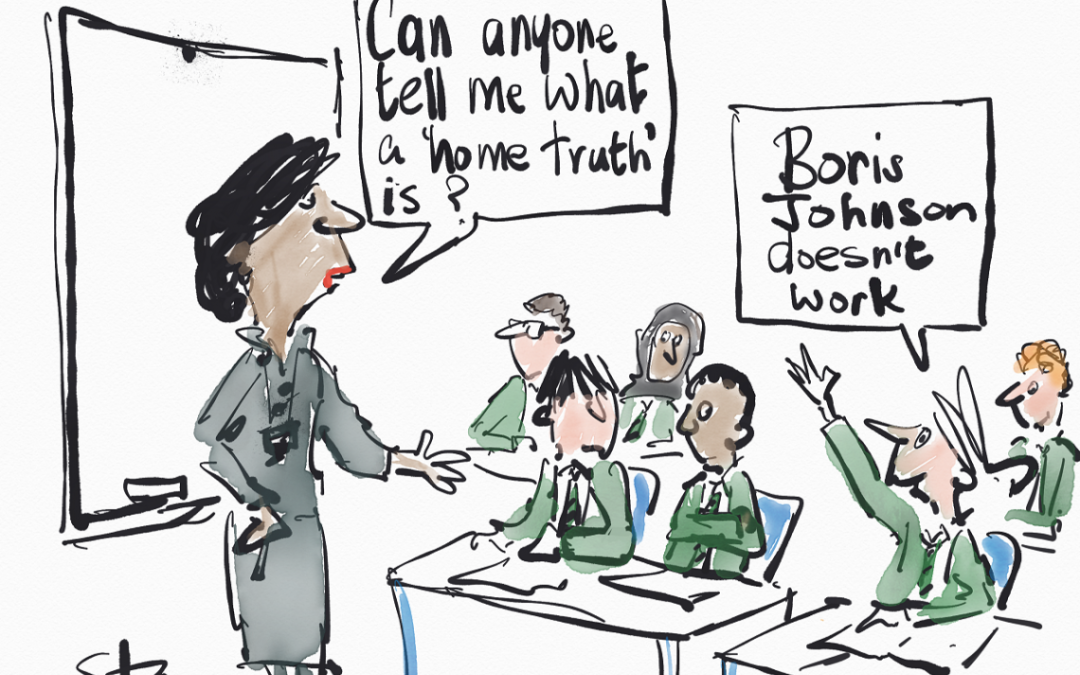
Many have questioned whether the government fully intends to progress with its outrageous, inhumane policy or whether it is merely a diversion from various scandals. Certainly, the timing of the announcement is a convenient distraction from talk of the prime minister breaking the law, and the government does have form for this. We are quite familiar with its attempts at distracting attention when things aren’t going to plan – whether that’s covid, Brexit or the cost-of-living crisis.

As George Monbiot pointed out recently on Twitter, Johnson explained the dead cat strategy back in 2006. At the time, he described his “brilliant new strategy” as to “make so many gaffes that nobody knows which one to concentrate on”, adding that it was like a “helicopter throwing out chaff”.

However, Monbiot did add the warning that, dead cat or no, that did not rule out the government’s intention of following through with this policy. Anyone who has been following the Home Office’s increasingly extremist strategies, even before Patel became home secretary, cannot doubt the desire to move further to the right.

Turning a blind eye

The Home Office claims that Rwanda has “strong experience in supporting and integrating refugees”. It has praised the country as being “internationally recognised for its safety, strong governance, low corruption, gender equality”. This is despite condemning Rwanda, just a few short months ago, for failing to investigate human rights abuses. Those abuses include the failure to protect and support victims of people trafficking. Today, Rwanda is already home to over 127,000 refugees, most of whom are living in refugee camps and unable to work.

The Home Office may be correct in its assertion that existing approaches have failed and that a new approach was necessary, but this is not it. Not even close.

Our government is turning a blind eye to human rights abuses in Rwanda while implementing abuses all its own. Where it claims to want to prevent people-smugglers from taking advantage of desperate refugees, it closes its eyes to its own plans to traffic vulnerable people abroad. As the government panders to right-wing xenophobes, it claims to do so in our name.

The welcome that’s been extended to desperate, vulnerable people from Ukraine has proved the compassion and tolerance of the British people, unlike those who claim to represent them. The government, by comparison, has shown itself to be full of heartless, bigoted zealots. They think this approach makes them appear strong and in control, but it only demonstrates their misguided, insular and damaging attitudes. The rest of the world has its eyes wide open to the shameful truth. And so do the British public. The Rwanda plan will not work. Time for a change of heart, a change of mind and a change of government.
How A Beach-side Community In Spain’s Valencia Region Opened It’s Heart To Ukrainian Refugees

How A Beach-side Community In Spain’s Valencia Region Opened It’s Heart To Ukrainian Refugees

By Sue Wilson in Alcossebre

As Miquel Angel Jauset watched events in Ukraine unfold on his TV he, like so many of us,  felt he must do something to help..

And as Director-General of Kione Resorts, a holiday village in the coastal town of Alcossebre in the Valenciano province of Castellon he came up with an idea that was more ambitious than most.

“I saw how people crossed the border without anything and I saw myself reflected in them”, he explained in an interview last week.

Feeling a “need to go and help”, Miquel Angel launched a campaign crowd-funder to raise money to collect Ukrainian refugees from the Polish border, bring them back to Spain and “offer them the chance to start a new life”.

With the help of his Ukrainian employee, Olena Cherniek, Miquel Angel co-ordinated with volunteers in Valencia, and at the Polish border to set the project in motion.

The original plan was to bring up to 50 refugees back to Alcossebre by coach but the numbers grew and so far over 70 families have relocated with the project.

Miguel Angel Jauset with the Ukrainian refugee families

The resort is providing free accommodation for the families on their premises but also helping the families to establish themselves.

Apart from assisting with the necessary paperwork required to allow them to work, they are helping organise health insurance and providing schooling, including Spanish lessons.

The younger children started school a few days ago, the older children will do so after Easter. Some of the adults have already started working, and a few – who preferred not to remain in Alcossebre – have been helped on their onward journey to other European cities.

Help offered to refugees locally has come from a variety of quarters, including the local charity shop – The Friends of Alcossebre.

President, Carolyn Arneill, said it has always been their aim to help the local communities and our new local Ukrainian neighbours are no exception.

Volunteers, FOACC (Friends of Alcossebre and Alcala)

For every refugee, the charity is providing a gift voucher that equates to five items per person, per month of clothes, shoes, toys etc.

“We are working closely with the Ayuntamiento to provide assistance in any way we can”, she said.

“We have all seen the news of what is happening every day in Ukraine and we’re happy to be able to help provide support to the Ukrainian families here”.

On Sunday, April 3, a local event that was organised to raise funds for the refugees, attracted a crowd of over 500 locals.

Alcossebre resdidents enjoy their huge paella

Residents enjoying their 550 portions of paella

Considering the resident population of Alcossebre is just 3,000 people, this was quite a turnout. With 550 portions of paella served from the biggest paella dish I have ever seen, the event raised almost 6,000 euros net profit. All the proceeds will be used to purchase food and basic items for our new Ukrainian neighbours.

Two recipients of Alcossebre hospitality are sisters Marina Demchenko and Alena Tysenko. 36 year-old Marina and 38 year-old Alena began their journey to Alcossebre from their home in Dnipro, 1,000 kilometres east of the Polish border.

Leaving her husband behind, Maria travelled with her five-year-old son, daughter, 13, and her mother-in-law.

Marina Demchendo and her family

Marina Demchendo and her family

Travelling with them was sister Alena with her eight-year-old daughter.

When they set out, they had no idea where they were headed or which country they would end up in. They did not choose Spain, rather as Maria explained: “Spain chose us.”.

The war has separated Maria not just from her husband but from her elderly parents too, forcing her to leave behind her home and her country. She said, “in one day, we lost everything – work, peace, our past life”.

As a child, Marina’s grandmother used to say to her, “if only there was no war”. Marina is grateful that her grandmother is not alive to see the horrors the Russians are now inflicting on the Ukrainian people.

“So many people suffer because of one person”, she added. “Putin is an unhealthy person. If he were of sound mind, he would understand that you cannot achieve peace by war”.

Marina’s sister Alena described how they met volunteers from Alcossebre in Przemysl, Poland. Alena said they were offered help back in Spain of “free accommodation, meals, assistance with paperwork, Spanish lessons and a school programme for the children”.

It was an offer too good to refuse.

Alena is planning to work in Spain for “as long as the hostilities continue”. As far as the future is concerned, she said, “I don’t guess any further”.

While Alena studies Spanish and looks for work, she can’t help but worry for the well-being of her parents, unable to move to a safer place. She desperately wants to help them and to “hug them”.

With her plans for the future in tatters, Alena is at least grateful to no longer be in danger. She thanked the people of Alcossebre, and Kione in particular, for their help and support, and prays for “peace and humanity in the whole universe, like we have met in Spain”.

At present, Miquel Angel has no further plans to bring more refugees to Spain, as “we want to focus on the ones already here”.

He added: “Our project is not yet finished. When all the refugees have their own homes, with proper jobs, and are completely settled, that will be the moment to start a new trip to bring another coachload of refugees to Alcossebre, and to start the project again”.

The author of this article is Sue Wilson MBE, Chair of Bremain in Spain. Read more of her writing at the Olive Press HERE and visit the Bremain in Spain website for more.

Ukrainians in Spain: ‘Every night I wake up and worry about the lives of those I’ve left back home’ 

EXPLAINED: How can I offer my home in Spain to refugees fleeing war in Ukraine?


Bremainers ask……. Gavin Esler

Bremainers ask……. Gavin Esler

Gavin Esler is an award-winning television and radio broadcaster, novelist and journalist. He is the holder of a Royal Television Society award, a Sony Gold (radio) award, and two Lovie awards for his podcast series about Vladimir Putin, The Big Steal. He is the author of five novels and four non-fiction books, most recently, “How Britain Ends – English Nationalism and the Re-birth of Four Nations”.

Mike Thomas: If we were to re-run the 2016 referendum, how would it be possible or practical to present accurate information and stop one side using and amplifying lies to dissuade/persuade voters?

Well, what is done is done. Any re-run referendum would have to be on rejoining the EU and in one sense it would be easier. People are much more suspicious of lies in political life, and the Brexit bunch have failed to come up with any – any – significant Brexit “opportunity”. Unfortunately, however, rejoining the EU would be fraught with difficulties. We might even be at the back of the queue behind Moldova, Albania and Ukraine.

 Tracy Rolfe: Do you see a route to EU membership for the UK? If so, what is it and what would be the timescale?

I dislike referendums intensely and would suggest that at the next general election it would be possible for Labour and the Liberal Democrats to put a line in their manifestoes saying they would work together with other parties for a better relationship with the EU – and move to rejoin the Single Market and Customs Union without a referendum.

Pat Kennedy: Why do you think Change UK had so little support in the 2019 European elections, when half the country didn’t want to leave the EU and Brexit negotiations were not going well?

It is very difficult in the UK to break the two-party system, despite the fact that the only other country which elects its legislature in such an idiotic way is Belarus. And it is an England problem. Scotland, Northern Ireland and Wales have PR systems in their devolved administrations. The party of protest in 2019 was that of the Lib Dems and they – rightly – did very well. Breaking the system – a failed system – depends upon achieving PR I think. Oh, and we had no party organisation or funds either, just enthusiasm!

 Valerie Chaplin: With the terrible conflict in Ukraine, will Boris Johnson and colleagues get away with not being held to account over Partygate etc?

Possibly. But some of us will not forget. And moreover, the Putin style is to lie constantly. In that sense Trump, Johnson and other so-called populist leaders are Putin’s fellow travellers. Johnson has been lucky for a long time. I know many Conservatives, however, who utterly despise him.

Ruth Woodhouse: I understand that you have been a voice for Led By Donkeys. Do you consider that their projects have had any measurable effect?

I think Led By Donkeys have proved that many of us are willing to consider information sources which are not part of the mainstream. I think that they have proved so far to be utterly reliable in asserting merely the facts about Brexit, Cummings, Russian money in our political system, etc., and therefore I give them my support when I can.

Steve Wilson: Would you ever consider another attempt at becoming a politician?

Never say never, but I cannot see it under the two-party system. And remember, each part of the UK votes for a different ‘biggest’ party – SNP in Scotland; DUP (or soon Sinn Fein) in Northern Ireland; Labour in Wales and Conservatives in England. My book ‘How Britain Ends’ is not a recommendation but an observation that Westminster politics has failed to unite the “United” Kingdom.

 Lisa Burton: The BBC is often under attack, from the left, the right and from government. Since your days at the BBC, have you noticed any changes in the way it reports and analyses political topics, or are these attacks a consequence of the culture wars?

Not really, no. I have noticed greater polarisation and ludicrous attacks on the Corporation especially from those who witter endlessly about “Global Britain” and yet have tarnished one of our best brands.

 Andy Hawker: Britain as a cultural project is going through a very tough time and BREXIT has exacerbated this. Do you think events like Unboxed will help to restore the British narrative or simple drive a deeper wedge between the nations? Is there anything that could bring the UK together again?

Various Royal weddings and the 2012 Olympics did not pull us together for very long. I doubt if the re-badged Festival of Brexit will do much when the “British narrative” has been so tarnished by a British government which speaks mainly for the English heartland. I cannot name any current Westminster politician from an English constituency who speaks for the union of the UK in any credible way in Scotland, Northern Ireland and Wales. Where is the Thatcher of today? Or not merely the Churchill but Arthur Greenwood? (Arthur is a hero of mine from 1939 when he spoke for England – and all of the UK – worth Googling him).


Coming next month, we are delighted to be featuring journalist, actor, author and award-winning radio and TV broadcaster, Terry Christian. Terry has been a strong critic of Brexit, and the Tory government, and he doesn’t mince his words. If you wish to contribute to next month’s Bremainers Ask, please send your question(s) to enquiries@bremaininspain.com no later than Wednesday 6 April.