Bremain BrexElection Briefing 5

Bremain BrexElection Briefing 5

Welcome to our 5th Briefing. Please scroll down to the end to make sure you read all the news extracts we have selected for you this week.  To read the whole story just click on the link.

As the political conversation moves further away from Brexit, Labour’s chances in the election increase With criticism of the so-called ‘dementia tax’ dominating the headlines and Corbyn focussing more in the left-wing social issues he’s known for, the gap between the two main parties appears to be closing.  Against all the odds, the general election campaign is beginning to develop into something vaguely approaching a contest. (Voices > Editorials The Independent 21 May)


The Remain strategy for this election is a simple one Politics is a matter of sentiment, of attitude and feeling.  Tactical voting is essential in this general election. It does not matter how big a majority a Brexiter MP has in your constituency, the national aggregate of votes cast for anti-Brexit candidates matters. And in constituencies where a combined tactical vote could oust a Conservative MP, that tactic is an absolute necessity. Give up the tribalism and antipathy of the past; matters are far too serious for that. (A C Grayling New European 22 May)

General Election 2017: who’s more likely to vote — Brexiteers or Remainers? People who voted Remain in the EU Referendum are more likely to vote in the upcoming General Election, according to a new poll. A Sunday Times/YouGov survey found that 76 per cent of those who voted to stay in the European Union say they are ‘absolutely certain’ to vote on June 8. (Anthony Pearce Yahoo News UK 22 May) 

The only constituency in the UK where you can’t vote for a man Every political party insists it is promoting women within its ranks and striving towards a more gender-balanced cabinet. But the proof of the pudding, as they say, is in the eating. And at the minute, the overall picture looks far from balanced. There are 104 constituencies in the UK where residents cannot vote for a woman to represent them in Parliament. But there is only one constituency in the whole of the UK where you cannot vote for a man: Glasgow Central. (Heather Saul additional reporting by Charlotte Leedham i News 26 May)


All party leaders except Theresa May and Paul Nuttall sign EU citizen pledge The Home is Here campaign asks candidates to commit to guaranteeing the rights of EU nationals. The leaders of the Tories and Ukip have refused to back a pledge to campaign for the rights of EU citizens signed by all the other mainstream parties. Labour leader Jeremy Corbyn, Lib Dem leader Tim Farron, SNP Westminster leader Angus Robertson, Green co-leader Caroline Lucas and Plaid Cymru leader Leanne Wood have all signed up to the Home is Here pledge. (Julia Rampen New Statesman 26 May)

Conservatives cancel election campaign relaunch as poll lead over Labour evaporates Tories decline to say why event was scrapped – a decision taken as news of major poll shift emerges The Conservatives cancelled the relaunch of their election campaign, as nervousness grew over the party’s evaporating lead in the opinion polls.  Faced with the likelihood of difficult questions about the Tory campaign, David Davis suddenly pulled out of a planned event in central London earlier today.  With Theresa May abroad at the G7 summit in Sicily, it meant the effective relaunch of the Tory campaign, after the three-day pause because of the Manchester bombings, was put on hold. (Rob Merrick Deputy Political Editor The Independent 26 May)

Defence secretary Michael Fallon slams Jeremy Corbyn’s terror quotes – only to realise they came from Boris Johnson Michael Fallon was left red-faced after he blasted quotes seemingly from Jeremy Corbyn on the war against terror – only to realise they were the views of Boris Johnson.  The defence secretary attacked the Labour leader’s policy on defence and views on extremism in Britain, with Mr Corbyn claiming on Friday the war on terror is “simply not working”.   (Jonathan Mitchell Evening Standard 27 May)


George Osborne in blistering attack on Theresa May’s manifesto pledges – ‘It’s clearly badly thought through’ George Osborne has publicly attacked key policies in Theresa May’s manifesto just days before the election as he pledged not to “pull punches” after quitting politics.  The former Tory chancellor, who was sacked by Mrs May when she became prime minister, called her social care proposals “badly thought through”.  He also said the Prime Minister’s repledged immigration target could force family members to live apart and accused her of abandoning liberal politics.  (Ben Riley-Smith Assistant Political Editor The Telegraph 27 May)

Save

Save

Tactical Voting

Tactical Voting

Tactical Voting ……

Carry on reading and find out how to elect pro-Remain MPs to maintain our close ties with Europe in this most historic of elections

YOUR Vote can make a REAL Difference!

Tactical Voting also known as Strategic Voting, occurs in elections with more than two candidates, when a voter supports another candidate more strongly than his or her sincere preference, in order to prevent an undesirable outcome. In other words when it is necessary to go against lifelong beliefs and allegiances and vote for a candidate who supports your views on a particular subject, in this case Remain.  However, in some instances it could be necessary to vote for a candidate when they are pro-Remain and pro-EU, whereas the candidate of your preferred party could be pro-Brexit.

Tactical voting will help to secure as many pro-remain MPs in Parliament as possible in order to stop Theresa May in her tracks and halt her progress towards a hard Brexit. With tactical voting, it is pointless to vote for your preferred candidate whose principles you believe in if they came 3rd or 4th in the 2015 election with a small number of votes and do not have any chance of winning the seat in your constituency.

Vote Tactically

You should use tactical voting to make a difference. As Gina Miller said in her launch speech for
Best for Britain

“People are worried about the future direction of this country, they believe in Parliamentary democracy and they believe, as do we, that only tactical voting in this election can ensure that Parliament plays their full part in the future of this country. Throughout the course of this General Election campaign we will be focusing on educating and empowering people to make a tactical vote and choosing MPs who will do the Best for Britain.”

Best for Britain

To join Gina Miller’s Best for Britain, you can sign up at bestforbritain.org click on “join the campaign” scroll down and fill in a couple of details, it only takes a minute to do. Once you have done so you will receive a daily email giving interesting facts and up-to-date information together with links to other sites and newspaper articles.

If you want to go directly to the Best for Britain Tactical Voting site you can find it HERE

Latest video from Best for Britain – Ever tried to talk to you parents about politics?

Here is another helpful site regarding Tactical Voting: tactical2017.com. When you click on the link you put in your postcode or town, where you are eligible vote, and it tells you which party you should vote for if you wish to vote tactically. We will be updating this page on a regular basis as and when we have more information on tactical voting for you so please keep checking regularly to find out what is new.

tactical 2017
tactical 2017

Please also tell any students you, your family or your friends know about this link: http://ge2017.com/students

The link will allow them, in 30 seconds, to determine where their vote will be most powerful, either at home or at Uni. They simply enter their home & Uni postcodes & click on “compare” to see which is their best voting option.  For example, if their university constituency is a safe seat for one party but their home constituency is a contested seat between two, their vote at home will have a bigger impact for tactical voting purposes.  They can use the link to register to vote and to vote tactically to avoid a hard Brexit. Their votes matter!

Vote Smart

Maybe you are worried about the NHS; your pension; the cost of your education; or the Conservative’s destructive Brexit policies. Whatever your motive, with a tactical vote on June 8th, you can help get a better balance in Parliament.

If you want the safety net of a more balanced Parliament, the best way to make a difference is by voting for the opposition party most likely to win. Even if it isn’t your usual choice. Find your area on the Vote Smart site to get started.

Candidate List by Vote for Europe
These are suggestions for Tactical Voting which have been developed in consultation with other groups.

Explanatory information to accompany the list can be found HERE

If you have any queries or comments please send them to enquiries@bremaininspain.com.

Bremain BrexElection Briefing 2

Bremain BrexElection Briefing 2

Clive Lewis: “Public should get final Brexit say if they want it”   A Norwich MP is risking the wrath of his party leader once again after calling for a referendum on the final Brexit offer – if the public wants it.  Clive Lewis quit his role as shadow business secretary earlier this year after deciding to defy Labour leader Jeremy Corbyn and vote against the bill to trigger Article 50.  But now he has gone a step further. (Clive Lewis MP ITV News Anglia 1 May)


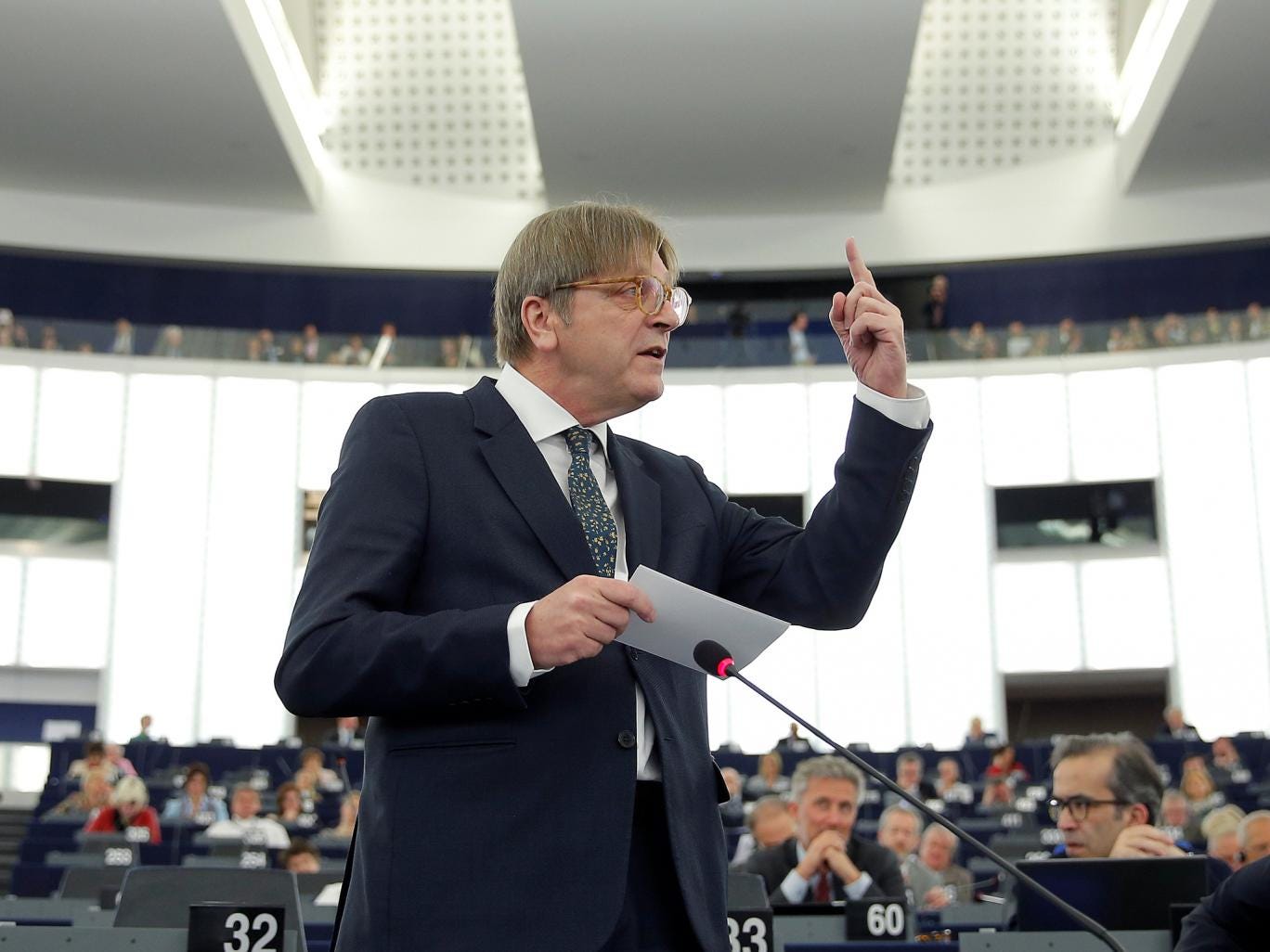
Theresa May mocked by EU parliament’s chief negotiator The European Parliament’s chief Brexit co-ordinator has mocked Theresa May’s election campaign slogan, by suggesting she lacks a “strong and stable” understanding of the complex issues around Britain’s withdrawal from the EU.  Guy Verhofstadt, already a fierce critic of the Prime Minister, finished his attack by saying it is “time to get real” about how difficult a Brexit deal may be.  It comes after a German newspaper reported that in the wake of a meeting with the Prime Minister, Jean Claude Juncker phoned Angela Merkel and said Ms May lives “in another galaxy” and is “deluding herself” over Brexit. (Joe Watts The Independent 2 May)


A guide to what the BBC’s election impartiality actually means  The guidelines are surprisingly detailed. If you imagined impartiality was implicit, you were wrong. The basic principle is that no one party or candidate should be favoured over others, while still taking into account the size and support of the party. There are no percentages, but Labour and the Conservatives, as the biggest parties in the UK, must be given roughly equal coverage, while mid-sized parties such as the Lib Dems will get slightly less, and smaller parties such as the Greens will only be given equal billing to the bigger players in certain circumstances. (Karl McDonald i News The Essential Daily Briefing 3 May)

The 3 reasons May called an election (and the reasons you should thwart her plan) It would be bliss to elect a pro-EU government that would ditch Brexit, says A C Grayling  Theresa May might have had any one of three reasons for calling a General Election.   One is that she was in danger of losing her Commons majority because so many Tory MPs are under investigation for alleged election fraud.  Fraud, and allegations of financial wrongdoing are a theme of the right wing: Tory MPs, UKIP, the Leave.EU campaign have all been the subject of investigations.  Their leading figures have, however, skipped away laughing from their culpability for the fraudulent lies and false promises of the Leave campaign itself.” (A C Grayling The New European 3 May)

Students just blew the general election wide open with one hell of a shock for Theresa May Front-runner Theresa May could be in for one hell of a shock. Students have blown the general election wide open, as 93% say they are registered to vote on 8 June. And the majority of that 93% plan to use their vote either for Labour or to tactically remove the Conservatives from power.  Stepping back from the students, a striking 530,982 under-35s have registered to vote since May called the election. Over half of these people are 18-24. Labour has a solid lead with under-40s, meaning a high turnout from young people could dramatically change the result. (James Wright The Canary 4 May)


Boris Johnson backed by Ukip in General Election UKIP has backed Boris Johnson in the General Election in a major move to endorse Tory Brexiteers. The party have decided not to stand in Uxbridge & South Ruislip where the Foreign Secretary has a 10,695 majority. This is the second time UKIP has decided not to run against Brexit-backing MPs following their election pact with Tory MP Philip Hollobone in Kettering. Deputy leader Paul Nuttall said they would not seek to target seats where a pro-Brexit MP has a slender majority and could lose to a Remainer. This is to avoid splitting the vote and give the pro-Brexit candidate the best chance of winning. (Kate Proctor Evening Standard 4 May)


EU puzzled and alarmed by May’s election meddling claims Prime Minister Theresa May’s claims that the European Union is trying to influence next month’s general election have perplexed and alarmed officials in Brussels, who warn that the rapidly souring tone could derail the Brexit negotiations. EU Council President Donald Tusk on Thursday urged all sides to cool off. “If we start arguing before they even begin, they will become impossible,” he said, adding that the Brexit negotiations were difficult enough as they are, and the stakes too high to let emotions get out of hand. “In order to succeed, today we need discretion, moderation, mutual respect and a maximum of good will,” he said. “Because at stake are the daily lives and interests of millions of people on both sides of the Channel.” (Leo Cendrowicz i News 4 May)


Lib Dems and Labour in fightback after Conservatives’ success in local elections The Lib Dems are announcing a controversial plan to increase all rates of income tax by 1p to raise an extra £6bn for the NHS and social care.  And Jeremy Corbyn is warning that Labour faces a challenge on a “historic scale” as he campaigns in the key general election battleground of the Midlands.  (Jon Craig, Chief Political Correspondent, Sky News Vote 2017 6 May)


Greens withdraw Oxford West and Abingdon candidate in bid to oust Tories   The Green Party has withdrawn its candidate from an Oxfordshire constituency in a move it hopes will help defeat the Tories.  The Greens have now urged Labour to also stand aside in Oxford West and Abingdon and allow the Liberal Democrats to stand against health minister Nicola Blackwood. Sarah Wood, chairwoman of the Oxfordshire Green Party, said: “Our political system is broken, and it makes no sense that parties with many common values stand against each other and let the Tories through.” (Press Association 2017 The Oxford Times 6 May)


EU demands three million citizens be allowed to stay in UK after Brexit, including people with no proof of residency  ‘We will not discuss our future relationship with the UK until the 27 member states are reassured that all citizens will be treated properly and humanely’ The EU has toughened its stance on the fate of three million EU citizens in the UK, demanding even for those with no proof of residency are allowed to stay after Brexit. The lead negotiator for Brussels insisted “red tape” must not be allowed to stand in the way of EU nationals remaining with full rights.  “Individuals legally residing in the UK today must remain residents after withdrawal, including in those cases when people have no documents to prove residency,” Michel Barnier said. (Rob Merrick Deputy Political Editor The Independent 6 May)

Labour will increase tax for top 5% – but not MPs Labour has pledged to increase income tax only for those earning more than £80,000 a year, if it comes to power after the General Election – just above what MPs take home as their salary. Shadow chancellor John McDonnell promised that just the top 5 per cent of earners would face a hike in tax, which would help pay for extra spending on public services. It would mean MPs, who earn £76,000 a year, would be exempt from any increase in income tax. (Richard Vaugham i News 7 May)


We hope you have enjoyed reading the above extracts from important news stories published over the last 7 days and would welcome any comments you may have on how we are bringing the latest news to you.  

RIFT Project – lobbying for a pledge to support citizens’ rights

RIFT Project – lobbying for a pledge to support citizens’ rights

This is a month-long project, running from 9 May to 7 June 2017, in which we ask as many people as possible (from RIFT and from other groups) to write to the main parliamentary candidates in their constituency, asking each candidate to pledge their support for a full guarantee of UK/EU citizens’ rights as outlined in the EU draft negotiating guidelines.

Anyone can participate, whether you still have a vote or not; to make sure we get major reach across constituencies we’re also suggesting that each person asks 5 friends or family members to take part as well. On this page and associated pages we provide all the resources and guidelines you’ll need, whichever category you fall into.

Why do this?

For three reasons.

  1. To educate and raise awareness amongst parliamentary candidates of the issues surrounding UK/EU citizens’ rights, in particular of what needs to be guaranteed and why. Many will be unaware of the complexity around this subject and in particular of the indivisibility of the rights we currently hold.
  2. To harness support and collect pledges for a guarantee of those rights to match that proposed by the EU, along with a commitment to ring-fencing those rights.
  3. The contacts we have with local candidates will contribute information which can be used to inform decisions about tactical voting.

For find out more, and get all the information you need to participate, please see the
RIFT Project Page

Expats like me living in the EU are being denied the right to vote in the general election

Expats like me living in the EU are being denied the right to vote in the general election

On 23 June last year, three million British citizens across Europe could not vote in the EU referendum because of a ban on voting for Brits who have lived overseas for more than 15 years. They were denied the opportunity to vote on their own futures, when they are amongst the most likely to be badly affected by the outcome. To say that many people were upset and angry is a gross understatement. I was disenchanted with the failings of this supposed “democratic exercise” and as a result became the Chair of Bremain in Spain, to campaign for our rights as British citizens in the EU.

Little did I know almost one year on we would be in the same position. We were relieved last October when the Government said it would keep its pledge to allow ‘Votes for Life’ in time for the next election. We were not prepared to take this ‘promise’ at face value and continued to lobby on the subject, including communicating directly with Chris Skidmore, MP. We said that, even if our voting rights were fully restored in time for the next election in 2020, what would happen if a second referendum occurred on any Brexit deal in the meantime, or heaven forbid there was a snap election? The only answer we received was that we would have the vote before the 2020 election. You can imagine our shock when Theresa May announced the early election.

If Britons living in the EU were angry about not voting in the referendum last year, can you imagine how they feel about being denied their democratic right once again? Some see it as a deliberate ploy by the Government to ensure that we cannot vote, in case we act against its own vested interests. Although this idea is a little misguided since many Brits living overseas did vote to leave. (Turkeys voting for Christmas springs to mind). In any case, that still leaves us disenfranchised yet again, at a time when more people are more politically aware and involved than ever before and absolutely want to have their say.

What is particularly galling is the urgency of this election. With more time in hand, we could have pushed for a short bill to resolve the ‘Votes for Life’ matter but I fear it’s impossible now.

With the election just six weeks away, also concerned about the short amount of time available to vote from overseas for those still able to. Voting from outside the UK involves a lead time: obtaining voting papers alone can take weeks. I strongly urge Britons based overseas to vote by proxy rather than by post.

Whatever happens on 8 June, we will fight to protect the rights and freedoms we enjoy as EU citizens – not some rights and freedoms, all of them. It seems that the EU agrees that we should keep all our existing rights and freedoms for life. I am waiting for the day when we hear the same reassurances from the UK government. I am not holding my breath.

 Sue Wilson is Chair of Bremain in Spain

See Yahoo Article
Brits beyond Brexit

Brits beyond Brexit

Brits beyond Brexit – what now for Brits in France and Spain?

Very many British citizens who live and work in other European Union countries feel like the forgotten victims of Brexit: Greatly affected by the prospective withdrawal of the UK from the EU yet often disenfranchised and rarely considered with sympathy by the folks back home. Frequently frustrated by what are at best feelings of apathy towards our plight, it makes for a pleasant change when the unique set of problems facing us are highlighted, and so we were particularly delighted to be invited to participate in Brits beyond Brexit on April 26.

This event, which took place at the University of Miguel Hernández, Elche, was a joint venture by Jeremy MacClancy, professor of anthropology at Oxford Brookes University, and Fiona Ferbrache, lecturer in geography at Keble College, Oxford. Following research primarily concerning British residents who had taken on the role of town councillor in their municipalities here in Spain and over the border in France, MacClancy and Ferbrache switched focus to the consequences of Brexit following the referendum last June.

Brits beyond Brexit

Specifically, they’re interested in collating and analysing the concerns of the two British communities in the light of the UK’s planned exit from the EU. The event at Elche was associated with a government initiative to make research more socially responsible, and MacClancy and Ferbrache expressed a wish to find out participants’ opinions about the future direction of their academic work.

Bremain in Spain was represented at the event by Zoe Adams Green, who was joined by delegates from two other pro-European campaign groups: Margaret Hale MBE, speaking on behalf of the pan-European organisation ECREU, and Jim Simpson, who attended in his capacity as a founding member of EUROPATS. All three campaign groups are members of the British in Europe coalition, which campaigns for the rights of UK citizens in the other EU member states as well as supporting the rights of EU27 nationals based in the UK. Encouragingly, the event was also attended by Elizabeth Bell, British Vice-Consul in Alicante, and Consular Official Hugo Griffin. Disappointingly but unsurprisingly, the Vice-Consul was unable to provide any concrete information to allay our concerns at present, but both she and her consular official expressed a strong desire to listen to our worries and anxieties, and to provide consular support at a local level here in cases where, for example, British residents find themselves struggling with the idiosyncrasies of their town halls and other regional bodies.

Zoe Adams Green

The three campaign group representatives explained their shared objectives and showed a united front with regard to their common intent to fight for the rights of UK nationals in Spain and other EU countries. Each spokesperson clarified the activity of their respective organization and outlined the focus of their work. Whilst Bremain in Spain primarily concentrates on representing the concerns of our members both in Spain and on an international level, EUROPATs has a more grass roots approach to protecting Brits resident in Spain, and ECREU is active on a cross-European platform.

The presentations given by the three campaigners complemented each other well, providing an informative basis for the joint questions and debate session that followed. This included discussions about specific problems that audience members have encountered here in Spain, their personal concerns about their futures here, and musings as to how the various campaign groups can increase their reach to raise awareness about our cause even further.

As might be expected, many worries were raised and several issues will require further brainstorming and action. Discussions continued over a wonderfully Spanish lunch of tapas and a huge paella – and, of course, a few glasses of vino. The general consensus was that the event had proven extremely useful to all, providing both a forum for exchanging information and viewpoints as well as the opportunity to network and make connections that might be instrumental in the coming weeks and months.