Joint Nationality Campaign

Joint Nationality Campaign

You may already have heard of the Joint Nationality Campaign to persuade Spain to offer joint nationality to current UK residents in Spain. The campaign was launched in July 2016 by two British writers in Madrid, Giles Tremlett and William Chislett and already they have 21,000 signatures on change.org.

Bremain in Spain is pleased to be able to support this campaign as it moves into the next phase. A draft joint nationality law will be presented to the Spanish government in the coming months.

If there is no response, the campaign intends to take the issue to the Court of Justice of the European Union in Luxembourg, asking it to decide whether Spain has an enforceable obligation to offer joint nationality.

The campaign is therefore also seeking people who have applied for Spanish nationality, or obtained it recently, who would be prepared to join an eventual legal challenge (at no cost) should this become necessary. Those wishing to be kept up to date, or wanting to know more about how they might join the legal challenge can contact Giles Tremlett at jointnationality@gmail.com.

We wish Giles and William every success with the next phase of the campaign and hope that you will join us in supporting them.

Draft Agreement on the withdrawal of the UK & N Ireland from the EU

Draft Agreement on the withdrawal of the UK & N Ireland from the EU

Draft Agreement on the withdrawal of the United Kingdom of Great Britain and Northern Ireland from the European Union and the European Atomic Energy Community – highlighting the progress made in the negotiation round with the UK of 16-19 March 2018.

European Commission, Task Force for the Preparation and Conduct of the Negotiations with the United Kingdom under Article 50 TEU.
Sent to the EU27 Member States, to the Brexit Steering Group of the European Parliament and published on the TF50 website on 19 March 2018.


Read the full draft agreement document below:

https://ec.europa.eu/commission/publications/draft-agreement-withdrawal-united-kingdom-great-britain-and-northern-ireland-european-union-and-european-atomic-energy-community-0_en

British in Europe Analysis of Draft Withdrawal Agreement

British in Europe Analysis of Draft Withdrawal Agreement

INTRODUCTION

On Thursday 22nd March, the European Council will consider the draft UK Withdrawal Agreement prepared by the EC Article 50 Task Force (“the draft”). The aim is to produce a legally enforceable agreement embodying the political understanding reached in a Joint Report (JR) last December and dealing with other outstanding issues.

The European Parliament’s resolution of 13.12.17 made it clear that the JR did not go far enough in a number of important respects. British in Europe and the3million published a detailed critique of the JR (see point 1 below) with suggestions as to what the Withdrawal Agreement needed to include to achieve the stated aim of ensuring that nothing would change for EU27 nationals in the UK and for UK nationals in the EU.

In preparation for the European Council’s consideration of the draft, we have conducted a review and prepared a checklist of initial comments. We will supplement this with a detailed legal analysis of the draft once adopted. Our comments cover the following:

  • Outstanding issues e.g. free movement, future family reunification.
  • Omissions from the text e.g. persons not currently covered.
  • Ambiguities e.g. the position of dual citizens and Initial drafting comments.

Since ‘nothing is agreed until everything is agreed’, all of these issues must be addressed in Phase 2 and accorded at least equal priority to that afforded other issues such as Northern Ireland.

CHECKLIST

Outstanding issues

1. Article 32: Free movement for UK citizens in the EU (“UKinEU”) and lifelong right of return for EU citizens in the UK (“EUinUK”). This is linked to the issue of whether associated individual economic rights, and recognition of qualifications will apply across the EU for these citizens. Although this is an outstanding issue and still subject to negotiation, the draft goes much further and specifically excludes free movement rights for UK citizens in the EU. It makes clear that this exclusion covers:

  • Free movement rights to other Member States
  • Right of establishment in other Member States
  • Right to provide services on the territory of another Member State AND
  • Right to provide services to a person established in another Member State

This last is an entirely new and highly restrictive provision introduced at a late stage into the negotiations by the Commission without prior consultation. It is not even clear from the wording what it means. It could mean:

1. That it is intended to prevent a UK citizen residing in an EU27 country from providing services to a national of another Member State anywhere – so a UK translator in Germany would not be able to provide a service to a Dutch client even if the client comes to her office; or
2. That it is intended to prevent a UK citizen residing in Germany from providing services in Germany to a national of another Member State if that person is not physically present in Germany.
Even if the marginally less restrictive second interpretation is intended, this provision is entirely unacceptable because:

  • Apart from all the arguments we have raised in the past as to why those UKinEU who have already exercised free movement rights (an important distinction in CJEU case law) should have them safeguarded, this new provision simply ignores the way the world works in the EU in the 21st century, partly due to the success of the Single Market and partly due to technology. The right to work that the JR purports to guarantee in the host state will be meaningless for large numbers of self-employed people ( see point 2 below).  A UKinEU translator or IT consultant based in Germany, asked by a French company to provide it with translation or IT services remotely from Germany, would have to refuse simply because the client was established elsewhere and not physically present in Germany.
  • Looked at from the point of view of the EU client, such a rule would represent an irrational restriction on their freedom to choose their service-providers: from the point of view of the UKinEU worker, it could easily spell bankruptcy.
  • Moreover, the enforcement of this pedantic distinction is going to require a mountain of complex bureaucracy, simply to verify that UK citizens are no longer doing what they moved to the EU27 to do.
  • The absurd mirror image of this, if reciprocity were to apply, would be that the UK would make similar provision to prevent EU27 citizens based in the UK from working for nationals of their home or any other EU State.
  • More incongruously still, a UK lawyer established as an avvocato in Italy will be able to provide advice to a US or Australian client without difficulty, but will have to decline to advise a client who happens to be based in the EU.
  • The provision will have to be redrafted in any event, since the wording is not clear. It is so badly thought through in policy terms that it ought to be deleted altogether.

2. Articles 12-18: Securing our status. We will not repeat all the arguments we have made previously concerning the acceptance by the EU of the UK’s proposal for settled status (see point 3 below) and, the inclusion at the last minute, due to reciprocity, of an option for EU 27 countries to apply a similar conditional application system to UKinEU, in clear departure from EU law. The draft deals with this in Title II, Chap I:

  • Overall comment: Paragraph 16 of the JR provided States with two options for registering residence rights. Article 17 of the draft WA provides over 3 pages of detailed explanation of the option for a new conditional system, followed by a single paragraph merely acknowledging the existence of an option not to require new applications to be made. In order to avoid confusion on this important topic, this section should start with a clear statement of the two options, followed by such detail of each as is necessary. The explanation of the option of retaining the present declaratory system should expressly refer to the procedures in Directive 2004/38, thereby simplifying the drafting in the WA at the same time as retaining a system which has stood the test of time and legal consideration.
  • Article 17: Member States with existing registration systems. the drafting seems to assume a system (like the UK) where to date citizens have not been registered. In EU countries where they have been registered, but have not formally been required to have permanent residence cards, some of these provisions should fall away e.g. 17(1)(j)-(m)

3. Article 9: Future family reunification. In contrast to free movement, this right, which is also still subject to negotiations, has been included in the draft. We are happy to support this for both groups, as a failure to provide it will result in discrimination vis-à-vis the younger demographic in the UKinEU and EUinUK groups.

Omissions

1. Article 9: Family reunification. “Surinder Singh” rights for returning citizens. This is not covered. Citizens returning to their home countries post end-transition should be able to do so with their non-British or British non-EU spouses under EU rules, not national immigration rules. Put simply, a German citizen who leaves the UK post end-transition must be able to return to Germany with a British spouse, and a British citizen who leaves Germany to return to the UK with a German spouse must be able to do so too, both under EU rules as they can now.

2. Article 9: Zambrano carers (non-EU parents caring for children who themselves have rights under the WA). The draft does not cover them, but should.

3. Article 25: Recognition of qualifications limited to host State or State of work. This limitation is linked to free movement for UKinEU but it will impact all those who hold UK qualifications, whether EU citizens in the UK or UKinEU.

4. Rights of lawyers to establishment under their home title in the host state. Article 2 of Directive 5/98 allows lawyers to establish themselves in another Member State under their home title. Where a person who falls within the personal scope of the draft and their sole place of establishment is in their host state of residence so that they practise solely out of the host state, there appears no logical reason to exclude such establishment under Article 2. There is no logical reason why a French or German lawyer currently practising under their home title and solely established in the UK, possibly dealing with French/German clients both in the UK and in France/Germany should not continue to do so; the same is true for a UK lawyer who actually resides in their host state, and practises solely out of that host state. This clear removal of an existing right to practise could not come at a worse time: an Italian in the UK in doubt about his/her post-Brexit rights is most likely to want advice from a co-national: this restriction removes a set of UK-based Italian avvocati from being able to give such advice.

Ambiguities

1. Articles 8(c), 9(1)(a), and 9(1)(b): Dual citizens. It is not clear that the drafting of these articles covers those EUinUK and UKinEU who have decided to take dual citizenship and this should be clear, in line with the Lounes case law. The draft must expressly cover those with dual citizenship and clarify that, where conflict arises between their rights as a person within the scope of the WA and their rights as nationals, their WA rights represent their minimum entitlement and as an add-on to their rights as a citizen in the host state.

2. Articles 8(b), 8(d), 9(1)(c), 9(1)(d), 23(2) and 24. Frontier workers. There are a number of issues that need to be clarified. In the definition, how frequent, regular or recent as at Brexit does the economic activity have to be? How are status and state of work to be evidenced, in particular for self-employed frontier workers? What happens once the current job in the state of work comes to an end? There must be at least a “grace period” of, say, a year to get another job/establish another business.

3. Articles 9(1)(a) & 9(1)(b): Temporary absence. Since it appears that citizens must show that not only have they exercised residence rights before end of transition period but also continue to reside post the end of transition, it must be clear that a temporary absence from the host country on the day after end of transition, e.g. due to a work posting or need to care for a sick relative, does not affect the rights of such a citizen.

4. Article 17(1)(h): Criminality checks. We will not repeat what we have said as regards systematic criminality checks (see point 4 below) other than to note that as regards Article 17(1)(h): where citizens are exchanging a permanent residence card for any new status, no systematic criminality or security check without reasonable suspicion of its necessity should be carried out.

5. Articles 18 and 19: Some redrafting of Articles 18 and/or 19 is required as at present they are self-contradictory. Chapter VI of Directive 2004/38 contains important safeguards for those who are accused or guilty of misconduct: in addition to due process requirements the safeguards also prevent deportation unless such a measure is proportionate having regard to the offence and the personal circumstances of the offender and his/her family. Art. 19 of the Commission’s draft says that these safeguards apply in any case of restriction of residence rights. Art. 18.1 says that Chapter VI applies to conduct prior to the end of the transition period, but Art. 18.2 clearly implies that it does not apply to post-transition conduct. The WA needs to make clear what parts of Chapter VI apply in the case of post-transition period conduct: among other things, in addition to the procedural safeguards of Chapter VI, it needs to be made clear that, whenever the misconduct took place, residence rights can only be restricted in a way which is proportionate, so that Directive Articles 27.2 and 28 should apply.

6. Articles 22 and 23: Rights of self-employed persons. These are currently subject to Article 32 in the draft. Please note our comments above on Article 32.

7. Article 29(1): Social security coordination. The drafting is unclear but the meaning appears to be that the full acquis on social security applies to the rights of those covered by this title on social security.

Conclusion

  • All outstanding issues should be negotiated within the scope of the Withdrawal Agreement, including, in particular, genuine free movement rights, and all interlinked economic rights/recognition of qualifications, as well as future family reunification, and should remain a priority for this phase of the negotiations.
  • The gaps, clarifications and ambiguities that we have identified should be dealt with.
  • As “nothing is agreed until everything is agreed” citizens’ rights — above and beyond the ‘common understanding’ reached at the end of Phase 1 — must be ring-fenced to ensure that all our existing rights are protected in any event.

6 March 2018
British in Europe

1 See joint British in Europe/the3million paper “Considerations for Phase 2” of 23 January 2018: https://britishineurope.org/wp-content/uploads/2018/01/Considerations-for-Phase-2-23-01-2018.pdf

2 The draft does not make clear whether it also prevents UK workers employed by an EU company from providing services to clients of the company based in other States.

3 For example, see joint paper with the3million, Considerations for Phase 2, as above.

4 See for example our Considerations for Phase 2 paper as above.
Chair Sue Wilson on the Campaign Trail

Chair Sue Wilson on the Campaign Trail

Sue Wilson, Chair of Bremain in Spain spent six days campaigning to #stopbrexit. You can follow her travels below.

Day 1

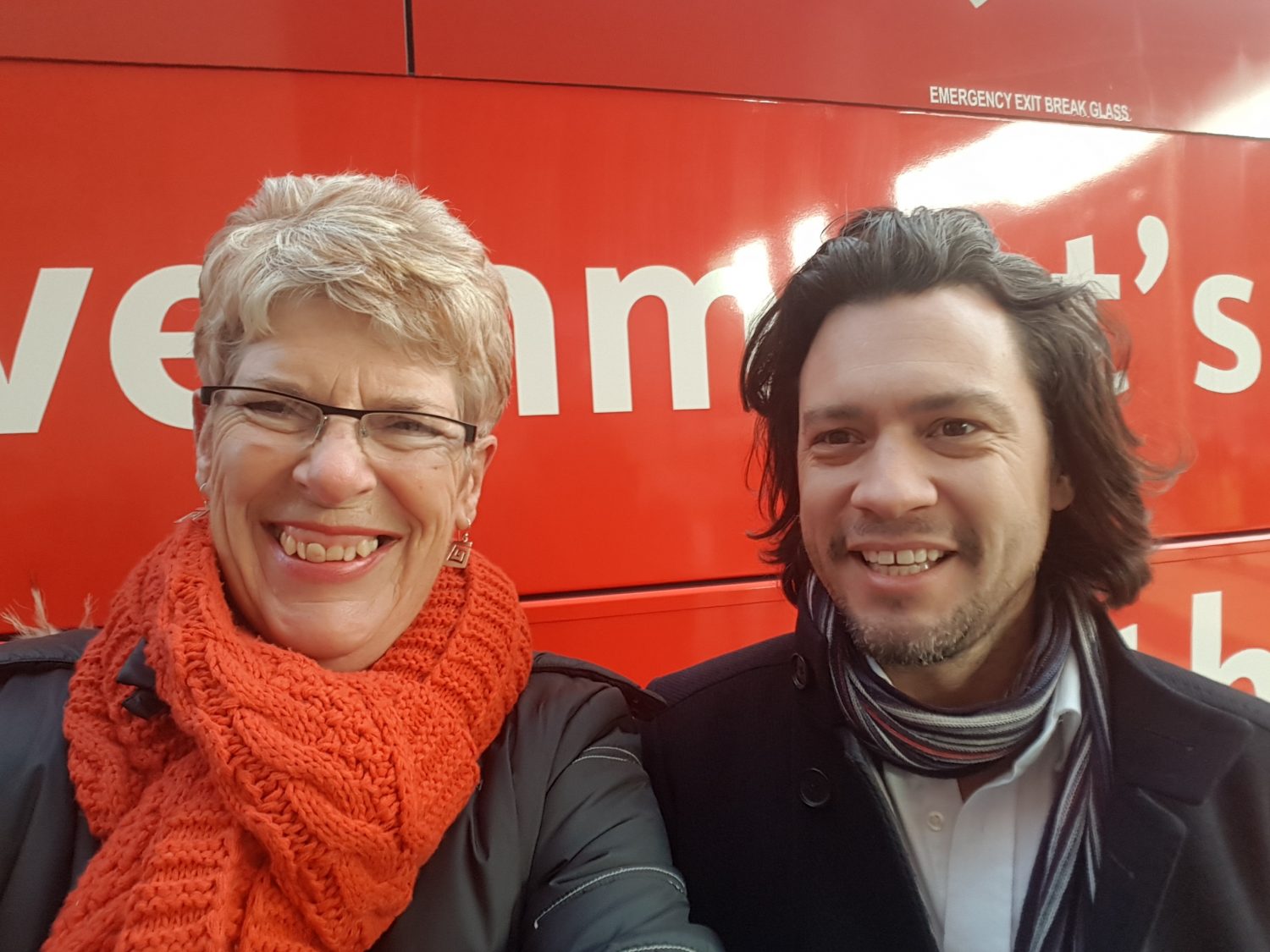
On Wednesday 21st February, my action-packed week in the UK got off to a flying start in London. I had been invited to join the “Truth Bus” launch, a fantastic campaign organised by Camden for Europe. The idea behind the bus was to mimic the infamous campaign bus, so loved by the Leave campaign. Instead of the £350 million promised to the NHS, this time the number was £2000 million – the cost of a hard Brexit, according to the government’s own analysis, with the message
“Is it worth it?”

For more information, check out the campaign website:

http://www.isitworthit.org.uk

Is it worth it? Bus

The launch in Camden started with speeches from Mike Galsworthy of Scientists for Europe & Alistair Campbell, before the bus filled up with campaigners & press contacts, & headed for Whitehall. In Westminster we were joined by Channel 4, ITN & BBC TV news teams, & there was a great turnout by politicians from both Houses of Parliament.

There were eloquent interviews conducted with Chuka Umunna, Caroline Lucas, Lord Adonis, & Tom Brake, but unfortunately none of them made it onto the TV news. It seems the press were far more interested in the 15 minutes when the bus got stuck between parked cars in a very narrow side street.

I was lucky enough to get the opportunity to get lots of selfies with anti-Brexit champions, but also to have time to chat to many of them too. I was particularly delighted to speak with Lord Adonis – he mentioned that he had been in the House of Lords the previous day for 9 hours attending the EU (Withdrawal) Bill debate. I asked if he would be there again on Monday, when I would be attending at the invitation of Baroness Hamwee, & he said yes – in fact, not only on Monday, but every day, every minute that the Brexit Bill is being debated. He also asked me to email him with the selfie, which I happily did. After Westminster, the bus headed off for East London, but I left it behind to join it again later in the day.

Chuka Umunna and Gina Miller
Mike Galsworthy
Sue and Tom Brake
Sue and Alistair Campbell
Chuka Umunna and Gina Miller
Sue and Lord Adonis
Group and Is it worth it? Bus
Sue and Seb Dance
Sue and Stephen Cowan

My next appointment was a lunch date with Dr. Michaela Benson, of Goldsmiths University in London. Bremain has been helping Michaela with a major research project called Brexit Brits Abroad. A number of Bremain members have been interviewed by the research team about the effects of Brexit & their concerns & anxieties. The project is likely to continue for many more months, or possibly even years, & Bremain will continue to be involved.

For more information, check out their website: https://brexitbritsabroad.com/

After lunch, I picked up the bus again in Hammersmith, where there were a number of speakers including Seb Dance, Labour MEP & Stephen Cowan, Head of Hammersmith Council, the first council in the UK to speak out against Brexit. There was also an appearance by Fake Boris, who gave a speech & sang a song.

A surprise visitor that the organisers weren’t expecting was Femi, one of the founders of OFOC (Our Future, Our Voice), a new campaign group aimed at motivating the young. Femi was obviously invited to give a speech on the spot, & I had a lovely chat with him too. As we talked about stopping Brexit, he really liked what I had to say, so we started over so that he could film our interview. It was a great pleasure to meet a young, intelligent, committed campaigner, though he did make me feel very cold as he was wearing just a T-shirt. I told him I would start a crowd-funder to buy him a coat!

Sue and Femi

Friday was a special day in the House of Commons for Brits in Europe as it was the 2nd reading of the Overseas Electors Bill. For many weeks we had been lobbying MPs asking for their support for our Votes for Life campaign. Whilst we had received many positive responses, there had also been a significant number of negative responses too. There was speculation beforehand that the Bill may run out of time as it followed an important debate about organ donation. Thankfully though, the debate went ahead, & I was privileged to be there in the public gallery of the House of Commons watching the entire debate.

There were some spirited speeches supporting Votes for Life from Tory & LibDem MPs & some surprisingly negative comments from a number of Labour MPs. The highlight for me was the speech by LibDem MP Layla Moran, who not only gave a great speech but also quoted our own Ruth Woodhouse, one of our most active lobbyists.

Just before time ran out, the vote was called, & to my surprise all the Labour MPs abstained, so the Bill was passed unanimously. Now we wait to find out when the Bill will move to the Committee Stage. There is still a long way to go, but today was a significant step in our fight to restore votes to all Brits abroad, & proved absolutely that our lobbying is having an effect & that we are making a difference. A good day for democracy & one that is being celebrated by long-time Votes for Life campaigner, 96 year old Harry Shindler – he’s already planning his victory celebration!

Votes for Life

Day 2

On Friday 23rd February, I made my second trip to London & had a meeting in the morning with Eloise Todd, the CEO of Best for Britain. We have been working very closely with this amazing group recently, as they came to Alicante earlier this month to train Bremain delegates in persuasion techniques. The joint venture proved a huge success & we discussed how we follow this up & how we can support each other in the future.

It is always a pleasure to work with Eloise & her team & to hear about their projects & plans. All under wraps at present, but watch this space! For further information, their website is:

 http://www.bestforbritain.org

Sue and Eloise Todd

Day 3

Another day, another city, this time Bristol for the bi-monthly national meeting for Britain for Europe groups. Bremain has been a proud member of Britain for Europe since 2016, & it is always a pleasure to meet up with other grass-roots groups from all over the country. We have so much to learn from each other, & being amongst so many committed campaigners is always a great boost.

The meeting was also attended by James MacCleary, Campaigns Manager for European Movement UK, proving how closely campaign groups in UK are now working together. Both groups are part of the GCG (Grass-roots Co-ordinating Group), which also includes Best for Britain & Scientists for Europe, & we learnt of the aims & strategy of the GCG over the coming months. The goal is to secure a final say referendum, with one of the options being to stay in the EU, & then having secured a vote, to campaign to ensure that we win that vote.
Forthcoming events were outlined, such as the series of rallies & marches around the country on March 24th, plans for Europe Day in May, & 2 big marches in London in June & October. We were made privy to some very exciting plans over the coming months, but these are hush-hush for now.

Britain for Europe

Day 4

On my third trip to London, my first appointment was with Peter French, who was in the process of organising the Great Northern March in Leeds, alongside Leeds for Europe. Having just heard some exciting plans for stopping Brexit in Bristol, it was great to hear that Peter had some pretty great ideas & plans too. Again, under wraps for now, but I promise you you’re going to like them!

Peter & I also talked about the subject matter of my forthcoming speech for the Leeds event. We agreed to go with a different tack & topic this time around, which really excited me, & fits in with my own personal desire to spend more time & effort on Bremain’s plan A & less time on Bremain’s plan B. I hope that many Bremainers will be able to make it to Leeds on 24th March to hear me speak.

Sue and Peter Finch

My last commitment of the day was my first visit to the House of Lords. I had been personally invited by Baroness Sally Hamwee to attend the debate on the EU (Withdrawal) Bill. As I had an invite, I got a very special seat right at the front & within arms length of the Lords & Ladies. I saw many faces I recognised, including Lords Kerr, Lamont, Ashdown, Adonis, Kinnock, Newby, Cashman & Bilimoria, & Baronesses Bakewell, Benjamin, Kennedy of the Shaws, Altmann & Smith of Basildon.

The debate was the second of 10 days of the Brexit Bill in the House of Lords, & they are certainly going to have their work cut out with close to 400 amendments to cover at the committee stage. The amendments are grouped together by topic, so during my 3 & 1/2 hours in the chamber I heard debates on healthcare for Brits in the EU, the EHIC card, the Erasmus scheme & joint research projects. Apparently, after I had left, the debates went on until 1.00 a.m. the next day!

It was a great pleasure to hear a completely different tone on Brexit from the Lords than we are used to hearing from the Commons, & to hear many eloquent speakers talking about what a terrible idea Brexit really is. It was clear that there are likely to be many amendments that will be agreed by the Upper House, so the Commons will have their work cut out when the Bill returns in a few months time.

I shall be following developments closely via Parliament TV over the coming weeks, & I have an open invitation to return whenever I am next in London.

Parliament

Day 5

As easier day for me, as this time the city was my home town of Oxford. My lunch date was with Elena Remigi, the “author” of the In Limbo book, a wonderful collection of heartwarming & heartbreaking testimonials from EU citizens living in the UK.

Bremain has been helping Elena collect stories for her follow-up book In Limbo Too, this time telling the stories of British citizens in the UK. If you wish to contribute, please check-out the In Limbo Facebook page: https://www.facebook.com/OurBrexitTestimonies/

Elena & I will be meeting again soon in Leeds, as she also will be giving a speech at the march & rally.

Sue and Elena Remigi
In Limbo

Day 6

Having started so well, unfortunately my trip ended with a disappointment, thanks to the “Beast from the East” – a particularly nasty storm that blanketed many parts of the UK in heavy snow & fog. I was all set to meet up with the Brexit Fact Bus for its final day & to give a speech in Maidstone, but it would have been foolhardy to attempt the journey. Schools in Kent were closed & press contacts that were booked for the event were cancelling too.

So, I ended my trip staying overnight at Stansted airport, having arrived 14 hours before my early morning flight home, with every hotel within a 15 mile radius fully booked.

The things I do for Bremain!

Homeward Bound
Bremain in Spain/Best for Britain Barnstorm Alicante

Bremain in Spain/Best for Britain Barnstorm Alicante

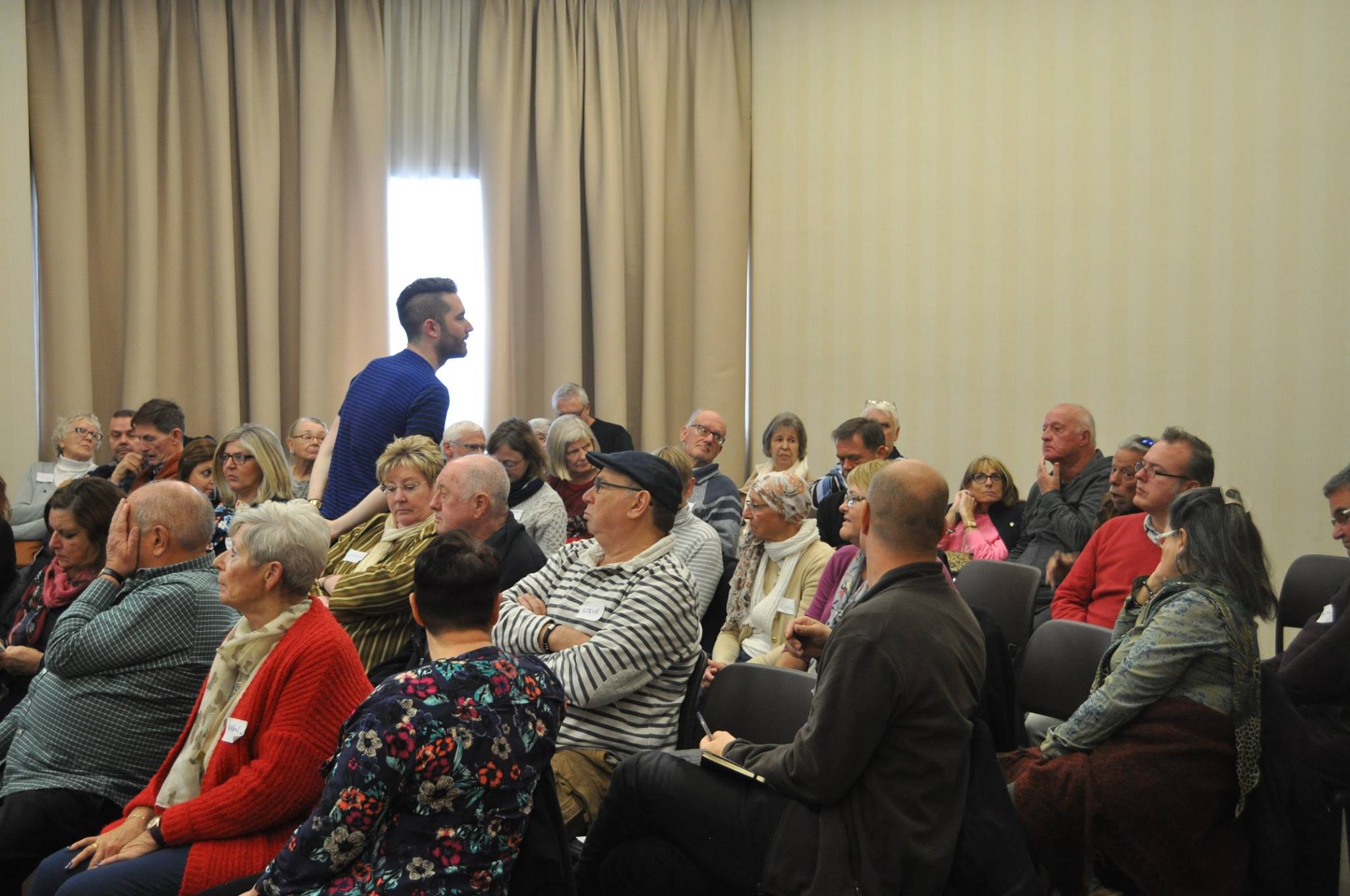
On Feb 10th Bremain in Spain and Best for Britain held their first joint event in Elche, near Alicante. Nearly fifty Bremainers joined our Chair Sue Wilson, Best for Britain’s Kyle Taylor and members of Bremain council. We were delighted that Debbie Williams from Brexpats – Hear our Voice was able to attend. Many Bremainers were meeting for the first time, despite working together for many months.

Refreshments were served in the garden of the hotel before Sue welcomed everyone and Kyle started the workshop – How to fight Brexit – Practical Campaign Training. There were group exercises, meaningful discussion and a real sense of determination to fight to stop Brexit.


Following the workshop we had a question and answer session where we were able to update members that Bremain in Spain is now a registered association. Kyle also offered practical advice to those who wanted further clarity. Debbie updated everyone on the court case which has just been referred to the ECJ. Their argument is basically ‘Once an EU citizen, Always an EU citizen’ and they hope that the case will be expedited within the next two months.

Lunch was served after the workshop and many commented on how reinvigorated they felt to fight to stop Brexit. Similar style workshops will be rolled out throughout Bremain regional groups in the coming months.

Feedback was overwhelmingly positive, and many commented on their renewed invigoration to fight Brexit. Debbie Williams sums up her feelings about the training session as follows: “Since the enlightening event organised by Bremain in Spain, I am now calmer and more confident in my dealings with Brexit-related discussions, I feel empowered and have actually also realised that I (along with all the other delegates, I’m sure) know far more about the politics of Brexit than most politicians. Thank you for organising the event and inviting me. Bravo! – to all concerned.”

Bremain member Alison Curtis adds: “It was truly worth the 5-hour drive each way, and we gained enormously: Good strategies, insight, motivation, ideas and above all enjoyment from being with such nice and like-minded folk. Thanks to Kyle for his experience and presentation, and the Bremain Council for the excellent organising”. Below are a selection of photos from the day.