Renew’s campaign for EU Citizenship for Brits in EU 27

Renew’s campaign for EU Citizenship for Brits in EU 27

UPDATE 25 JANUARY 2021:

Terry, Julien and the team now have over 400 supporters signed up to back this campaign. The more supporters to sign up with give more weight to both cases so  please consider submitting your details. Read on to see how you can help.

Bremain in Spain and the Renew Party UK started working together way back in April 2018 when they approached us to assist with developing their policies re Britons Abroad. We have remained in regular contact, mainly through Terry Knott, Renew European Coordinator. You can read more about Renew here and their policies on Britons Abroad here.

Terry has made us aware of a new campaign for Britons in the EU27 to maintain their EU citizenship and is working with French lawyer and Bremain member Julien Fouchet and his team. Here’s what Terry has to say about the campaign:


There are 1.4 million British passport holders in the EU, including YOU, with 80% working, studying or researching (U.K. government own figure). For the past 4 years, we’ve been treated like mushrooms: kept in the dark and fed on manure!

We’ve lost our vote in the EU, due to Brexit and our vote in the U.K., after 15 years, even if we pay taxes.

Enough. The Renew Party is working with the inestimable French lawyer, Maitre Julien Fouchet and his team, pro-bono, to win European Citizenship and YOU can help him, win back our Freedom of Movement, in the EU and so much more. Read on for how members of Bremain and beyond can support this initiative.

Col Terry Knott MC
Maitre Julien Fouchet
The document below outlines the case and a copy has been sent to Ursula von der Leyen, European Commission President, and Belgian MEP Guy Verhofstadt.
There have been cases before which have been unsuccesful, however, M Fouchet and Terry both believe that these cases stand a much better chance of success, now that Brexit has actually happened.

Below you can read both the testimony and a newspaper article submitted by one of the plaintiffs, Alice:

“CIVIS ROMANUS SUM – CIVIS EUROPEUS SUM

Here I am, a Citizen of the European Union whose rights and privileges have been stripped away from me without me being able to vote on the matter.

Who is it that dares to say that I no longer naturally belong where I have made my home in total legality? That I should need a ‘Carte de Sejour’ to confirm my duty to the state in which I live and work; when only yesterday I enjoyed full and fair rights and privileges?

My only privilege now is to pay my taxes; with what in return? Do I have freedom of movement to live and work in 27 countries? NO! Why not? Because people living in a country that saw my birth, 1000 miles away, and where I can no longer vote, who know nothing of my situation, have decided that ‘they’ are better off stripping ‘my’ rights away. What utter nonsense. How unfair is that?

The treaties demand that decisions on the welfare of European Citizens be taken as close as possible to the people concerned. Those people who voted in the referendum in 2016 live very far away from me. They have other preoccupations, such as fishing rights or sovereignty with gunboats to back up their arguments. Those arguments had nothing to do with my situation and yet I have been fully affected by them in a negative way. I have lost my only rights to vote anywhere as a consequence, as well as my Freedom of Movement.

Continue reading

The mass media try to tell me that I am no longer a European Citizen but CIVIS EUROPEUS SUM! Once a European Citizen, always a European Citizen. Mr Murdoch was visibly furious about being summoned to come before the Parliamentary Select Committee and vowed his vengeance in his newspapers. He appears to have managed. I started to campaign for our rights when I realised that there was no one in power in the UK with the slightest regard for my situation or the situation of millions of others like me. To be disenfranchised is a horrible feeling; with one decree you are thrown back into a state similar to that of childhood. Your voice does not matter, your opinions do not change anything. There is a feeling of being bereft. The suffragettes were not fighting for something that they had lost nor for something that they had previously held. They were fighting for new rights. The arguments of the Suffragettes and the abolitionist movement in the USA are just as valid now as they ever were. I am fighting to regain my rights, to be counted as a grown-up adult. What happens when you lose the right to vote? You are disenfranchised, this means that you become a child in the eyes of society. A child with no parent or guardian to take up your problems or worries. Just as an orphan can ask for emancipation when his or her parents die and he or she has to take on the responsibility for a family, so do I ask to be emancipated, to be able to vote again as a fully-fledged European Citizen once more. Why was there no one there to speak up for me? Unlike other European countries the United Kingdom has no Member of Parliament for those who live outside its borders. France in comparison does have parliamentary representatives for its expatriates, wherever they live in the World. The only thing or structures that the UK has are the consular services or the British Council (that British citizens have no access to). Consular services have been reduced to mere trade envoys as Mrs Ratcliffe has found to her cost. A British person outside the UK has no support or voice and there is no help. Members of Parliament are unreachable by people who are not their constituents. An MP is not allowed to reply to a letter from someone outside their constituency (James Foley’s case). This system, or lack of it is fine if you have an MP. Not so good if you don’t have one. The only recourse is to write to the Upper House or Her Majesty The Queen. I wrote to Lord Hestletine in 2016. To Lord Adonis, To Dominic Grieve who have since become part of the European Movement.  The Queen however was unable to concern herself with ‘political’ matters. Mrs Ratcliffe has an admirable husband who has publicised her case but how many Britons are there with no protection whatsoever? Until January 2020 Britons had access to European Union consular services and ultimately judicial help through the European Union Court system. A person accused of a crime could ask for help from any European Union Embassy or Consular service. This is no longer true. I was turned away by the guards, from the UK Embassy in Oslo with my British born, dual national Anglo/French son in 2017 when he had a serious personal problem. What are we to say to Mrs Page who had planned to live out her retirement in a lovely house in the French countryside surrounded by her horse, her dogs and her cats, when after the referendum her income from the UK was slashed by a third due to the Brexit vote, and who is now in a retirement home in Hungerford without her beloved animals? What do we say to my godfather, Mike Johnson, whose two girls, who have always lived in France and are having difficulty getting their Cartes de Sejour, or the twins who went for French nationality: One was given it , but the other was denied it. A great many of those worst affected are recently arrived British women, widows, divorcees, wives of EU nationals. Some with children at foot with dual nationality. Which jurisdiction will uphold the rights of divorced couples, in the future? Collateral damage, you might say, Collateral damage, as if that was a fair excuse. Life is unfair, you might say, Yes: that is the reason for the existence of the Courts and their Justice system. Remember, last month, that all of these people were European Citizens and totally and legally within their rights to be where they are now. They are now destitute of their rights. What should we all do in these examples?  I do not feel that it is right to wave a ‘flag of convenience, like some clandestine ship’ by taking the nationality of another European country and by virtue of that subterfuge, be recognised once again as a European Citizen (many people cannot for various reasons). I still am a European Citizen and wish to stay so. I was given Citizenship of Europe by virtue of my country joining the European Union in 1973. Reinforced in 1992 by the Maastricht treaty. From that moment forward I have been a European Citizen I own that Citizenship. It is a fundamental status. My inalienable right, part of my being. One thing is certain, and that is that on the 31st January 2020 I was a fully fledged European Citizen with all the rights and obligations mentioned in the European Charter of Human rights. Since that date no one has sent me a message personally to tell me that I am no longer a European Citizen. If they had I would have contested it.  Instead without warning, I was made aware that I could no longer vote in the municipal elections in March 2020. My name was absent from the register, with the humiliation of being singled out. During the Brexit negotiations we have all been told that nothing was final until everything was signed. The social side was sadly forgotten. Why have I been discriminated against? Although everyone understands that geopolitical states are often in flux, there is a growing group of families that are spread over the whole of Europe and these people are often highly educated and possess three or more languages, they need to be able to belong to a group that has distinct protections rights and duties. Who pays for my European Citizenship? I pay for it at the moment through taxation in my chosen country France. When on European soil the taxes of all European citizens are collected and a proportion is ring fenced for European projects. When outside European soil, the taxes of European citizens have always gone to the country of residence. This should not have to change. The finances of Europe will not suffer from giving me back my rights. Civil rights are often made to sound like some outlandish impertinence. Nothing could be further from the truth. Basic Human rights are the bedrock of society.

You can see from the documents below what information Terry and the team require, how your data will be handled securely and how to join the campaign. Obviously in Spain the document would be Residencia instead of Carte de Sejour.

If you would like to participate, please download the forms from here, complete and send them, along with the necessary supporting documents via email to

eu.britizens@gmail.com

Should you have any queries, please email the team directly on the above address. Bremain would like to wish Terry, Julien and the team every success.

A link to this page will be sent out to Renew supporters shortly via their weekly briefing. To receive it, please sign up here


Here’s what Terry wrote in this past week’s Renew Briefing:

With effect 1 February, the RENEW PARTY in Europe is expanding its reach and activities, to reflect and respond to the 27 different countries Remaining in the EU.

As most of you will know, RENEW has agreed among other objectives, oriented within the UK, also to begin re-forging links with the EU.

To that end, a dedicated team is being formed in France, headed up by two Joint Coordinators *.  Further teams will follow, in a Phase 1, including Spain, Italy, Netherlands and Germany.

If any EU based Member or supporter of RENEW feels motivated to help in a low key way, to coordinate information in their own country, please contact: terry.knott@renewparty.org.uk

*Alice Bouilliez, email: esme_bouilliez@hotmail.com

*Paul Fisher, email: paul.fisher@renewparty.org.uk

El adiós del Reino Unido de la Unión Europea – Postfactual Interview

El adiós del Reino Unido de la Unión Europea – Postfactual Interview

Bremain member Greg Hunt was recently interviewed about the UK’s exit from the European Union by Celia Rivas Lopez, Political Editor in Chief for Postfactual, a new journal in Spain. Postfactual describes its purpose as follows:

Because we believe it is necessary to disseminate the knowledge that has been relegated to the academic world, we bring to our journal disciplines that have been relegated almost exclusively to the academic field, such as the study and analysis of political culture, in an attempt to approach current affairs from the thought , the reason and the circumstances in this current dilemma, exemplifying with practical cases and taking into consideration the History of Political Ideas and Law.”

You can listen to Greg from approximately fifteen minutes in:

Many thanks again to Greg for taking part on behalf of Bremain. 

How Brexit is delivering unpleasant surprises for Brits in Spain

How Brexit is delivering unpleasant surprises for Brits in Spain

Already a week into the New Year, Sue Wilson considers that aside from the large-scale losses brought by Brexit – freedom to live and work across the EU – it’s the smaller losses that are now causing concern.

Last week, as we bid goodbye to the worst year most of us could remember, we dared to hope that 2021 would be better. After all, it could hardly be any worse. Just one week in and our resolve is certainly being tested with plenty of fresh concerns to cause us stress.

Thankfully, with the ongoing Spanish Covid situation, we have reasons to be hopeful. Although cases and death rates remain a concern, they are falling, and compliance with government rules is generally high. By contrast, the UK continues to break records for the number of new cases daily, and that’s before the impact of Christmas mingling is assessed.

International travel has been problematic throughout the Covid crisis. For Brits, it has recently become even worse. This week, we have seen British nationals denied entry to Spain and other European countries, as border control officials questioned whether the travellers were valid EU residents with essential travel needs. Hopefully, with the swift intervention of Spanish authorities and the British Embassy, the problem has largely been resolved.

Many Brits in Spain are still struggling to get their affairs in order, and the lack of appointments for residencia and driving licence applications is contributing to stress levels. Add to that the continuing uncertainties surrounding Brexit, and it’s no surprise that we are still reeling.

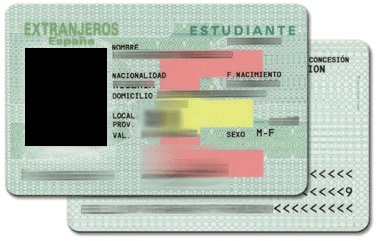
TIE Example

Even after Brexit is supposedly all over, much remains unresolved, leaving room for unpleasant surprises. Although an oversimplified generalisation, it would be fair to say that those that voted to remain are less surprised than those that voted to leave. Many leave voters were expecting – indeed, were promised – that nothing would change. They were misled that our rights, freedoms and benefits would remain the same, regardless of Britain’s EU membership status.

With the Withdrawal Agreement agreed a year ago, it was clear that some things were going to change for the worse. However, the scale of change was unclear to many. Aside from the large-scale losses – such as our freedom to live, work or study in any EU country – the smaller losses are now causing concern.

With our travel prospects limited, we won’t immediately be aware of all the ways our lives will change. It is too soon to say how the sterling/euro exchange rate might be affected long-term. The pound is worth about the same today as it was a month ago, even despite a Brexit deal being agreed. Seems the markets didn’t think it was that good a deal after all.

You can read the full article over at The Local

What does 2021 hold for those in Spain who fought against Brexit?

What does 2021 hold for those in Spain who fought against Brexit?

After months of bluster, grandstanding and tedium, the UK and EU have finally agreed a Brexit trade deal.

Although it’s far from ideal, and even further from the best deal possible – the one we already had – it’s a great relief all round not be crashing over the proverbial cliff edge. It seems a bad deal really is better than no deal after all.

I could complain about what we’ve lost, but it won’t change the situation we are facing. Instead, my New Year’s resolution is to move past old arguments and concentrate on constructive battles. I don’t mean that I’ll forget or forgive what has been stolen from us, and I’m certainly not ready to “suck it up”. However, our Brexit journey isn’t over with the new deal, as negotiations will likely continue for years to come.

When Michel Barnier and Ursula von der Leyen announced that a deal had been struck, their overall tone was one of regret. By contrast, and entirely as predicted, Boris Johnson’s approach was celebratory and triumphal.

Never one to focus on the details, it’s quite possible our prime minister doesn’t understand all the intricacies of the deal he just signed. This was apparent in his response to press questions about friction-free trade. He claimed that the tariff-free deal had no non-tariff barriers, when in fact there are many barriers to trade. With the UK leaving the single market and customs union, those barriers will include a multitude of customs and regulatory checks at borders.

EU Nov

By contrast, the EU is keen on details and has added legal clauses to protect the integrity of the single market, and the EU itself. Based on its recent experiences, the EU knows that Johnson’s good faith cannot be taken at face value.  Legal protection is evident in the deal with regard to the European Convention on Human Rights (ECHR). Should the UK attempt to diverge on human rights, the agreement will be “terminated on date of leaving ECHR”. Not for the first time, I’m grateful that our rights are protected by international statute, rather than UK law.

So, where does the current state of play leave campaign groups, such as Bremain in Spain? When the group was created on June 24th, 2016, our main aim was to stop Brexit. Obviously, we failed, but I don’t regret a single moment of that fight. The anti-Brexit campaign came close to securing a second referendum, and we know that we tried everything in our power.

It was sometimes a bitter struggle, but I’ll always remember the moments when we united with passion and hope. The feelings of camaraderie are still strong, as are the collective feelings of sadness, anger and disbelief.

With varying degrees of success, I have tried to understand the reasoning behind Leave voters’ decisions, but I’ve rarely felt that Remainers have been extended the same courtesy. The most vocal commentators are usually the extremists on both sides, but they don’t express the majority view.

You can read the full article over at The Local.

As the ‘moment of truth’ arrives our Brexit future is still uncertain

As the ‘moment of truth’ arrives our Brexit future is still uncertain

writes Sue Wilson from Bremain in Spain

On Sunday evening, the last trade deal deadline passed without progress, leaving us none the wiser as to whether the UK will leave the EU with a deal in just a few days time.

Although I understood the attraction of Boris Johnson’s “Get Brexit Done” catchphrase – particularly to Leave voters – it never appealed to me personally. Had the prime minister come up with a “get a deal done” catchphrase, I might have been converted!

Let me be clear (to use a phrase nicked from a former PM): I’m not saying that I’ve become a Brexit fan; just that the Brexit negotiations have been interminable! Deadlines have come and gone. When the chances of a deal were described as “very, very difficult”, our patience wore very, very thin.

How many ways can politicians, or the media, say it’s the 11th hour in the talks? In case you missed any of them, a few of my personal favourites are: last chance saloon, on a knife edge, moment of truth and end of the road.

Following the latest round of talks, Chief Negotiator, Michel Barnier, said the EU remained committed to achieving “a fair, reciprocal and balanced agreement”, and that talks with the UK’s chief negotiator, Lord Frost, had reached a “crucial moment”.

In response, the UK accused the EU of making “unreasonable demands” and stated that a “substantial shift” was required in the EU’s position. Whitehall sources said no-deal was increasingly likely. If that sounds familiar, it’s because we’ve been here several times before. Unsurprisingly, it’s still about fish and the level playing field.

Despite the final, final, final deadline having passed, the talks are continuing still. Sunday’s deadline, set by the EU, offered the last opportunity for the European parliament to ratify any agreement before the transition period ends. While talks are continuing, a last-minute deal is possible, but it’s unclear what it would entail. Until any deal can be ratified, there could be contingency plans implemented, or a brief period of no-deal, and the accompanying chaos.

As if Brexit problems aren’t enough, a new strain of Covid – thought to originate in Kent – has thrown the UK’s plans into disarray. The new strain, which has been around since September and on the government’s radar since October, apparently spreads more rapidly.

Thankfully, it’s no more lethal than the original strain, and there’s no reason to expect it wouldn’t respond to the vaccine. However, it has caused widespread concern across Europe.

You can read the article in full over at The Local