Sue Wilson Writes: Do Britain’s political parties really care about Brits living in Spain?

Sue Wilson Writes: Do Britain’s political parties really care about Brits living in Spain?

Last week saw the publication of manifestos from the main political parties, ahead of the UK general election.

From the hundreds of pages already available, I’ve been reading the manifestos to see if Brits abroad merit a mention.

I won’t pretend to have read them in detail, but I’ve focused on pages relevant to Brits living in Europe.

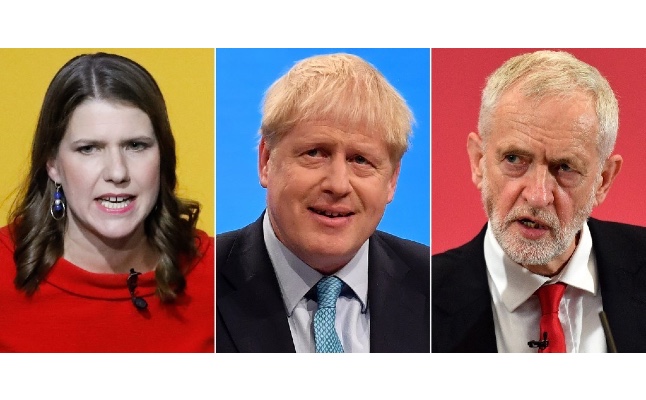
The LibDems manifesto proves that it’s not just a one-policy party, solely intent on stopping Brexit.

Its manifesto includes a wide range of social, economic and environmental proposals.

One positive promise for Brits abroad is the restoration of full voting rights – a promise to return our ‘Votes for Life’.

It was something of a surprise to find the Conservatives offering to restore our voting rights too, though we have been here before with the defunct ‘Overseas Electors’ bill – a private members bill that never made it through parliament.

Labour’s manifesto is extensive and is considered the most radical.

It includes proposals for re-nationalisation of certain industries such as rail and mail, and massive spending commitments.

Labour pledges to maintain the triple lock on pensions – a commitment also made by the LibDems.

However, Labour goes one step further, specifically mentioning Brits abroad.

The manifesto states: “We will ensure that the pensions of UK citizens living overseas rise in line with pensions in Britain.”

Labour also commits to compensating ‘WASPI’ women – those born in the 1950s who have been deprived on thousands of pounds worth of pension payments.

During the televised leaders’ debate on Friday, the Prime Minister said he sympathised with WASPI women, but a solution would be expensive.

He responded to an audience question with: “I cannot promise that I can magic up that money for you.”

Unlike all the money the government has magicked-up to pay for Brexit.

The Conservative party manifesto was only published yesterday, but the headlines are a commitment to railroad the Brexit Bill through before Christmas, hold down taxes and “put more money back in people’s pockets”.

I suspect that the only people who will end up with more money will be those that need it the least, and certainly not those affected by the fluctuating exchange rate.

The Conservative manifesto also includes a number of crowd-pleasing initiatives, such as repairing potholes and axing hospital parking fees.

Rather begs the question as to why these wonderful new ideas, if considered so important, never came up in the last nine years of Conservative rule.

I have yet to find any further reference to our situation in Europe, but I’ll keep checking. Perhaps we are hidden somewhere in the small print.

A recent poll identified the NHS as the British public’s number one concern, with Brexit coming a close second.

All other topics fall way behind. It’s debatable whether Brexit is a major concern to British voters abroad.

It’s clearly the top priority for the Conservative party – we are all overfamiliar with the prime minister’s overused slogan, “get Brexit done”.

Brexit is certainly the priority for the Liberal Democrats. Labour, on the other hand, would prefer to focus the election on other important issues, such as an end to austerity, improving education, housing and social care, etc.

No matter what you consider important in British politics today, this is the Brexit election.

Even if Brexit isn’t your personal priority, it will still be a hugely significant factor. The outcome of the election, and Brexit, will determine whether there’s money in the coffers to pay for all the promises being made by the political parties.

The LibDems promise to use a £50bn “remain bonus” to fund their spending plans.

The Conservatives have criticised Labour for planning to spend £80bn on its radical programme, yet they’ve conveniently forgotten their own bill for Brexit runs to a similar figure, according to Bank of England estimates.

Meanwhile, the treasury refuses to confirm the extra cost of the government’s Brexit plans – perhaps believing that the public’s ignorance is bliss.

For those lucky enough to retain a vote in the general election, our reasons for choosing a party will be personal and varied. We may have supported the party for years.

Our vote may be cast based on our feelings about Brexit.

Or we might decide based on the content of the manifestos and the promises of a different – and, hopefully, better – future for the UK.

For me, as a strong Remainer, I care less (at least for the moment), what policies my candidate is promising to implement.

I won’t be voting for the party that most closely matches my personal preferences.

I won’t be voting for the party that I supported for over four decades, or the party I’m likely to choose in the next general election.

Rather, I’ll be voting for the party with the best chance of removing my Conservative MP from his relatively safe seat.

So, please read the manifestos and understand what your candidate and party represent.

Then hold your nose, forget your tribal instincts and vote to #GetTheToriesOut!

We need to be rid of this government and rid of Brexit, so we can concentrate on putting the UK back together and undoing all the damage.

Thank you all the same, Mr. Johnson, but no, I don’t want Brexit, or another five years of Tory government for Christmas, if it’s all the same to you.

Sue Wilson Writes: Why the Spanish election result brings hope for Britons fearing Brexit

Sue Wilson Writes: Why the Spanish election result brings hope for Britons fearing Brexit

Sue on panel at European ParliamentThanks to Brexit, I’ve recently taken more interest in British politics than in the political situation here in Spain. I’ve focused on the forthcoming British election, rather than on the Spanish one, although both have come around rather quickly!


It could be argued that the general election in Spain will affect the lives of British migrants more than the British general election. For many British citizens in Spain who are younger and working, that’s probably true. They pay into the Spanish system, are entitled to Spanish healthcare, and will have Spanish state pensions. They may have Spanish spouses and family. Their kids probably speak Spanish first, English second, and will be completely integrated into Spanish society. Meanwhile, many Leave voters in the UK tell me that I voted with my feet – by moving to Spain – and, therefore, I should have no further say in British politics.


As a retired Brit relying on a state pension from the UK, I feel more in the hands of the British government than the Spanish one. The British government pays for my healthcare and determines the value of my pension and whether it will continue to increase annually. Since the June 2016 referendum, Brexit has determined the value of my monthly income, because all the political twists and turns have daily affected the Pound to Euro exchange rate.

Another personal factor is that I can still vote in the imminent British election – although possibly for the last time. In Spain, I can’t vote for the national government because all Brits here are disenfranchised from doing so. Sadly, many of us are disenfranchised from voting for any national government, thanks to broken promises by the Conservative government about restoring Votes for Life.

While I was being distracted by Brexit, last week’s Spanish election rather snuck up on me. For some time, Spanish politics has existed in a state of upheaval. Unsurprisingly, with so many problems at home, the Spanish public and media have only taken a passing interest in British politics and Brexit.

Following the recent Spanish election result, we can see light at the end of the political tunnel here. The rise of the far-right – not just in Spain but across Europe – has been an ongoing concern. Many people thought that recent events in Catalonia would see the Vox party increasing in popularity and power.

While Vox did increase its share of the vote, becoming the third largest force in congress with 52 seats, the actual result was that Spain now has a left-wing coalition government. Prime Minister Pedro Sanchez achieved a governing alliance between the Socialist Party and Unidas Podemos within hours of the election – a seemingly impossible feat. With 155 seats between them, PSOE/Podemos still need the endorsement of other parties. However, there’s hope that Spanish politics can finally move forwards and spare the country yet another election.

The EU welcomed the news from Spain “with much more relief than concern”. The rise of the far-right has worried the EU for some time. Yet, despite Vox rising in popularity, Spain now has one of the most left-wing governments in Europe.

We’re right to be concerned about the growth of nationalist and far-right groups, both in the UK and Spain. Nevertheless, the outcome of the Spanish election proves that the right gaining support doesn’t necessarily lead to a more right-wing government.

Back in the UK, the Brexit Party may gain further support from the British public on December 12th, but this doesn’t guarantee it a single seat in the next parliament. With the British ‘first past the post’ electoral system, support does not necessarily translate into power.

The result of the forthcoming British election is proving almost impossible to predict, with many voters determined not to vote along normal party lines, putting Brexit ahead of more usual political concerns. If all goes well, the outcome will end the rule of the most right-wing British government I’ve seen since I’ve been old enough to vote.

Let’s hope the new British government can learn lessons from Spain and work cross-party to form a coalition for the benefit of the nation. If that happens, perhaps we can avoid further elections for a few years – in Spain and Britain.

Article from The Local


Sue Wilson Writes: Why a proxy vote is the best option for those expats with right to vote in UK election

Sue Wilson Writes: Why a proxy vote is the best option for those expats with right to vote in UK election

Now that the general election campaign (yes, another one!) has officially commenced in Britain, it’s time to ensure you can cast your vote.  

If you’re already registered to vote, you can do so in person, post or proxy. If you’re not registered, you must apply to become an overseas voter. Those already registered need to verify that their registration is still current, as it must be renewed annually.

If you haven’t renewed your registration since the 2015 election, you must do so by midnight November 26th. However, we recommend not leaving this process until the last minute, as it will leave insufficient time to apply for a postal or proxy vote.

Based on previous experience, I would strongly recommend applying for a proxy vote, if you cannot vote in person. During the referendum, the 2015 general election and the recent European elections, many people who relied on postal votes were badly let down.

Either postal forms weren’t issued in time to be completed and returned before the deadline, or not issued at all. After the European elections, some local authorities openly admitted that they had failed to comply with postal vote requests.

Around 60 percent of British citizens overseas are already disenfranchised because of the 15-year voting rule. This is a sore point for people who are being forced to live with decisions that affect their lives, but over which they have no say.

For those who still have their democratic voting rights, it’s infuriating to have them removed by a UK council that has failed to issue postal ballots to overseas voters.

Those with no experience of proxy voting often assume that you need to find a friend or family member living in your local constituency to act on your behalf. While that is certainly one option, there are others. My personal method – and a popular one – is to have my preferred candidate do the work for me.

Once your name is on the electoral register in your former constituency (the address where you last resided in the UK), you can apply for a proxy vote. This is an easy process which can be started online. However, your ‘hard copy’ form must be received by post by your local Electoral Registration Office by December 4th (and beware the UK pre-Christmas post slow-down and planned postal strike).

When you’ve decided on your preferred political candidate, and have been granted a proxy vote, you can approach the local constituency office of your chosen candidate. The office will assign a proxy for you and, clearly, they have a vested interest in ensuring that the process works.

For the disenfranchised, there are still ways to be heard in this election. You can encourage friends and family members, in Spain and the UK, to register and vote. You may have young family members who’ve never voted and don’t know how. For example, students may not be aware that they can register to vote in their home town and their university town. They can only vote once but registering in two different places gives them more flexibility when the time comes.

It remains to be seen whether “Votes for Life” – the former Overseas Electors Bill – proceeds into any party manifestos, but we live in hope. Bremain in Spain will continue to campaign to have voting rights restored to all overseas voters. In the meantime, if you can vote, please do so. You’re not just voting for yourself but for the hundreds of thousands of people who cannot vote in this election.

From The Local


Sue Wilson Writes: If Brexit is the ‘will of the people’ then let’s test it

Sue Wilson Writes: If Brexit is the ‘will of the people’ then let’s test it

#FinalSayMany British citizens from Spain joined over a million marchers at the #PeoplesVote rally: a day of solidarity, strength, good humour and determination. A day we will proudly recall, in years to come, with the words “I was there”.

For those of us fighting to stay in the EU, it will be remembered as another significant day in which the prime minister, Boris Johnson, was prevented by parliament from rushing through his damaging Brexit deal.

On Thursday October 17th, at the EU summit, Johnson unexpectedly agreed terms for the UK’s withdrawal from the EU. The shock of the 11th hour agreement was followed by news that parliament would vote on the deal on “Super Saturday”, with a view to leaving the EU on October 31st, should it pass. The votes were too close to call as to whether the deal would pass.

Thanks to an ingeniously simple but effective amendment by Sir Oliver Letwin, Johnson withdrew the planned vote on the deal. The Letwin amendment, described as an insurance policy to prevent a last minute “accidental” no deal, passed by a majority of 16.

The news of this monumental defeat for the government was greeted with huge cheers from the crowds in Parliament Square. With the result of this vote, and because of the Benn Act, Johnson would be forced to write to the EU requesting an extension.

Read full article in The Local


For Brits living in Europe, Brexit throws a once clear future into doubt

For Brits living in Europe, Brexit throws a once clear future into doubt

A couple of years ago, Teresa and Kim Sawdy moved from England to Spain to take an early retirement.

Drawn by the beautiful nature, welcoming population, quality of life, and lower costs, they bought an apartment in this sun-kissed town on Spain’s southern coast. Ms. Sawdy first volunteered at a local dog shelter and today teaches English as a foreign language; Mr. Sawdy enjoys his free time.

But like many other Britons living in Europe, the couple say their lives have gotten more difficult because of the fallout over Brexit. They say that with the administrative hurdles they are encountering, it feels as if Brexit had already happened.

Now Mr. Sawdy worries he could have to go back to work, and Ms. Sawdy says she doubts she will “ever get a pension from England.”

From small seaside villages on the coast of Spain, where older British expatriates have found a sunny slice of paradise to retire, to larger cities where younger ones have found a viable professional base, to the European Union more broadly, Brexit and its implications are viewed with genuine concern, if not always great clarity.

Uncertain rights and protections

With the United Kingdom scheduled to leave the EU on Oct. 31, British Prime Minister Boris Johnson and EU negotiators agreed Thursday upon a last-ditch deal on the terms for Brexit. But Parliament still must approve the deal in an extraordinary session on Saturday, and the prospects for success remain uncertain. Should the vote fail, Mr. Johnson would be obliged under the law to seek an extension from the EU – something he has said he would obey, while also promising that the U.K. would leave the EU on Oct. 31 no matter what.

Full story in The Christian Science Monitor