Jon Danzig’s World – EU referendum broke code of good practice

Jon Danzig’s World – EU referendum broke code of good practice

In all democracies, it’s essential that elections – including referendums – are run fairly, and that the regulatory authority has the power to annul an election or referendum if serious irregularities may have affected the result.

That’s not just my opinion. Such a requirement forms part of the Venice Commission’s ‘Code of Good Practice on Referendums’.  Although the code is voluntary and not legally binding, the UK is one of the 61 member states of the Commission and helped to form the Code, which was adopted in 2006. The Commission advised me:
 
 
“The Code was and is strongly supported by the Committee of Ministers recommending to the member States to respect its provisions.”
The UK’s Foreign Secretary, Jeremy Hunt, currently sits on the Commission’s Committee of Ministers.
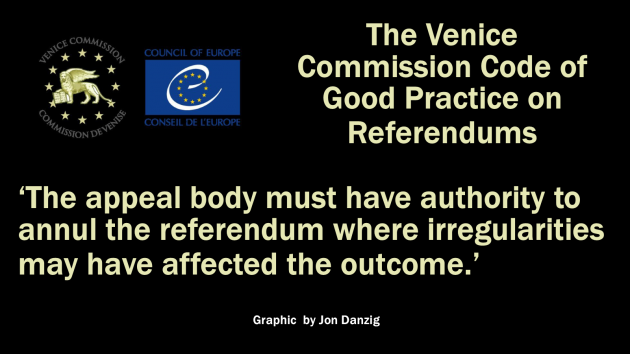
Clause II 3. 3 e) of the Venice Code states:
‘The appeal body must have authority to annul the referendum where irregularities may have affected the outcome. It must be possible to annul the entire referendum or merely the results for one polling station or constituency. In the event of annulment of the global result, a new referendum must be called.’
In the UK, our Electoral Commission is the independent regulatory body for elections and referendums, set up by Parliament to “regulate political finance in the UK” and to “promote public confidence in the democratic process and ensure its integrity.” 
 
I asked the Commission if they have the power to annul a referendum, in accordance with the recommendations of the Venice Code.
 
They replied:
“In short, no we do not have the power to annul an election or referendum.”
If the Electoral Commission had the power to annul a referendum in accordance with the Venice Code, then it’s unlikely that members of the public would now be calling on the High Court to declare the EU referendum “void” as a result of serious irregularities. 
 
The case of Susan Wilson & Others versus The Prime Minister, is scheduled to move to a full hearing on 7 December.
The case will argue that Brexit must be declared void and the notification of Article 50 quashed because, “various criminal offences may have been committed”. 
 
Read the full Jon Danzig’s article in his blog…
Brexit: High Court to rule if referendum vote ‘void’ as early as Christmas after Arron Banks investigation

Brexit: High Court to rule if referendum vote ‘void’ as early as Christmas after Arron Banks investigation

The High Court will rule as early as Christmas whether Brexit should be declared “void”, in a legal case given a turbo-boost by the criminal investigation into Leave funder Arron Banks.

Judges are poised to fast track the potentially explosive challenge, after Theresa May’s refusal to act on the growing evidence of illegality in the 2016 referendum campaign, The Independent can reveal.


Lawyers describe that failure as “absolutely extraordinary” – given the National Crime Agency’s (NCA) probe into suspicions of “multiple” criminal offences committed by Mr Banks and the Leave.EU campaign.

Now The Independent understands the case is likely to move to a full hearing and a ruling within weeks of opening on 7 December, with the clock ticking on the UK’s departure from the EU next March.

Both its lawyers and a leading academic believe its chances of success have been given a big boost by the unfolding scandal and the government’s refusal to recognise the gravity of what is being exposed.

The government is expected to deploy Sir James Eadie QC – the star barrister who led the unsuccessful battle for the government to trigger Article 50 without parliament’s consent – in a sign of the case’s importance.

Read full article in The Guardian


‘Deal? What deal?’: Reaction from Brits in Spain

‘Deal? What deal?’: Reaction from Brits in Spain

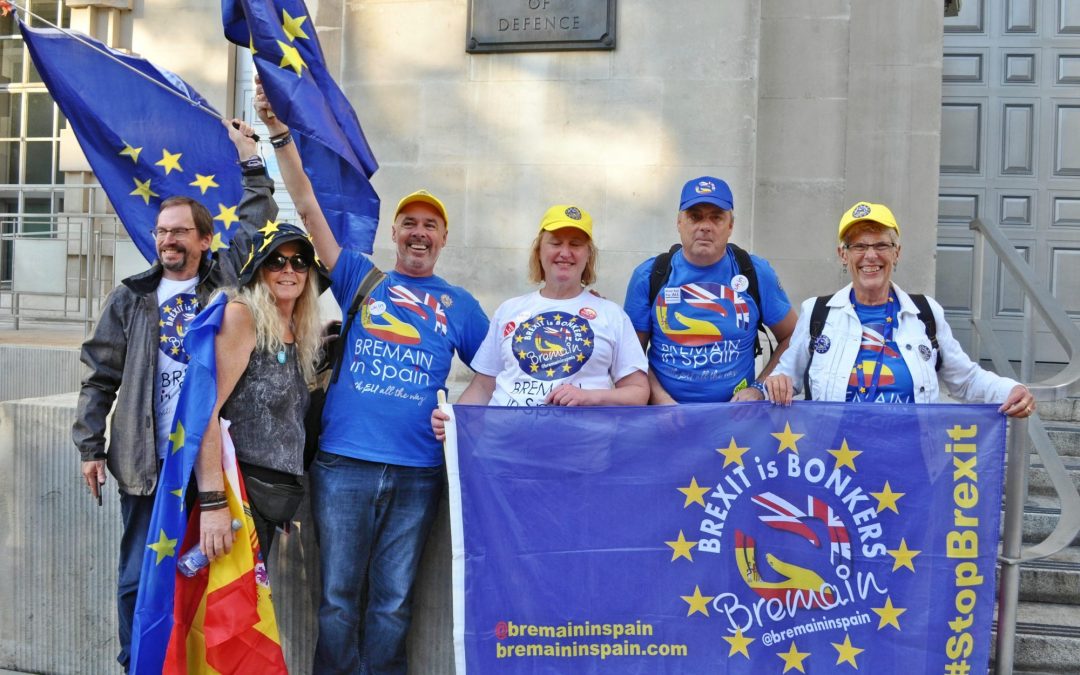
Sue Wilson, chair of Bremain in Spain, shared her thoughts with The Local.

“The reactions from Bremain in Spain members have ranged from serious concerns over our future citizens’ rights to ‘I’ll believe it when I see it’,” she said.

“It’s been difficult for many to know how to react to the news, as there’s so little information available. We’ve been told a deal has been done, that the UK and the EU have reached an agreement, but where is the evidence?”


“There has been no announcement from Theresa May or confirmation from Michel Barnier. Only a qualified comment from Ireland’s Deputy Premier, Simon Coveney, that negotiations were ongoing and have not yet concluded.”

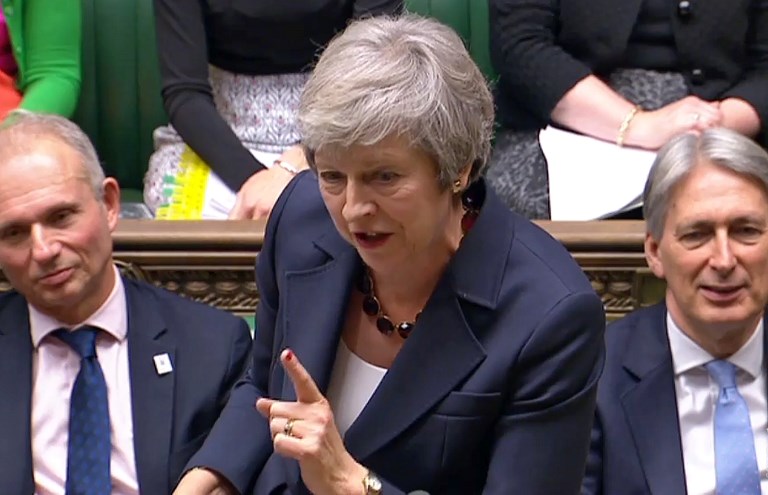
“During Prime Minister’s Question Time today, May described the 500 page document as a “draft agreement”, while her deputy, David Liddington, described it only as a “provisional agreement between negotiators”. A statement to the House is not expected until tomorrow, after the Cabinet has met this afternoon.

Wilson adds: “It would seem the only sure thing is that the proposed agreement has not been well received, neither by Remain or Leave supporters.”

“May has been meeting Cabinet ministers one at a time in an effort to garner their support. Whether she has succeeded, we shall wait to find out.

Full article in The Local


Brexit Legality Challenged: Susan Wilson v. The Prime Minister

Brexit Legality Challenged: Susan Wilson v. The Prime Minister

For the last three months, as lead claimant versus the Prime Minister, I have been living and breathing the UK in EU legal challenge. I have learnt some new terminology and spent hours reading documents which might as well have been written in Swahili. Mostly, I been doing a lot of waiting, and then some more. The premise of our case against the Prime Minister is this – we are asking the High Court to find on two issues that could fundamentally alter the Brexit process:

  • To declare the Referendum result invalid due to the Leave campaign’s proven disregard for spending rules.
  • To subsequently find that the basis for Theresa May’s decision to trigger Article 50 is unreliable because of this wrongdoing. To argue that the referendum produced a small majority in favour of leaving is an irrational basis for such a momentous and far-reaching decision.


The Government has responded to our challenge. Its arguments contend that our claim was out of time, having not been submitted within a set timescale following either the referendum itself, or the triggering of Article 50.

We argue that we are within time as the Electoral Commission’s findings that Vote Leave broke the law have only recently been published.

All legal arguments/documents from both sides are available on our website:

https://www.ukineuchallenge.com/

Our challenge hit a stumbling block when the High Court refused permission for a substantive hearing. However, the swift action of our legal team meant a “Notice of Renewal” was submitted within 7 days and an oral permission hearing was secured.

Read full article in Impakter

Why Britons in Spain need to fight for another Brexit referendum

Why Britons in Spain need to fight for another Brexit referendum

There is an unfortunate but prevalent stereotype that British migrants in Spain are all pensioners who laze around, sunning it on the coast.

They lie on their loungers, maybe occasionally skipping off for a round of golf or a game of bridge with their retired friends, all the while refusing to learn the language or mingle with locals. If they want to make a concession to Spanish culture, they might swap gin and tonics for a jug of sangria every now and then.

Not only is that image unfortunate, it is untrue. Around three-quarters of British migrants in Spain are members of younger, working families who are taking advantage of the opportunities the European Union offers them.

The pattern is similar across the EU27 – 80% of Brits in these countries are young people who are greatly appreciative of how they have been welcomed with open arms.


Read full story in El Pais