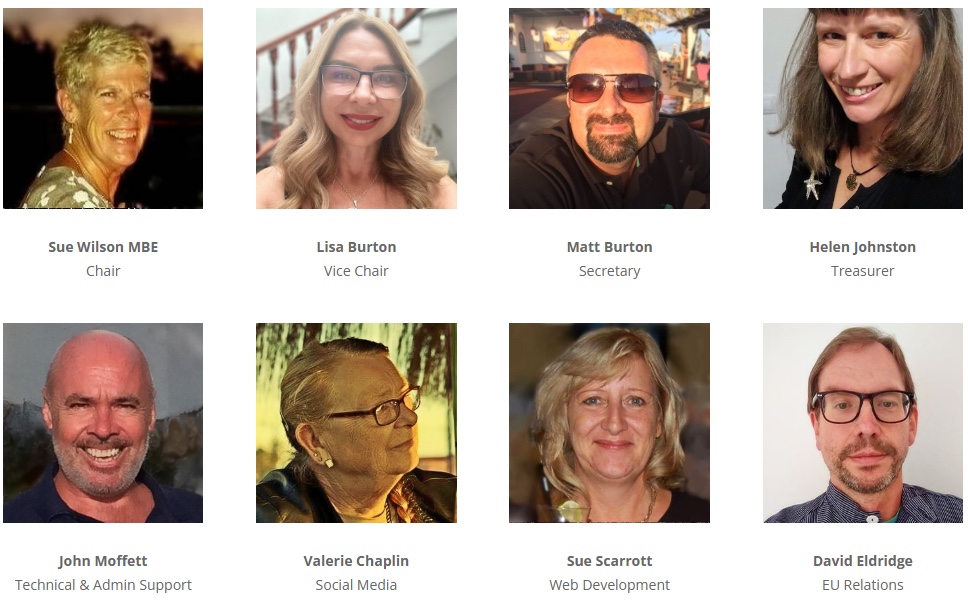
Bremain’s AGM took place online on Saturday 22 November. Vice Chair Lisa Burton presented our Annual Report and Chair Sue Wilson talked about our goals and strategy for the coming year.
For the Q&A session, members were invited to put questions to the Bremain Council. We received some great questions and the answers we gave in the meeting are summarised here
Michael Soffe : Could I ask that Bremain have a concerted effort to create a campaign to get ALL the members to vote in the next GE. Many people are saying they have not registered. We are going to need absolutely every vote we can get in the next GE I feel.
Sue Wilson : I absolutely agree that encouraging registration to vote as overseas electors is vital, especially after how hard we fought to regain that right. It is disappointing that so few took advantage when the opportunity arose, so I think a renewed campaign is essential. Timing, however, is crucial: if we ask people to register too early, they may have to repeat the process by the time the election comes around, since re-registration is required every three years. I believe a more forceful push should come a year before the election, to maximize effectiveness. Maintaining this momentum and making sure people are aware of both the opportunity and their responsibilities is key.
Beth Martin :I am unclear what Spanish residents with a TIE are supposed to do when the EES comes in. Do we have to use the same machines as tourists or will we count as “Europeans”?
Sue Wilson : Based on what we know from the embassy, the official EES procedures aren’t entirely clear for residents like us. Officially, if you hold a TIE, you are exempt from fingerprinting and biometric data, but it’s still uncertain which gate you’ll use: in theory, there are supposed to be three options, but we haven’t seen this implemented yet. From my recent experience in Barcelona, I tried the EU gate but was refused, having to use the non-EU line with everyone else, though I didn’t need biometric checks. And, based on the stories we have heard today from members entering through airports such as Alicante, Castellon, and Malaga, for now, I’d advise that TIE holders should expect to queue with other Brits. The rules may become clearer and more consistent as the system matures, but for the time being, expect some confusion and be ready to politely present your case depending on the airport and the officials on duty that day.
Mike Phillips : What is the better way to rejoin a changing EU, in a phased manner starting with an EFTA single market approach, or as if we are a new non-member?
Lisa Burton : I believe that, although full EU membership is our long-term goal, we have to be realistic about the current political climate, both in the UK and within the European Union. From my perspective, the EU is understandably cautious about welcoming Britain back when there’s a risk that another anti-EU government might reverse any progress. That’s why I advocate for a step-by-step, pragmatic approach—one where we focus first on building trust and establishing closer ties through agencies like Horizon, Erasmus, and joint energy projects. While public support for rejoining is rising, it hasn’t yet reached the level where an immediate push would be successful. So, for now, we must combine visible campaigning with emotional arguments that reconnect people to the European ideal, while steadily advancing our engagement with Europe.
David Eldridge : I share Lisa’s view that a phased strategy is wisest. Specifically, I support intermediary measures such as joining a Customs Union, as recently proposed by the Liberal Democrats. This route provides tangible progress without the political difficulties of freedom of movement. Gradual integration reduces the risk of another reversal and builds credibility with the EU, laying a stronger foundation for eventual full membership. I believe incremental steps and maintaining rejoining as our ultimate goal are both essential.
Sue Wilson : I think it’s important that rejoining the EU remains our goal. Joining the Single Market and Customs Union would be significant improvements but we still wouldn’t have a voice. So we need to work on two fronts, with rejoining as the ultimate goal, while considering how to improve things along the way. One doesn’t have to exclude the other.

Ruth Woodhouse : Our list of aims includes protecting the rights of UK citizens abroad, but have we got anything specific about protecting the rights of EU citizens in the UK?
Sue Wilson : Although we’ve always supported them morally, it’s not explicitly listed in our aims—though it does appear in our mission statement. Our focus has traditionally been on representing Brits in Europe because that’s who our main contacts, like Westminster officials, expect us to represent. However, I see no obstacle to making this support more explicit in our goals, especially given coming challenges. It’s a topic worth revisiting in future council meetings to consider how we might advocate more directly for EU citizens’ rights in the UK.
Lisa Burton : Early on, our group worked very closely with organizations like the 3 millionand the In Limbo project—especially during the heightened uncertainty of the withdrawal agreement’s rollout. Although some of those partnerships have faded a bit, they were strong, productive relationships based on mutual support. I see value in reinvigorating those connections and collaborating where our efforts align. It’s important to revisit these links as we continue to face evolving challenges.
Anonymous : What are your thoughts about the new immigration rules being proposed by the Home Secretary?
Lisa Burton : I see these new immigration policies as deeply worrying, especially the reciprocal risks for Brits in Europe. When lobbying, I point these repercussions out to the Labour government, stressing that dignified treatment of EU citizens in the UK is crucial because it will be mirrored for UK nationals abroad. I’ve also noticed a troubling increase in fear-driven, anti-immigration rhetoric—even among liberal, anti-Brexit group members. It’s vital we keep confronting misinformation with facts and compassion, reinforcing our group’s core values on migrant rights and showing how Brexit has damaged positive attitudes toward migration and made policies more restrictive.
Sue Scarrott : I speak from the perspective of living in Scotland, where the labour shortage is acute and immigration is desperately needed. Policies that prevent asylum seekers from working only make things worse, and we need to communicate how Brexit has led to harmful restrictions—especially hampering our ability to fill essential jobs. I’d like to see a shift in the message toward the advantages migration brings, particularly for struggling economies and public services.
Helen Johnston : It’s clear that Brexit hurt not just long-term migration, but crucially, short-term and seasonal work. This loss is felt in agriculture, hospitality, and other industries that used to rely on the easy movement of temporary workers. I would argue that any discussion about migration policy needs to include the positives of freedom of movement for all types of workers,especially young people, who benefit from opportunities to work abroad and experience other cultures, while filling vital gaps in the labour market.
Sue Wilson : I make it a point to remind people—both inside and outside our group—that we should always link the current hostile migration climate back to Brexit’s negative impact. U.K. policies now erroneously lump all newcomers together as “illegal”, escalating fear and misunderstanding. When the government conflates asylum seekers with economic migrants, public perception worsens, and policy becomes more damaging. Our advocacy should be fact-driven and emphasize constructive, humane solutions.
Anonymous : Do you feel more or less optimistic about the prospects of the UK rejoining the EU now than you did a year ago?
Lisa Burton : I feel 100% more positive than last year. The change in government and Starmer’s deliberate effort to rebuild trust with the EU are significant. The symbolism of the EU-UK summit in Britain was huge, and Starmer has found himself included in European circles where we were previously excluded. There’s mounting evidence of the negative impact Brexit has had: the GDP loss, labour shortages, security issues. Politicians are now talking openly about these problems and about solutions that invariably lead back toward Europe. Public opinion, as reflected in Lib Dem, Lab, and SNP positions, is aligning as well. The landscape is clearly shifting toward closer EU ties.
Sue Wilson : I share the sense that things have moved forward over the past year. It’s encouraging to see Brexit finally being mentioned again by politicians and in the media as, until recently, it has been a taboo subject. I believe politicians are beginning to acknowledge the damage and to talk about improving the relationship with Europe, as well as how the landscape is shifting towards practical cooperation. I’m convinced, though, that the approach will remain cautious for a while—government will want to proceed quietly to avoid political attacks from opposition and media.
Sue closed the AGM by summarising our collective optimism about future relations with the EU and confirming the Council’s views that we are closer now than a year ago, and progress is being made.